What This Article Covers
- Which Shinkansen seats offer a view of Mount Fuji and which train cars are recommended
- When Mount Fuji becomes visible from Tokyo, Shin-Osaka, and Nagoya
- The best seasons for seeing Mount Fuji and tips for taking photos
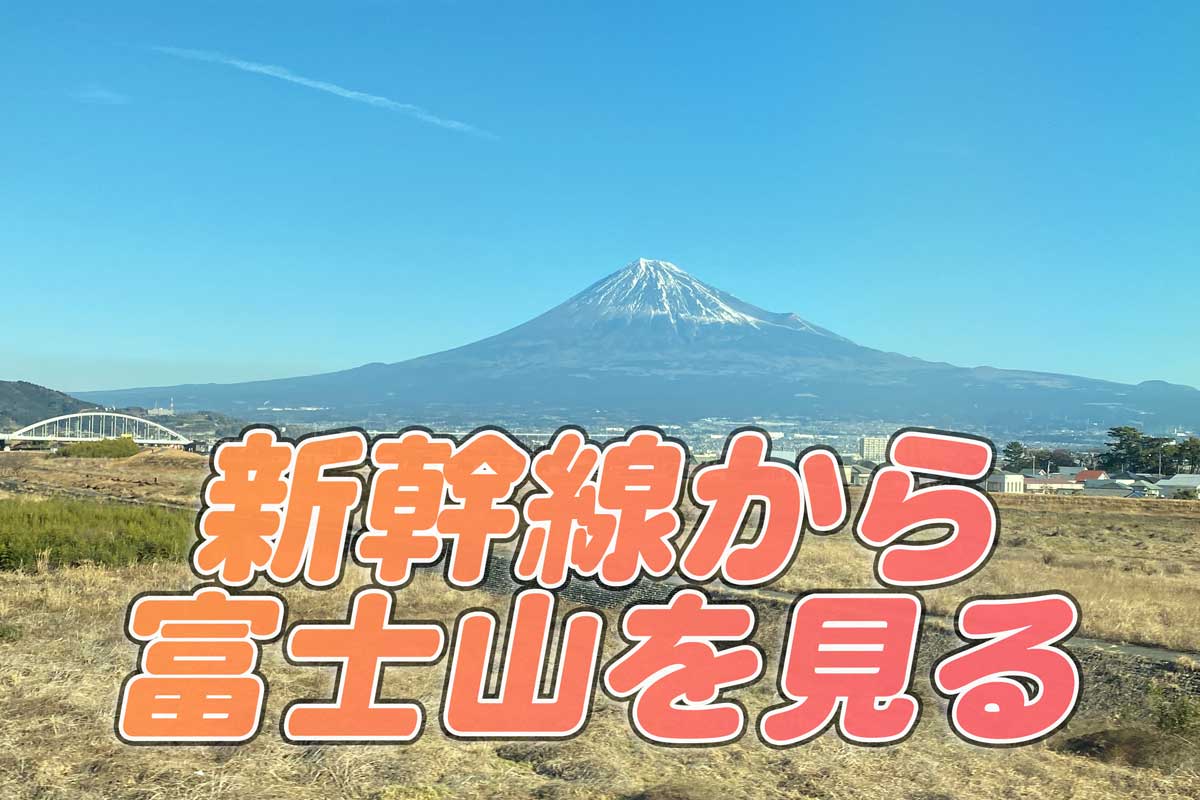
When taking the Shinkansen from Osaka or Kyoto to Tokyo for a trip or business, you probably hope to see Mount Fuji along the way.
Seeing the mountain clearly under a cloudless sky feels incredibly lucky.
However, on a Nozomi train, it takes quite a while before Mount Fuji comes into view. If you are watching videos, playing games on your phone, or sleeping, you may realize only afterward that you have already passed it.
Here is a guide to the best timing, seats, and important points for viewing Mount Fuji.
Viewing Mount Fuji from the Shinkansen
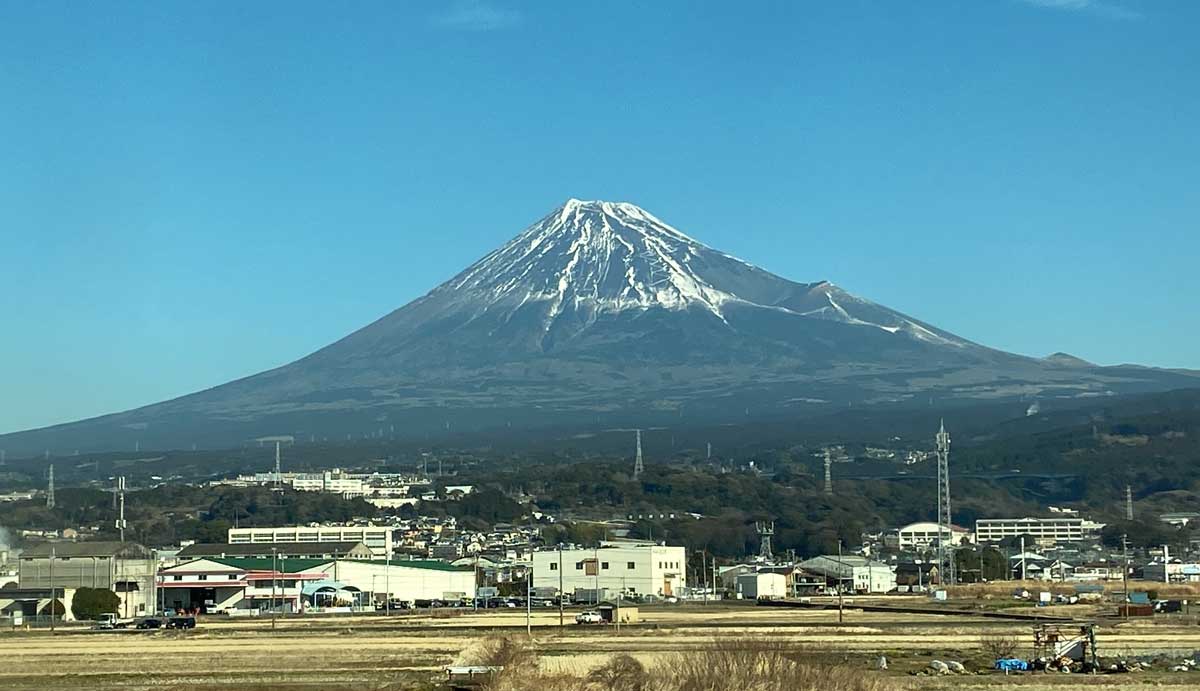
Several conditions need to be met to see Mount Fuji.
- Travel during daylight hours
- Choose a clear day
- The mountain is visible from only one side of the train
Because Mount Fuji is a natural landmark, it cannot be seen after dark.
Many travelers therefore miss it when returning after work in Tokyo or after spending the day at Tokyo Disneyland.
If you are traveling by Shinkansen from Kansai or Nagoya, try to see it on the way to Tokyo.
Travelers departing from Tokyo or Shin-Yokohama should also watch for it on the outbound trip.
At 3,776 meters tall, Mount Fuji often develops clouds near its summit.
Note: Under certain conditions, a small part of the mountain can also be seen from the opposite side.
Where can you see Mount Fuji? Which Shinkansen station is closest?
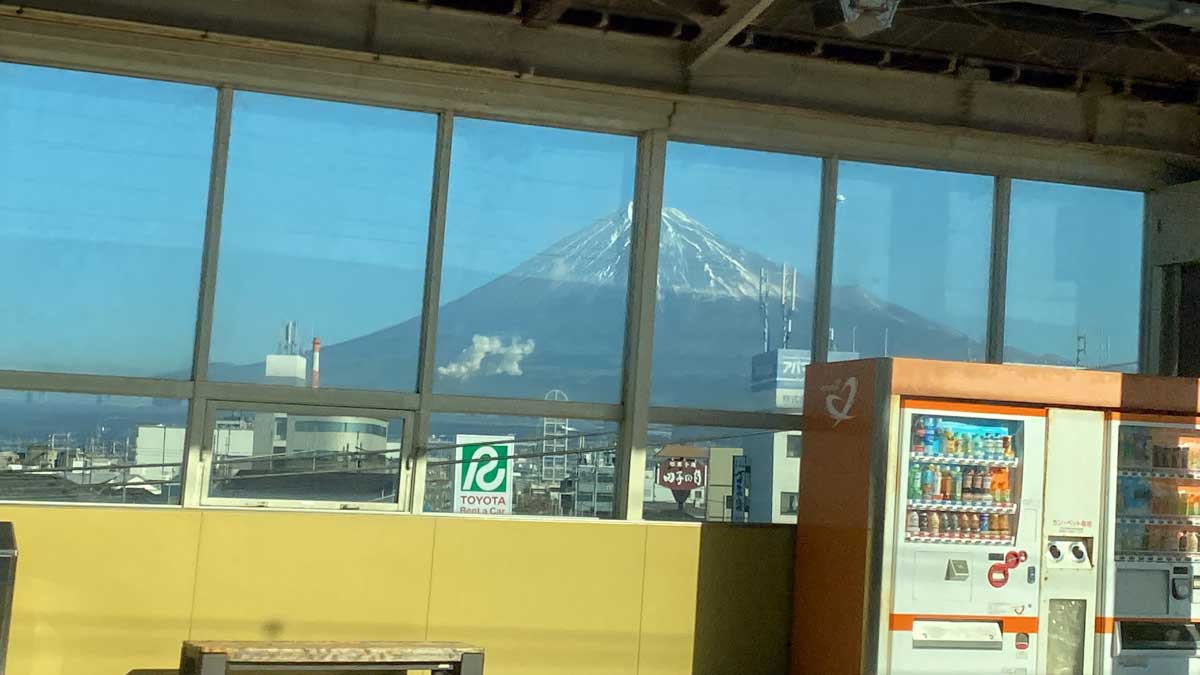
Shin-Fuji Station is the closest station with views of Mount Fuji.
However, only Kodama trains stop there.
For Nozomi trains, the nearest stops are Nagoya and Shin-Yokohama, both quite far away.
For Hikari trains, the nearest stops are Shizuoka and Mishima.
How to book a Shinkansen and hotel package for less
Depending on the Shinkansen departure time, hotel, and travel dates you choose, a Shinkansen-plus-hotel package can sometimes cost less than the round-trip train fare alone.
Search for hotels with JTB
Search for hotels with Nippon Travel Agency
Types of N700-series trains
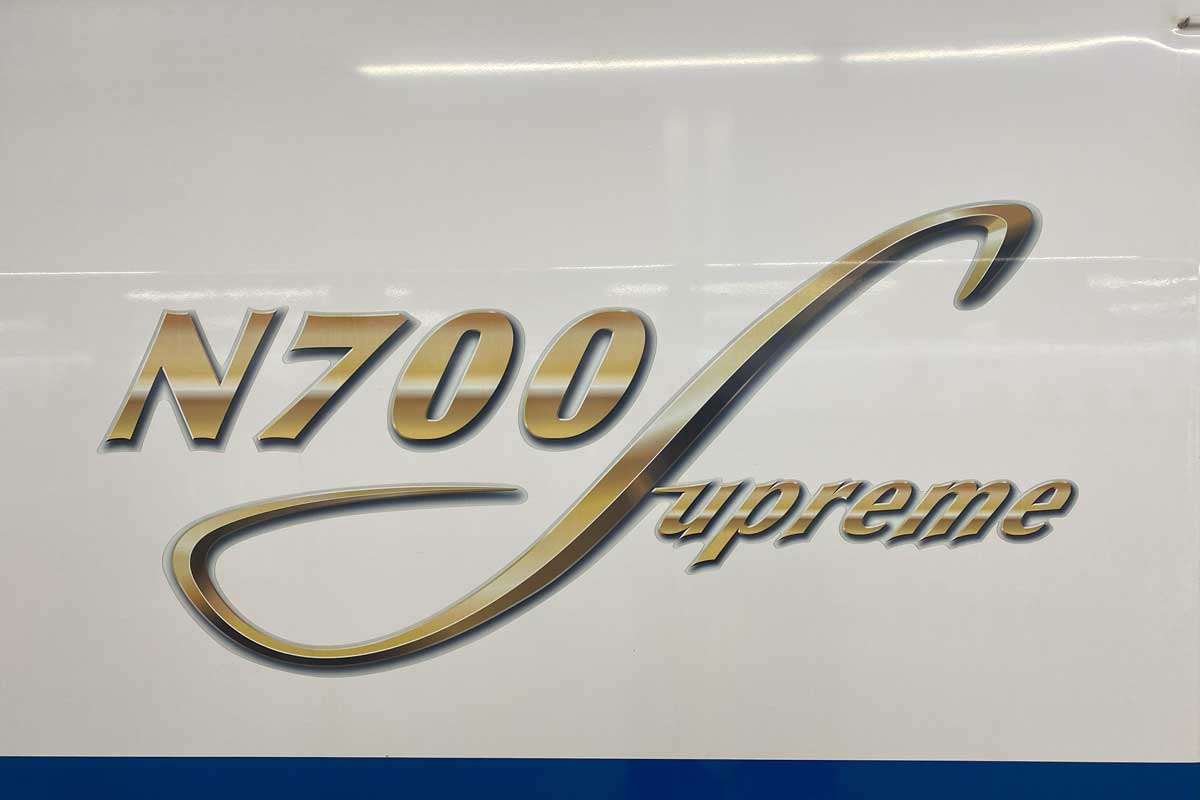
As of 2026, every train used on the Tokaido Shinkansen is part of the N700 series. There are two types: the N700S and N700A.
The newest model is the N700S.
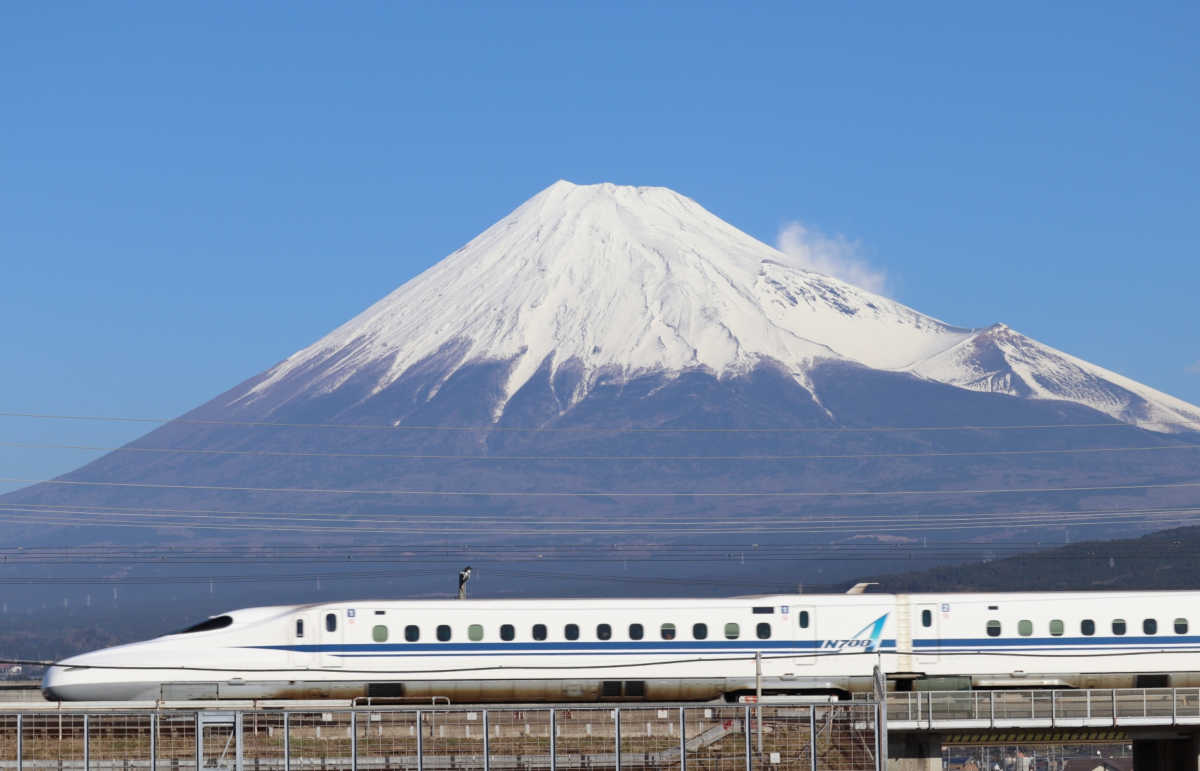
Near the doors on the side of the train, you will see the words “N700 Supreme.”
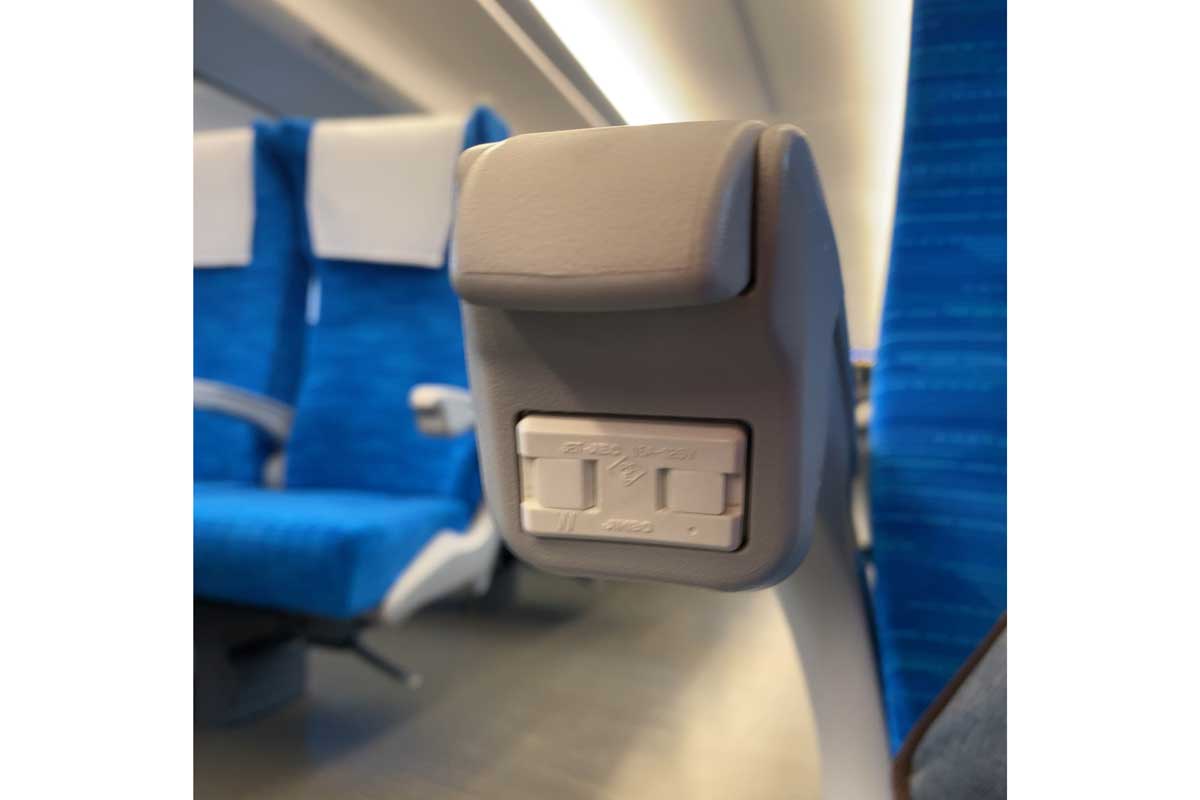
Changes introduced with the N700S include:
- A power outlet at every seat
- Soft indirect lighting throughout the cabin
- Overhead luggage racks brighten as the train approaches a station, making bags easier to notice and helping prevent forgotten items
- Air-conditioning vents are integrated into the side walls and are less noticeable. They are said to help keep the cabin temperature even
- The seat pattern resembles Mount Fuji
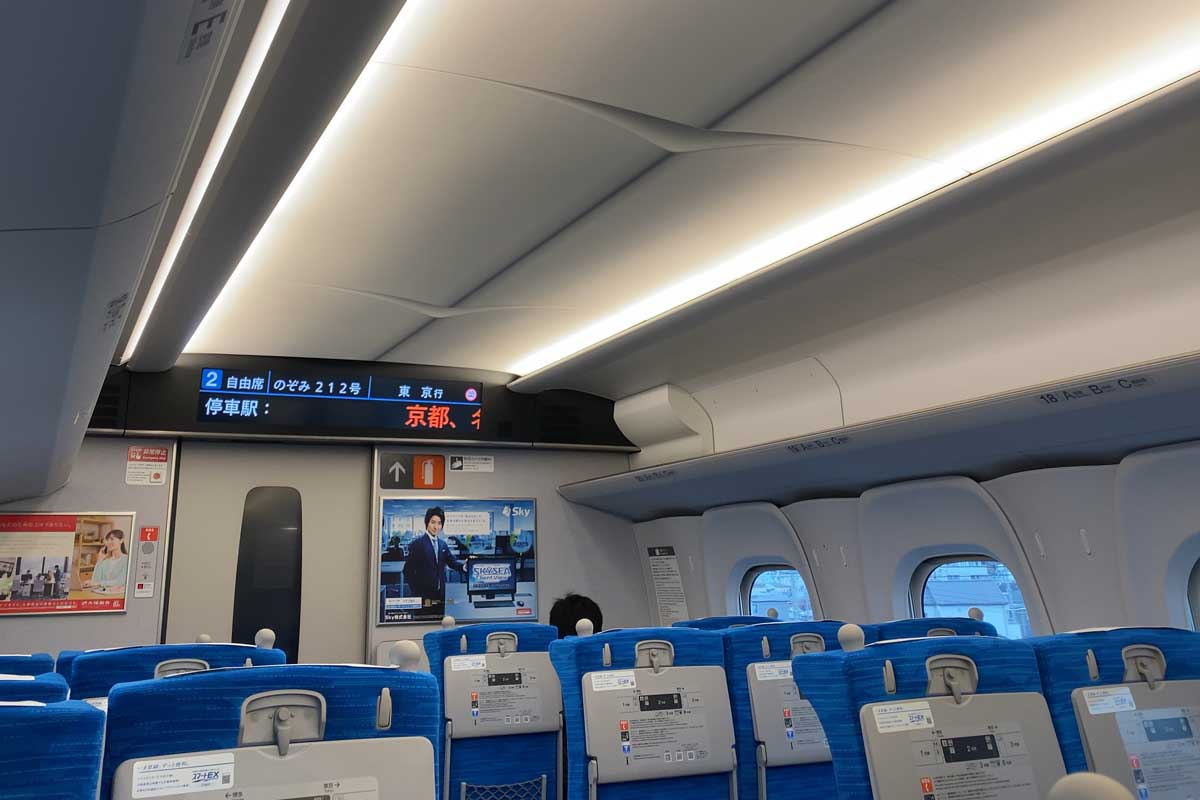
- Onboard information displays changed from LED panels to LCD screens
- The window-side table makes it easier to place a plastic beverage bottle
- It recorded a top speed of 362 km/h. The maximum speed in commercial service is 285 km/h
- A constant-speed control system can make up a delay of about 10 minutes between Shin-Yokohama and Nagoya. This was introduced with the N700A
Is the Mount Fuji side the two-seat side or the three-seat side?
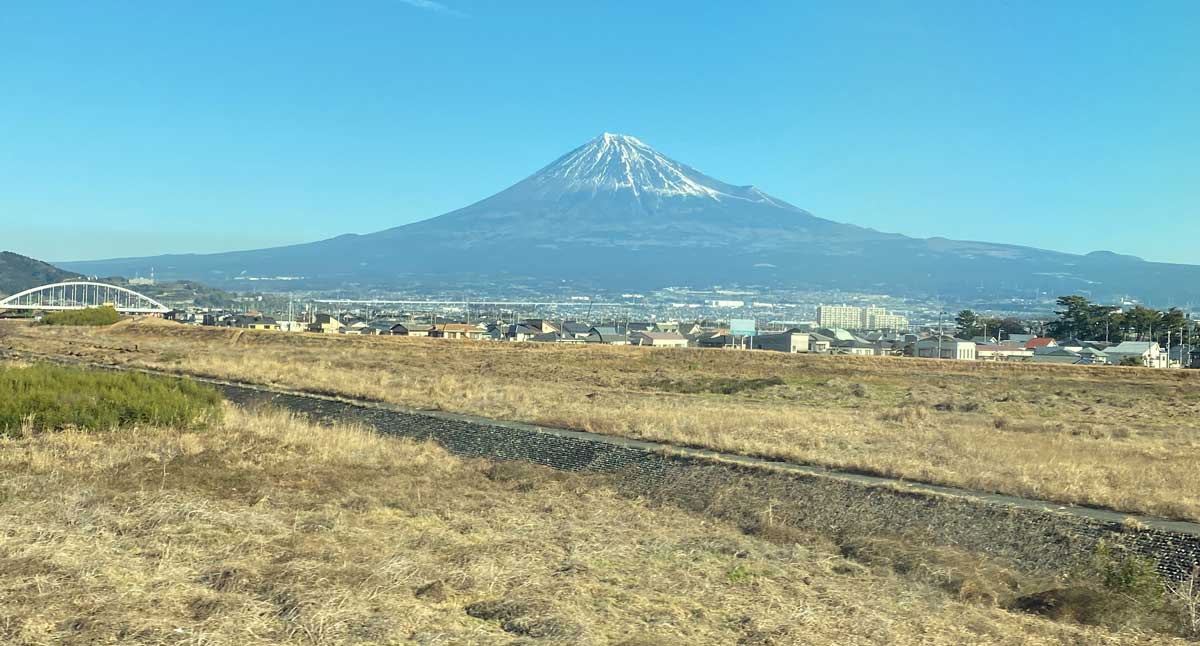
Mount Fuji is generally visible from the two-seat side.
Seats with Mount Fuji views in reserved and non-reserved cars
Seat E, the window seat on the two-seat side, offers the view.
However, on the N700A, power outlets are available at seats A and E, so travelers who want to charge a phone or work on a laptop also target these seats.
Getting an E seat in a non-reserved car is likely to be very difficult when boarding at Kyoto or Nagoya.
Green Car seats with Mount Fuji views
Choose seat D. Green Cars have two seats on each side, so there is no seat E.
Viewing from the area near the doors
If you cannot get an E seat, you can move to a window in the train door as Mount Fuji approaches.
On very clear days or busy trains and travel times, other passengers may also be watching from the vestibule near the non-reserved cars.
One advantage of the vestibule is that it is easier to take photos without worrying as much about your phone’s shutter sound.
Where Mount Fuji can be seen from seat A
Seat A is generally on the opposite, ocean-facing side, so Mount Fuji cannot normally be seen from it.
However, there is a chance to see it for just over 20 seconds on a northbound section.
After passing Kakegawa Station, crossing the large Oi River, and emerging from a tunnel, the mountain comes into view.
Because the summit is about 60 km away, it will not appear very large.
From seat E, it is about 20 km away, so the view from seat A is three times farther.
When Mount Fuji becomes visible
The fastest Shinkansen trip from Tokyo Station to Shin-Osaka Station takes 2 hours 21 minutes as of 2026, while the average is 2 hours 28 minutes.
The fastest time in 2018 was 2 hours 30 minutes, so the journey is now nine minutes shorter, but it is still a long ride.
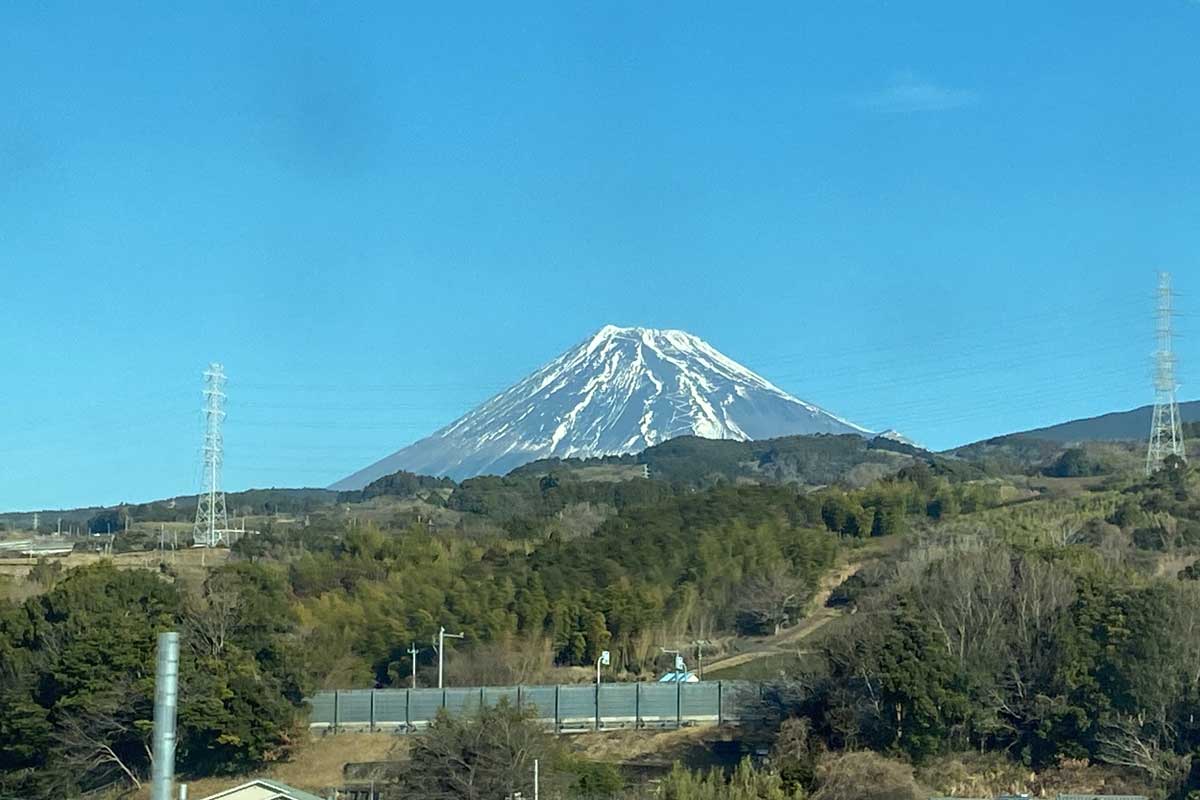
During that journey, Mount Fuji is visible for only about three minutes.
If you are looking at your phone or sleeping, you may have passed it by the time you notice.
Note: The trip from Tokyo Station to Nagoya Station takes 1 hour 33 minutes.
How many minutes after Nagoya Station does Mount Fuji appear?
It becomes visible about 50 minutes after departing Nagoya Station.
How many minutes after Shin-Osaka Station does Mount Fuji appear?
It becomes visible about 1 hour 40 minutes after departing Shin-Osaka Station.
Viewing times from Shin-Osaka and Nagoya
- 1 hour 40 minutes after leaving Shin-Osaka Station
- 1 hour 26 minutes after leaving Kyoto Station
- 50 minutes after leaving Nagoya Station
The timing may vary by about three minutes depending on the type of N700-series train.
How many minutes after Tokyo Station does Mount Fuji appear?
It becomes visible after about 46 to 48 minutes.
Note: You may also see it from farther away after about 30 minutes and at closer range after about 42 to 44 minutes.
Months with more clear days and the best seasons for seeing Mount Fuji
The percentage of days when the entire mountain was visible was:
- January: 59%
- February: 52%
- March: 40%
- April: 36%
- May: 29%
- June: 12%
- July: 8%
- August: 14%
- September: 26%
- October: 40%
- November: 54%
- December: 60%
According to Fuji City, averages from 32 years of data, or about 11,700 days, show that Mount Fuji was completely hidden on roughly 30% of days.
It was clearly visible on 14% of days.
In other words, you may get a beautiful full view only about once in every ten Shinkansen trips.
Visibility varies greatly by season.
Mount Fuji is easiest to see clearly in winter. Even when the whole mountain is not visible, at least part of it can be seen on 70% to 80% of days.
Unless snow is in the forecast, there is a good chance of seeing it.
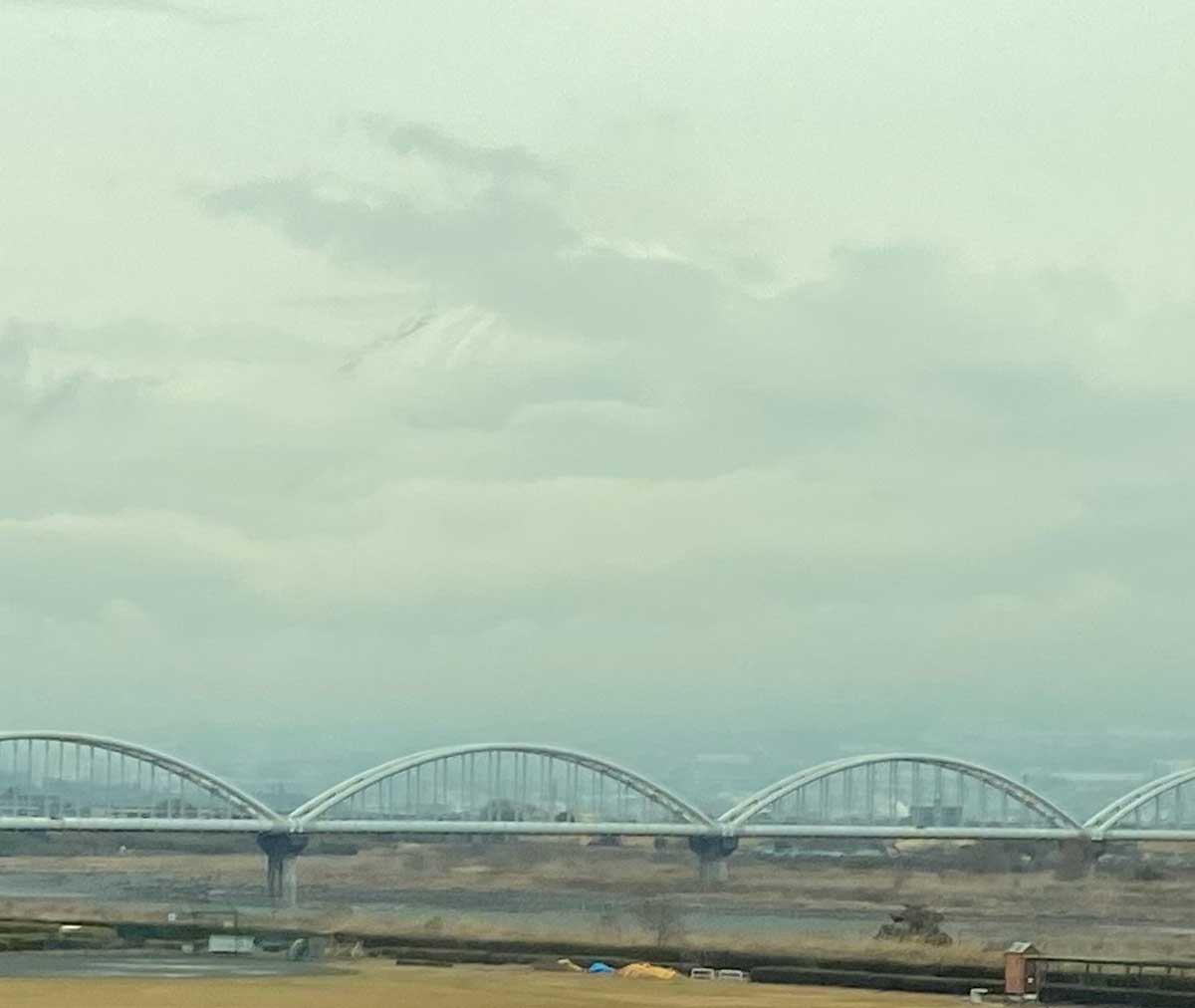
By contrast, the mountain is completely hidden on 60% to 80% of days in June, July, and August, so seeing it is especially lucky.
It may be visible on only two or three days per month during this period.
Mount Fuji visibility records: Fuji City
How do you reach Mount Fuji by Shinkansen?
Get off at Shin-Fuji Station. There are four rental-car offices nearby, so rent a car there.
A drive of a little over one hour will take you to Mount Fuji’s Fifth Station.
For local bus access, the nearest station is Kawaguchiko Station on the Fujikyu Railway.
Get off the Shinkansen at Shin-Yokohama Station and travel for about 3 hours 20 minutes to reach Kawaguchiko Station.
From there, take a local Fujikyu bus for about 50 minutes.
However, only four buses operate each day.

Make the latest USJ and Kansai event updates
easier to find on Google.




![Osaka Temperatures by Month | What to Wear at USJ for Morning-to-Night Temperature Swings [Women & Men]](https://happyell.co.jp/world/wp-content/uploads/2026/08/usj-osaka-temperature-clothingtitle-600x338.jpg)