What This Article Covers
- Highlights and ways to enjoy the Ghost in the Shell Exhibition’s Kansai tour
- Highlights including original artwork from past series, the new anime, and the AR glasses experience
- Essential visitor information, including dates, venue, admission, and opening hours
Where 37 Years of History Meet a Series Airing Right Now: The Essence of Ghost in the Shell Revealed at the Exhibition
Beginning with Masamune Shirow’s manga in 1989, Ghost in the Shell has expanded through films, television anime, 3DCG productions, and the visions of many different creators.
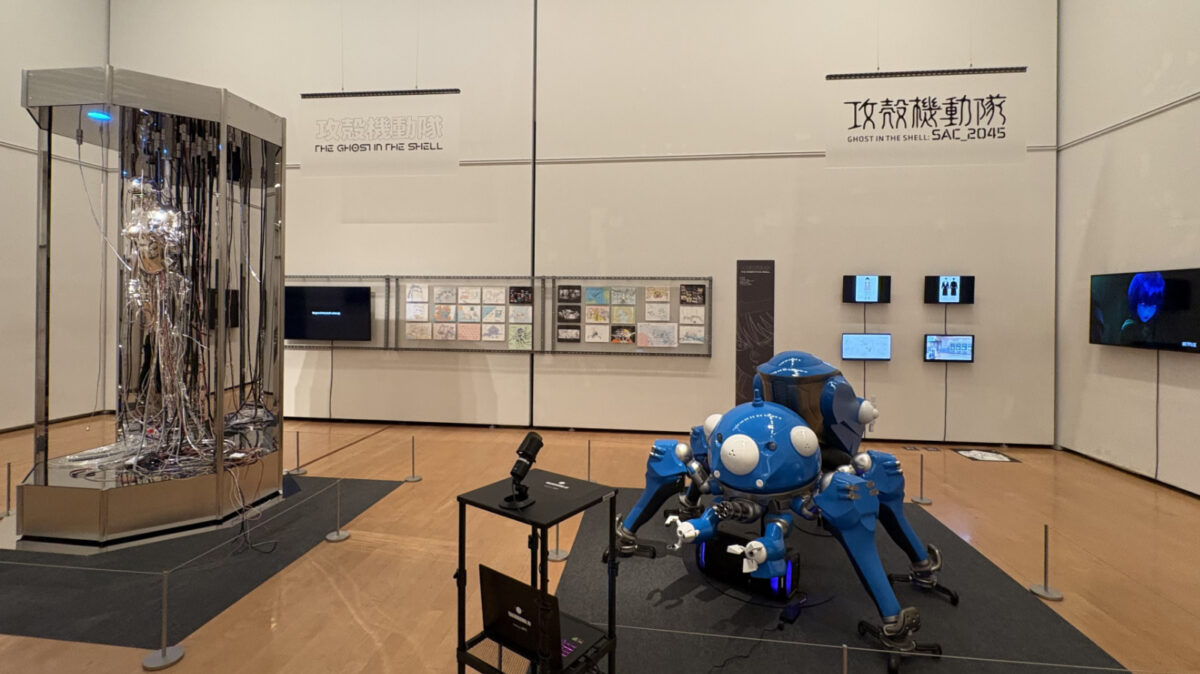
The Kansai touring edition of Ghost and the Shell, an exhibition spanning that history through invaluable production materials, opens at the Hyogo Prefectural Museum of Art.
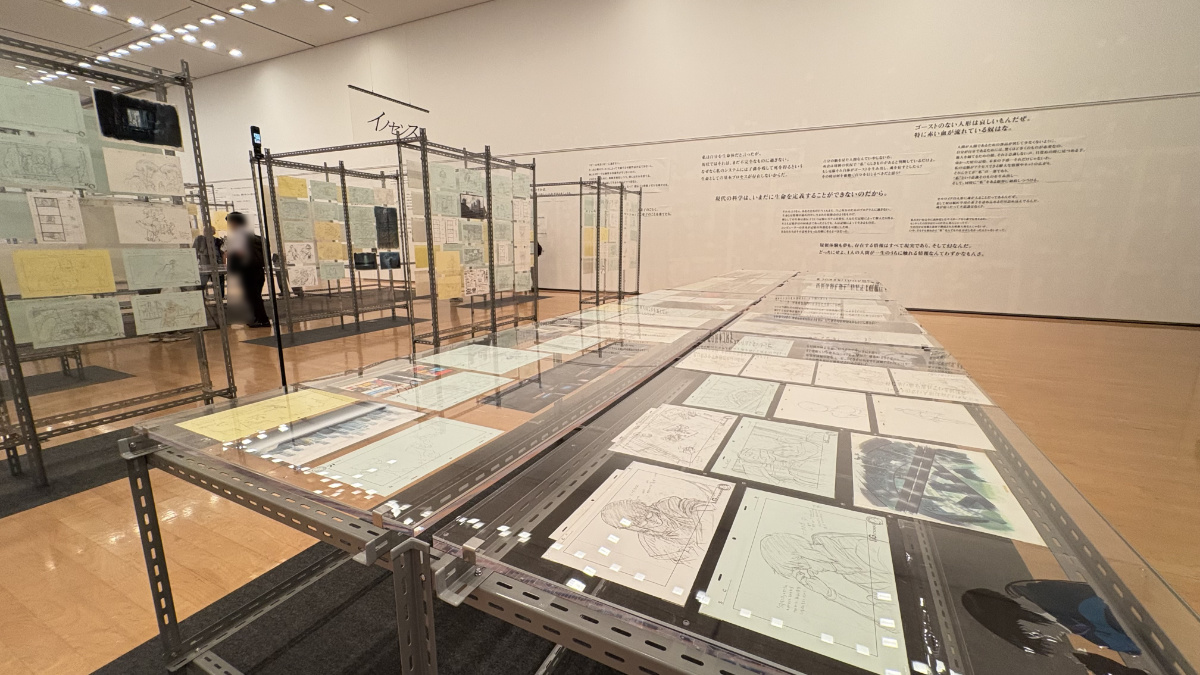
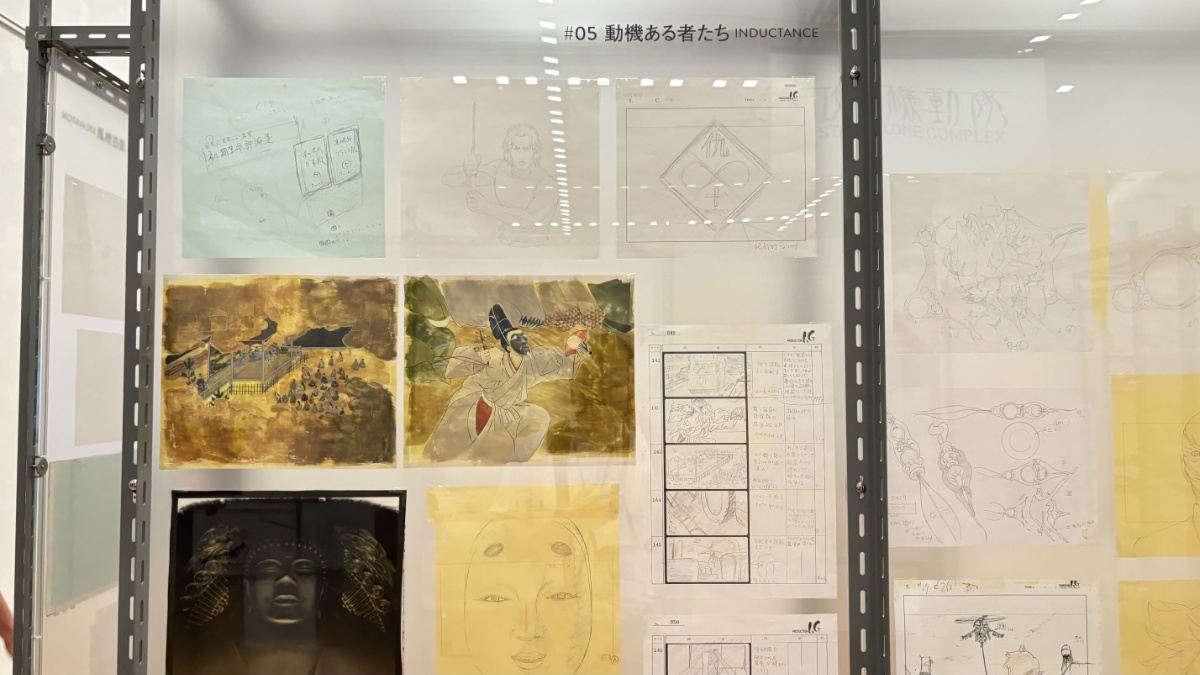
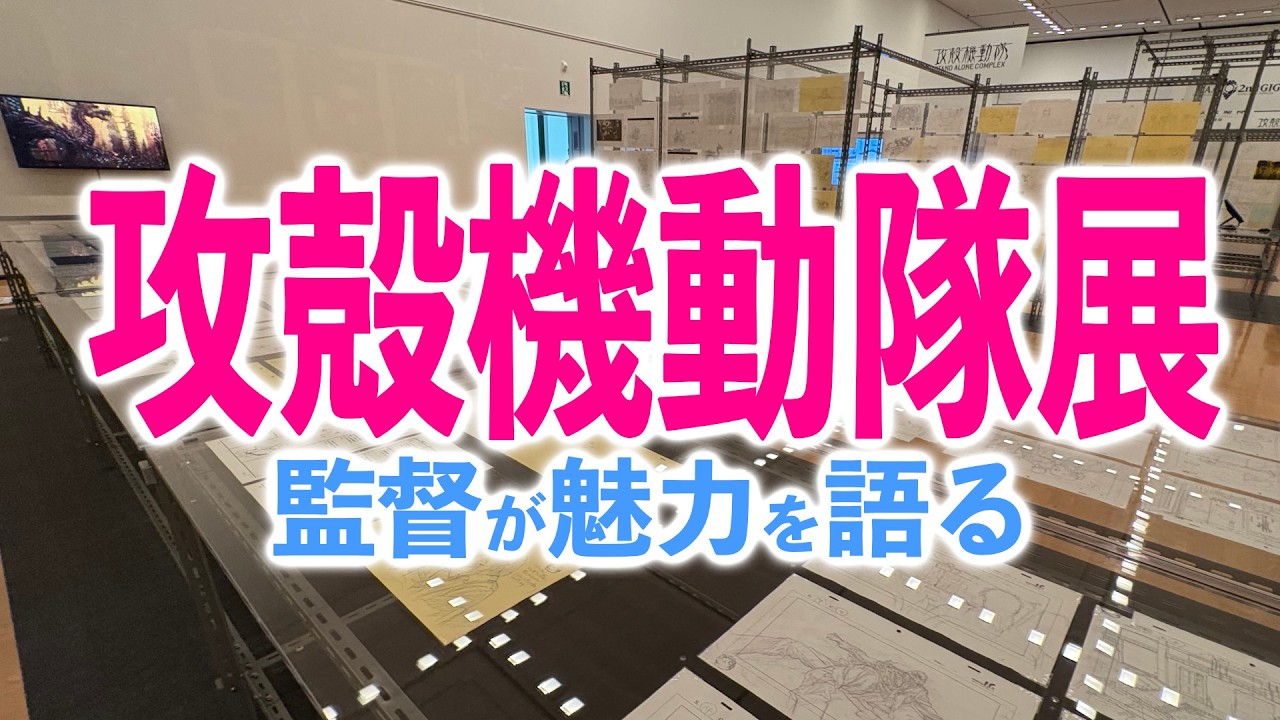
The venue is filled with a vast collection of materials created during animation production, including design documents, original drawings, and storyboards.
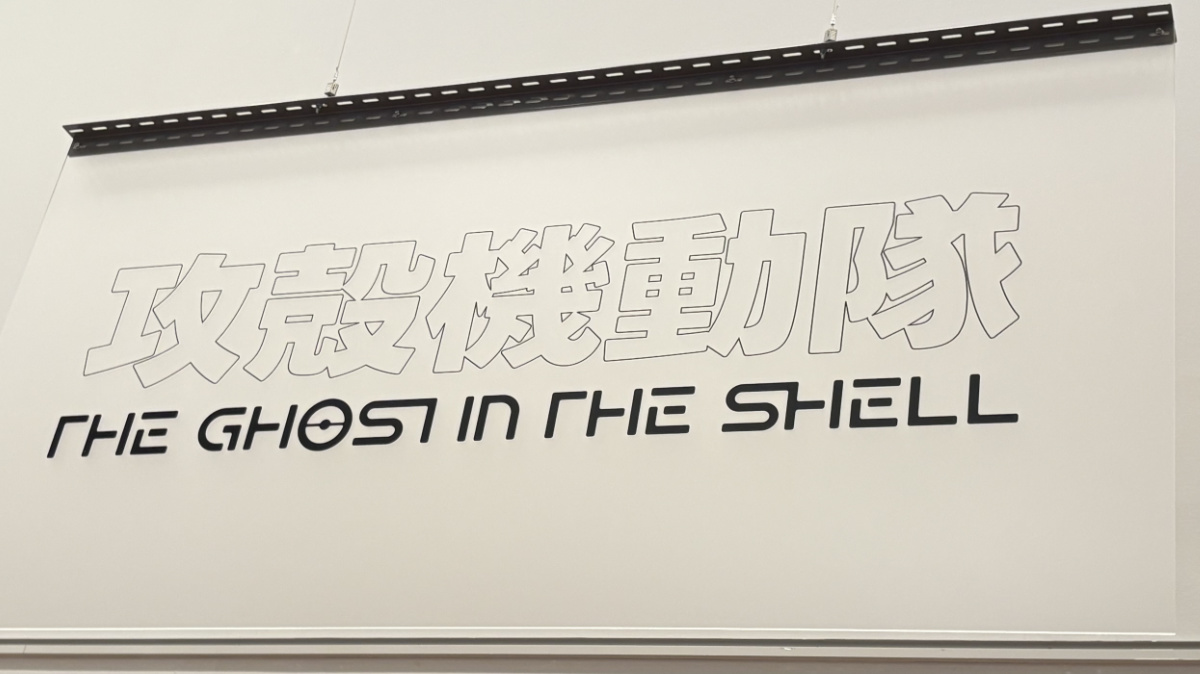
The Kansai venue also adds a new section on the TV anime Ghost in the Shell: THE GHOST IN THE SHELL, which began airing on July 7, 2026.
One of this edition’s biggest attractions is the chance to view original drawings actually used in the currently airing series alongside materials from earlier installments.
At the press preview, the speakers were Moko-chan, director of the new anime; Daichi Sasa, producer at Kodansha; and Isao Kuwana, Mori Building’s executive director overseeing production of the exhibition.
They discussed the appeal of Ghost in the Shell as it has been passed down for 37 years, and why holding this exhibition now is meaningful.
Materials from Every Animated Series Gathered in One Place
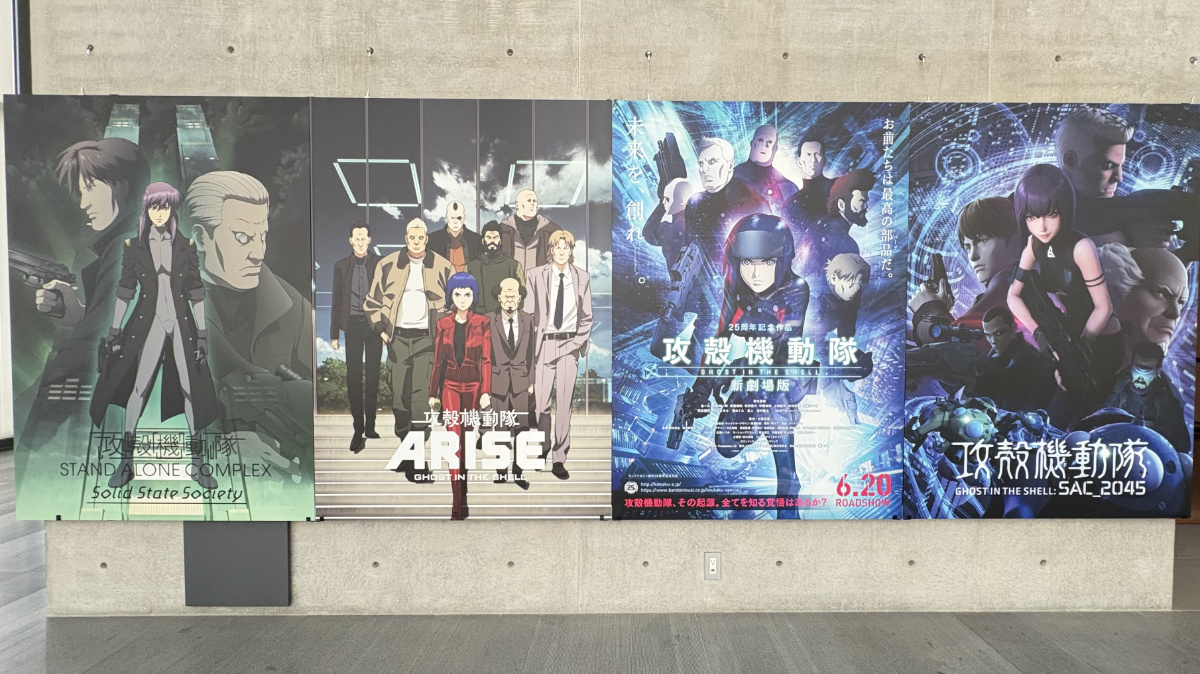
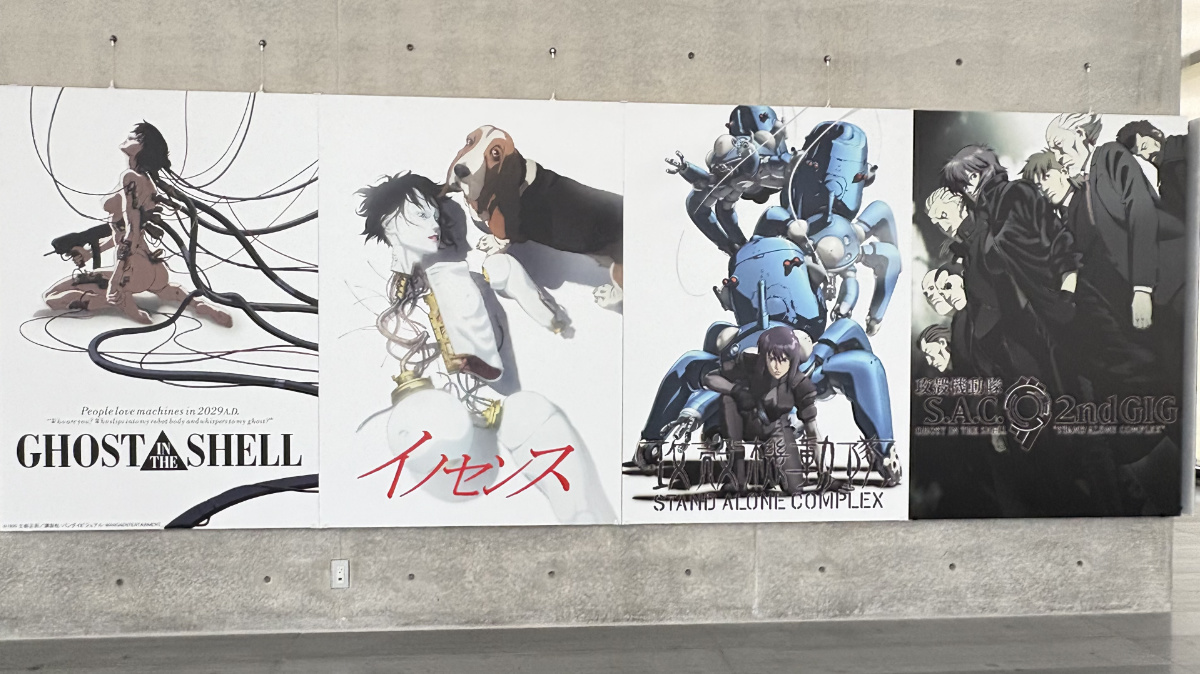
This major exhibition offers a sweeping look across the animated history of Ghost in the Shell.
Visitors can closely examine materials that shaped each work, including Mamoru Oshii’s GHOST IN THE SHELL, Kenji Kamiyama’s Ghost in the Shell: STAND ALONE COMPLEX, chief director Kazuchika Kise’s Ghost in the Shell: ARISE, and Shinji Aramaki and Kenji Kamiyama’s Ghost in the Shell: SAC_2045.
More than 600 items have been assembled from across the franchise.
They reveal what finished footage alone cannot: the trial and error behind characters’ expressions and movements, and the intentions of the directors and animators.
Executive Director Kuwana explained that he did not want the exhibition to be merely a retrospective of past series.
The futures imagined in 1989—cyberbrain augmentation, prosthetic bodies, artificial intelligence, and a networked society—can no longer be dismissed as pure fantasy.
As reality moves closer to the future portrayed by the work, revisiting Ghost in the Shell changes what we take from it.
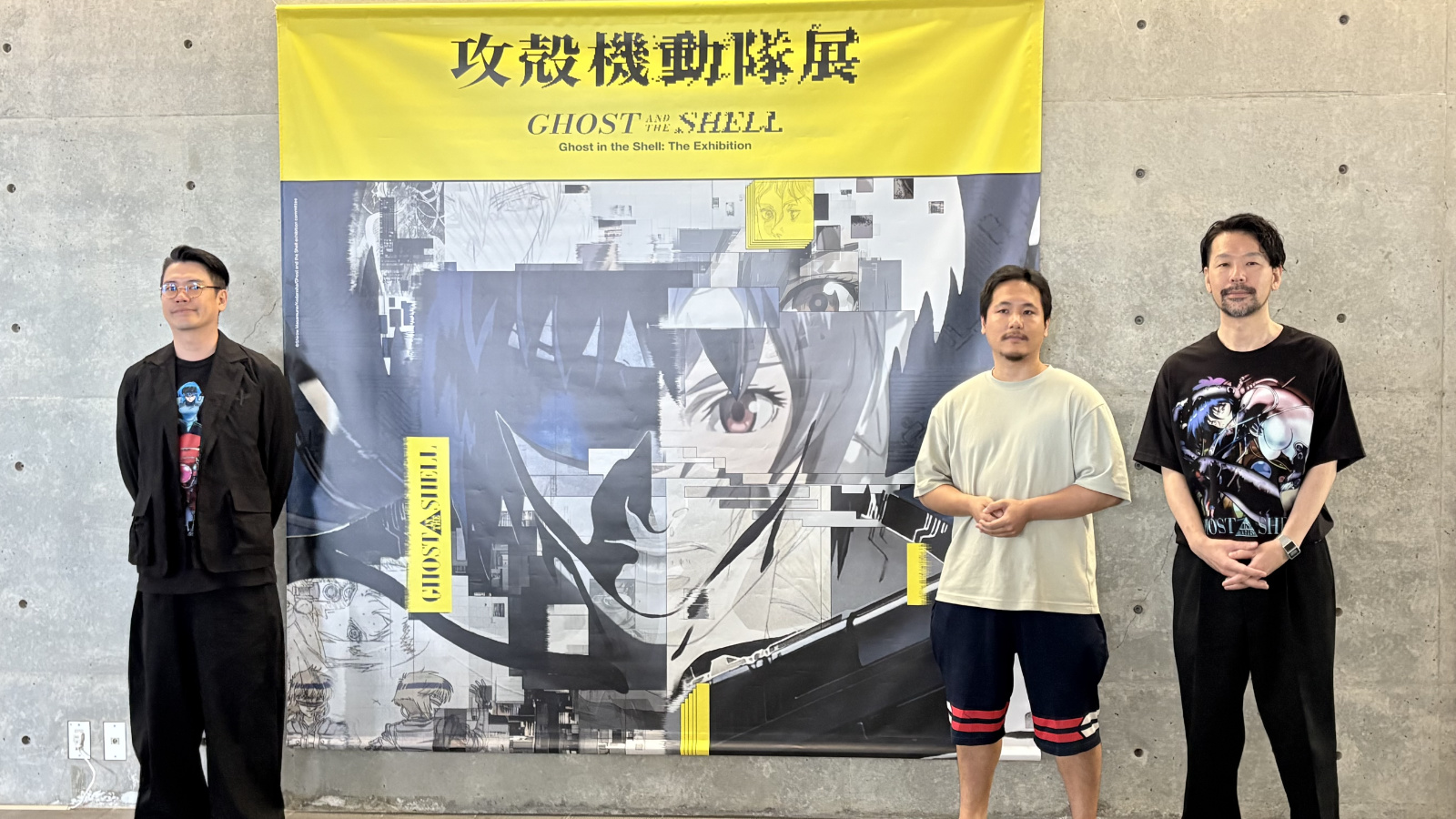
“As I grow older and society changes, looking back at the words in the work always makes them feel current.”
That is how Executive Director Kuwana described the enduring power of the words preserved throughout the series.
The venue also displays memorable lines that symbolize each installment.
A line different from the one that moved you before may now stay with you. The way Ghost in the Shell changes with each viewer’s experiences and the state of society is part of its unique appeal.
See Original Drawings from the Currently Airing Anime Up Close
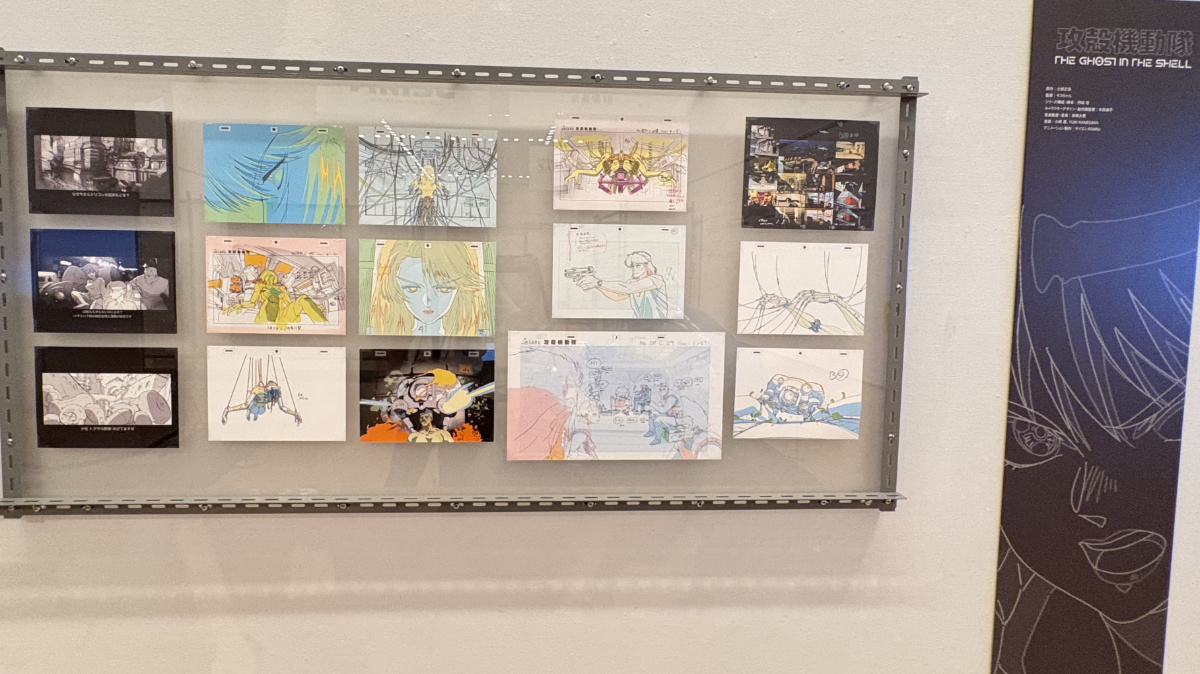
A special highlight of the Kansai touring exhibition is the section devoted to the TV anime Ghost in the Shell: THE GHOST IN THE SHELL.
This new series is produced by animation studio Science SARU. It is Moko-chan’s first television anime as director and presents a new Ghost in the Shell that stays close to the original manga.
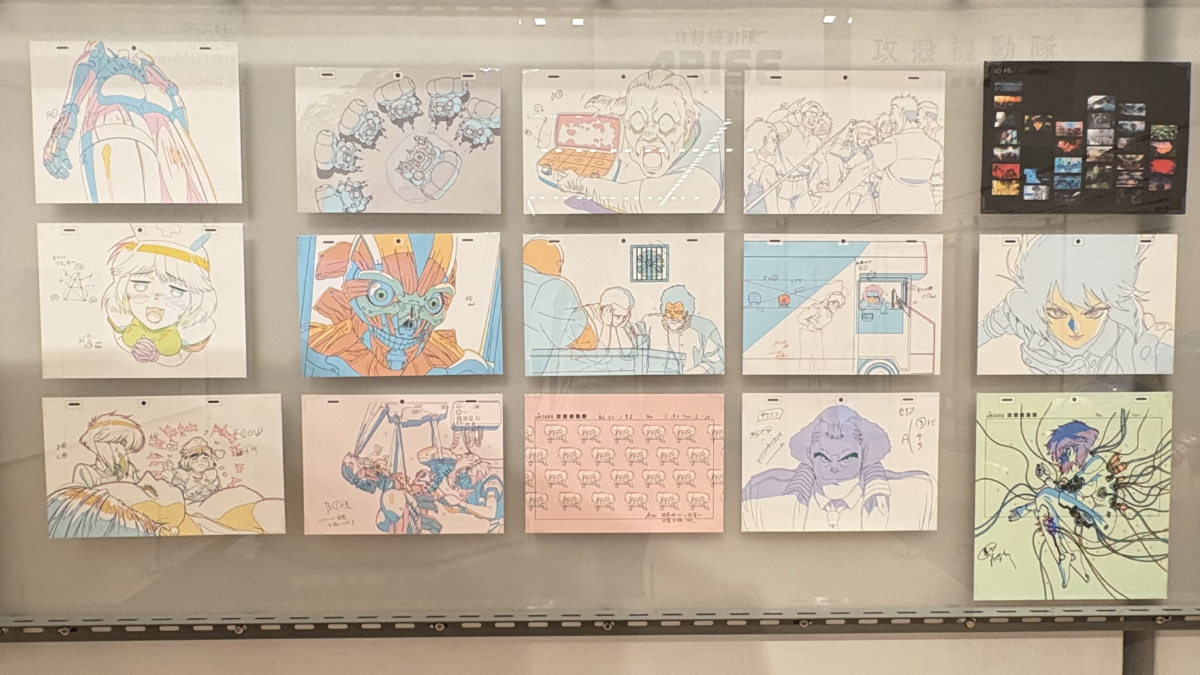
The venue displayed original drawings and production materials used in episodes that had only just aired.
Character movements that flash by in an instant onscreen can be studied as original drawings, letting you appreciate the force of each line and even subtle changes in expression.
Seeing the production materials immediately after watching the anime adds another layer of enjoyment: “So this scene began with lines like these.”
After seeing materials from her own work displayed beside those of earlier series, Director Moko-chan said she was surprised and newly aware of the long history behind Ghost in the Shell.
“Seeing materials from the anime we were making until just recently displayed alongside the previous series made me realize the breadth of the Ghost in the Shell IP, and the length and depth of its history.”
Because the work has only just been completed, she said the sensations of production are still so vivid that even she finds it difficult to view the materials objectively.
The opportunity to see materials that still carry the energy of the creators working on an anime currently on the air is an experience unique to an exhibition held at this moment.
Some of the displays related to the new anime are scheduled to be rotated during the exhibition period.
Different materials will be shown depending on when you visit, offering a reason to return while following the broadcast rather than coming only once.
Different Directors, Different Visions of Ghost in the Shell
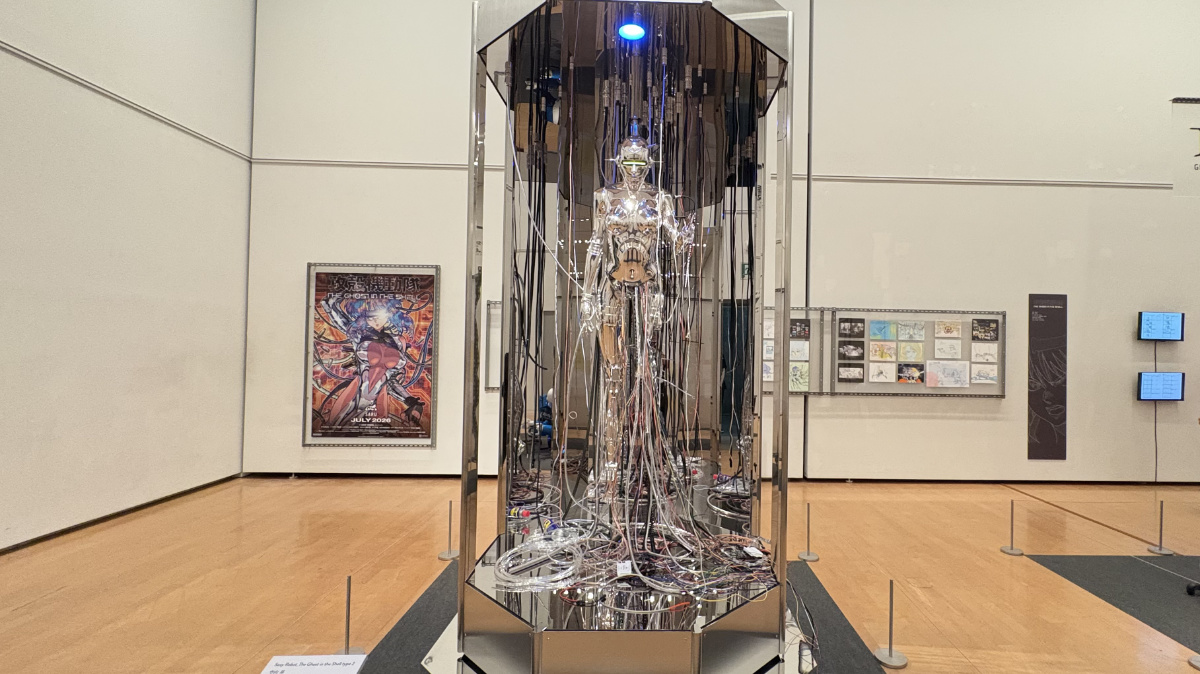
Although every version of Ghost in the Shell is based on the same original work, its style and interpretation of the story vary greatly by director and production team.
Some installments present weighty imagery and philosophical questions; others explore society and politics through the investigations of Public Security Section 9; still others focus on character relationships and new beginnings. Each has its own identity.
Producer Sasa said this diversity is one reason the series has continued for 37 years.
Creators in each era have depicted Ghost in the Shell through their own interpretations, while fans have watched, analyzed, and deepened their own readings.
Rather than delivering answers one-sidedly, the work expands as viewers think about it. The accumulation of those interpretations has shaped Ghost in the Shell as it exists today.
Director Moko-chan likewise cited its “complexity that cannot be summed up in a single phrase” as part of the appeal.
“I believe the work has grown not only through its creators, but through fans interpreting and critiquing it. I look forward to everyone discovering what kind of appeal the new series has as well.”
Even when some parts feel difficult, you do not have to understand everything before enjoying it.
Enter through whatever catches your attention—the visuals, music, action, or conversations between characters—and consider the meaning later. That freedom is another part of Ghost in the Shell’s appeal.
A New Series Faithful to the Original, Created for a Younger Generation
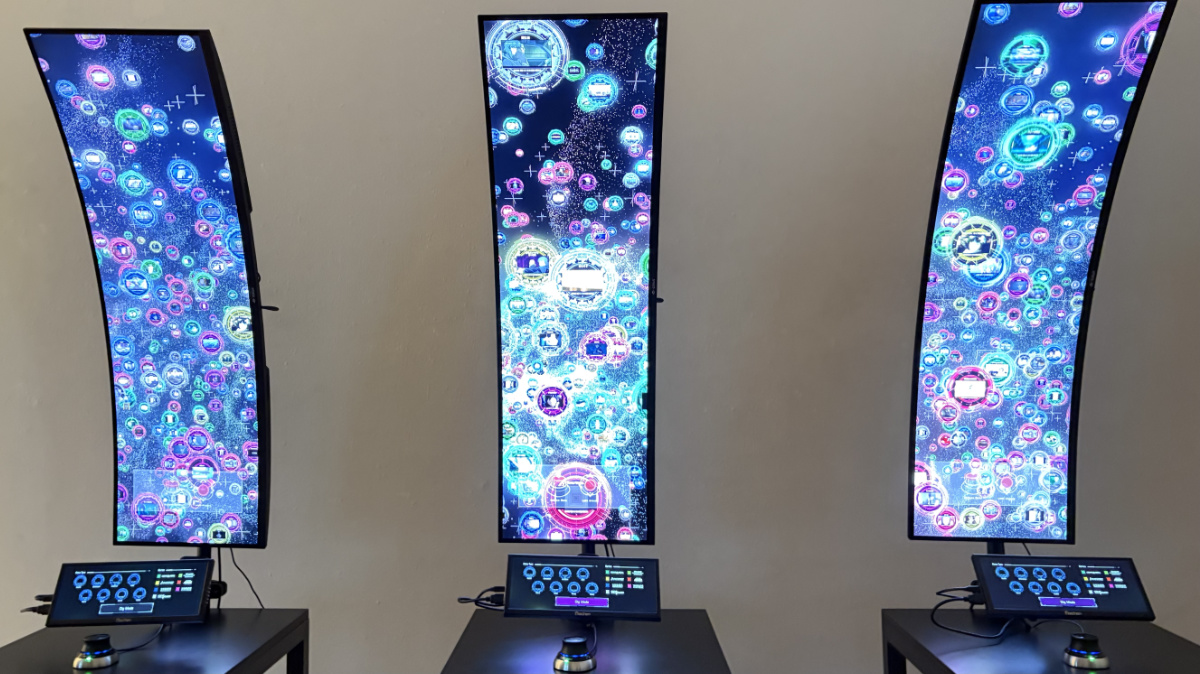
The new anime Ghost in the Shell: THE GHOST IN THE SHELL is being produced as a fresh 2026 animated work, with Masamune Shirow’s original manga serving as one of its central foundations.
Director Moko-chan said she wanted younger viewers who had never encountered Ghost in the Shell before to watch it.
At the same time, not explaining the story more plainly than necessary is part of the aesthetic Ghost in the Shell has inherited.
“Some parts may be a little difficult to follow, but that is also part of the work’s character. Even if you do not understand everything, it is completely fine to watch simply because it feels interesting or fun.”
The series opens a door not only for longtime fans, but also for first-time viewers.
At the same time, it leaves room for viewers to think and interpret for themselves.
While inheriting the history of a franchise that has continued for 37 years, the new work can also be seen as a fresh start for the next generation.
Tracing the Creators’ Thinking Through the Lines Before They Became Finished Animation
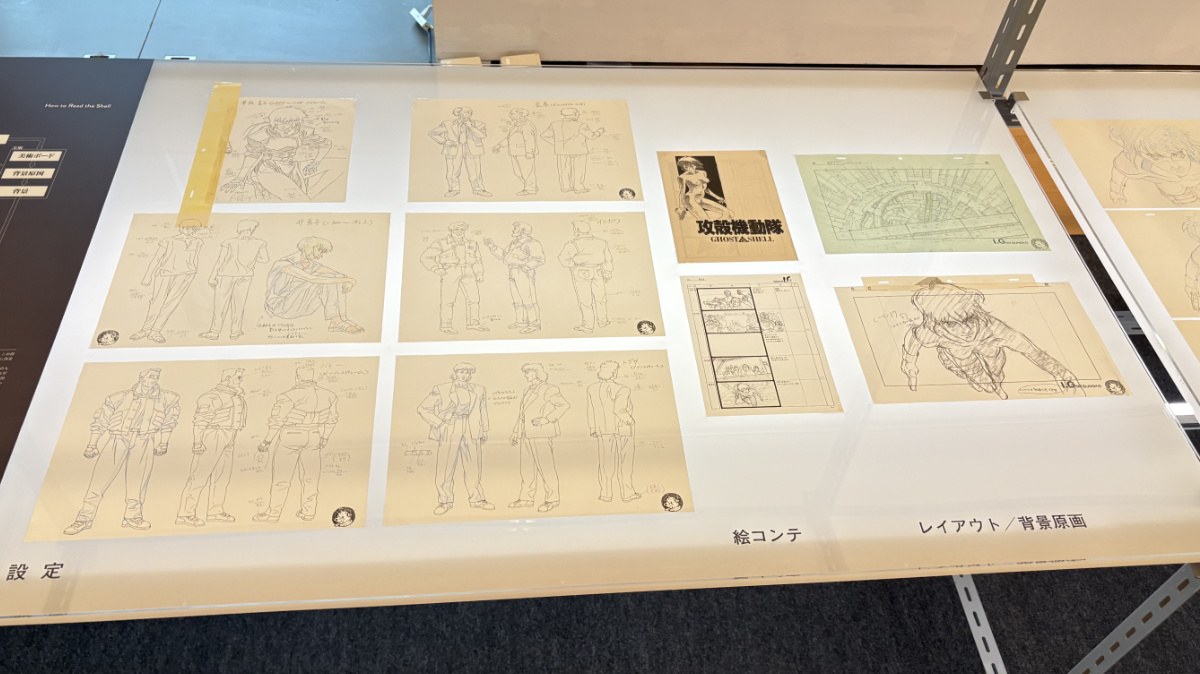
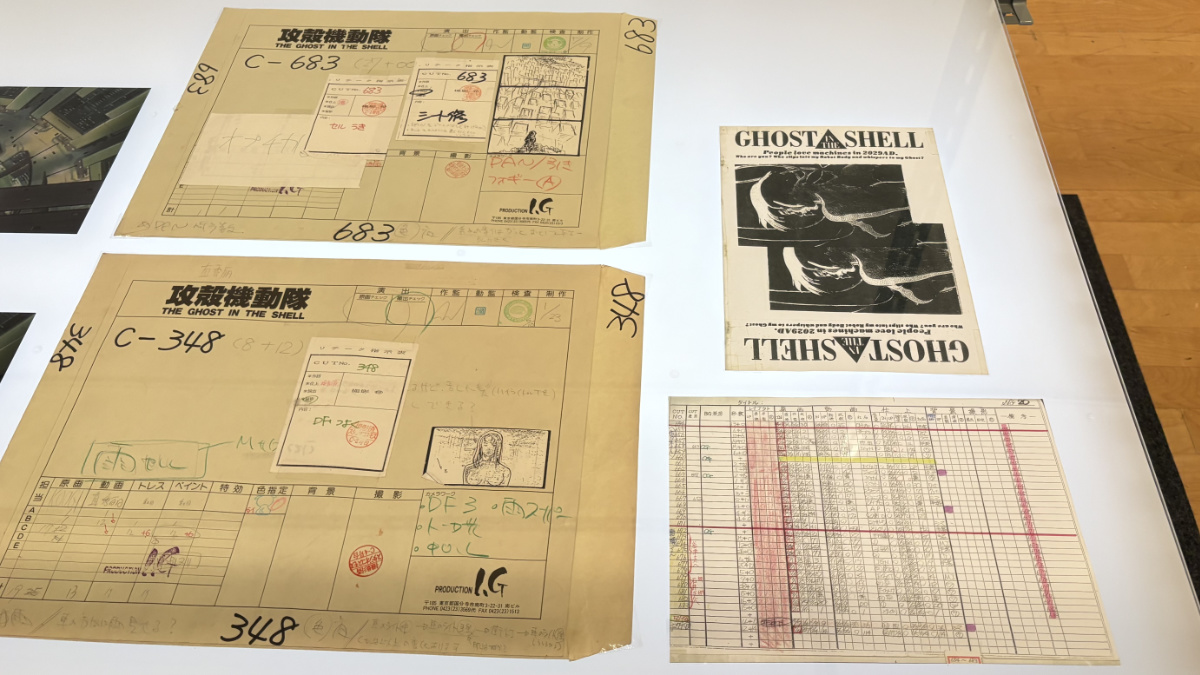
The original drawings, storyboards, and design materials are among the displays worth taking time to examine.
Animation seen on television or in theaters is completed by layering lines drawn by many staff members, then adding color, backgrounds, sound, and performance.
Original drawings, however, preserve movements of the artist’s hand that become harder to see in the finished footage.
A character’s center of gravity while running, the instant a gaze shifts, the movement of clothing and hair, and the structure of firearms and prosthetic bodies all remain visible.
Looking through the sheets one by one reveals the immense accumulation of design and expression behind scenes you may once have watched casually.
People following the new anime in particular should feel the intensity of the production floor more strongly by viewing the original drawings while their memory of the footage is still fresh.
Those who have not yet seen the new series may also find that viewing the materials first sparks an interest in its characters and world.
Experience a “Cyberbrain Sensation” Through AR Glasses
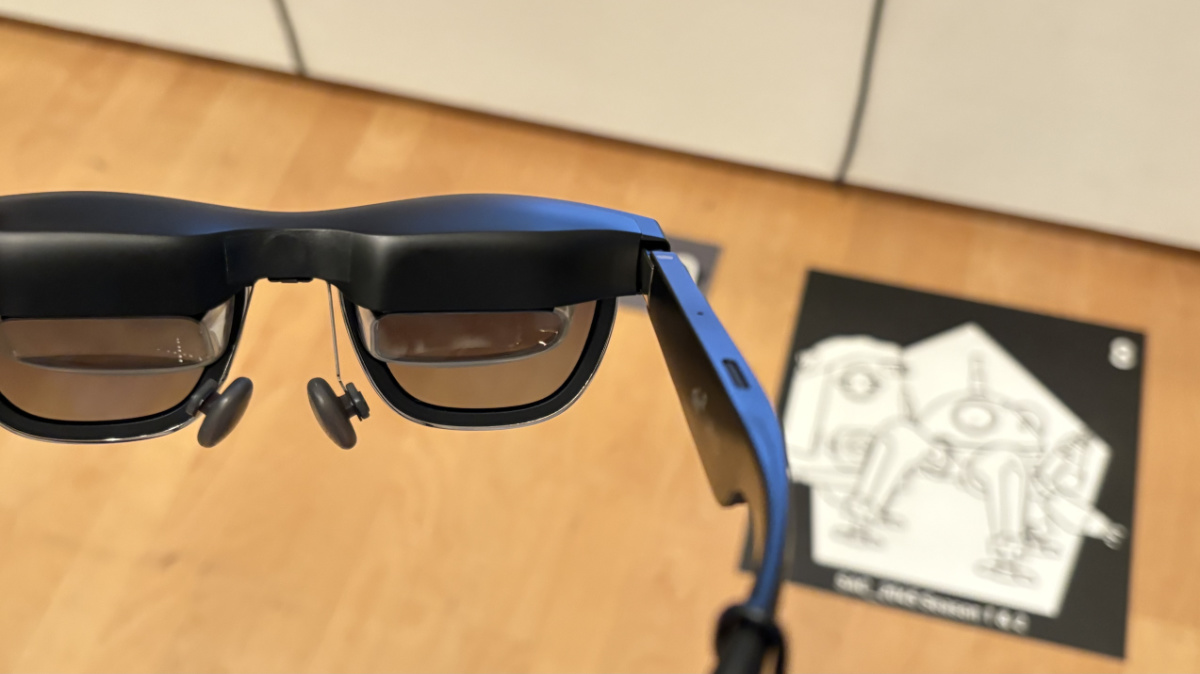
The venue offers not only materials to view, but also exhibits that let visitors experience the world of Ghost in the Shell.
When you put on the AR glasses, digital information overlays the real exhibition space, creating a simulated taste of the cyberized perception portrayed in the series.
The experience blurs the boundary between the real scene and digital imagery, echoing the work’s question: “Where does reality end, and where does information begin?”
This exhibition-only installation lets visitors who were once merely observers feel as though they have stepped into a cyberized society themselves.
AR Glasses Experience
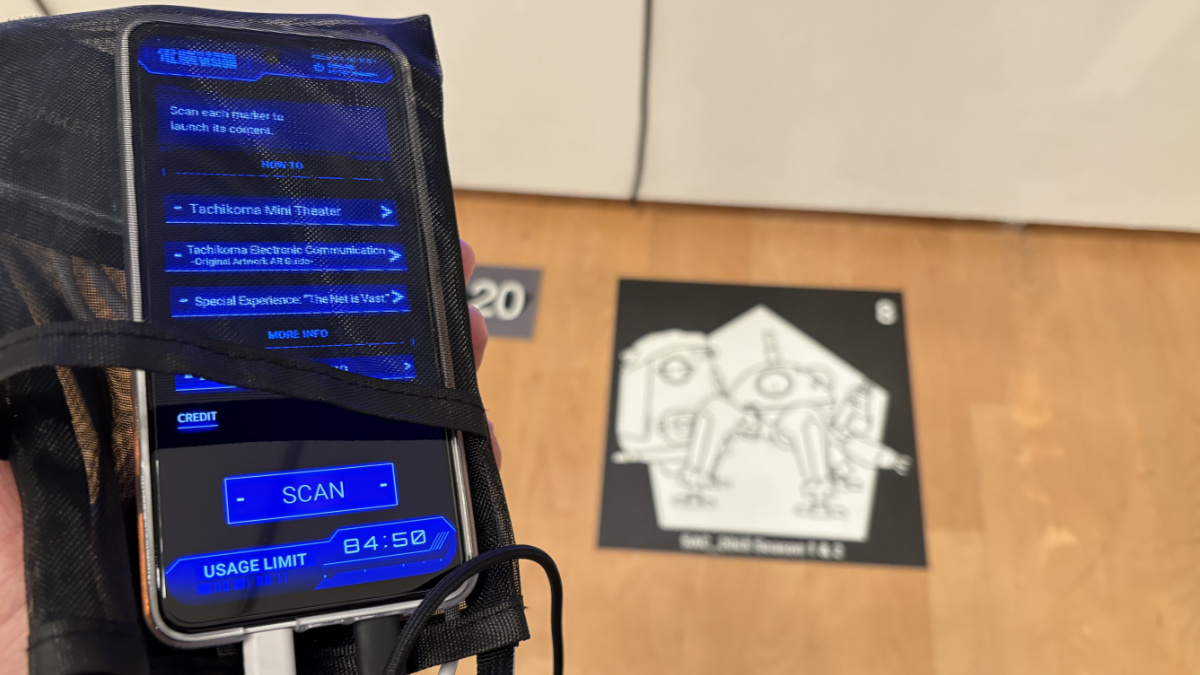
Put on the AR glasses and tap the SCAN button on the smartphone. A scanning display then appears overlaid on the real world in front of you.
Read the marker drawn on the floor to begin the experience.
The direction you should move is shown within the space.
When several cyber-experience points are available, multiple routes appear.
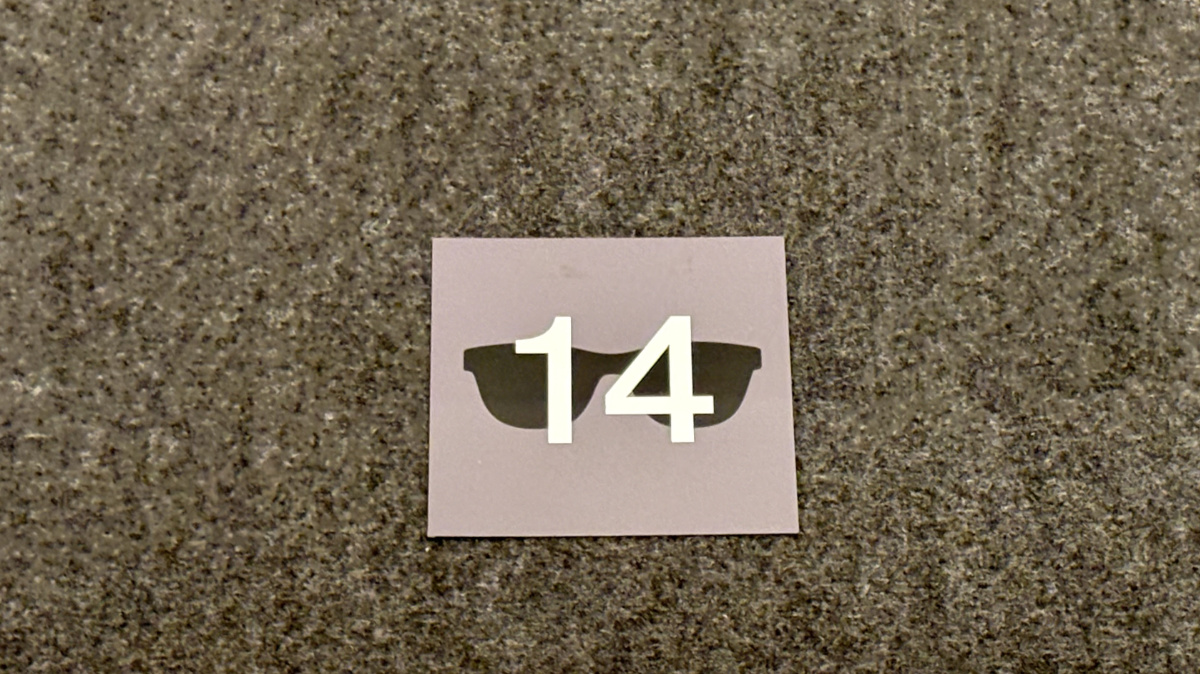
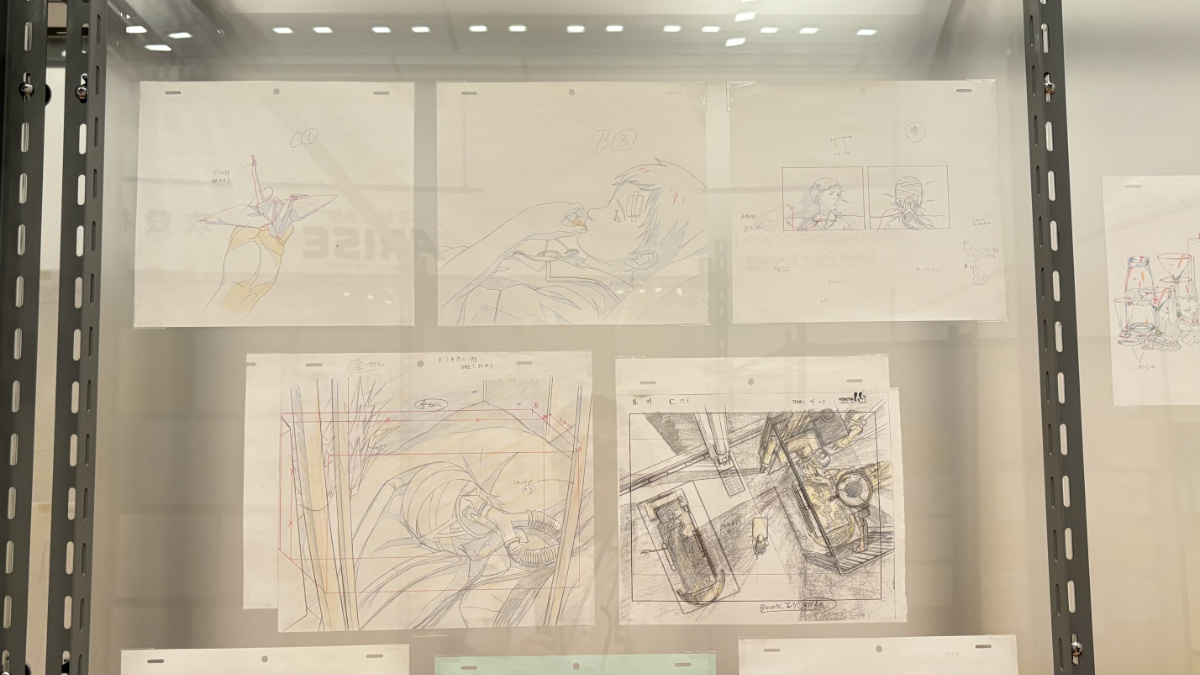
As you follow the route, actual works in the exhibition also appear in cyberspace. Look at one for about three seconds and, remarkably, you can watch the anime scene that used the original drawing.
This was the first exhibition I had experienced where the transformation from original drawing to animated footage could be viewed so seamlessly.
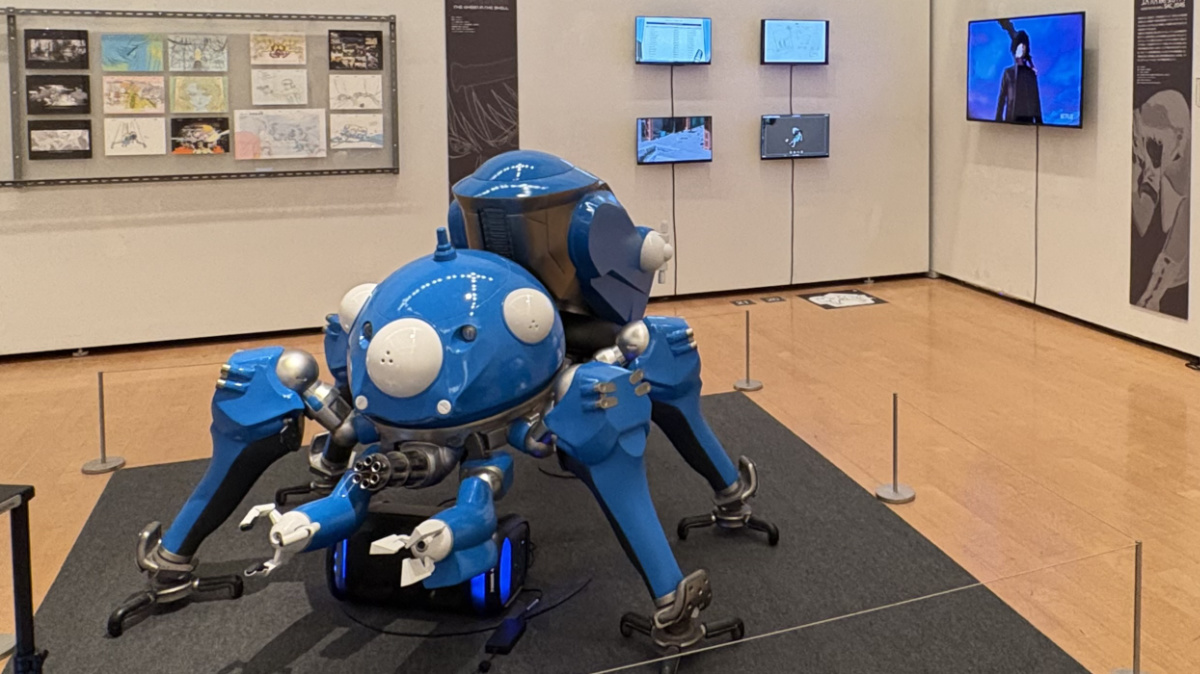
Tachikoma, the blue robot, guides you through the experience.
Merchandise Is Part of the Exhibition Experience, Too
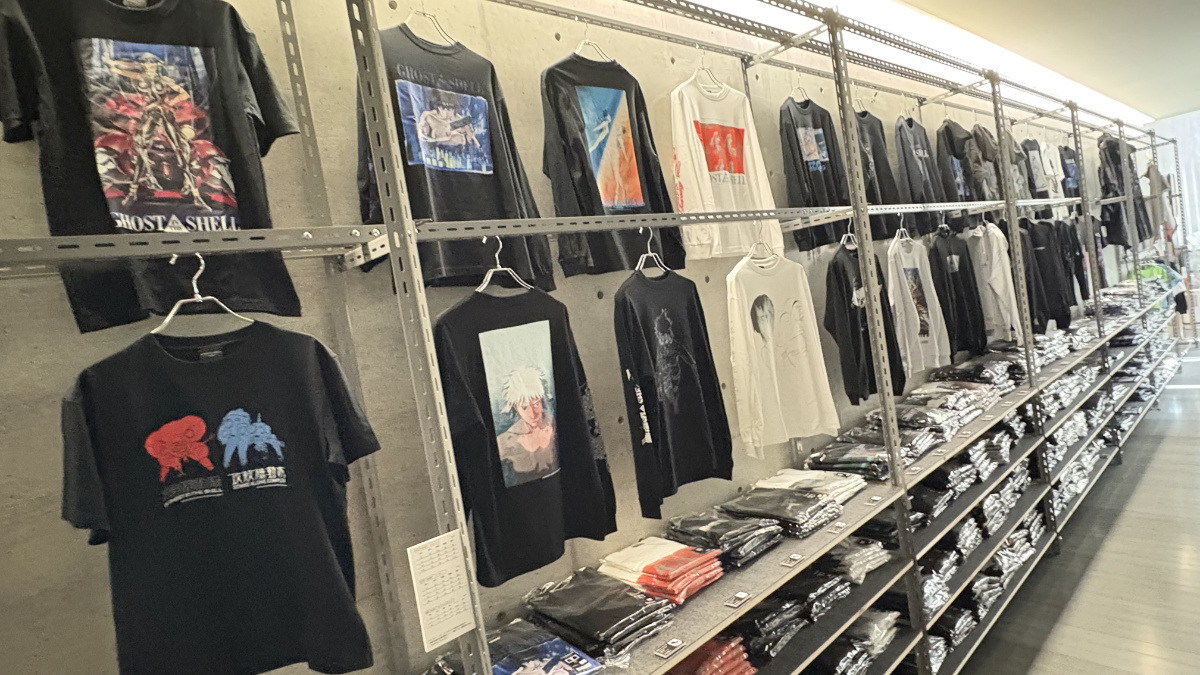
At the end of the exhibition, visitors will find collaborative merchandise from a wide range of brands.
According to Producer Sasa, the exhibition has partnered with around 40 brands to offer more than 60 products.
Alongside items inspired by earlier installments, merchandise related to the currently airing new anime is also available.
There is an especially broad selection of fashion items, including T-shirts, and comparing how each brand interprets Ghost in the Shell is another way to enjoy the shop.
Producer Sasa encouraged visitors to enjoy shopping as part of the overall value of the exhibition experience.
An Exhibition with New Discoveries on Every Visit
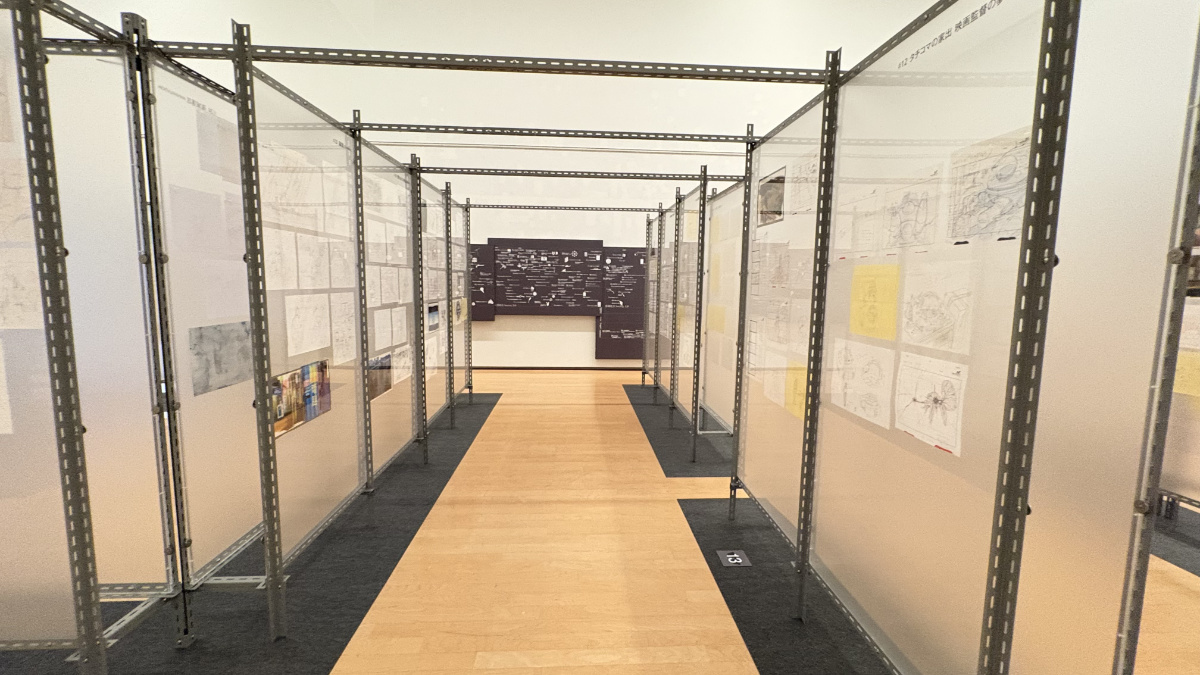
It is not easy to fully absorb the enormous volume of materials in a single visit.
But that is not a flaw; it is part of the exhibition’s appeal.
Executive Director Kuwana said the goal was to create an exhibition worth enjoying repeatedly, just as Ghost in the Shell reveals something new each time you watch it.
On your first visit, focus on your favorite series.
Next time, study the original drawings and storyboards closely.
Then return after watching more of the new anime to see the added or rotated displays.
Changing your perspective with each visit may reveal different meanings in the same materials.
What Will We See as We Approach the 2029 Imagined by the Work?
The original manga is set in Japan in 2029.
The exhibition takes place in 2026, only three years before that era.
Now that artificial intelligence has entered daily life and work, and online identity, memory, and the reliability of information have become social issues, the questions raised by Ghost in the Shell feel more real than ever.
If a body is replaced by machinery, is that person still the same human being?
When memories are manipulated, how can you prove who you are?
In a society where knowledge and consciousness connect through networks, what is an individual?
What is a “ghost”?
And how far does the “shell” extend?
Looking back at materials from the past works is not merely a journey through anime history.
It leads us to consider our own society and what it means to be human today.
Ghost and the Shell brings the currently airing anime and 37 years of past series together in one venue for the first time.
It promises to be a valuable opportunity to enter this world, both for longtime fans and for people who have never seen Ghost in the Shell.
Ghost and the Shell Exhibition Highlights
Newcomers Can Start with Whatever World Catches Their Interest
Ghost in the Shell is not a franchise you must watch entirely in release order to understand. You can choose a work based on the character designs, visuals, music, or mecha that caught your attention at the exhibition and still enjoy it.
- Want cinematic visuals and a philosophical story: GHOST IN THE SHELL
- Want team action and investigations with Public Security Section 9: Ghost in the Shell: STAND ALONE COMPLEX
- Want to see how the members came together: Ghost in the Shell: ARISE
- Want to begin with the newest series still unfolding: Ghost in the Shell: THE GHOST IN THE SHELL
After the exhibition, you will likely know what drew you in—Motoko Kusanagi’s expressions, the depiction of the city, the design of the AI combat tanks, or the staging of a particular director. Even without prior knowledge of the franchise, a good place to begin is the work that made you think, “I want to see more of this world.”
Animation Workflow
Ghost in the Shell: THE GHOST IN THE SHELL
This new television anime is animated by Science SARU. It began airing in July 2026 and reimagines Masamune Shirow’s original work through new visual expression.
As the latest point in a long-running franchise, it is worth watching for differences in design and direction from earlier works. After viewing the new series’ materials at the exhibition, watching the anime itself becomes even more enjoyable as you recall the production process.
Director Mamoru Oshii’s Theatrical Film GHOST IN THE SHELL
Released in 1995, GHOST IN THE SHELL follows Motoko Kusanagi and the mysterious entity known as the Puppet Master. Through quiet imagery, weighty music, and urban scenery, it explores the boundary between human and machine.
Innocence
Released in 2004, Innocence inherits that world and centers its story on Batou. It is an approachable branch of the franchise for viewers who want to savor visual beauty and philosophical themes.
Masamune Shirow’s Original Manga Ghost in the Shell
This is where the franchise began. Alongside intricate worldbuilding and dense information, it also weaves humor into serious incidents.
Compared with the animated versions, Motoko Kusanagi may seem different in expression and personality. Comparing the original manga with the designs from past anime at the exhibition makes it easier to see what each adaptation inherited and what it reinterpreted.
Ghost in the Shell: STAND ALONE COMPLEX—Team Operations and Investigations by Public Security Section 9
This television anime series is directed by Kenji Kamiyama. In addition to Motoko Kusanagi, members of Public Security Section 9 such as Batou, Togusa, Aramaki, and Tachikoma all receive memorable moments.
Its defining appeal is the combination of self-contained cases and a larger incident that develops over time. Viewers who enjoy investigative drama, team stories, and narratives about social issues may find this series the easiest way to grasp the characters’ relationships.
Ghost in the Shell: ARISE—Before Public Security Section 9 Took Shape
This series, led by chief director Kazuchika Kise, depicts the period before Motoko Kusanagi was known as “the Major.” A key attraction is seeing how the people who would later become members of Public Security Section 9 came together.
Its character designs and setting differ from the other continuities. It is well suited to viewers interested in the beginnings of Section 9.
Ghost in the Shell: SAC_2045—The World of 2045
This work follows the continuity of Ghost in the Shell: STAND ALONE COMPLEX. Set in 2045, it follows a re-formed Public Security Section 9 as the team confronts beings known as “posthumans.”
Its visual presentation also differs from previous series. At the exhibition, compare how the characters and mecha were expressed in three-dimensional imagery.
What Is Ghost in the Shell? A Simple Guide to the Different Series
After seeing the exhibition overview, newcomers to Ghost in the Shell may wonder, “There are so many works—where should I start?”
The first thing to know is that not every work is connected along one long timeline. Using Masamune Shirow’s original manga as a foundation, different directors and production teams portray Motoko Kusanagi and Public Security Section 9 in distinct worlds.
Essential Ghost in the Shell Terms to Know First
The world of Ghost in the Shell contains many unfamiliar terms, but you do not need to memorize every detail from the beginning.
Start with the relationship between the “ghost,” which is close to the mind, and the “shell,” which is close to the body. This makes both the title and the exhibition’s themes easier to understand.
What Is a Ghost? The Consciousness or Mind That Makes a Person Who They Are
A ghost is a term close to human consciousness, ego, spirit, or soul. Put simply, it can be understood as the sense that “I am myself,” including one’s memories and way of thinking.
Even within the story, however, the meaning of a ghost is not fixed. Whether an advanced AI or machine can develop a ghost is one of the franchise’s central questions.
What Is a Shell? The Body or Vessel That Contains the Ghost
In English, “shell” means a hard outer covering or something that surrounds what is inside. In Ghost in the Shell, it is easiest to imagine it as the body or vessel that houses the ghost.
In a world where most of the body can be replaced by machinery, the question arises whether someone remains the same person when their appearance and physical abilities change. Thinking about the relationship between ghost and shell is a gateway to understanding the franchise.
What Is a Cyberbrain? A System That Connects the Brain to a Network
A cyberbrain allows the human brain to connect directly to computers and networks. People can communicate and search for information mentally without operating a device by hand.
The series also depicts “cyberbrain communication,” in which people converse without speaking aloud, and scenes where consciousness enters network space. The technology is convenient, but it also creates the danger that the brain or memories can be attacked from outside.
What Is Cyberization? Connecting the Brain and Machines
Cyberization means implanting mechanical devices in the brain so it can connect to a network. In the work’s world, many people have cyberbrains, and the technology is portrayed less as a special ability than as part of society’s infrastructure.
Imagine a future where you can access the internet directly from your mind without using a smartphone or computer.
What Is a Prosthetic Body? A Body Replaced with Artificial Components
A prosthetic body replaces part or all of a human body with an artificial one. Some people have only artificial limbs, while others, including Motoko Kusanagi, have fully prosthetic bodies.
Prosthetic bodies can enhance physical ability, vision, and hearing. At the same time, the series asks whether appearance and flesh remain part of a person when the body itself can be replaced.
What Is Ghost Hacking? Hijacking Another Person’s Brain or Perception
Ghost hacking is the unauthorized intrusion into a cyberized person’s brain to interfere with memories, perception, or behavior. It can replace the scenery a person sees with a false image or make them believe in memories that never existed.
What appears onscreen and what a character testifies are not necessarily true. This uncertainty creates much of the tension in the investigative drama.
What Is Therm-Optic Camouflage? Technology That Blends into the Surroundings
Therm-optic camouflage controls optical information so the user’s body blends into the surrounding scenery. Rather than making a person completely transparent, it is depicted as displaying the background to make the user difficult to see.
It is one of the signature tools Motoko Kusanagi and her team use in infiltration and combat, and one of the exhibition’s most memorable technologies.
What Is Public Security Section 9? The Elite Unit Led by Motoko Kusanagi
Public Security Section 9 handles sophisticated and complex cases involving cybercrime, terrorism, corruption, and more. It is commonly known as Ghost in the Shell and includes Motoko Kusanagi, Batou, Togusa, and Daisuke Aramaki.
Each member has a different specialty, including investigation, combat, cyberwarfare, and intelligence gathering. Motoko Kusanagi’s title “the Major” has likewise become established through her role as the leader of Section 9.
What Is an AI Combat Tank? A Fighting Vehicle That Thinks and Talks
These combat vehicles are equipped with AI and can make their own judgments and act independently. Depending on the work, they appear under different names and designs, including Tachikoma, Fuchikoma, and Logicoma.
They are more than weapons: they learn through experience, share information with their companions, and display something like individuality. They make the question of whether machines can possess a ghost approachable and emotionally resonant.
What Kind of Story Is Ghost in the Shell?
Ghost in the Shell is a science-fiction manga that Masamune Shirow began serializing in 1989. It is set in a near future where cyberization and prosthetic bodies are widespread.
At the center of the story are Motoko Kusanagi, a full-body cyborg, and Public Security Section 9, the unit she leads. While confronting advanced cybercrime, terrorism, and political incidents, the series also asks, “What is a human being?” and “What allows me to call myself me?”
It works as action and investigative drama, while also exploring themes that resonate in a present where AI and networked society have become familiar.
Ghost and the Shell Exhibition: Event Information
| Exhibition | Ghost and the Shell Kansai Touring Exhibition |
|---|---|
| Dates | Friday, July 17–Sunday, August 30, 2026 |
| Venue | Hyogo Prefectural Museum of Art, Gallery Building, 3rd-Floor Gallery |
| Address | 1-1-1 Wakinohamakaigandori, Chuo Ward, Kobe, Hyogo |
| Hours | 10:00 a.m.–5:00 p.m. Last admission at 4:30 p.m. |
| Closed | Mondays If Monday is a national holiday, closed the following day |
| Admission | Adults: US$15.63 through ticket agencies; US$16.88 at the door High school and junior high school students: US$11.88 Elementary school students: US$7.50 |
Exchange rate used: US$1 = ¥160.

Make the latest USJ and Kansai event updates
easier to find on Google.



![Osaka Temperatures by Month | What to Wear at USJ for Morning-to-Night Temperature Swings [Women & Men]](https://happyell.co.jp/world/wp-content/uploads/2026/08/usj-osaka-temperature-clothingtitle-600x338.jpg)