What You’ll Learn in This Article
- Highlights of GODZILLA THE ART in Kobe and what is shown in all four chapters
- The background of the project and tips for enjoying it, explained by Go Miyazaki of Toho
- What to know before visiting, including estimated viewing time, shop information, and access
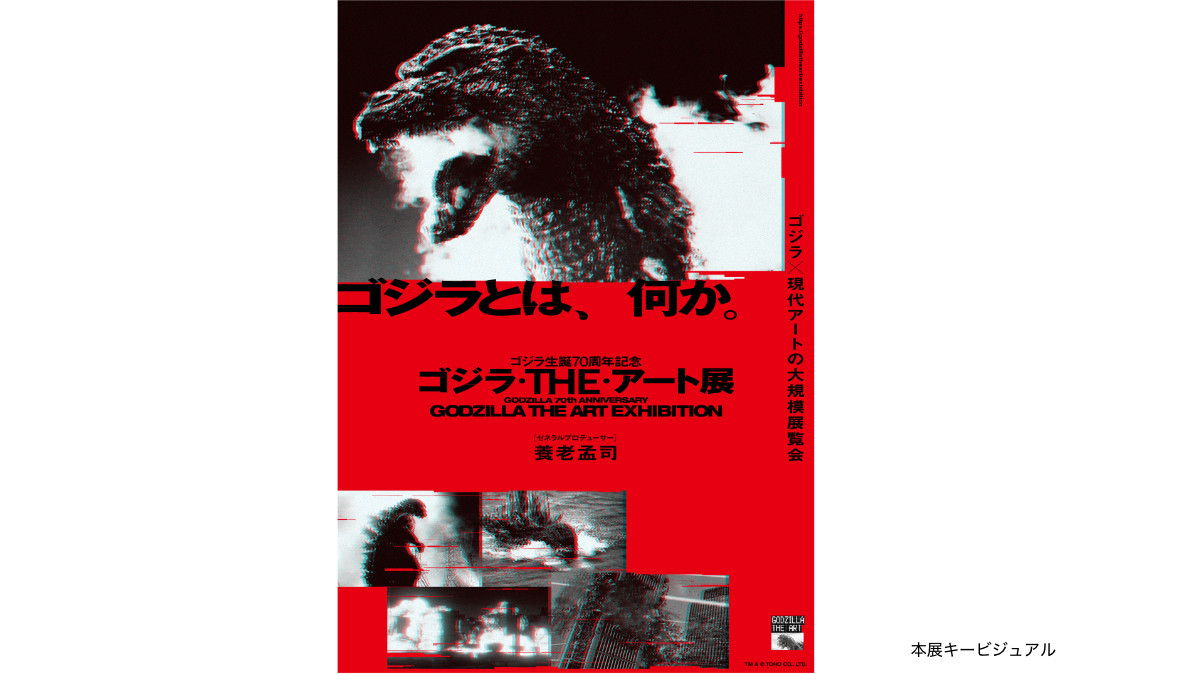
The special exhibition “Godzilla 70th Anniversary: GODZILLA THE ART” will be held at the Kobe Artists Museum from July 5 to September 6, 2026.
This is not a retrospective that simply displays movie materials and Godzilla designs from across the decades.
Contemporary artists from Japan and abroad confront the question, “What is Godzilla?” and present their own answers through painting, photography, woodblock prints, sculpture, miniatures, video, installations, and more.
We attended the press preview before the exhibition opened. This guide follows the exhibition from the entrance to the finale, while incorporating Go Miyazaki’s explanation of the project’s background and highlights on behalf of Toho Co., Ltd.
Allow plenty of time if you want to watch the video works and read the artwork descriptions carefully.
GODZILLA THE ART Kobe: Dates and Admission
The Kobe exhibition is the second stop in Japan, following the Tokyo exhibition held in 2025. The venue is the Kobe Artists Museum on Rokko Island.
- Exhibition period: Sunday, July 5 through Sunday, September 6, 2026
- Hours: 10:00 a.m. to 5:00 p.m.
- Last admission: 4:30 p.m.
- Closed: Every Monday. Open July 20 and closed July 21
- Venue: Kobe Artists Museum
- Same-day admission: Adults US$12.50, university students US$6.25, high school students and younger free
University and high school students should bring a student ID or school identification booklet. Kobe residents age 65 and older pay US$6.25 upon presenting proof of address and age. Admission is free for visitors who present a disability certificate or the Mirairo ID smartphone app.
Advance ticket sales ended on July 4, 2026. Tickets bundled with limited-quantity merchandise will stop being sold once the allotted number is reached, so check current availability with each ticket agency.
Visit the official GODZILLA THE ART website
What the Press Preview Revealed About the Exhibition’s Highlights
The exhibition’s greatest feature is that it does not present a single correct answer. Even though every work takes Godzilla as its subject, both the form and meaning vary dramatically from piece to piece.
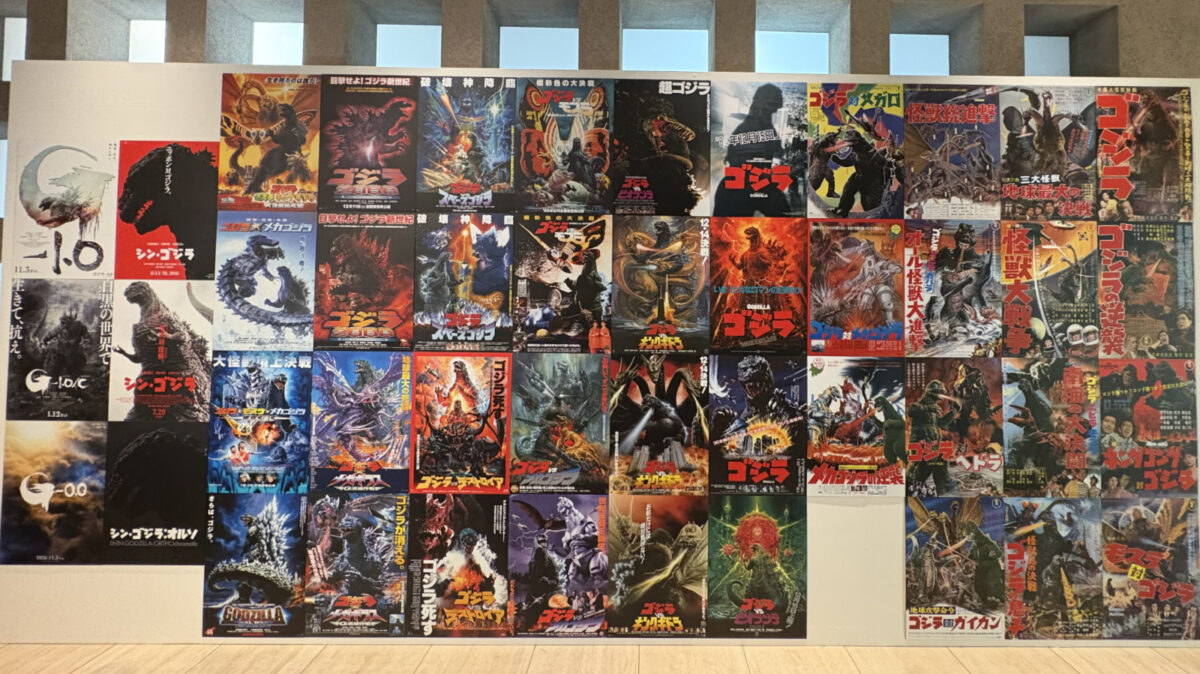
At the entrance, Godzilla’s powerful presence and posters from past films welcome visitors. Across four chapters, the perspective expands from postwar memory and urban landscapes to destruction and rebirth, video and news media, and the viewer’s own interpretation, culminating in a question posed through a special film.
Godzilla fans can enjoy finding connections to familiar works and historical contexts. Visitors who are new to contemporary art can get closer to each piece by first asking, “What does this look like to me?” and “Why is this expression Godzilla?”
Go Miyazaki of Toho Explains Why Godzilla and Art Work So Well Together
The speaker at the press briefing was Go Miyazaki, who is involved in planning and producing “GODZILLA THE ART” at Toho Co., Ltd. A native of Hyogo Prefecture, Miyazaki also spoke of his pleasure at bringing the exhibition to Kobe.
Godzilla was born in 1954. The first film carried a warning about war and the hydrogen bomb, while later eras sometimes portrayed Godzilla as a hero for children. Since the Heisei era, the character has continued to be depicted differently according to the period and its creators.
Miyazaki explained that Godzilla’s uniqueness lies precisely in the fact that the character cannot be defined in a single phrase. Viewers and creators arrive at different answers, and no single one is exclusively correct. The project began with the belief that this quality makes Godzilla especially compatible with contemporary art.
The Artists Were Given Only the Theme of “Godzilla”
The participating artists were selected to avoid bias in generation, gender, or medium. Miyazaki met each artist personally and asked how they viewed Godzilla and in what direction they wanted to take their expression.
At the same time, he did not steer them toward an answer by saying, “Please make this kind of work.” The artists were given only the theme of Godzilla itself.
That is why the venue contains such a broad range of works that it is hard to believe they all address the same character. You may read the wall text first, but another rewarding approach is to take in your initial impression and then check the artist’s interpretation, enjoying the work in two stages.
A Place to Think About Godzilla Together
Miyazaki said he wanted the venue to be more than a space where Godzilla is simply displayed; he wanted it to be a place where visitors could think about Godzilla together.
The answers suggested by the exhibited works are not the only answers. What visitors continue to think after leaving the venue can also become one element shaping Godzilla for the next era.
Four Chapters Deepen the Question From Entrance to Finale
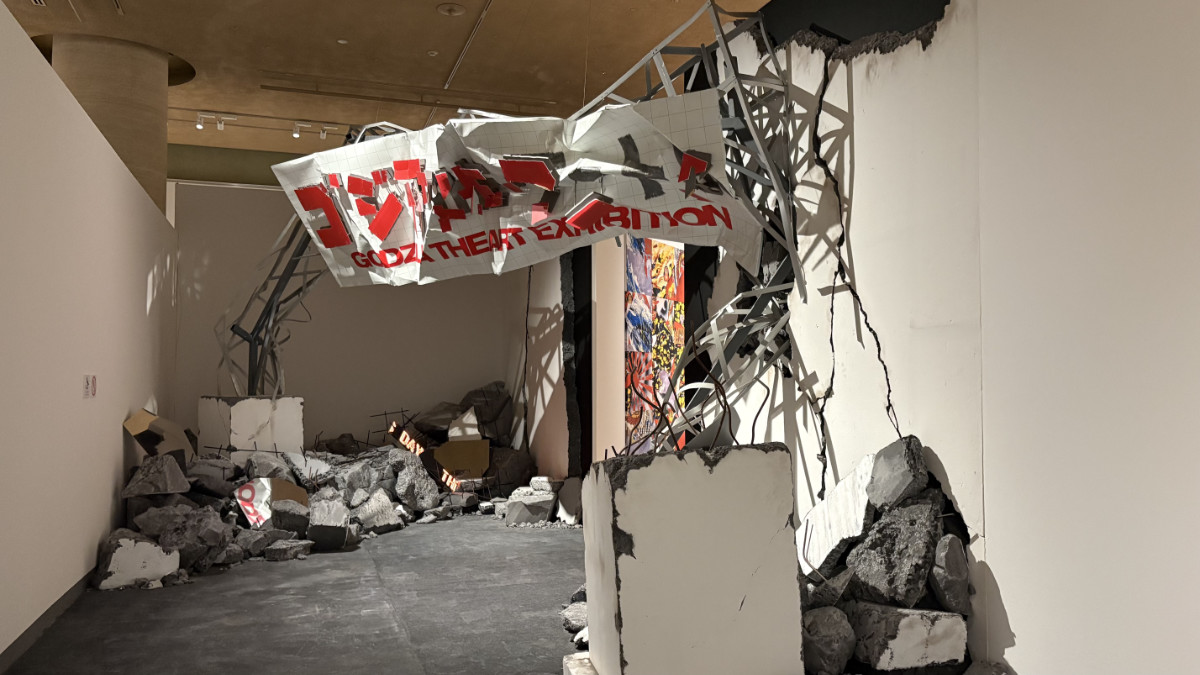
At the heart of the exhibition are four chapters organized with curator Chiu-Yu Chin. Nine artists ranging in age from their 30s to their 90s express Godzilla through different media, including painting, photography, printmaking, sculpture, and video.
Chapter One: “As a Collection of Modernity”
Chapter One views Godzilla as a being that gathers together the problems, emotions, and memories carried by postwar Japan.
Fear of nuclear weapons, environmental issues, urbanization, and society’s destruction and rebirth overlap within Godzilla’s body as the anxieties and hopes of each era. By bringing works by different artists into one space, a complex landscape emerges that cannot be contained within a single story.
Tadanori Yokoo, “PARADISE”
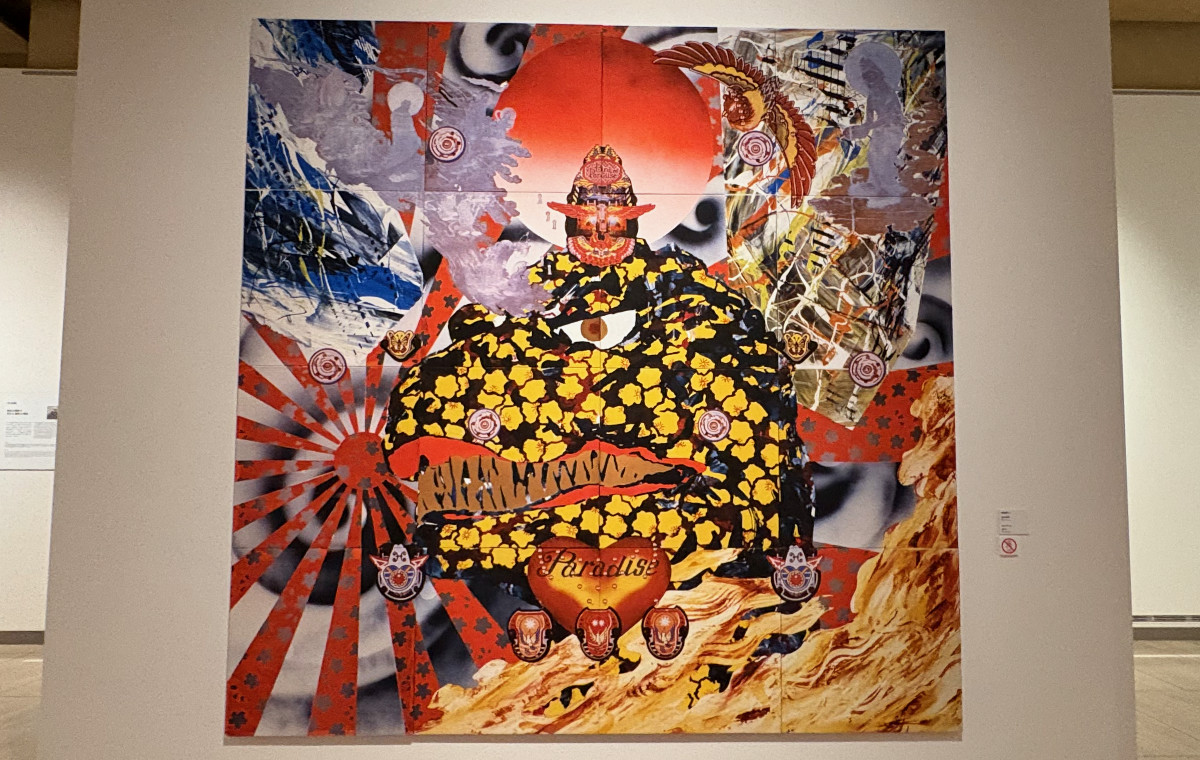
Tadanori Yokoo’s “PARADISE” is a 1985 work that was scanned at high resolution and reconstructed in a new form in 2025.
Fragments of rubble, collapsing cities, crowds, and monster silhouettes are repeatedly severed and reconnected. Memories of the past and omens of the future occupy the same image, never allowing the viewer’s gaze to settle.
This is a work worth viewing both from a distance and up close, with time to follow its details. Even when taking photos, do not let the camera be your only experience; take in the density of the image with your own eyes.
O JUN, “Rays”
O JUN is exhibiting six new works created after the Tokyo presentation. They depict Mothra, Rodan, King Ghidorah, and other monsters from “Ghidorah, the Three-Headed Monster.”
The rough crayon lines and expanses of untouched white space reveal not only clearly defined monsters, but also a “godzilla” that keeps changing shape within memory.
Miran Fukuda, “Godzilla Poster”
Starting from the 1954 film “Godzilla,” Miran Fukuda reexamines the relationship between science and technology and human society.
Large paintings following the movie’s story are displayed alongside images printed like posters. The boundaries among film, painting, and advertising begin to waver, expressing an unease as if reality itself were drawing closer to fiction.
Chapter Two: “Image and Roar”
Across the Showa, Heisei, and Reiwa eras, Godzilla has continued to disturb our unconscious. Through reproducible media—prints and photography—Chapter Two explores images of Godzilla that multiply and transform in memory.
Sachiko Kazama, “Fukuryu Reef Zone No. 5”
Sachiko Kazama’s woodblock print layers reefs resembling a fallen Godzilla, an enormous mushroom-cloud-like formation, and the silhouette of a ship recalling the Daigo Fukuryu Maru.
At first glance it resembles a quiet landscape painting, but the closer you look, the more memories of war and nuclear weapons emerge. The carved marks of the woodblock and layered ink convey a sense that history has been inscribed into the image.
Also on display is “Continued: Raging Waves of the Blockaded Fleet,” an animation developed from the woodblock work. Comparing the static print with the moving image reveals how the same expression changes when it gains time.
Kikuji Kawada, “Los Caprichos: Invisible”
Kikuji Kawada newly selected and reconfigured photographs taken from the 1960s through 2025.
Everyday skies, the moon, twilight, and urban buildings take on an ominous atmosphere in the photographs. Even without depicting Godzilla directly, memories and fantasies of a city where a roar seems about to sound rise into view.
Chapter Three: “Beautiful Ruins”
Japanese cities moved from burned-out ruins into rapid economic growth, experienced the bubble economy and stagnation, and repeatedly changed through natural and human-made disasters.
Buildings that once symbolized development turn into ruins over time. Chapter Three considers destroyed cities not only as landscapes of fear, but also as places that inherit memory and allow the next story to begin.
TokyoBuild’s Meticulously Detailed City
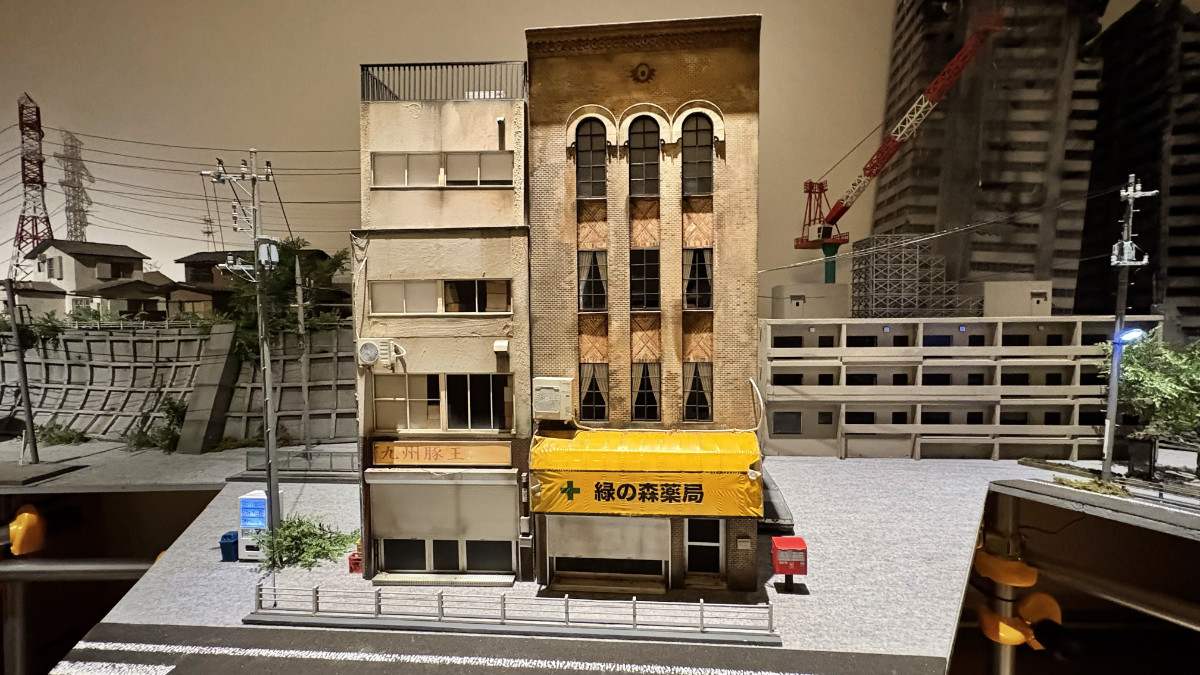
TokyoBuild reconstructs urban memories and landscapes as highly detailed miniatures. For this exhibition, it collaborates with sculptural elements by Toho Eizo Bijutsu, connecting the craft of special-effects art with contemporary art.
Look beyond the buildings’ shapes to weathering, material textures, signs, windows, and their distance from the roads. Is this a city before Godzilla destroys it, or a city left behind after the destruction? Its place in time changes with each viewer.
Motohiko Odani, “the One — Gojira (Temporary Monument 6)”
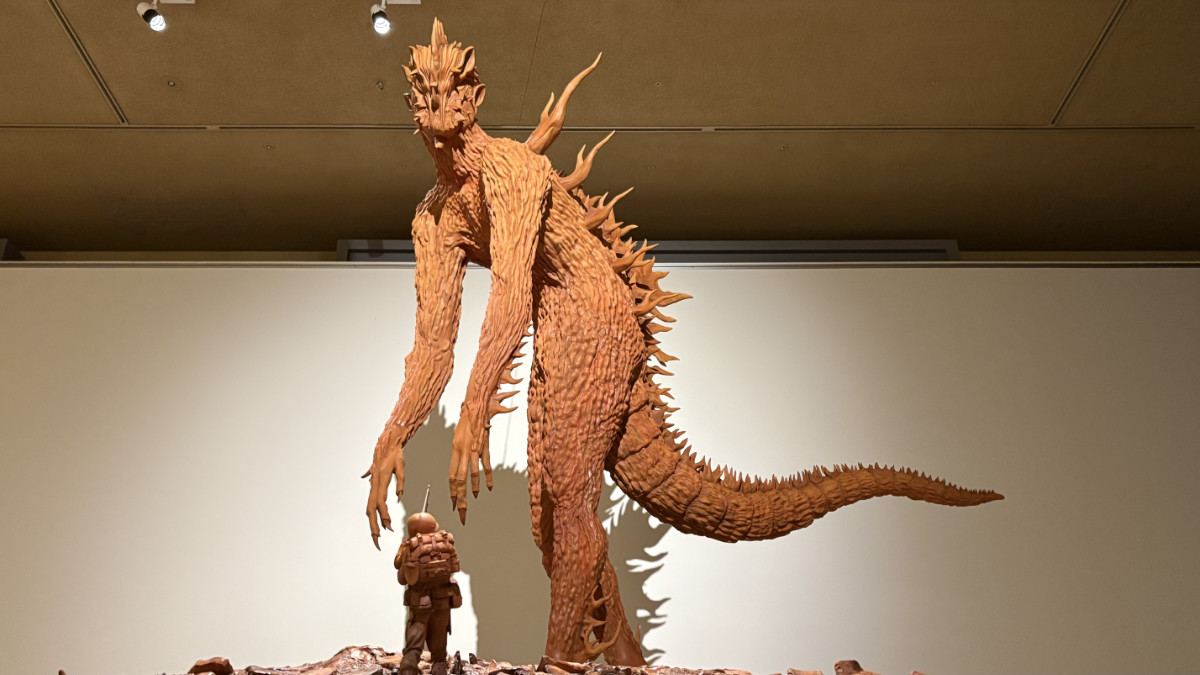
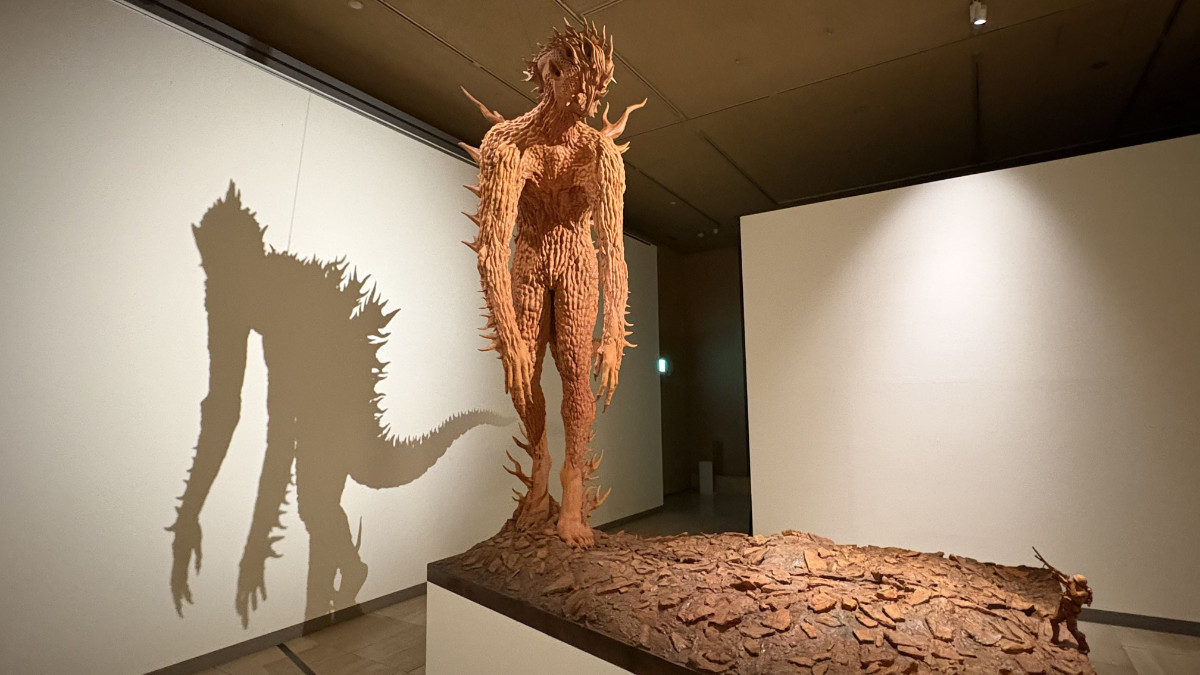
Motohiko Odani brings a mysterious figure of “Gojira” to life through wood carving.
The composition, in which a humanoid Godzilla confronts a soldier, evokes not only a battle between monster and human but also war among humans. The work joins wood, a traditional material, with Godzilla, born from the imagination of postwar Japan.
Chapter Four: “What Are We Looking At?”
Art is not completed solely by the work placed before us. Meaning also arises from what viewers feel and how they receive it.
Through video, words, and performative expressions scattered around the venue, Chapter Four moves toward an experience that goes beyond simply looking at artworks.
Natsumi Aoyagi, “NNC—Today’s Events β”
Natsumi Aoyagi’s work unsettles how we see cities and events through a format reminiscent of a television news program and through poetic language.
Every day we watch events through screens. But are we seeing reality itself, or an edited image? The act of looking at Godzilla becomes connected to the act of looking at contemporary society.
Tomoko Sato, “Index for Ghost Tokyo: Prologue, GODZILLA THE ART Version”
Tomoko Sato is an artist who researches urban history and memory, expressing her findings through body and language.
This work reconstructs a performance created during the COVID-19 pandemic as a video piece.
It reexamines Tokyo’s changes from the viewpoint of the Godzilla appearing in the 1954 film “Godzilla.”
Through the eyes of a nonhuman being, the memory of the land and the development of the city emerge in another form.
A key highlight is the portrayal of Godzilla not as a destroyer, but as an observer watching Tokyo.
The work is a 56-minute video installation.
Works From GODZILLA THE ART by PARCO Gather in Kobe
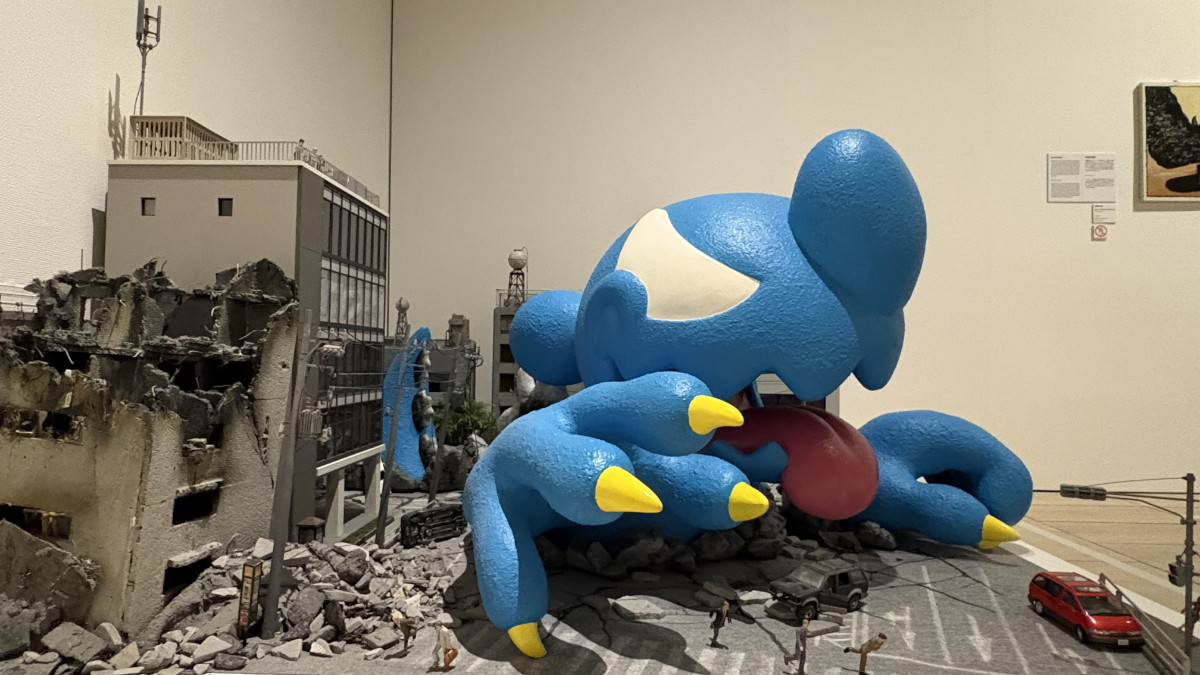
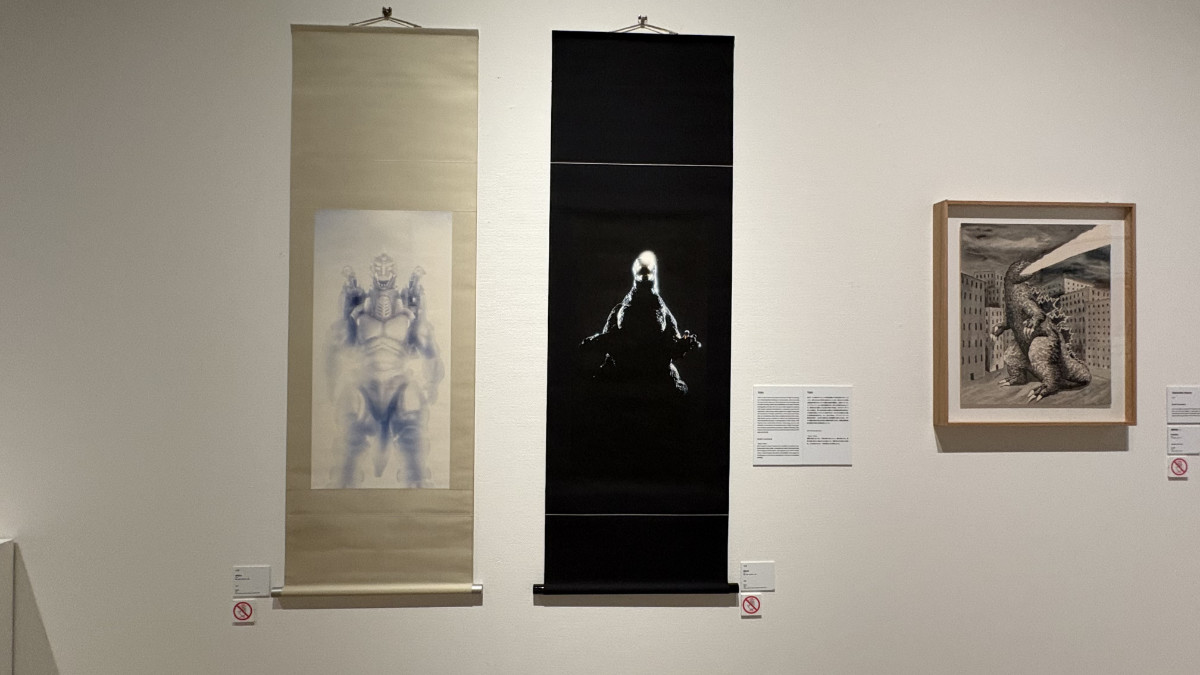
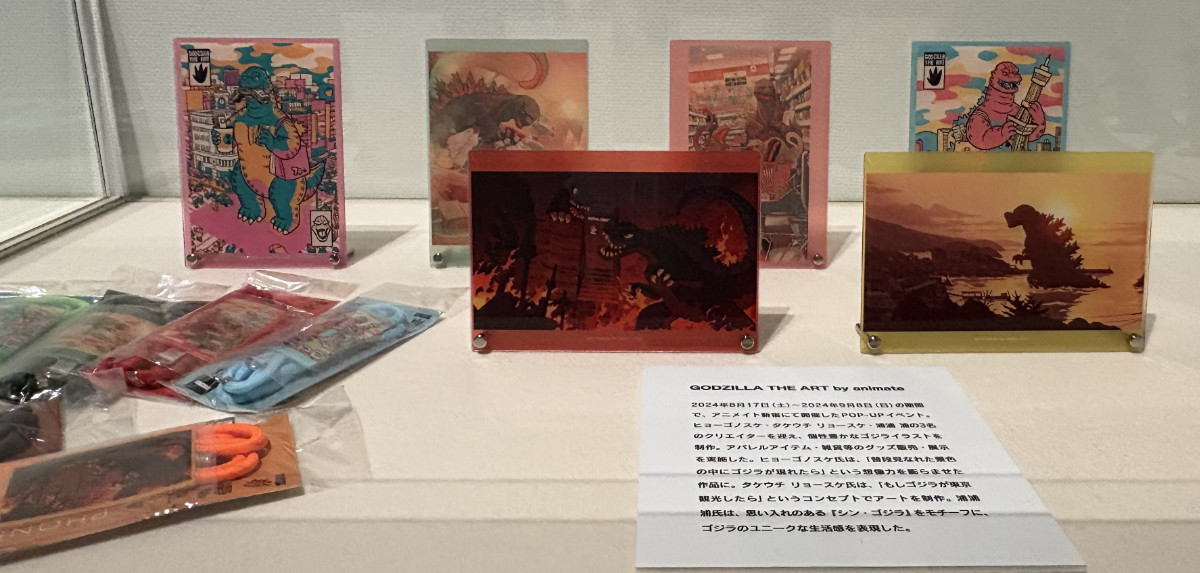
The venue includes an area presenting works from “GODZILLA THE ART by PARCO,” which was held at Shibuya PARCO over approximately two years beginning in 2023.
The first installment featured Isamu Gakiya and NOH Sangho, the second featured COIN PARKING DELIVERY, and the third featured Kosuke Kawamura and Kensuke Koike.
The fourth installment in November 2024 expanded to PARCO MUSEUM TOKYO and was curated by the NANZUKA gallery. Crossing the boundary between pop culture and contemporary art, the project produced a different image of Godzilla through each artist.
The Kobe venue displays selected works presented in each installment. While the exhibition’s four main chapters examine Godzilla through history and society, the PARCO area brings each artist’s individuality and connection with culture more clearly to the foreground.
Comparing the works one by one reveals that “Godzilla-ness” lies not in a particular form, but in the viewer’s memory and culture.
Toho Eizo Bijutsu Diorama and Special Film
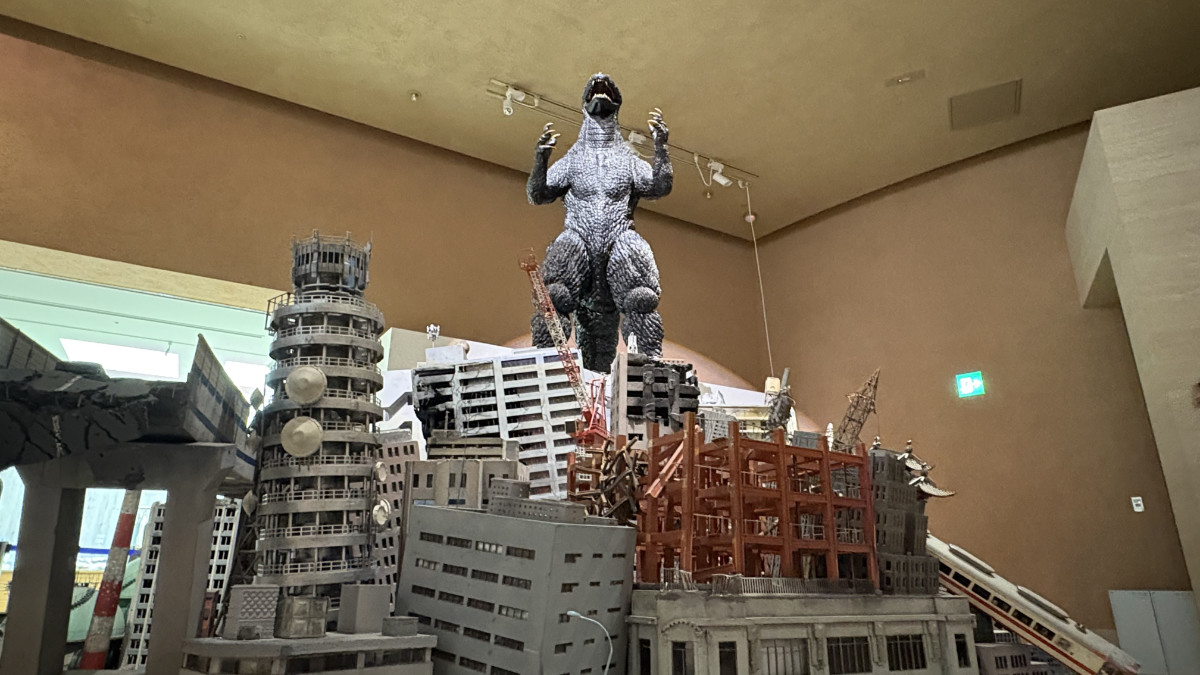
After the four chapters and the PARCO area, visitors encounter a diorama by Toho Eizo Bijutsu that fuses Godzilla and art, as well as a special film created for this exhibition.
According to Miyazaki, the route begins with Godzillas from different eras at the entrance, passes through the interpretations of many artists, and ends with the film, prompting each visitor to reflect on “What is Godzilla to me?”
In the diorama, look not only at its overall impact but also at the details of special-effects art: buildings, light, smoke, and the distance between the city and Godzilla. The themes seen throughout the exhibition—destruction, city, and memory—come together in a three-dimensional landscape.
Special Exhibition Shop
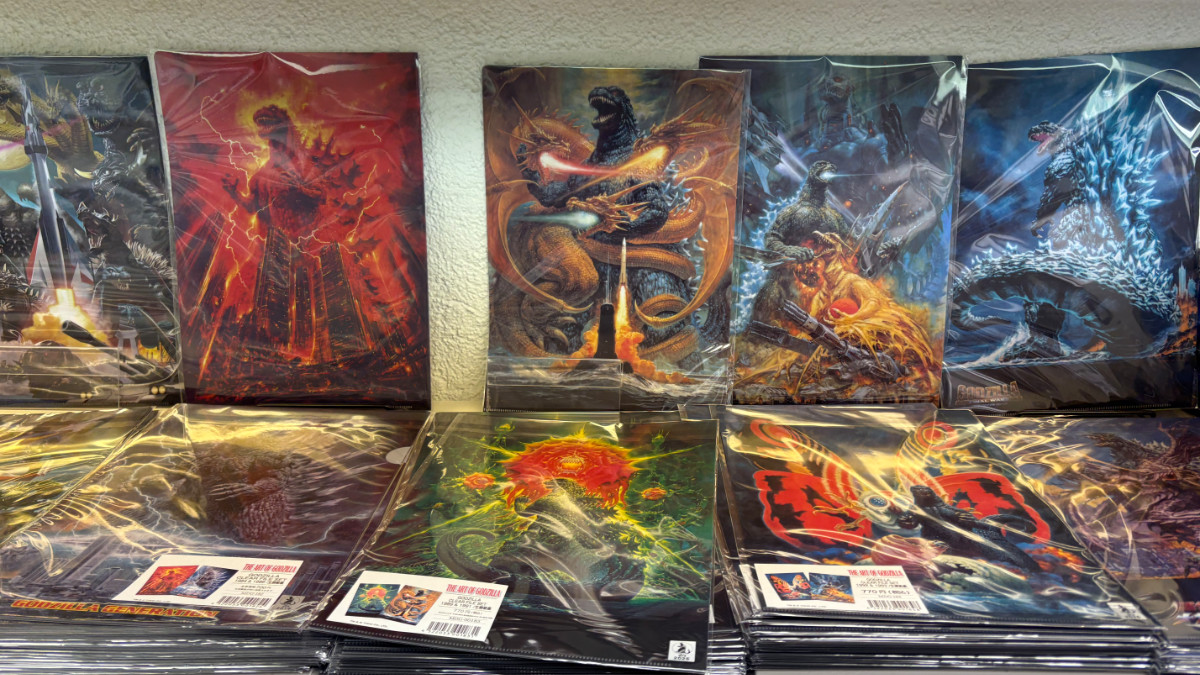
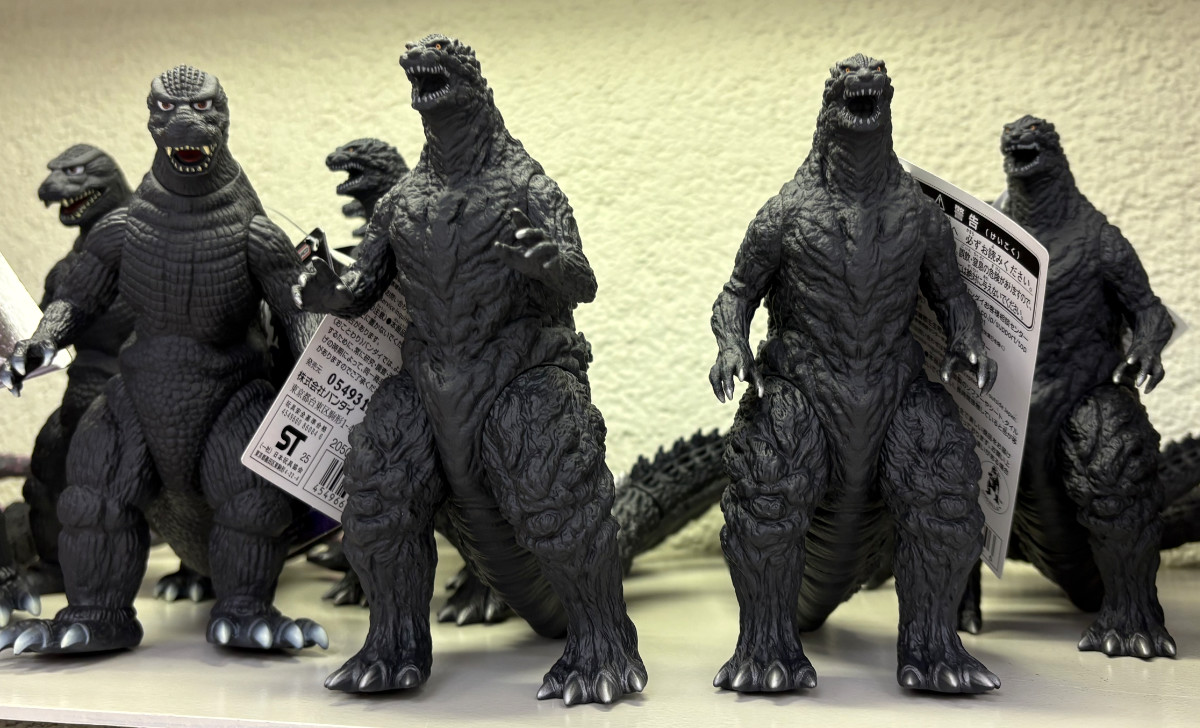
After leaving the galleries, visitors will find a pop-up Godzilla Store in the exhibition shop. It sells exhibition-exclusive merchandise and products featuring designs based on works by participating artists.
Planned items include a limited Movie Monster Series prototype Godzilla (1954) figure and original HAZE T-shirts. Products may sell out or be discontinued.
Last entry to the shop is at 4:45 p.m., and purchases must be completed by 5:00 p.m. The entry cutoff may be moved earlier depending on crowd levels.
Entering the museum at the final admission time of 4:30 p.m. leaves almost no time to enjoy both the exhibition and shopping. Visitors who want to browse the merchandise should avoid arriving close to closing.
The shop accepts cash, credit cards, electronic money, and QR-code payments. PayPay is not accepted.
Another Goal of GODZILLA THE ART Revealed in the Press Questions and Answers
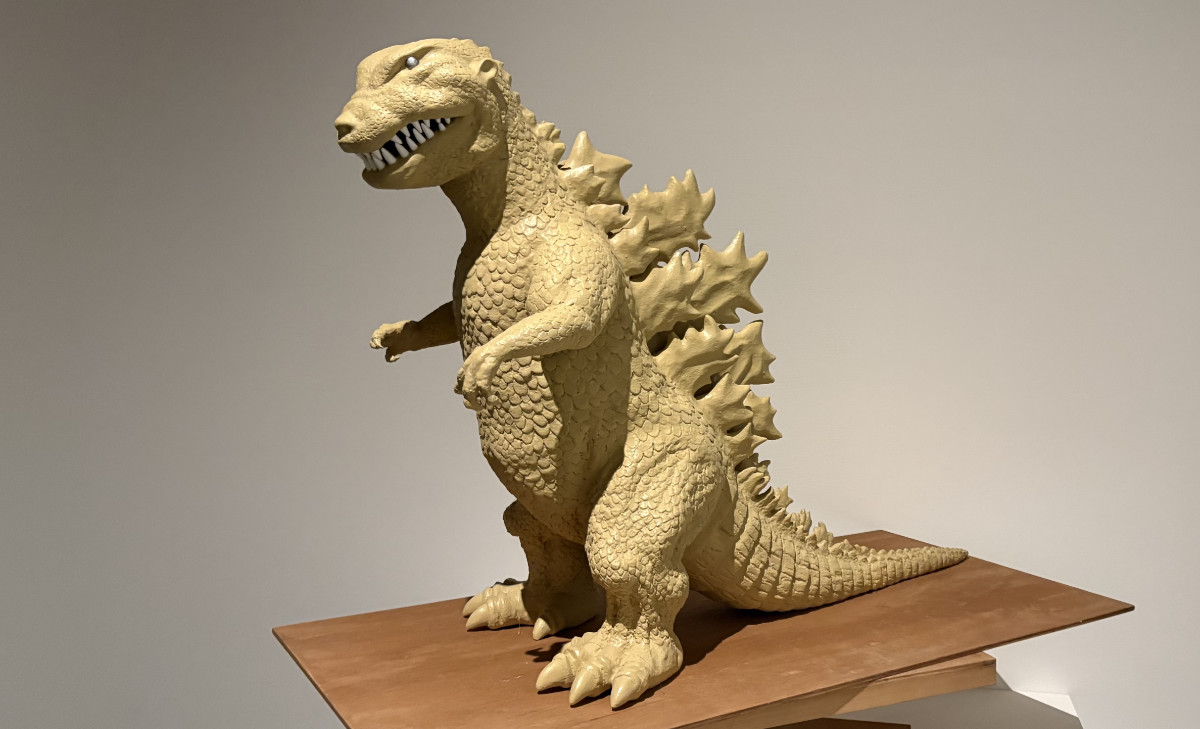
After the overview for the press, time was set aside for questions to Go Miyazaki of Toho Co., Ltd.
Questions ranged from the visitor demographics at the Tokyo venue and the development of the project with general producer Takeshi Yoro to Godzilla’s changing identity over time and the meaning of expressing the character through contemporary art. The answers revealed that the exhibition is intended not only for longtime fans, but also as an effort to carry Godzilla into the next generation.
- Visitors in their 20s, both men and women, were prominent at the Tokyo venue alongside longtime fans
- Art became an entry point for people who previously knew little about Godzilla
- The project is grounded in Takeshi Yoro’s idea that “Godzilla is an open question”
- Godzilla continues to change as a being that reflects the anxieties and emotions of people living in each era
- Insights gained from contemporary artists’ expressions may also lead to future Godzilla projects
Many Visitors in Their 20s Came to the Tokyo Venue
Asked what kinds of people visited the Tokyo venue, Miyazaki explained that in addition to fans who had long supported Godzilla, many younger visitors—including men and women in their 20s—stood out.
What was especially striking was that people who had previously shown little interest in Godzilla came because the exhibition combined the character with contemporary art.
The name Godzilla may suggest an event aimed mainly at longtime special-effects fans. This exhibition, however, spans painting, photography, sculpture, printmaking, video, and many other forms, allowing visitors to encounter Godzilla through an interest in artists or contemporary art.
Miyazaki said a cycle is needed in which people in their teens, 20s, and 30s become familiar with Godzilla and pass the character into the future. Helping visitors move beyond the preconception that “Godzilla is a little old-fashioned” and feel that “this kind of Godzilla is valid too” is another role of the project.
The Dialogue With Takeshi Yoro Began With “What Is Godzilla?”
There was also a question about developing the project with general producer Takeshi Yoro.
The project members visited Yoro and began by discussing the fundamental question, “What exactly is Godzilla?” The conversation ranged widely, from the social atmosphere when Godzilla first appeared in Japan to the meaning of art in the present day.
What remained especially vivid in Miyazaki’s memory was Yoro’s phrase, “Godzilla is an open question.”
There is no single answer about Godzilla that everyone shares. The character may be a monster, a disaster, a symbol of nuclear weapons, an object of fear, or a hero, and the interpretation changes with the viewer and the era.
Rather than settling on an answer, the importance of continuing to ask “What is Godzilla?” forms the foundation of the entire exhibition.
Godzilla Reflects the Hearts of People Living in Each Era
Miyazaki sees Godzilla, whose appearance and meaning change from era to era, as something like “a mirror reflecting the hearts of people living in Japan.”
The first film in 1954 carries the memories and anxieties of postwar society.
By contrast, he explained that the 2016 film “Shin Godzilla” reflects the emotions and collective unconscious of people living in the era when it was made.
Godzilla’s continued transformation is therefore inevitable. Miyazaki nevertheless believes that the central role of reflecting the feelings held by people of each era will likely continue.
If future society changes dramatically from the present, a Godzilla beyond our current imagination may be born. Even then, the anxieties, aspirations, and hopes of people living in that future will be reflected in the character, forming part of what makes Godzilla Godzilla.
Leaving Film Behind Reveals Today’s Many Views of Godzilla
One questioner suggested that Godzilla’s 70-year history is not only the history of forms created by filmmakers, but also a history in which the images and consciousness of those who received them have accumulated.
Miyazaki agreed that the exhibition is a challenging project for Toho. Until now, Godzilla has been depicted mainly in films and other moving-image works, but this time the character has left that framework and been entrusted to painting, photography, sculpture, and other forms.
Each artist’s work reveals the impression of Godzilla and personal memories they carry while living in the present. Walking through the venue, visitors notice that even works sharing Godzilla as a theme differ completely in both appearance and meaning.
Miyazaki said the works allowed him to sense the diverse views of Godzilla held by people today. He also hopes to bring what was learned back to Toho and connect it to new projects in the future.
Viewing Tips Learned From the Questions and Answers
There is no need to search for a “correct way” to view this exhibition. One person may find a work frightening, while another may find it beautiful, nostalgic, or sad.
Longtime Godzilla fans can discover new images of the character by noticing differences from the films and eras they know. Visitors unfamiliar with Godzilla may find the works easier to approach through their shapes, colors, materials, and immediate impressions.
After viewing the exhibition, try discussing with your companions, “What was Godzilla to me?” The fact that people can see the same work and arrive at different answers is itself part of the exhibition’s appeal.
Questions and Answers Summary
The press Questions and Answers showed that GODZILLA THE ART is not merely an exhibition looking back at the past, but a place to consider Godzilla for the next era.
The project aims to open an entrance for younger generations and people who previously knew little about Godzilla; to avoid fixing the character to a single meaning and instead preserve it as a question; and to connect Godzilla to new forms of expression while reflecting the emotions of people living in each era.
As you view the exhibition, pay attention not only to the answers offered by the artists, but also to the image of Godzilla that rises within you.
GODZILLA THE ART Kobe: Summary
GODZILLA THE ART does not tell visitors what a finished, definitive Godzilla should be. It is an exhibition where you look at the different Godzillas created by each artist and search for the Godzilla within your own memories and values.
The question progresses from the memories gathered by postwar Japan in Chapter One, to reproduced images in Chapter Two, cities of destruction and rebirth in Chapter Three, and the viewer’s own reception in Chapter Four. Afterward, the PARCO project, diorama, and special film should reveal a Godzilla different from the one seen at the entrance.
Visitors who want to read the artwork descriptions and watch the videos carefully should avoid arriving just before final admission. Those who also plan to shop should arrive early enough to finish viewing well before the shop’s 4:45 p.m. entry cutoff.
Exchange rate used: US$1 = ¥160.

Make the latest USJ and Kansai event updates
easier to find on Google.