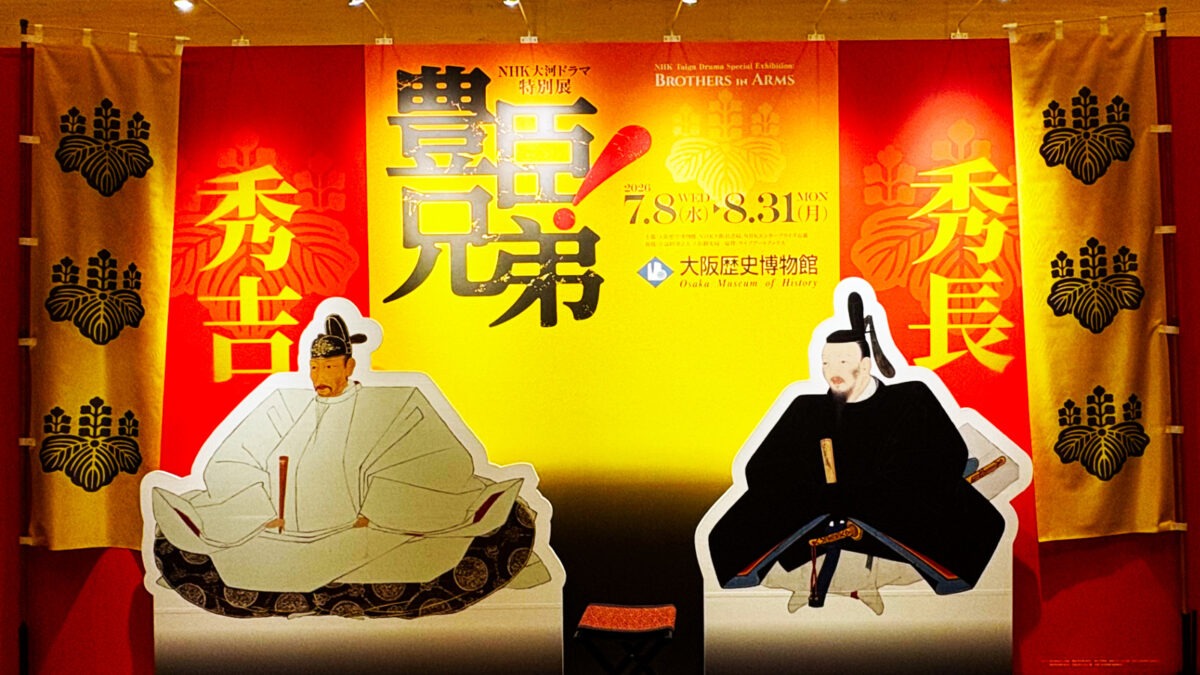
The NHK Taiga Drama Special Exhibition “Toyotomi Brothers!” in Osaka is not simply a showcase of the dazzling rise of the elder brother, Toyotomi Hideyoshi. Through letters, folding screens, castle roof tiles, arms and armor, tea utensils, and other objects, it explores the roles played by his younger brother, Toyotomi Hidenaga, in warfare, negotiation, and domain administration, and how the brothers advanced toward the unification of Japan.
To make the exhibition accessible even to visitors who are not history experts, this article first outlines the brothers’ relationship and the course of events. It then introduces highlights including a letter from Hideyoshi to Hidenaga, roof tiles linking the brothers’ castles, and the tea caddy “Yakushiin,” once owned by Hidenaga.
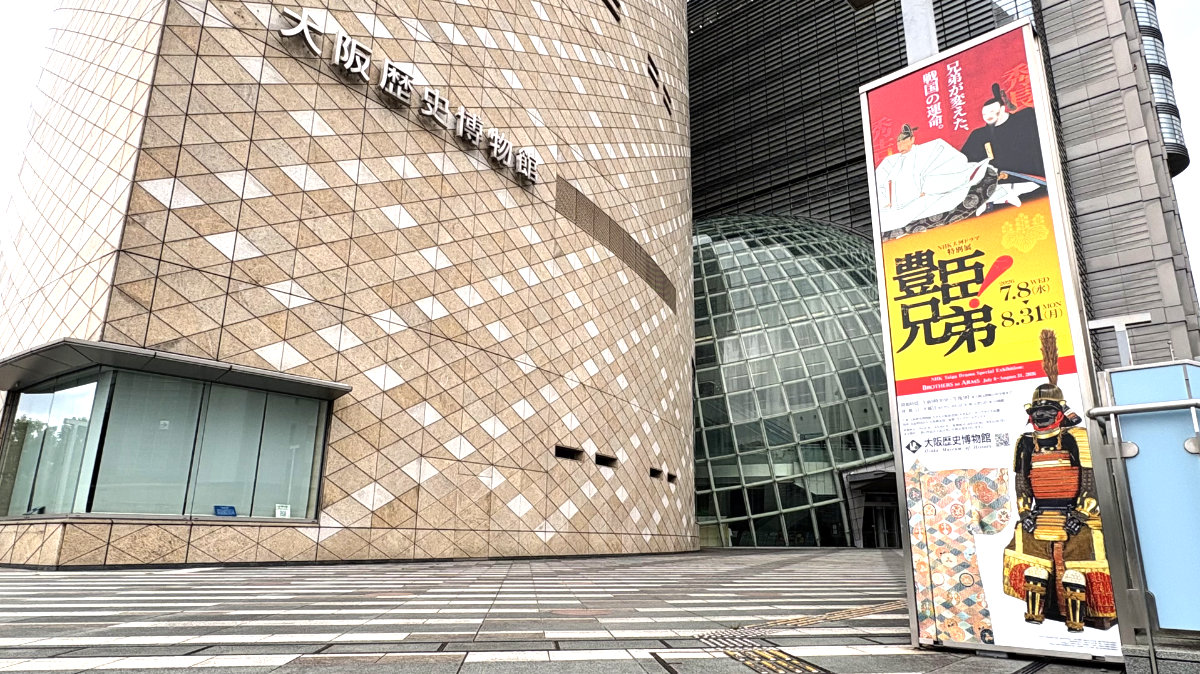
“Toyotomi Brothers!” Osaka Exhibition Runs Through August 31, 2026
The exhibition runs from July 8 through August 31, 2026, in the Special Exhibition Hall on the sixth floor of the Osaka Museum of History.
Key visitor information is as follows.
- First exhibition period: Wednesday, July 8–Monday, August 3
- Second exhibition period: Wednesday, August 5–Monday, August 31
- Hours: 9:30 a.m.–5:00 p.m.; last admission at 4:30 p.m.
- Closed: Tuesdays, except August 11 and 12, when the museum will be open
- Same-day admission: Adults $12.50; high school and university students $6.25
- Free for junior high school students and younger. High school and university students must present student ID.
Some objects will be rotated during the exhibition. Portraits, folding screens, and other works will change between the first and second periods, and certain objects have their own individual display dates.
“Hashiba Hideyoshi Written Instructions to the Governor of Mino,” sent from Hideyoshi to Hidenaga, will be on view in Osaka only through July 27. Visitors coming for a particular work should check its individual display dates in the exhibition checklist before arriving.
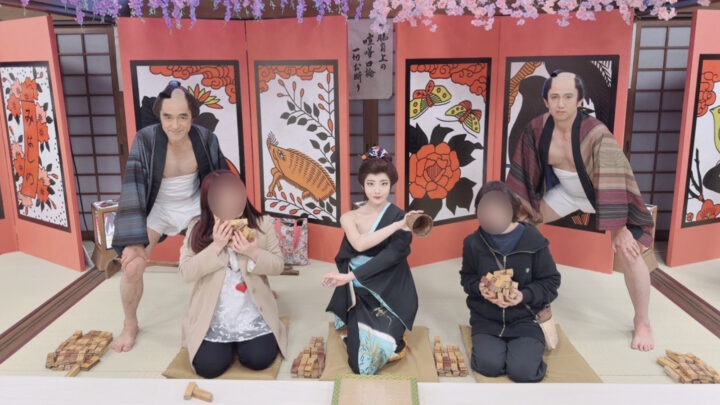
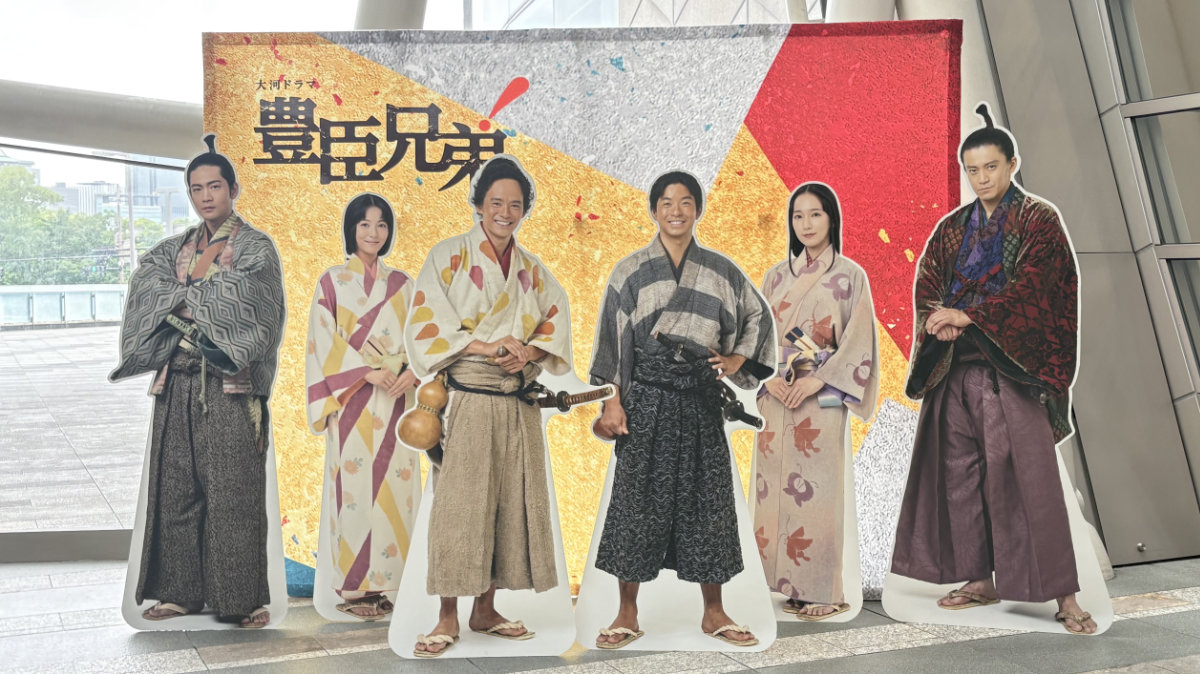
The venue also has a photo spot featuring visuals of the Taiga drama cast. Because visitors can review the characters before entering the exhibition, the presentation is welcoming to those whose interest began with the TV drama.
A castle-wall installation greets visitors at the gallery entrance. From there, the exhibition proceeds through the brothers’ early lives, battles, government administration, culture, and their posthumous legacy.
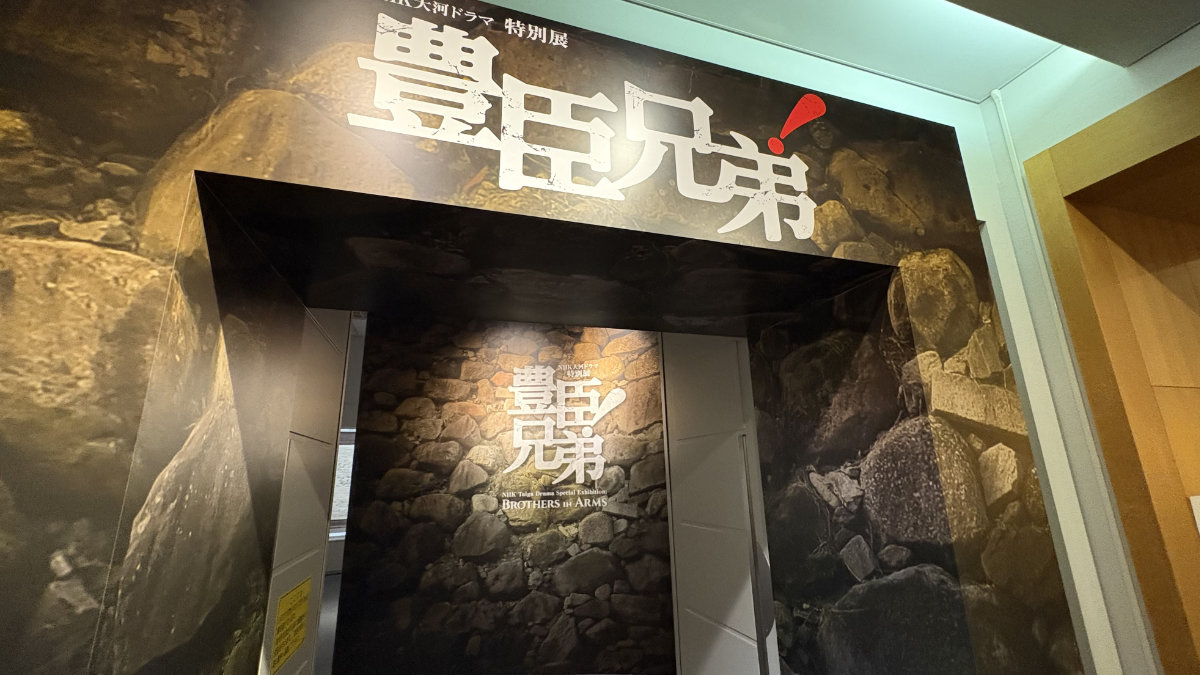
The photographs in this article were taken and published under press photography permission granted during the visit. General visitors should follow signs in the galleries and instructions from staff regarding whether photography is permitted.
Toyotomi Hideyoshi and Hidenaga Were More Than “Star and Supporting Player”
Toyotomi Hidenaga was Hideyoshi’s younger brother by three years.
Although parts of the brothers’ early lives remain unclear, when Hideyoshi rose to prominence under Oda Nobunaga, Hidenaga accompanied him and took on important roles in campaigns throughout Japan.
While Hideyoshi set the broad strategy and pressed forward, Hidenaga commanded troops, managed postwar settlements, and governed territories.
He was not merely an adviser in the background. He served as commander in chief of large armies and acted as a bridge between Hideyoshi and powerful daimyo.
The galleries also display portraits and historical documents relating to warriors connected with the Toyotomi brothers.
By looking not only at Hideyoshi and Hidenaga in isolation but also at their relationships with Oda Nobunaga, Tokugawa Ieyasu, Kuroda Kanbei, Todo Takatora, Sen no Rikyu, and others, visitors can see that the Toyotomi government was sustained by many capable people.
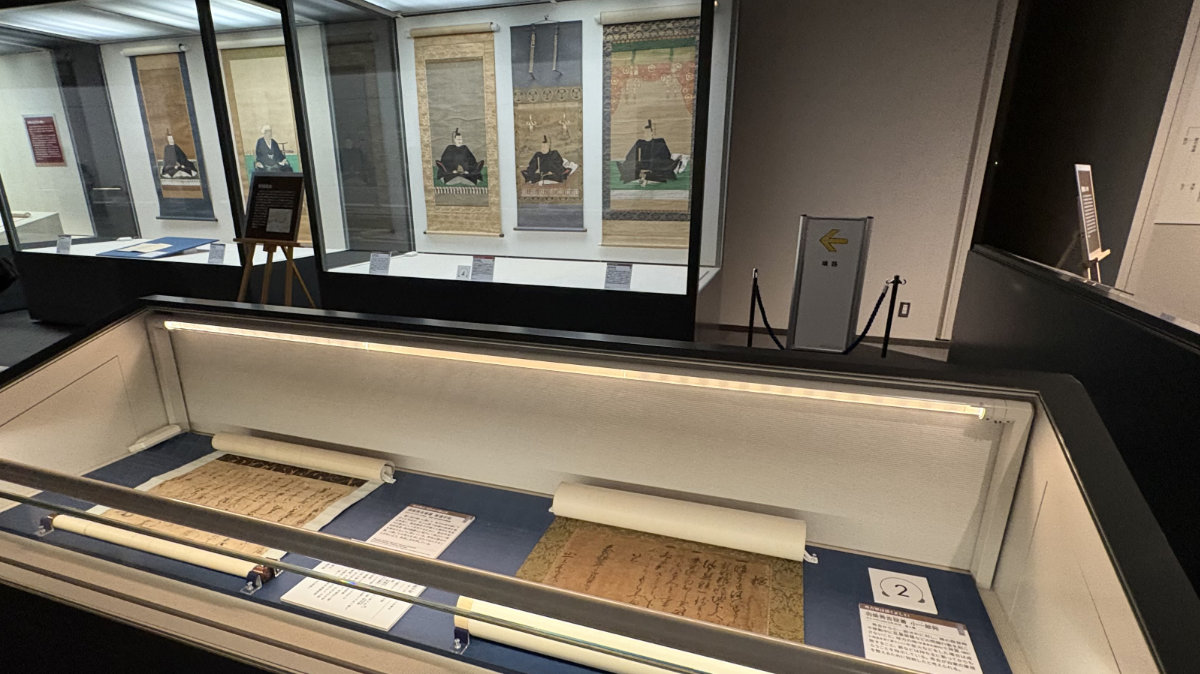
Seeing Hidenaga only as “the gentle younger brother who quietly supported his elder brother” reveals just part of the man. A major point of this exhibition is that he had the ability to move armies, govern domains, and reconcile competing interests, and that Hideyoshi entrusted him with difficult assignments in his stead.
How the Toyotomi Brothers Advanced Toward National Unification
The exhibition follows the brothers’ careers in chronological order.
Understanding the broad sequence of events beforehand makes it easier to identify where battle paintings and historical documents fit into the story.
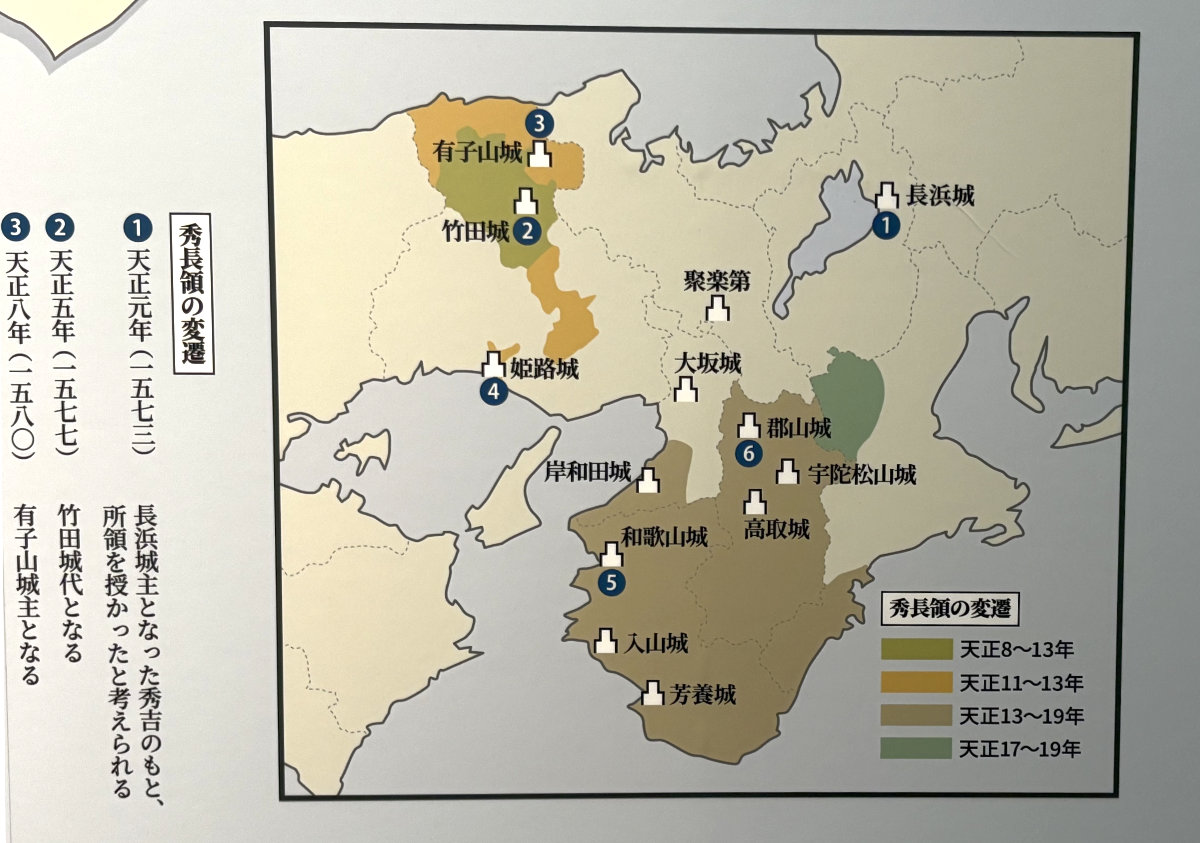
Campaigning Across Japan From 1574
Hidenaga is generally considered to have made his first clear appearance in historical records during the 1574 campaign against the Ise-Nagashima Ikko uprising.
He later fought alongside Hideyoshi in Tajima, Harima, Inaba, and other regions. As Hideyoshi expanded his power as a retainer of Nobunaga, Hidenaga supported that rise militarily.
After the Honnoji Incident, Hideyoshi Sets Out on the Road to National Rule
After Oda Nobunaga died in the Honnoji Incident of 1582, Hideyoshi defeated Akechi Mitsuhide at the Battle of Yamazaki.
The following year, at the Battle of Shizugatake in 1583, he fought Shibata Katsuie and gained the upper hand in the struggle to succeed the Oda regime. Hidenaga also played an important role on the front lines.
Hidenaga as Commander in Chief and Negotiator in Kishu, Shikoku, and Kyushu
Using Osaka Castle as his base, Hideyoshi expanded his power through campaigns at Komaki and Nagakute, and in Kishu, Shikoku, and Kyushu.
Hidenaga led large armies in the Shikoku and Kyushu campaigns and also helped negotiate the defeated sides’ incorporation into the Toyotomi government after the fighting.
Hideyoshi Becomes Kampaku; Hidenaga Becomes Dainagon of Yamato
In 1585, Hideyoshi was appointed kampaku, or imperial regent.
Hidenaga was also appointed dainagon, or major counselor, and governed territory spanning Yamato, Kii, and Izumi from Koriyama Castle. The brothers moved from the phase of winning on the battlefield to administering a broad region and a national government.
Hidenaga Dies in 1591
Hidenaga died of illness in 1591.
The later Toyotomi government cannot be explained without considering his death. Throughout the exhibition, visitors are also prompted to reflect on the enormous impact of losing someone who understood Hideyoshi’s thinking and could mediate among powerful figures.
A Letter From Hideyoshi to Hidenaga Reveals the Brothers’ Practical Trust
Among the materials relating to the Battle of Shizugatake, it is worth examining not only the placement of the armies but also how Hideyoshi and Hidenaga divided their responsibilities.
Especially important is “Hashiba Hideyoshi Written Instructions to the Governor of Mino.” The title “Governor of Mino” refers to Hidenaga.
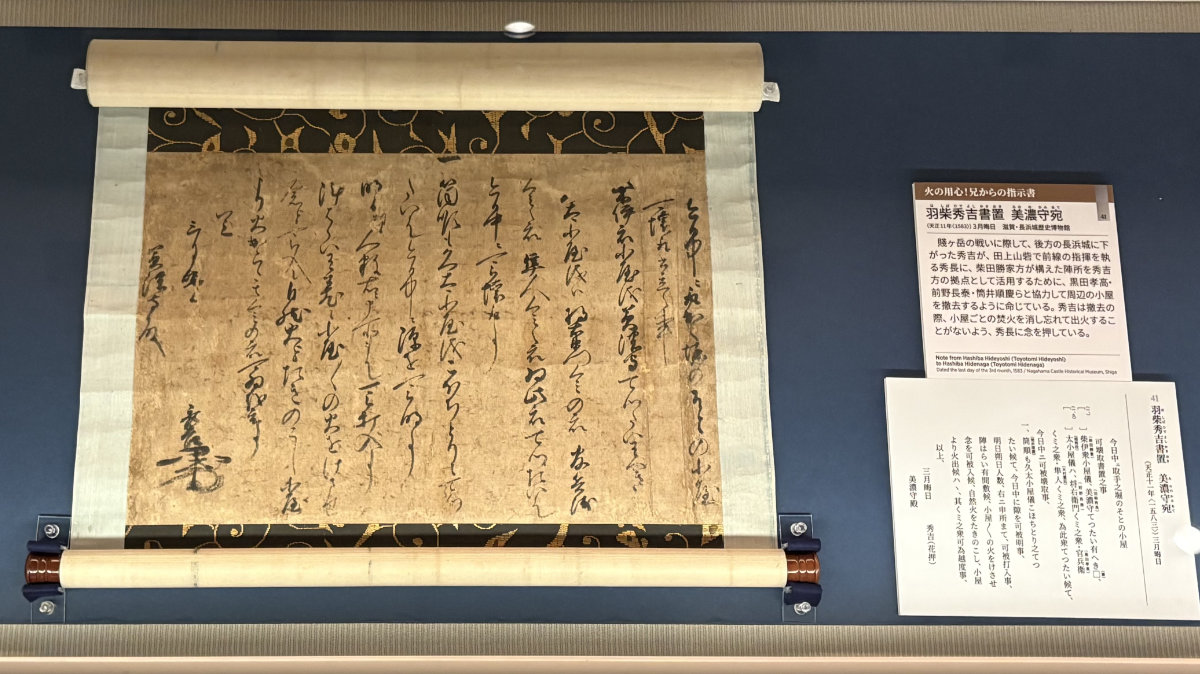
In this letter, Hideyoshi gives detailed instructions to Hidenaga, who was commanding the front line.
Rather than viewing it only as handwriting by a famous warlord, see it as evidence that Hideyoshi entrusted his brother with a vital position and kept in close, specific communication with him. Seen this way, the brothers’ relationship becomes much clearer.
Visitors who want to see the original must come by July 27, its final day on display.
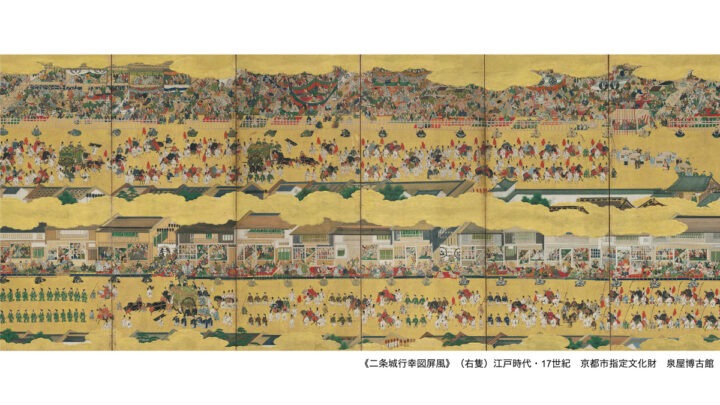
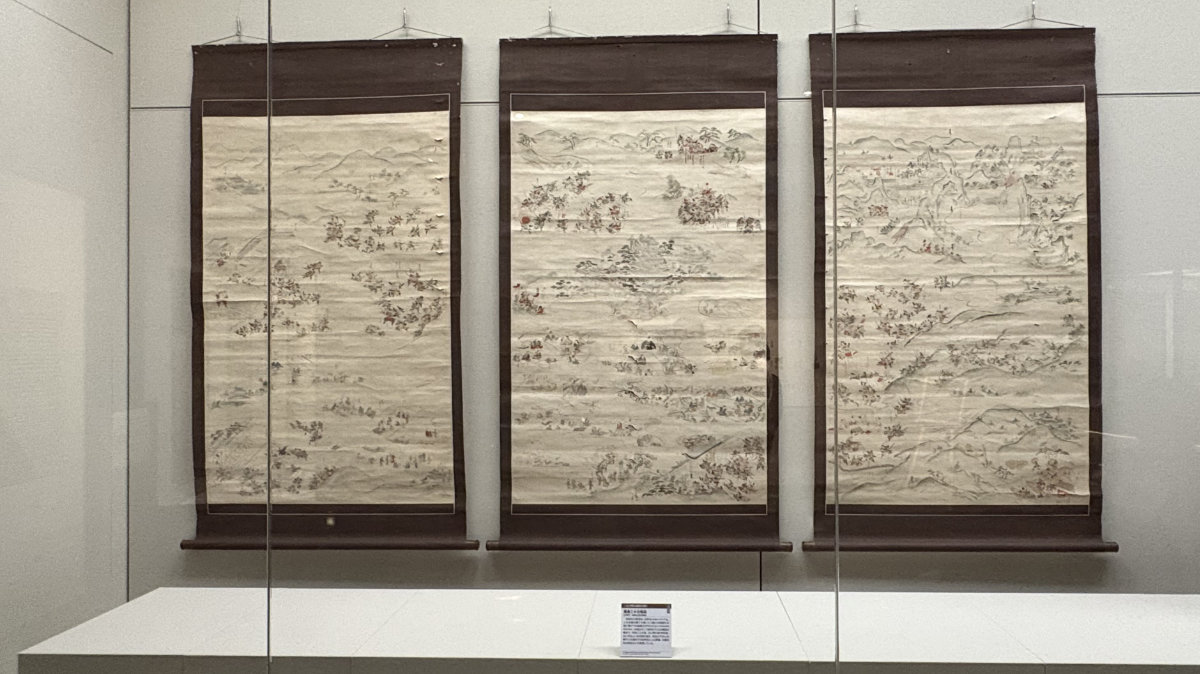
The Jurakudai Folding Screen Shows the Political Stage Hideyoshi Built
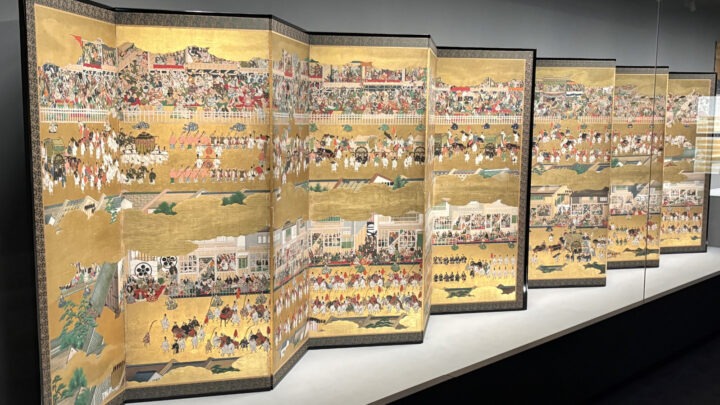
The “Scenes of Jurakudai Folding Screen” depicts Jurakudai, the palace Hideyoshi built in Kyoto, and the surrounding area.
It visually shows how the brothers, after expanding their power on the battlefield, moved on to create a political stage for receiving the imperial court and daimyo.
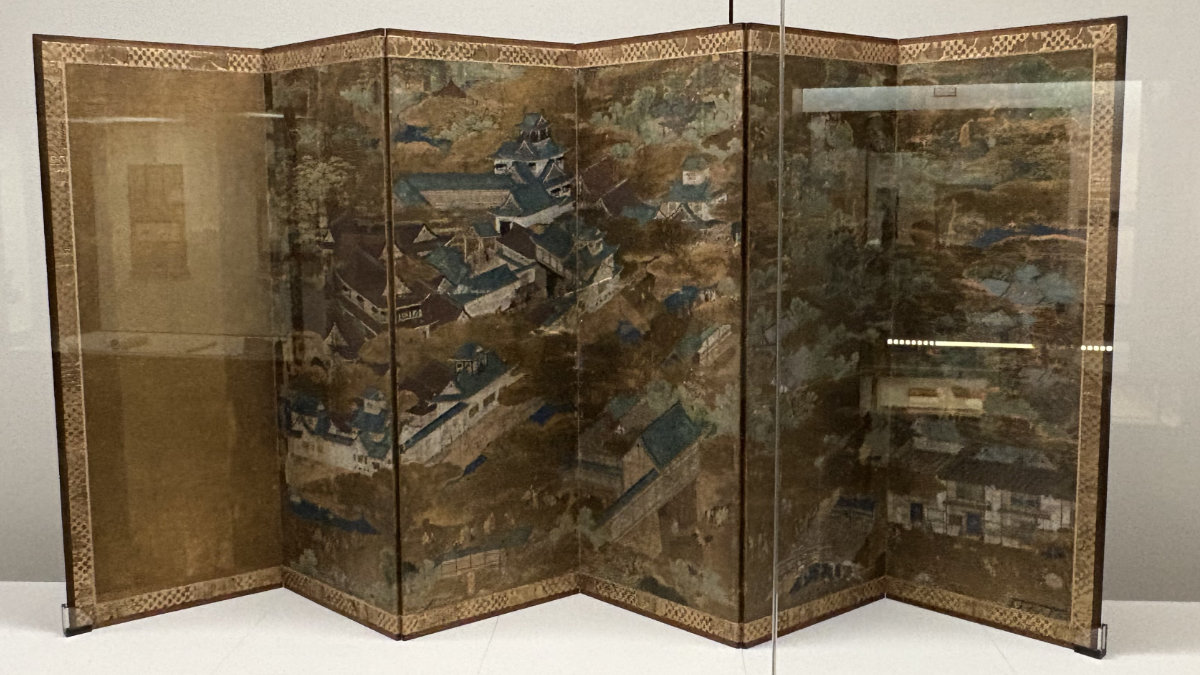
By following the detailed buildings and movements of people, viewers can see that a castle was not only a defensive structure but also a setting that expressed power and order.
Work No. 97, “Scenes of Jurakudai Folding Screen,” is on view during the first exhibition period in Osaka. Those wishing to see it should plan to visit by August 3.
“Tiles From the Same Mold” Link Osaka Castle and Koriyama Castle
A highlight particularly suited to the Osaka venue is the group of roof tiles excavated from the sites of Osaka Castle and Koriyama Castle.
The display includes not only finished tiles but also materials related to the molds and production systems used to make them.
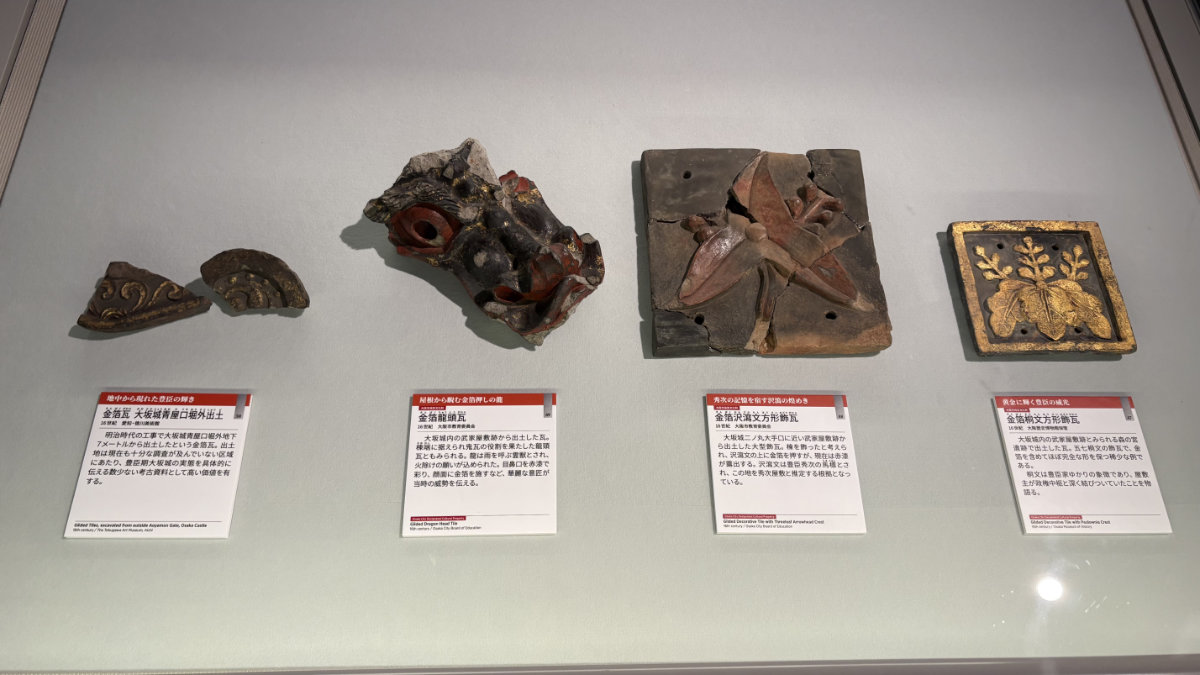
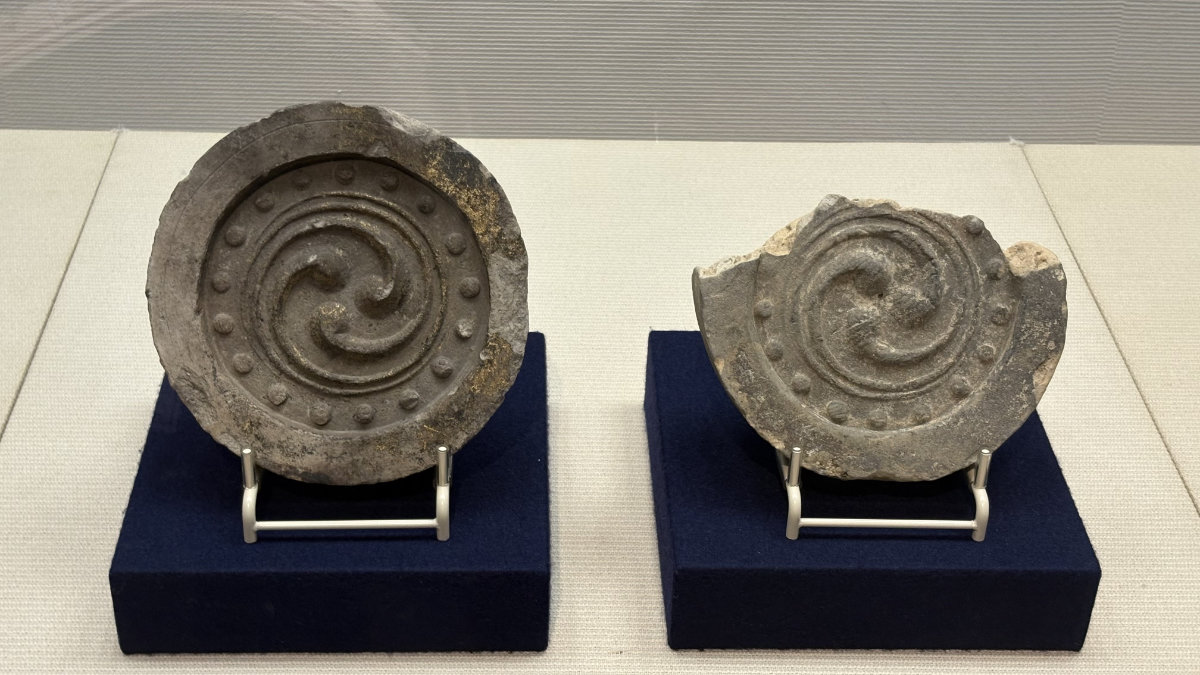
At first glance, the tiles appear to have similar spiral patterns. A close comparison of the details reveals features suggesting that they were made from the same mold.
Tiles produced from the same mold are known as dohan-gawara.
The discovery of dohan-gawara at different castles suggests that shared tools or production systems may have been involved in building Osaka Castle and Koriyama Castle.
Hideyoshi’s Osaka Castle and Hidenaga’s Koriyama Castle: the finds suggest that networks of craftspeople and production technology may also have been shared when the brothers built their respective bases.
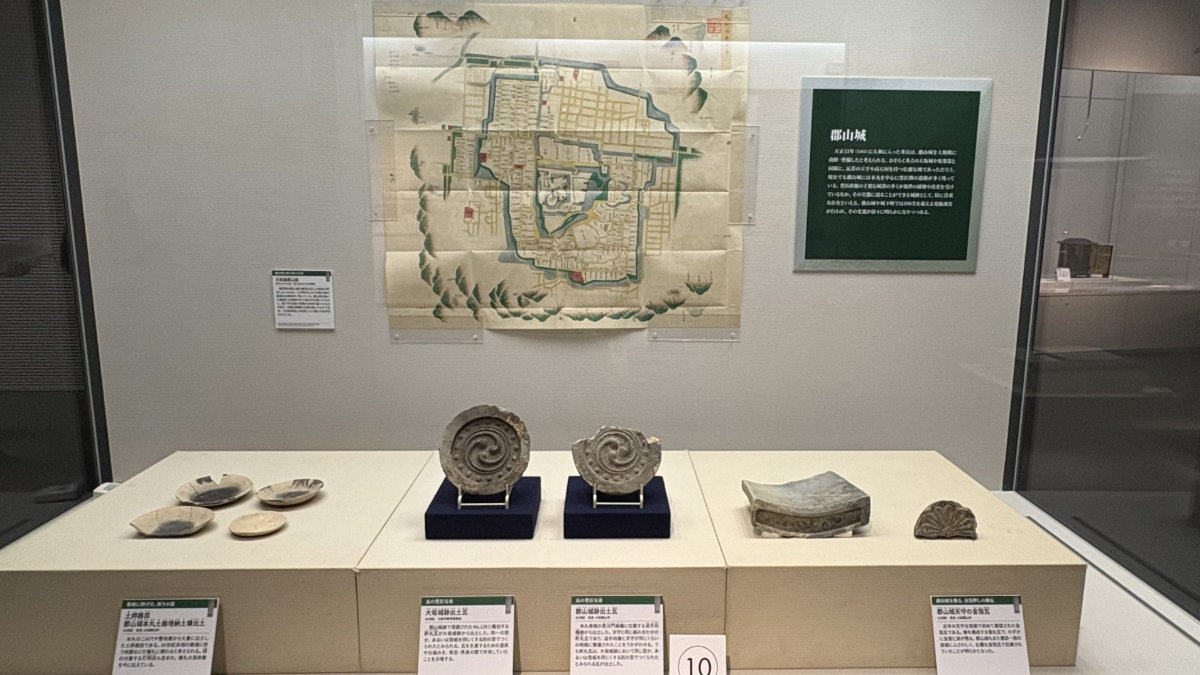
When looking at the display, pay attention not only to the spiral shapes but also to the spacing of the tiny dots around them.
Even small irregularities created by hand match, providing clues that the same mold was used.
The Retainers Who Supported Hidenaga Also Deserve Attention
No matter how capable Hidenaga was, he could not command a vast army or govern extensive territory alone.
The exhibition also highlights retainers who supported him, including Todo Takatora, Kuwayama Shigeharu and Motoharu, Yokohama Ichian, and Kobori Masatsugu.
Todo Takatora later became renowned as a master castle builder, while the Kuwayama family had deep ties to Kishu, once part of Hidenaga’s territory. Materials connecting Kobori Masatsugu with his son Kobori Enshu reveal not only military and administrative history but also the transmission of culture.
Hidenaga supported his elder brother, and he in turn was supported by talented retainers. This layered organization shows that the Toyotomi government did not run on one individual’s momentum alone.
Hidenaga’s Tea Caddy “Yakushiin” Is Small but Significant
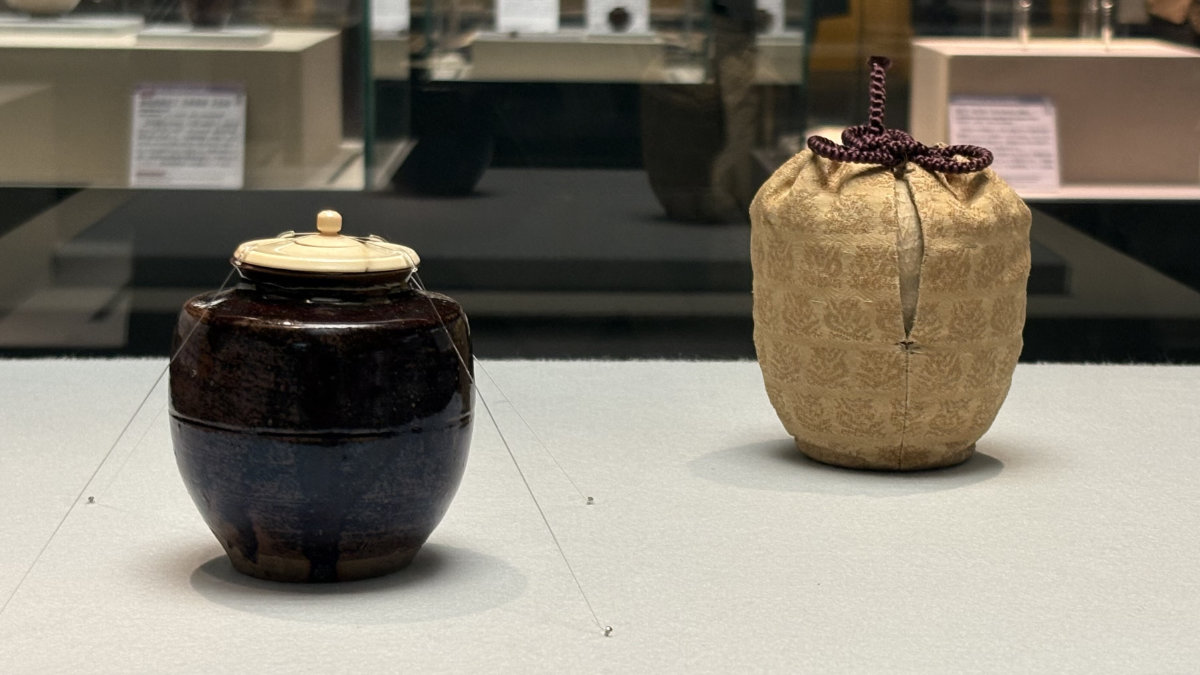
Among the craft objects, the “Katatsuki Tea Caddy, Named Yakushiin” deserves special attention.
It is the only surviving tea caddy known to have been owned by Hidenaga. Made in China between the Southern Song and Yuan dynasties, it dates to the 13th or 14th century. It is on view throughout the Osaka exhibition.
What Is a Katatsuki Tea Caddy?
A tea caddy is a small container used to hold matcha for koicha, or thick tea.
Katatsuki refers to a form whose upper body projects like shoulders. The object may be small compared with armor or folding screens, but in that period value was not determined by size alone.
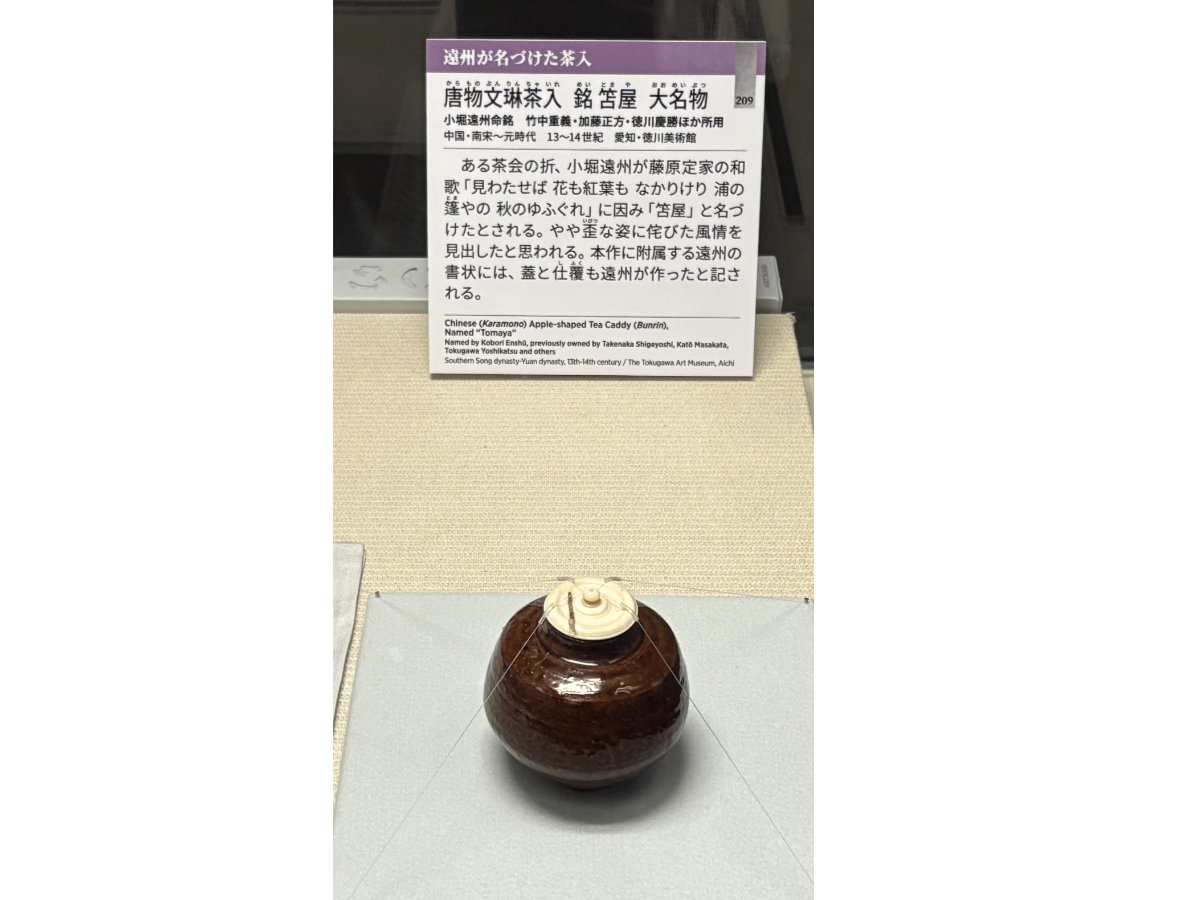
Why Were Tea Utensils From China So Valuable?
Paintings, ceramics, and tea utensils brought from China were called karamono and were highly prized in Japanese chanoyu.
“Yakushiin” was an imported Chinese vessel made several centuries before Hidenaga’s career in the 16th century. Its rarity and long provenance added to its value.
Tea utensils were practical objects for preparing tea, but they also helped form relationships through gifts and tea gatherings.
As histories accumulated around who owned an object and at which gatherings it was used, owning or using a celebrated tea utensil could demonstrate wealth, cultural sophistication, and connections with powerful people. Its importance is easier to grasp when understood as an object that made authority visible.
Hidenaga Used It at a Tea Gathering in Yamatokoriyama
Hidenaga is known to have used “Yakushiin” at a tea gathering held in Yamatokoriyama during the New Year of 1587.
The object shows that Hidenaga took part not only in warfare and politics but also in social exchange through chanoyu.
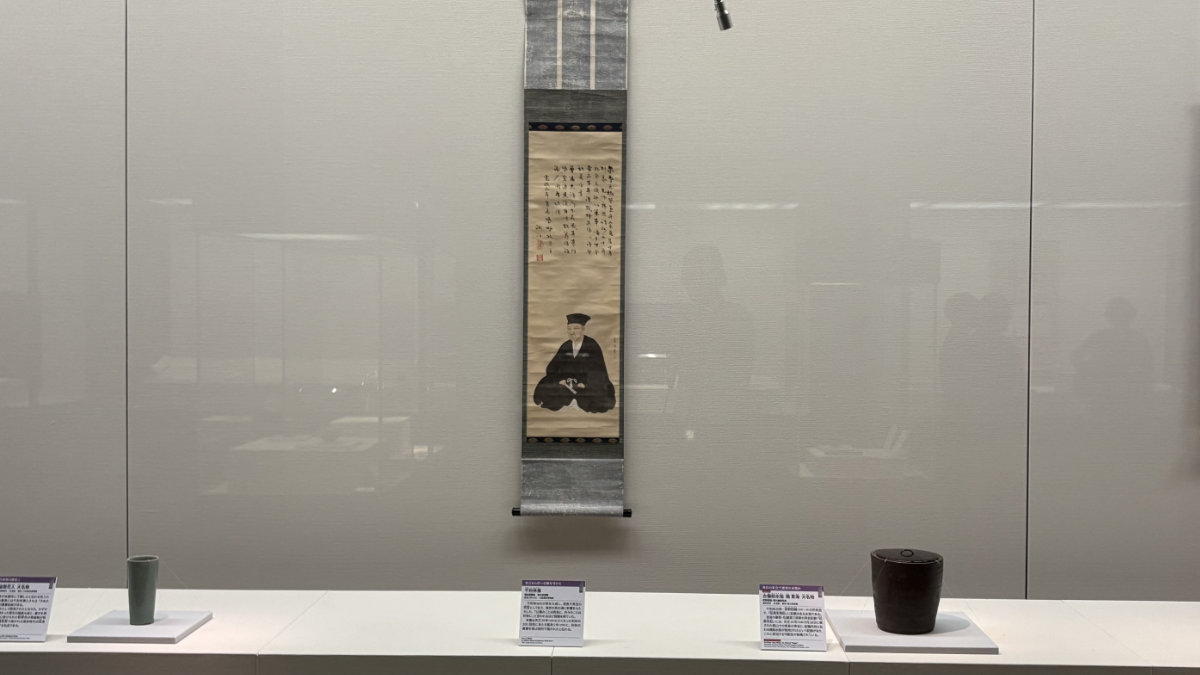
The “Bamboo Tea Scoop, Poetic Name Omokage,” made by Kobori Enshu, is also on view throughout the exhibition.
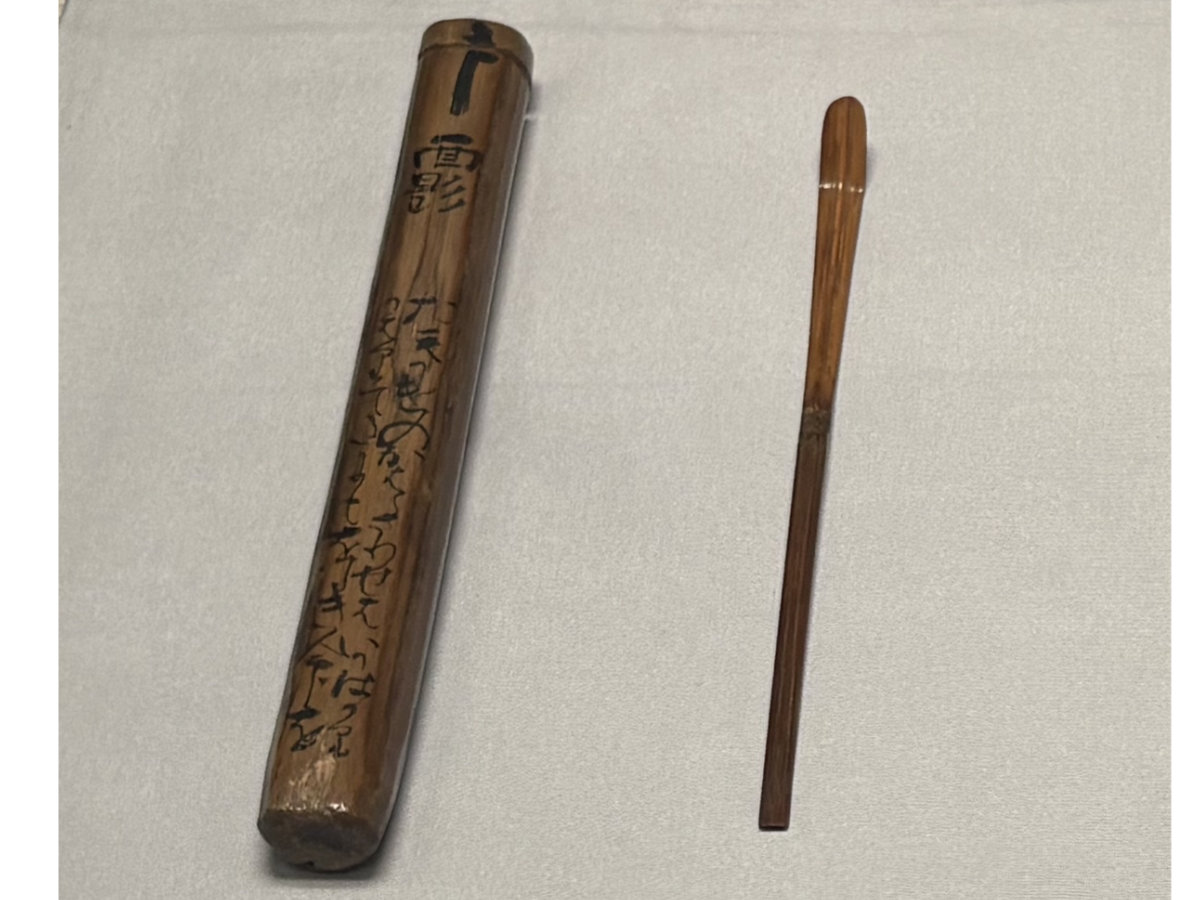
Following the line from Hidenaga’s retainers to the chanoyu of the next era also reveals how culture was passed down through people.
The splendor of Momoyama culture is conveyed not only by chanoyu but also by Noh costumes.
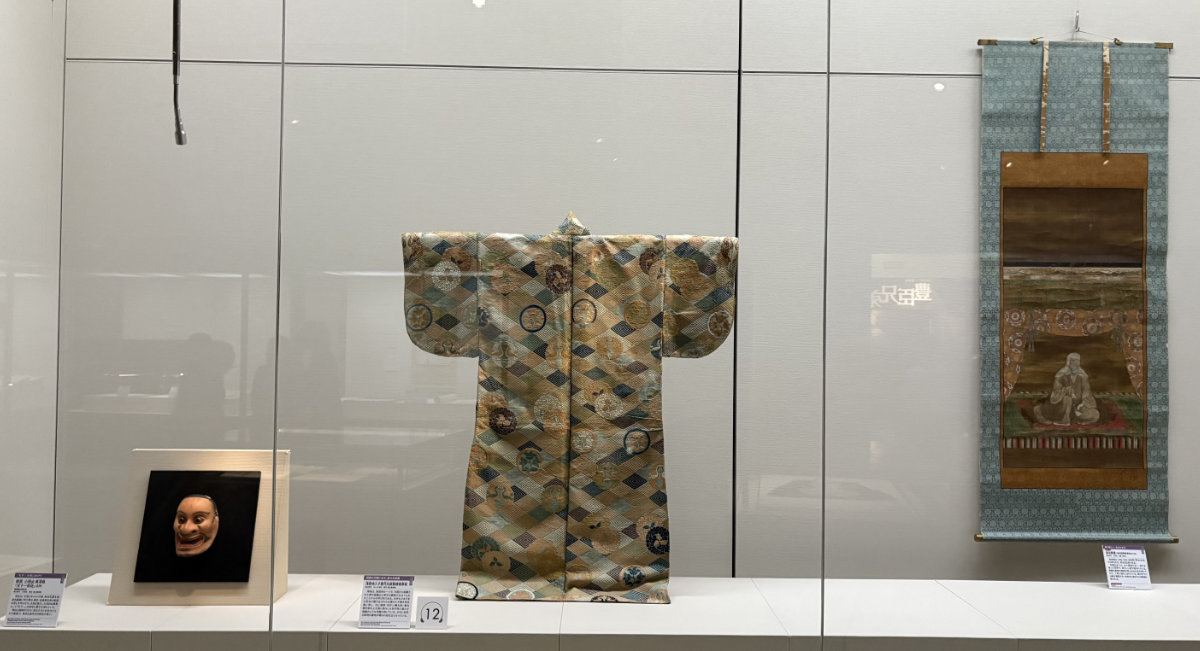
“Atsuita Robe With Nested Diamond, Floral-Roundel, and Scattered Motifs on a Pale Blue Ground” is a work worth examining for its colorful patterns and tailoring characteristic of the Momoyama period.
“Yakushiin” looks different when, rather than seeking flashiness, visitors focus on the fact that Hidenaga owned and used at a tea gathering a Chinese vessel handed down over centuries. The small tea caddy offers insight into Hidenaga’s status, cultural refinement, and personal connections.
The Statue of Lord Toyotomi Hidenaga Shows His Enduring Esteem in Yamato
Near the end of the exhibition are objects showing how the Toyotomi brothers were remembered after their deaths.
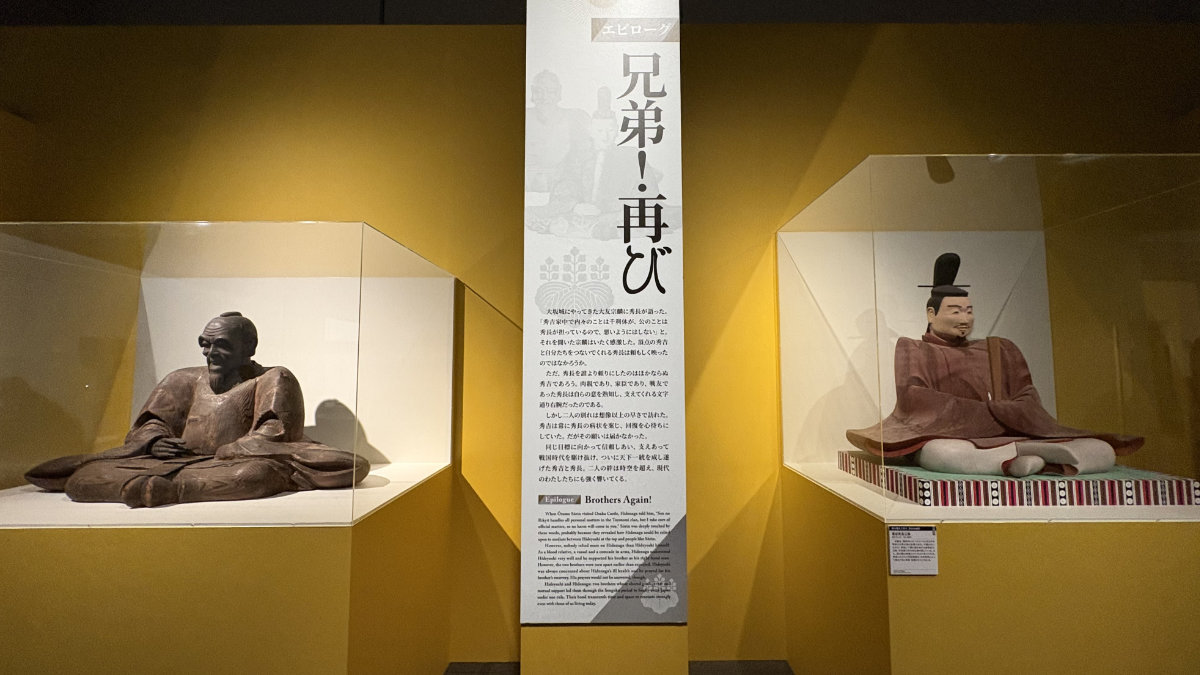
The “Statue of Lord Toyotomi Hidenaga,” preserved at Tsubosakadera Temple in Nara, was made in 1630.
Created about 40 years after Hidenaga’s death and donated to Tsubosakadera, it shows that he remained highly regarded for many years among people connected with Yamato.
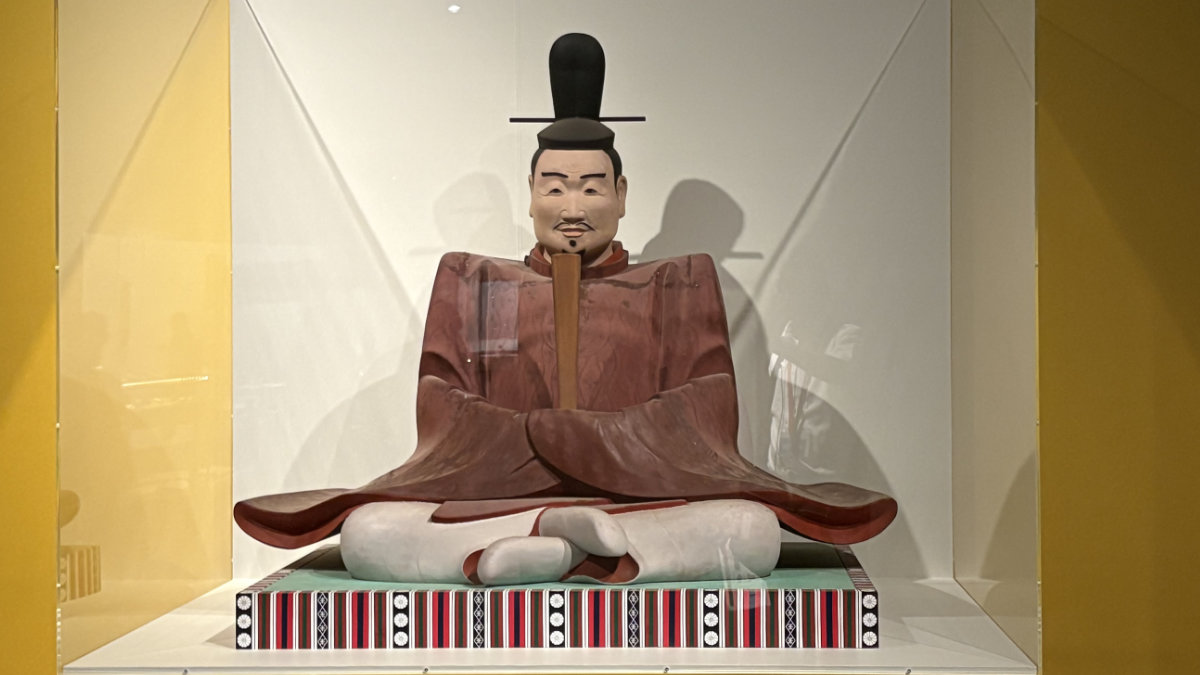
Hidenaga governed Yamato from his base at Koriyama Castle.
An important point of the exhibition is that he was remembered not only for his achievements as a Sengoku warrior but also as a lord who governed the region.
Choose the First or Second Period Based on the Works You Want to See
Some portraits, folding screens, letters, and other works are rotated between the first and second periods.
“Hashiba Hideyoshi Written Instructions to the Governor of Mino” is on view through July 27, while “Scenes of Jurakudai Folding Screen” is shown during the first period through August 3. The first period is the better choice for visitors who prioritize Hideyoshi’s instructions to Hidenaga and the political setting of Japan’s ruler.
The second period includes the “Portrait of Toyotomi Hidenaga” from Daikoin Temple in Kyoto and the “Portrait of Toyotomi Hideyoshi” from Myokoji Temple in Aichi.
Other objects, including the roof tiles, the “Yakushiin” katatsuki tea caddy, and the Statue of Lord Toyotomi Hidenaga, remain on view throughout the exhibition.
The first period ends August 3, and the second begins August 5. The museum is closed on Tuesday, August 4. Some works have display dates that differ from these overall periods. Visitors coming for a particular object should check the exhibition checklist before choosing a date.
For History Beginners, Follow “Who Did What”
The exhibition includes many battle names, court titles, and historical documents.
Rather than trying to memorize every date and name, keep the following three questions in mind to follow the overall story more easily.
- What broad strategy did Hideyoshi decide?
- What responsibilities was Hidenaga given in the field?
- How did retainers, craftspeople, and tea masters support the brothers?
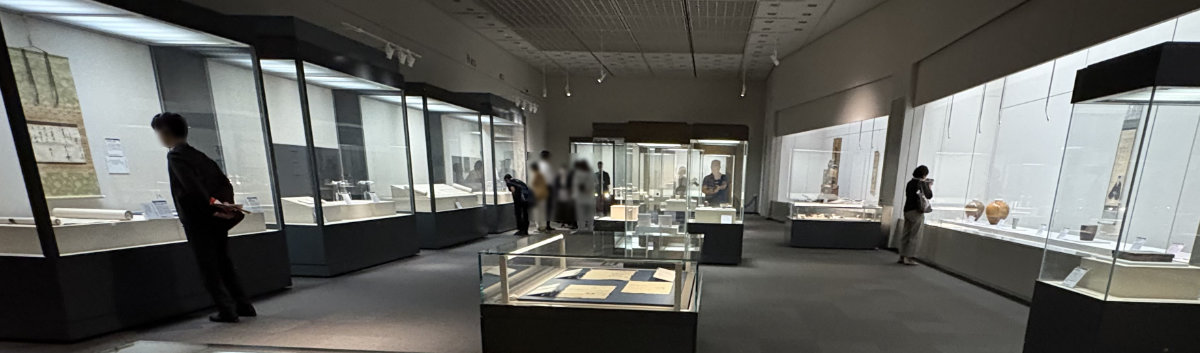
Visitors interested in battles and castles can grasp the sequence by focusing on the Shizugatake materials, the Jurakudai folding screen, and the castle roof tiles.
Those interested in art and culture should look closely at the tea caddy, tea scoop, Noh costume, and portraits to see how warriors used culture.
For couples and friends, the exhibition also makes for good conversation afterward, because interests can naturally divide between military history and decorative arts.
The Audio Guide Helps Clarify Relationships Between the Figures
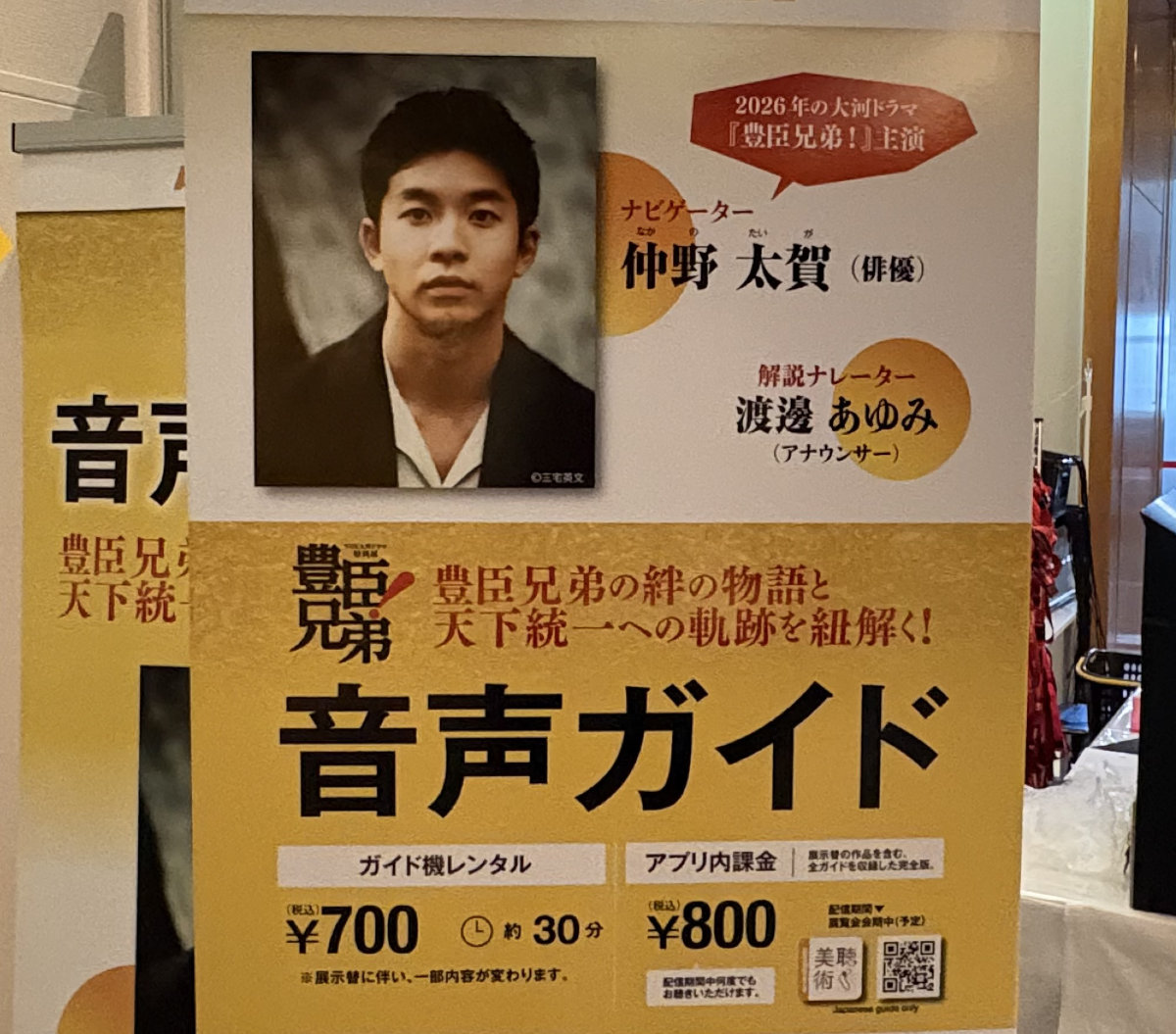
The audio guide is hosted by Taiga drama actor Taiga Nakano, who plays Toyotomi Hidenaga. With narration by announcer Ayumi Watanabe, it follows the path toward national unification.
The on-site rental version costs $4.38 per device. For visitors unsure about historical terminology or the relationships among the figures, listening in gallery order can make the material easier to understand.
Plan Time for Related Events and a Break
The “Hidenaga Castle Summit” will be held on August 1, 2026.
Curators connected with Nagahama Castle, Takeda Castle, Arikoyama Castle, Osaka Castle, Himeji Castle, Wakayama Castle, and Koriyama Castle will discuss Hidenaga’s strategy and policies and the roles played by the castles.
Participation is free, but visitors need both an admission ticket for the exhibition that day and a numbered entry ticket. The numbered tickets will be distributed from 10:00 a.m. in front of the fourth-floor auditorium, limited to the first 250 people.
A curator-led slide talk is scheduled for August 8, and the commemorative lecture “Toyotomi Hideyoshi and Osaka Castle” for August 22.
On days with related events, it is best to plan separately for ticket distribution, the program itself, and time in the exhibition.
For a break after the galleries, the first-floor restaurant ZIPANG is offering a special menu during the exhibition. Showing an exhibition ticket gives visitors 10% off the special menu.
The Special Shop Offers the Catalog and Exhibition Merchandise
After viewing the exhibition, visitors can stop by the special shop.
The official catalog costs $17.50. In addition to images and explanations of every work in the exhibition, it includes material that could not be fully presented in the galleries.
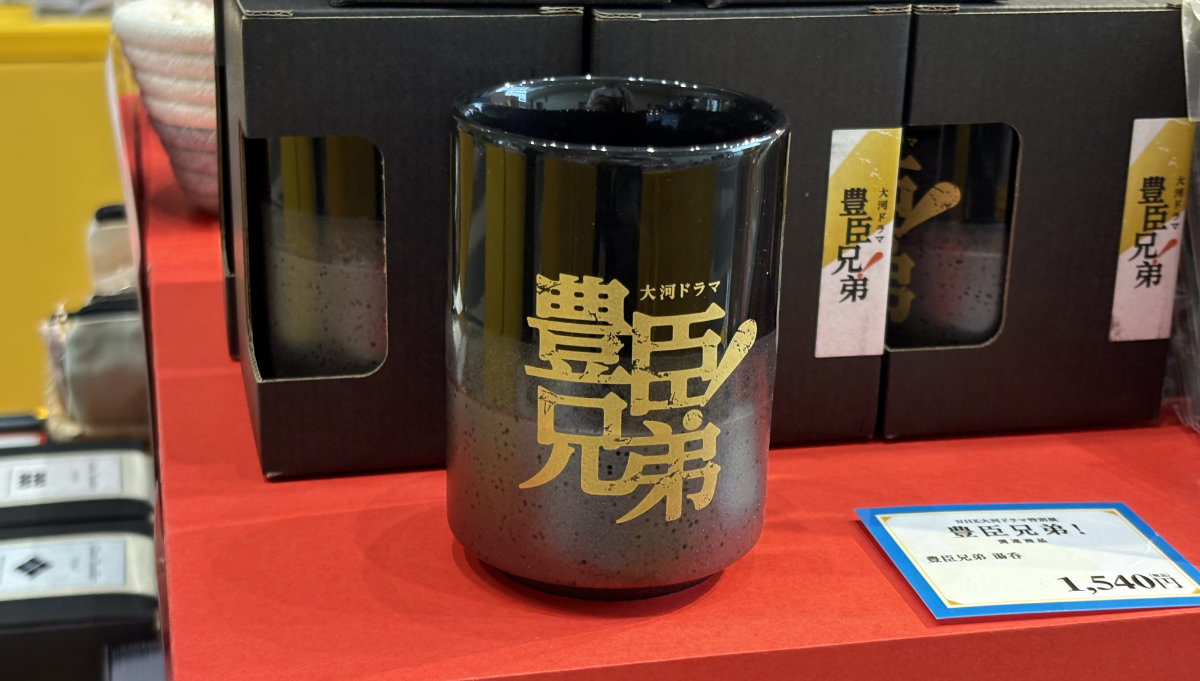
At the time of the visit, the shop offered tableware bearing the exhibition logo as well as merchandise incorporating Hideyoshi’s and Hidenaga’s signatures, family crests, and battle standards.
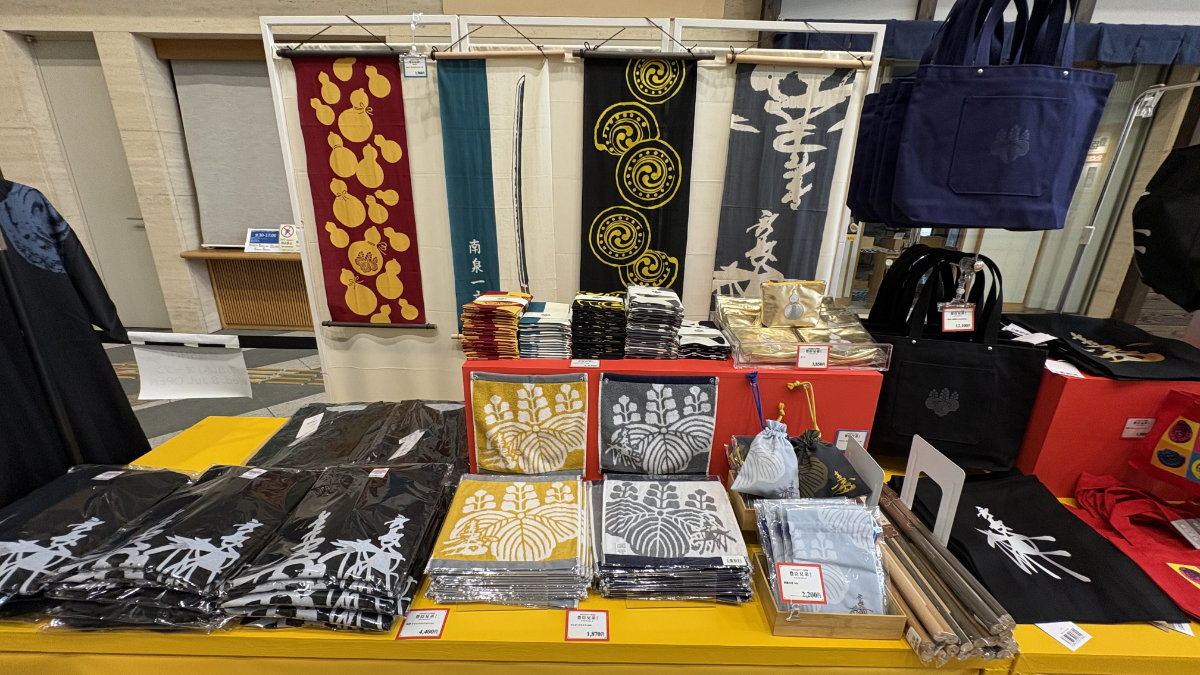
Some textile goods come in subdued colors, with designs suited not only as souvenirs of a history event but also for everyday use.
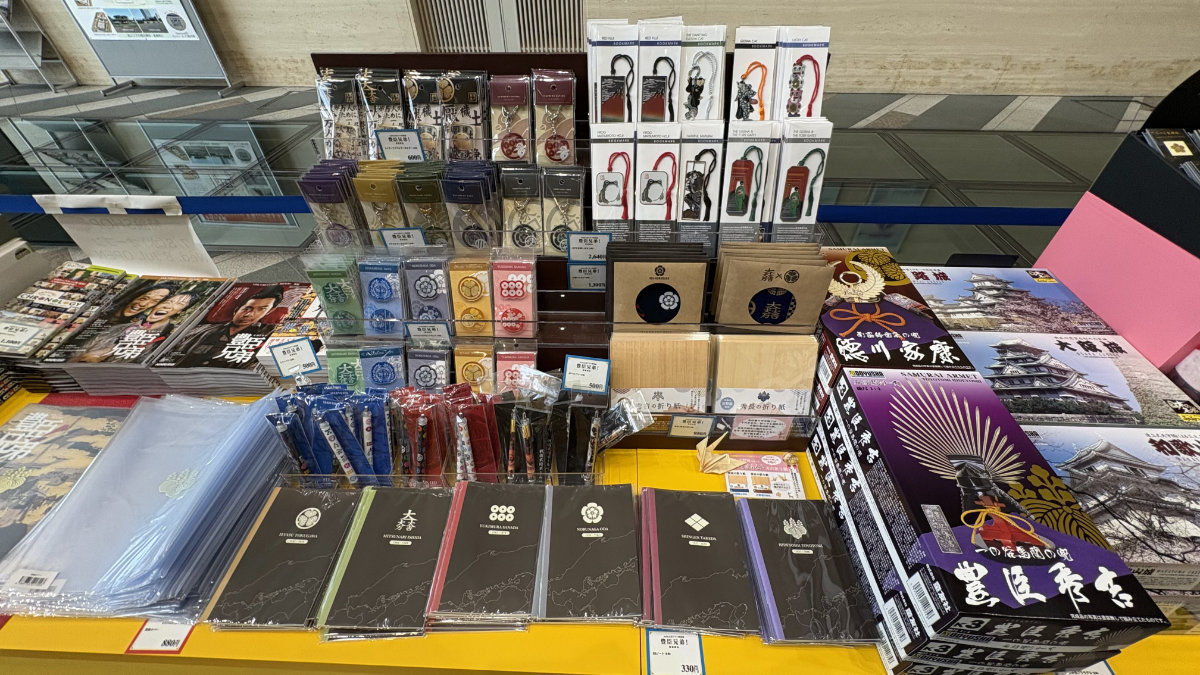
With a broad range of prices, the stationery and small-goods section makes it easy to find souvenirs for family and friends.
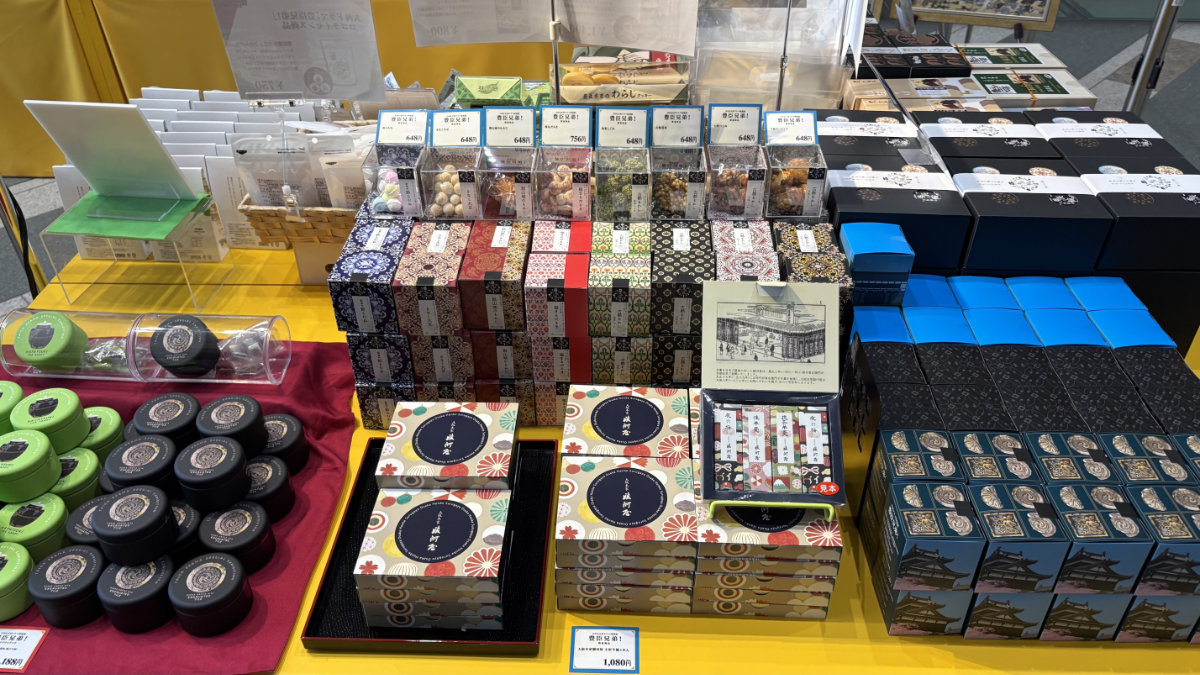
Products may sell out or be discontinued. Visitors seeking a particular item should check its availability in the shop when they arrive.
Learning About Hidenaga Changes How You See Hideyoshi
Toyotomi Hideyoshi is widely known as a man who rose from humble origins to become the ruler of Japan.
Yet his success cannot be explained by Hideyoshi’s talent alone.
Hidenaga commanded the front lines, managed postwar settlements, and governed extensive territory. His retainers, the craftspeople involved in castle construction, and tea masters also supported the brothers’ government.
The letters from Hideyoshi to Hidenaga reveal practical trust between the brothers.
The roof tiles from Osaka Castle and Koriyama Castle reveal shared technology behind castle building.
The small “Yakushiin” tea caddy shows that Hidenaga was involved not only in military power but also in the culture of chanoyu and the world of personal relationships.
Rather than presenting a simple picture of a glamorous elder brother and a younger brother supporting him from the shadows, this exhibition shows two men with different strengths dividing their roles and mobilizing a wide range of people and technologies.
Frequently Asked Questions About the “Toyotomi Brothers!” Osaka Exhibition
Can I Enjoy It Without Watching the Taiga Drama?
Yes. The exhibition follows the Toyotomi brothers chronologically and builds their portraits through letters, folding screens, castle roof tiles, tea utensils, and other objects.
Visitors who are unsure about the relationships among the figures can use the gallery panels and audio guide to follow the story more easily.
Which Should I Choose, the First or Second Exhibition Period?
Those who want to see Hideyoshi’s letter to Hidenaga should visit by July 27, while those who want to see the Jurakudai folding screen should come during the first period by August 3.
The second period features different works, including portraits of Toyotomi Hideyoshi and Toyotomi Hidenaga. Check the individual display dates when planning around a particular work.
Why Is the “Yakushiin” Tea Caddy Important?
It is the only tea caddy known to have been owned by Hidenaga, and records show that he used it at a tea gathering in Yamatokoriyama in 1587.
Made in China in the 13th or 14th century, this karamono object is valuable not only for its rarity but also for the history it preserves of its owners and tea gatherings.
Can I Visit With Children?
Admission is free for junior high school students and younger. However, because many displays involve reading historical documents and explanatory text, younger children may find parts of the exhibition difficult.
Starting with visually accessible objects—such as battle standards in the battle paintings, patterns on castle roof tiles, armor, and statues—can help spark their interest.
Exchange rate used: US$1 = JPY 160.

Make the latest USJ and Kansai event updates
easier to find on Google.



![Osaka Temperatures by Month | What to Wear at USJ for Morning-to-Night Temperature Swings [Women & Men]](https://happyell.co.jp/world/wp-content/uploads/2026/08/usj-osaka-temperature-clothingtitle-600x338.jpg)