What you’ll learn in this article
- Highlights of Sen-Oku Hakukokan Museum’s “The Kan’ei Imperial Visit and the Cultural Figures of the Flowering Capital”
- What the “Folding Screens Depicting the Imperial Visit to Nijo Castle” reveal about Kyoto’s excitement 400 years ago
- A newly exhibited artifact that offers clues to the lost “Imperial Visit Palace”
- Kan’ei culture and exchanges among cultural figures centered on Tofukumon-in Masako
- The oldest surviving jūnihitoe court robe and oshie textile art associated with Tofukumon-in
The “Imperial Procession Reenactment Event” will take place on December 6, 2026.
One work is especially important for understanding what the procession looked like 400 years ago.
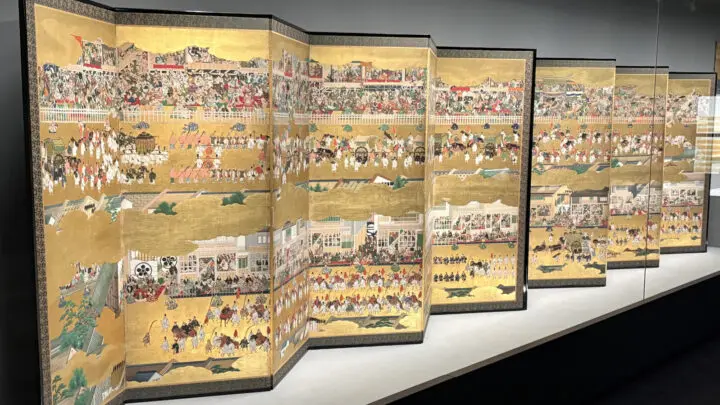
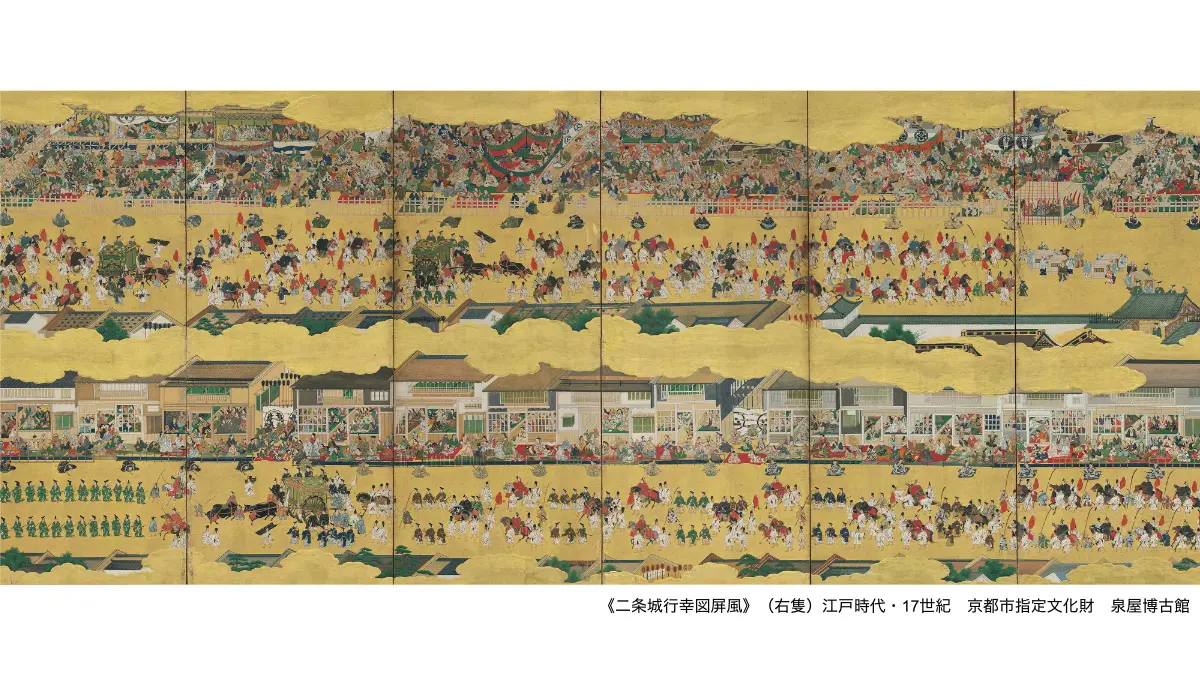
It is the “Folding Screens Depicting the Imperial Visit to Nijo Castle”, held by Sen-Oku Hakukokan Museum.
The work is also used as the key visual for the 400th anniversary of the Kan’ei Imperial Visit, and it serves as an important reference for considering the costumes and spectators in the 2026 reenactment.
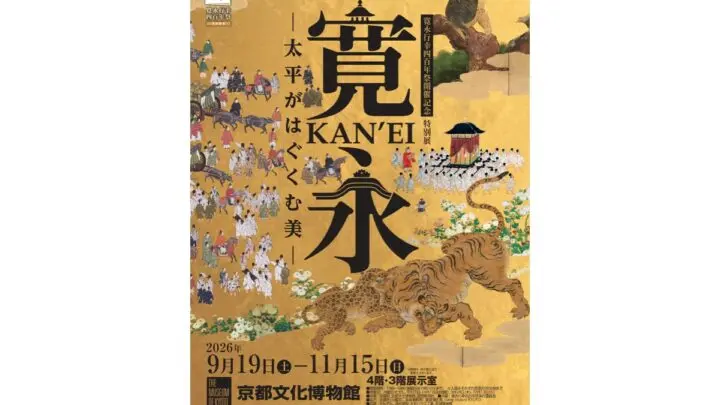
From September 5 to October 18, 2026, Sen-Oku Hakukokan Museum will present
the 400th Anniversary Special Exhibition “The Kan’ei Imperial Visit and the Cultural Figures of the Flowering Capital.”
The exhibition not only looks back at the Kan’ei Imperial Visit through the “Folding Screens Depicting the Imperial Visit to Nijo Castle,” but also traces the broader “Kan’ei culture” that grew from Tofukumon-in Masako and connected court nobles, warriors, tea practitioners, and artists across social ranks.
Why is Sen-Oku Hakukokan Museum holding a special exhibition for the 400th anniversary of the Kan’ei Imperial Visit?
At a media briefing, the museum gave a very clear explanation of why it is presenting an exhibition marking 400 years since the Kan’ei Imperial Visit.
The biggest reason is simple:
it owns the “Folding Screens Depicting the Imperial Visit to Nijo Castle.”
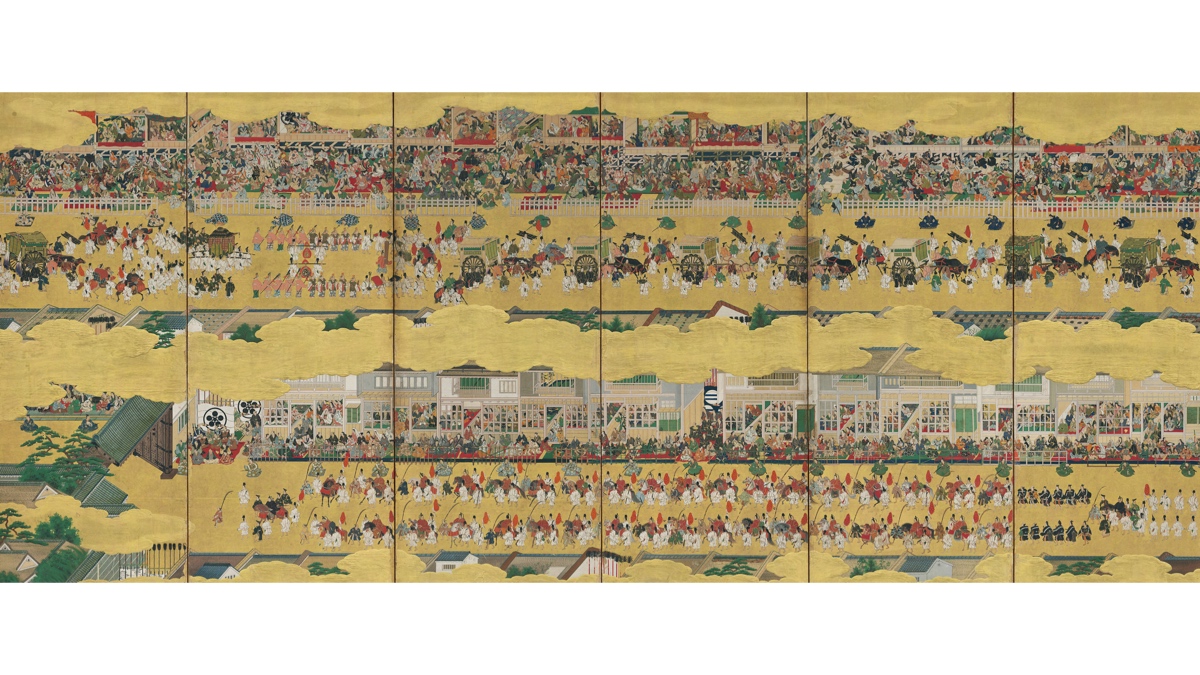
These screens, which depict the Kan’ei Imperial Visit of 1626, have become a symbolic work for the 400th-anniversary project as well.
Official materials from Sen-Oku Hakukokan Museum describe them as outstanding among related works for their reliable record of historical events, lively depictions of everyday customs, and meticulous detail.
Rather than viewing the figures only from a distance, it is worth looking closely at each person’s clothing and movement, as well as the people watching the procession.
The emperor and shogun are not the only stars: the scene is packed with spectators
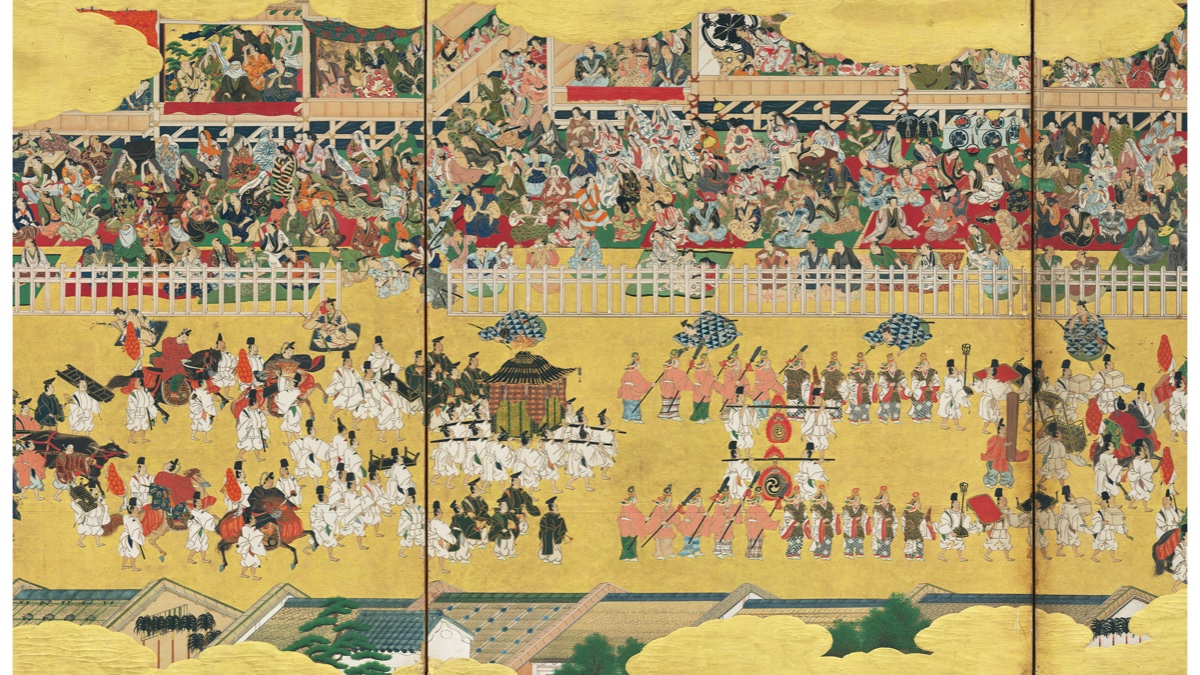
Edo period, 17th century, Kyoto City-designated Cultural Property, Sen-Oku Hakukokan Museum
In a typical depiction of an imperial visit, the central figures are the main participants in the procession, such as the emperor and shogun.
But the “Folding Screens Depicting the Imperial Visit to Nijo Castle” show much more than that.
An astonishing number of people watching the procession from along the route are depicted.
People, people, and more people fill the scene.
Spectators appear in buildings, on viewing stands, and along the roadside, watching the procession from all kinds of places.
Although the screens are a historical record, part of their appeal is that you can also search for the expressions and clothing of Kyoto residents from 400 years ago.
Were there really this many people? Crowds gathered at viewing stands from the night before
The briefing also introduced a fascinating episode.
With so many spectators painted into the screens, you might wonder,
“Was the artist exaggerating because it was a painting?”
However, research into written records found that viewing stands had been set up around Horikawa and people were already gathering from the night before the imperial visit.
Even 400 years ago, large numbers of people gathered the night before to see the next day’s procession.
The Kan’ei Imperial Visit was a major political ceremony involving the Imperial Court and the shogunate, but it was also a public spectacle exciting enough to stir the whole city of Kyoto.
When viewing the “Folding Screens Depicting the Imperial Visit to Nijo Castle,” do not follow only the procession; look closely at the spectators painted in the upper parts of the scene and elsewhere too.
That is why the 2026 reenactment includes the “spectators” too
The world depicted on the screens is also connected to the reenacted procession on December 6, 2026.
This time, organizers have created “costumed spectator seating,” where not only procession participants but also audience members can watch while wearing period dress.
In other words,
the project aims to bring even the “people watching” in the 400-year-old screens back to life in the present day.
Seeing the “Folding Screens Depicting the Imperial Visit to Nijo Castle” before attending the reenactment helps explain why spectators themselves are being invited to wear costumes.
What was the lost “Imperial Visit Palace” like?
The exhibition looks not only at the procession but also at the lavish hospitality provided inside Nijo Castle.
At the time, an “Imperial Visit Palace” was built at Nijo Castle to welcome Emperor Go-Mizunoo.
However, after the imperial visit it was relocated to the Sento Imperial Palace in Kan’ei 5 (1628), and it no longer remains at today’s Nijo Castle.
At the briefing, it was described as a kind of “lost building” because it stood at Nijo Castle for only a very short time.
What furnishings were arranged inside, and what did the space look like?
Many details are still unknown today.
First public display: a tobacco pouch said to reuse fabric from the Imperial Visit Palace blinds
The exhibition also introduces a particularly intriguing object that offers clues to this “lost Imperial Visit Palace.”
It is a small tobacco pouch passed down in the Ii family of Hikone Domain.
According to the briefing, an inscription on the box states that it was a gift from Tokugawa Iemitsu to Ii Naotaka, while the two colors of fabric used in it are
said to have been repurposed from fabric that edged the blinds of the Imperial Visit Palace.
The Imperial Visit Palace itself no longer survives at today’s Nijo Castle.
Yet this small piece of preserved cloth lets us imagine
“what kind of space was created to receive the emperor.”
The object drew such attention through the latest research that a curator at the briefing could not help saying,
“Isn’t this amazing? Do you see how amazing it is?”
Splendid furnishings showing Tokugawa wealth and craftsmanship
The Imperial Visit Palace at Nijo Castle is said to have welcomed Emperor Go-Mizunoo with lavish furnishings made with gold and silver.
The briefing also explained that researchers looked for furnishings actually used in the palace but were unable to confirm any surviving examples.
Instead, the exhibition presents luxurious wedding furnishings and other objects made about 10 years after the Kan’ei Imperial Visit, when Tokugawa Iemitsu’s daughter Princess Chiyo married into the Owari Tokugawa family.
They are not the actual items used in the Imperial Visit Palace, but they offer clues to how the Tokugawa family commissioned the finest furnishings of the period.
They are more than simply “luxurious objects made with lots of gold.”
Looking closely at their fine decoration and materials also reveals the Tokugawa family’s wealth and the high level of craftsmanship of the time.
Another central figure: Tofukumon-in Masako
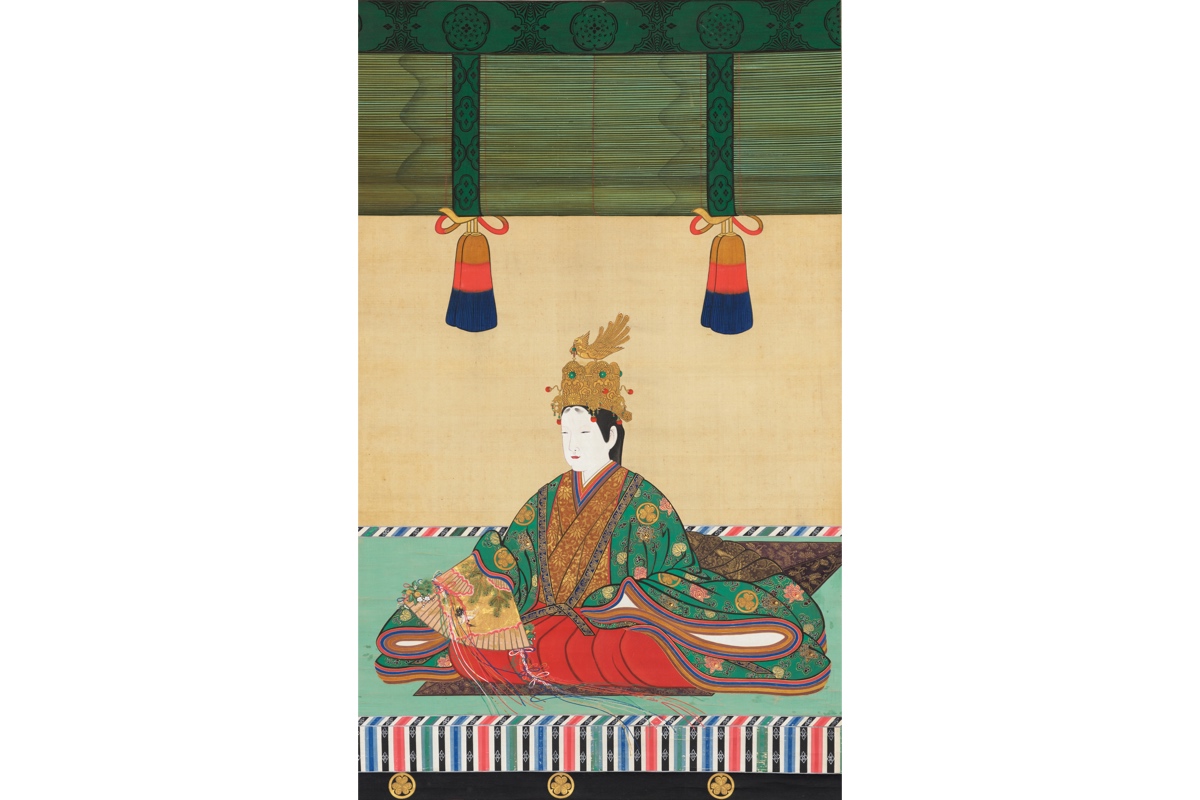
Alongside the “Folding Screens Depicting the Imperial Visit to Nijo Castle,” another major focus of the exhibition is Tofukumon-in Masako.
She was the daughter of Tokugawa Hidetada and the younger sister of Iemitsu.
She became the empress consort of Emperor Go-Mizunoo.
Official materials introduce her as
the only woman in Japanese history born into a shogunal family who became the emperor’s consort.
In Genna 6 (1620), at age 14, she entered the Imperial Palace to marry Emperor Go-Mizunoo.
Although political tensions existed between the Imperial Court and the shogunate, the couple had a daughter, and by the time of the Kan’ei Imperial Visit the mood of reconciliation between court and warrior government had grown considerably.
She is important not only for understanding the background that made the Kan’ei Imperial Visit possible, but also for tracing the cultural developments that followed.
The oldest surviving jūnihitoe: see Tofukumon-in’s highest-quality court dress
A major highlight that makes Tofukumon-in’s presence tangible is the “Karaginu and Uwagi Garments Used by Tofukumon-in.”
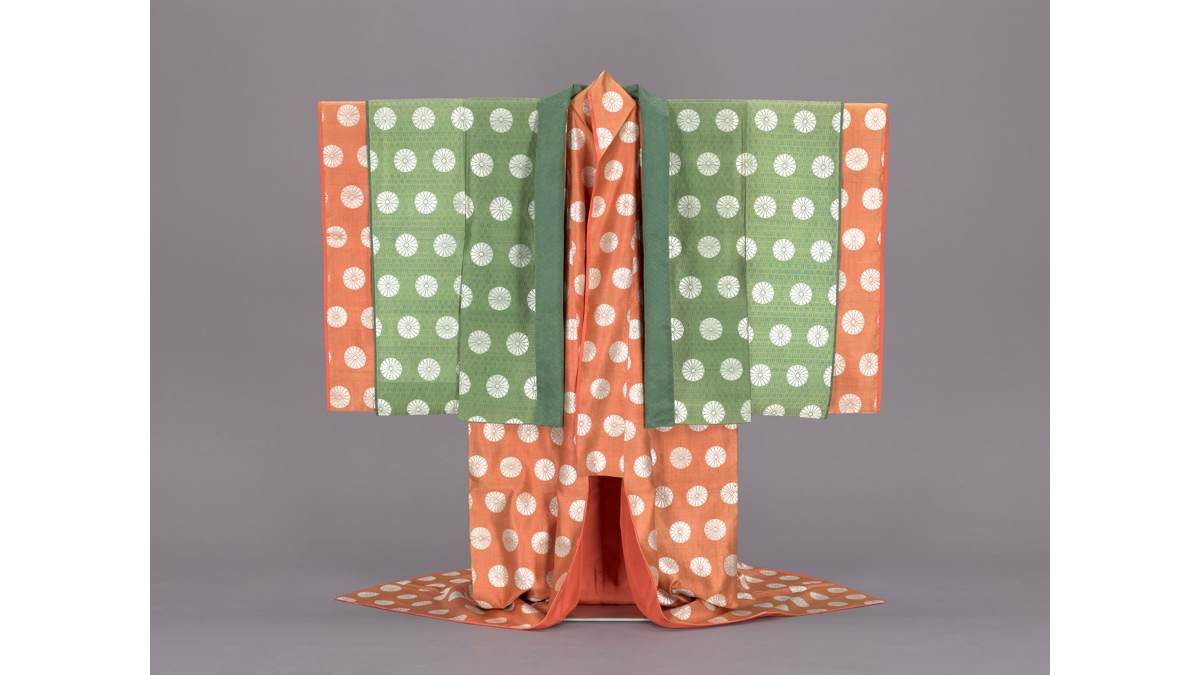
Edo period, 17th century, Kyoto Prefecture-designated Cultural Property, Reikan-ji Temple (On view: September 5–27)
Official materials describe this precious costume as the oldest surviving jūnihitoe.
Its vivid design combines green and orange with repeating white chrysanthemum patterns.
The garments also convey Tofukumon-in’s status as both “a daughter of the Tokugawa shogunal family and the emperor’s consort.”
However, they will be on display only from September 5 through September 27.
Visitors who want to see them need to come during the first half of the exhibition.
Tofukumon-in was not merely a “recipient of culture”
Tofukumon-in was not simply someone who owned luxurious clothing and furnishings.
She participated in cultural activities herself and was deeply involved in the creation of works.
A representative example is “oshie”.
This craft uses cut and layered textile pieces to depict figures and scenes from Noh performances, and Tofukumon-in is thought to have been deeply involved in their design and conception.
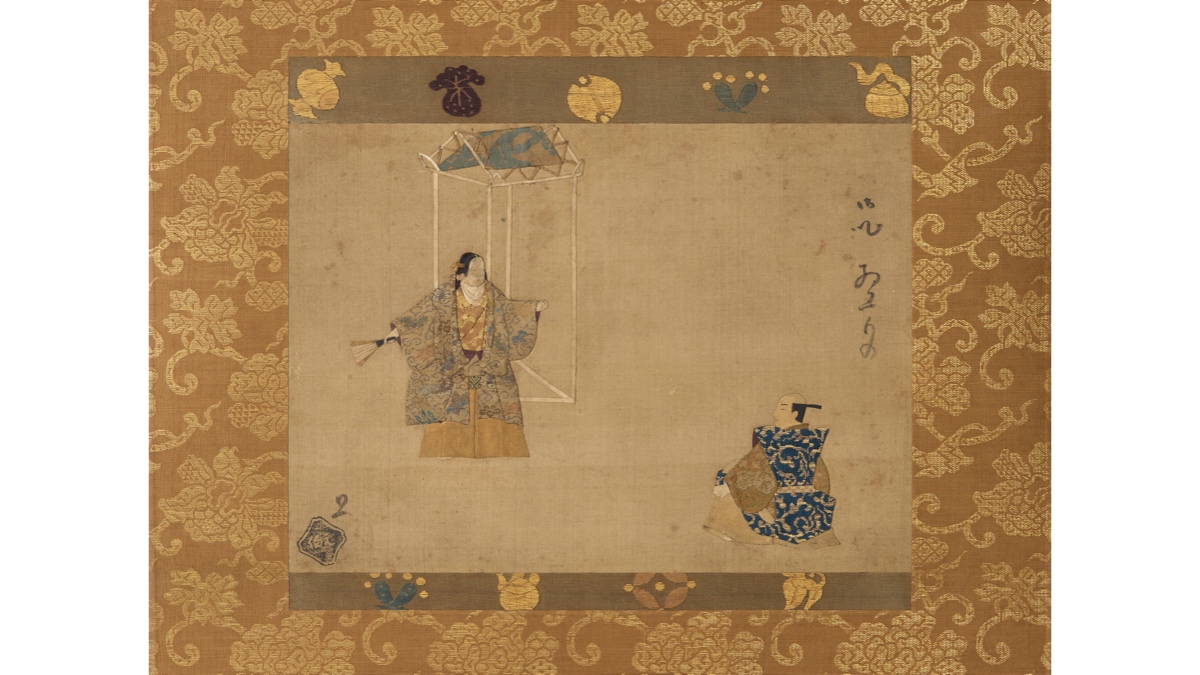
In “Oshie of the Noh Play ‘Yang Guifei,’” a costumed figure is formed from small pieces of textile.
The beauty of the materials themselves is striking, but the combinations of costume elements and the way the figure is represented also deserve attention.
Official materials also note that these oshie works have been preserved at places associated with members of the imperial family, daimyo, monks, tea practitioners, and others who had ties with Tofukumon-in.
Looking not only at the works themselves but also asking
“Who did Tofukumon-in give them to?”
reveals a cultural network that connected people to one another.
Cultural connections spreading across social ranks from Tofukumon-in
The exhibition expands further into tea, waka poetry, crafts, and more.
It features major cultural figures of the Kan’ei era, including Emperor Go-Mizunoo, Sen Sotan, Shokado Shojo, Kobori Enshu, and Nonomura Ninsei.
The important point is that culture was not created only by court nobles and warriors.
Tea practitioners and artists also mingled across social boundaries, and a distinctive culture emerged as people from the court, warrior class, and broader society inspired one another across rank.
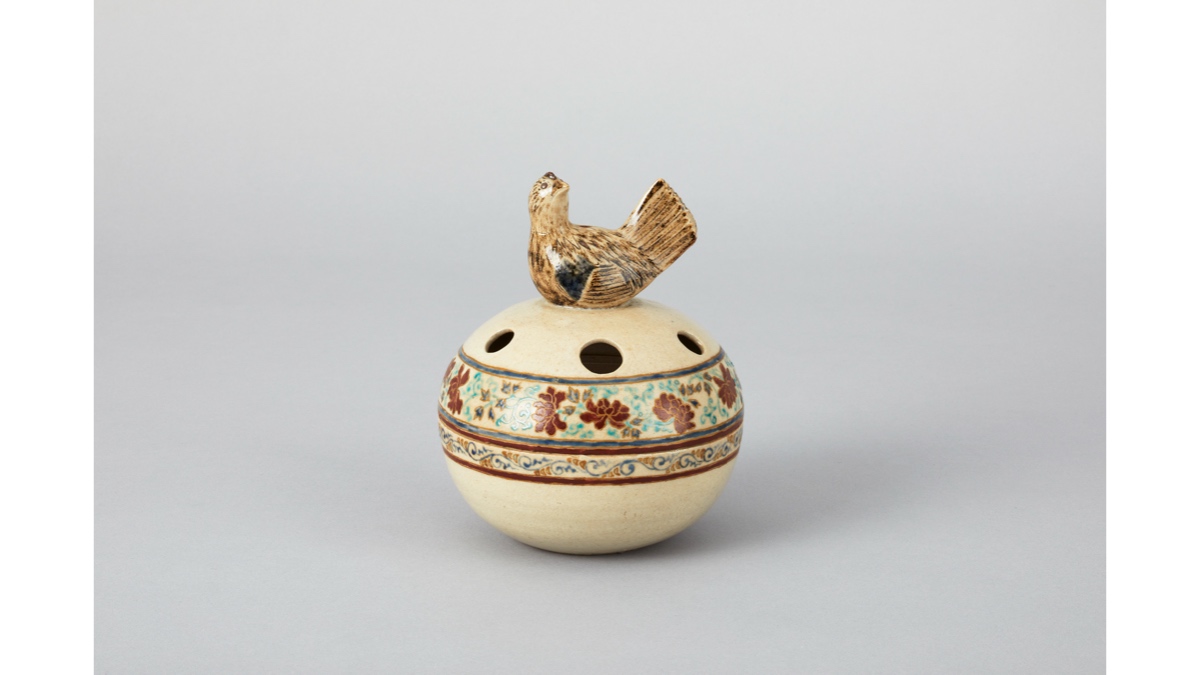
Nonomura Ninsei’s “Round Incense Burner with Chicken Finial” is another work that makes the craftsmanship of the period enjoyable to explore.
The sight of a small bird perched neatly atop the rounded vessel feels quite different from the stiff image the phrase “historical artifact” might suggest.
Even without detailed knowledge of Kan’ei culture, visitors can enjoy looking for a favorite work based on shape, color, and other visual qualities.
True to the exhibition title, “The Cultural Figures of the Flowering Capital,” this is not simply a show of historical documents; it explores how people living in the Kan’ei era connected with one another and created beauty.
Kosode fashion spread from warrior households to the Imperial Palace and court society
Tofukumon-in is also known for ordering large numbers of kosode robes.
Records from Kariganeya, a kimono merchant run by the father and relatives of Ogata Korin, show that the shop received many kosode orders from Tofukumon-in.
These were luxurious garments using embroidery, tie-dyeing, dark red-black dyeing, and other techniques.
Tofukumon-in also gave kosode not only for herself but to women around her, including imperial princesses and court ladies.
Official materials explain that this helped kosode, originally centered in warrior society, spread to the Imperial Palace and then to court society.
Following the clothing choices of a single woman reveals how court and warrior cultures began to blend.
If you plan to see the procession, first see the “Folding Screens Depicting the Imperial Visit to Nijo Castle”
On December 6, 2026, the Kan’ei Imperial Visit procession will be reenacted with about 330 participants.
The “Folding Screens Depicting the Imperial Visit to Nijo Castle” at Sen-Oku Hakukokan Museum are an important clue for imagining what that scene looked like.
The procession painted on the screens.
The spectators filling the space around it.
The colorful period costumes.
And 400 years later, a costumed procession and audience appearing once again in the streets of Kyoto.
Seeing the exhibition before December 6 may make the event feel like more than a historical parade:
“the world painted on the folding screens coming back to life in Kyoto 400 years later.”
The exhibition also looks beyond the procession to the culture that spread around Tofukumon-in.
Feel the “excitement” of Kyoto 400 years ago through the “Folding Screens Depicting the Imperial Visit to Nijo Castle,” then discover the era’s “beauty” through clothing, oshie, tea utensils, and crafts.
Experiencing both sides together is what makes this special exhibition at Sen-Oku Hakukokan Museum distinctive.
400th Anniversary Special Exhibition “The Kan’ei Imperial Visit and the Cultural Figures of the Flowering Capital” — Visitor Information
400th Anniversary Special Exhibition “The Kan’ei Imperial Visit and the Cultural Figures of the Flowering Capital”
Dates
September 5 (Sat)–October 18 (Sun), 2026
Hours
10:00 a.m.–5:00 p.m.
* Last admission at 4:30 p.m.
Closed
Mondays
* Open September 21 and October 12
Closed September 24 (Thu) and October 13 (Tue)
Venue
Sen-Oku Hakukokan Museum
24 Shishigatani Shimomiyanomae-cho, Sakyo-ku, Kyoto, Kyoto Prefecture
Admission
Adults: ¥1,200 (¥1,000 for groups of 20 or more)
Students: ¥800 (¥700 for groups of 20 or more)
Age 18 and under: Free
* Students and visitors age 18 and under must present identification.
* Visitors who present a disability certificate or similar document, plus one accompanying person, are admitted free of charge.
* The above admission fee also includes the concurrent Bronze Gallery exhibition.
* “Karaginu and Uwagi Garments Used by Tofukumon-in” is on view for a limited period from September 5 to September 27.
* Please check the official Sen-Oku Hakukokan Museum website for the latest exhibition and event information.

Make the latest USJ and Kansai event updates
easier to find on Google.


![Osaka Temperatures by Month | What to Wear at USJ for Morning-to-Night Temperature Swings [Women & Men]](https://happyell.co.jp/world/wp-content/uploads/2026/08/usj-osaka-temperature-clothingtitle-600x338.jpg.webp)