NHK VR “Samurai’s Dream” Is Not About Watching History—It Puts You Inside It
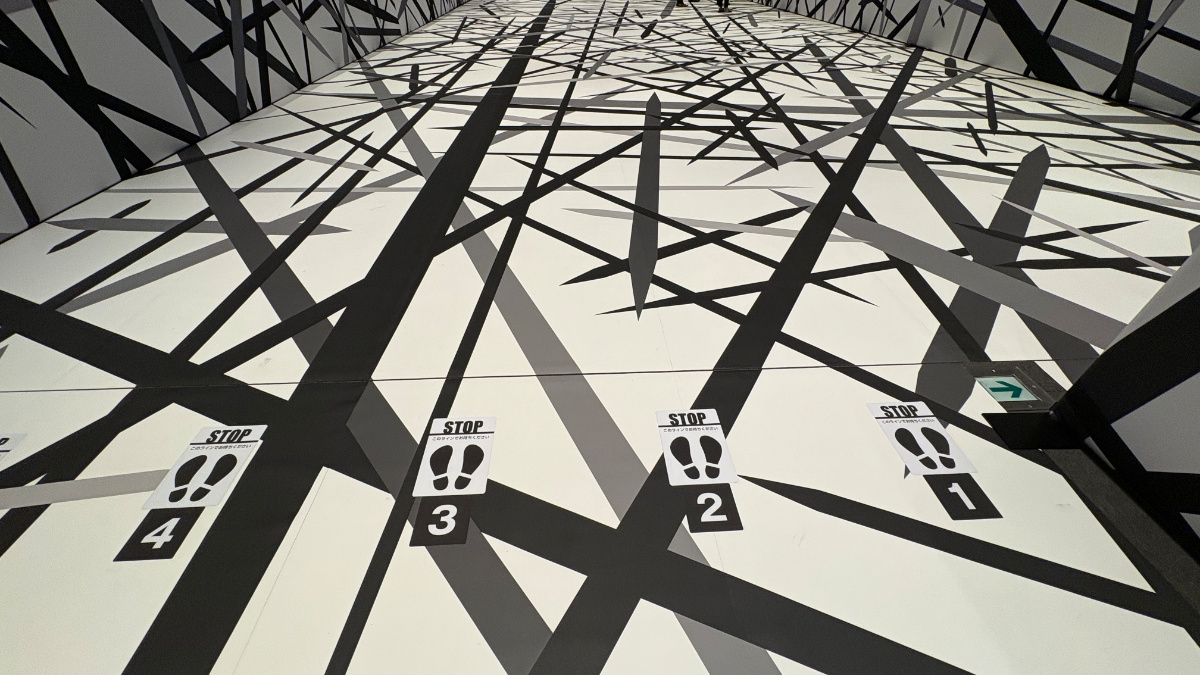
I have experienced many kinds of VR, from theme-park attractions and VR games to Expo VR content.
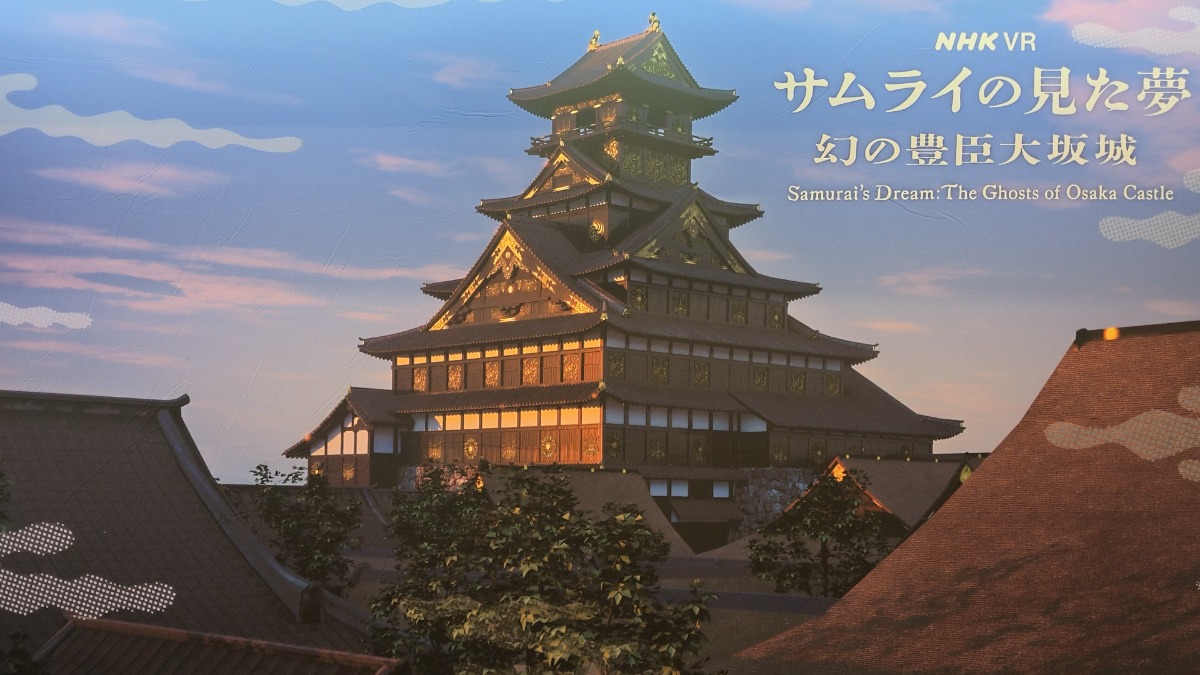
What stood out most about NHK VR “Samurai’s Dream: The Lost Toyotomi Osaka Castle” was how often it felt less like watching a video and more like standing inside Osaka Castle 400 years ago.
You look down on Osaka Castle from the sky, pass through Gokurakubashi Bridge, stand in the same space as Toyotomi Hideyoshi, and head into battle with a sword.
The VR portion lasts about 40 minutes, but each scene changes what you do—watch, walk, move your hands, or fight—so it feels very different from simply watching a long 40-minute video.
Experience Report | From the Sky to Toyotomi Osaka Castle: Immersed Within the First Few Minutes
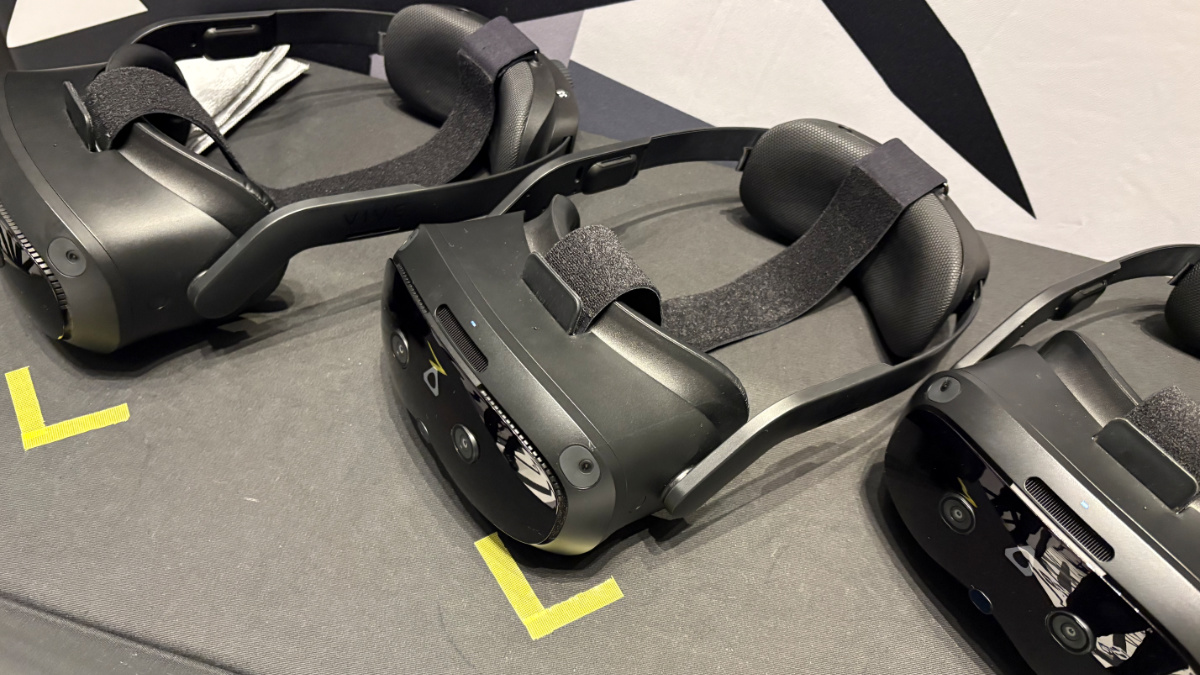
Once you put on the VR headset, the ground beneath your feet seems to rise, carrying you above Toyotomi Osaka Castle.
Instead of starting by simply “looking at the castle,” the experience begins with a bird’s-eye view, letting you physically sense its scale within the first few minutes.
The Sensation of Rising Above Osaka Castle
Below you spread the keep and moats, with the townscape of Osaka in Toyotomi Hideyoshi’s era beyond them.
Because you look down from a great height, anyone uncomfortable with heights may find this part a little scary.
I enjoyed the view from the edge, but if heights bother you, standing near the center of the floating platform may make the drop less noticeable at the edge of your vision.
Seeing the castle from above makes it easier to grasp how Osaka Castle spread across the landscape in a way maps and flat video cannot quite convey.
Step Inside the Lavishly Decorated Gokurakubashi Bridge
Next comes Gokurakubashi, the bridge leading into Osaka Castle.
The word “bridge” may suggest an outdoor crossing, but Gokurakubashi was a two-story structure. In VR, you can enter it and closely examine the decorations on its walls and ceiling.
It is said to have been a place used only by a limited group, including Hideyoshi, high-ranking warlords, imperial envoys, and invited guests.
VR uniquely lets you enter, from your own eye level, a space that no longer survives in its original form.
You can sense not only the colors and ornamentation but also the height and volume of the building, so this is a scene worth looking around carefully—including up at the ceiling—rather than rushing through.
Standing Beside Hideyoshi Makes “Scale” Part of History
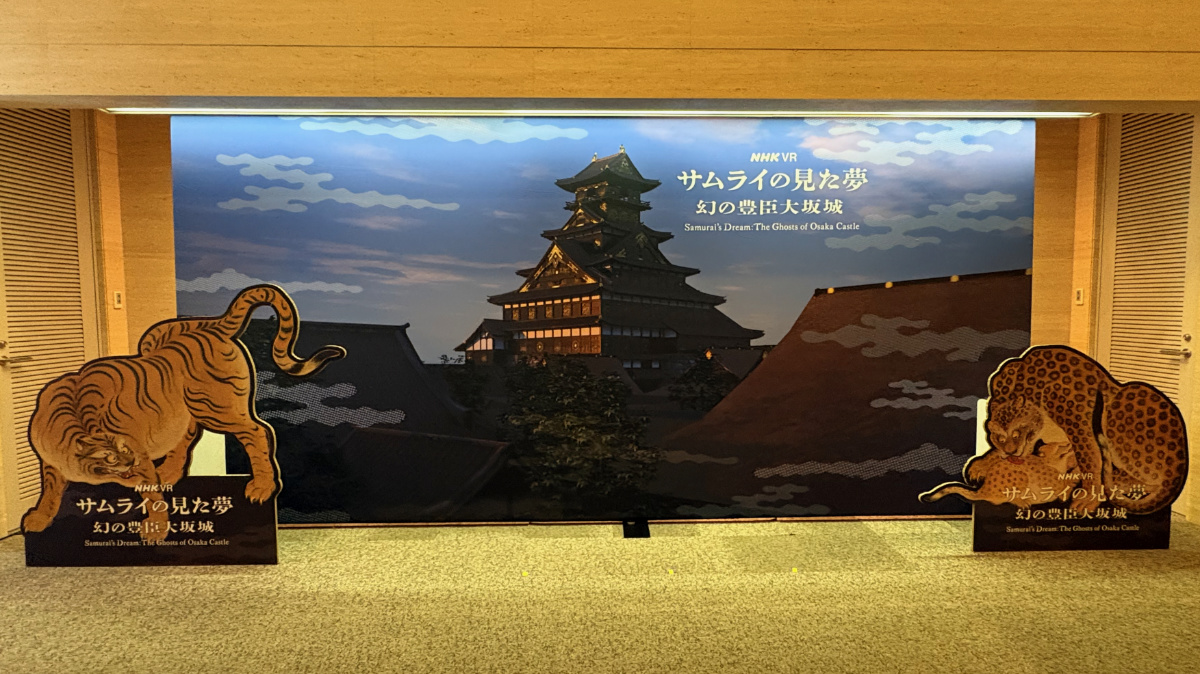
One of the most interesting parts of this VR is being able to compare the “size” of historical people and buildings directly with your own body.
On a TV screen, you can only imagine a castle’s scale. In VR, you stand inside the same space.
Toyotomi Hideyoshi Recreated at About 150 cm Tall
When Toyotomi Hideyoshi appears, his small stature is striking.
At the briefing, organizers explained that based on historical materials and expert research, Hideyoshi is depicted at an estimated height of about 150 cm.
Seeing him not as a “great figure from history” on a screen but as a person standing in the same space suddenly makes him feel much closer.
Watching Hideyoshi dance and sharing his viewpoint from the Osaka Castle keep creates a sense of physical reality that a written profile alone cannot provide.
Giant Helmets and Armor: A Distinctive Osaka-Version Effect
Some staging deliberately departs from historically accurate size.
Helmets and armor associated with warlords such as Naoe Kanetsugu, Sanada Yukimura, and Kato Kiyomasa appear at a gigantic scale that forces you to look up.
This “resizing” effect is impossible in a life-size exhibition, and it makes the shapes of the helmets and the presence of the armor especially memorable.
At the briefing, this was introduced as one of the presentation changes made from the Tokyo Shibuya venue.
Golden Tea Room, Sword, Cherry Blossoms: More “You Move” Moments in the Osaka Version
The Osaka version not only runs longer than the Tokyo Shibuya version; it also adds more scenes in which you participate with your body.
One major addition is Hideyoshi’s golden tea room.
In another scene, you face a warrior with a Japanese sword and make motions like drawing and sheathing it.
Because your movement leads into what happens next, the feeling shifts from being a “visitor” watching from the front to being a person inside the scene.
The cherry-blossom sequence was also memorable.
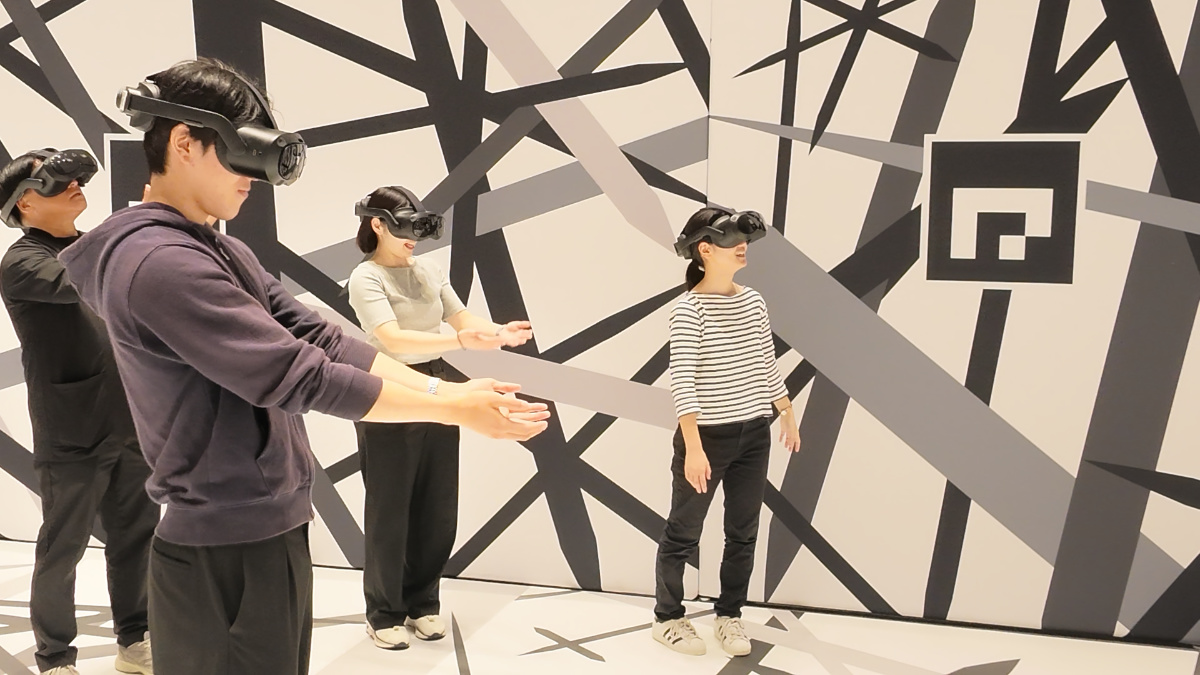
At the Tokyo venue, many visitors naturally reached toward the swirling cherry blossoms. In the Osaka version, an effect was added so the petals seem to respond and dance with your hand movements.
It is interesting that a natural visitor reaction—wanting to reach out—was incorporated into the next version of the experience.
These small responses help the VR world feel less like “video” and more like a “place” where you actually exist.
Into the Battle of Sanadamaru: The Battlefield Looks Different From Inside
In the second half of the experience, you enter the Winter Siege of Osaka.
You join the Tokugawa side attacking Sanadamaru and experience the battlefield from the attacker’s perspective.
What struck me was how different it is to know that Sanadamaru was “strong” and to stand on the attacking side and feel, “This will not be easy to break through.”
You attack Sanadamaru in various ways, and being placed inside the fighting makes the defensive strength of the outwork intuitive.
After this comes a scene that deepens your emotional connection to Osaka Castle itself.
I will avoid details because they would spoil much of the experience, but the ending lingered strongly enough that I almost teared up.
Even when you know how history ends, there is a real difference between “knowing the story” and feeling as though you witnessed it yourself.
Why Does It Feel So Real? Recreating the Lost Toyotomi Osaka Castle Through Sources and Historical Research
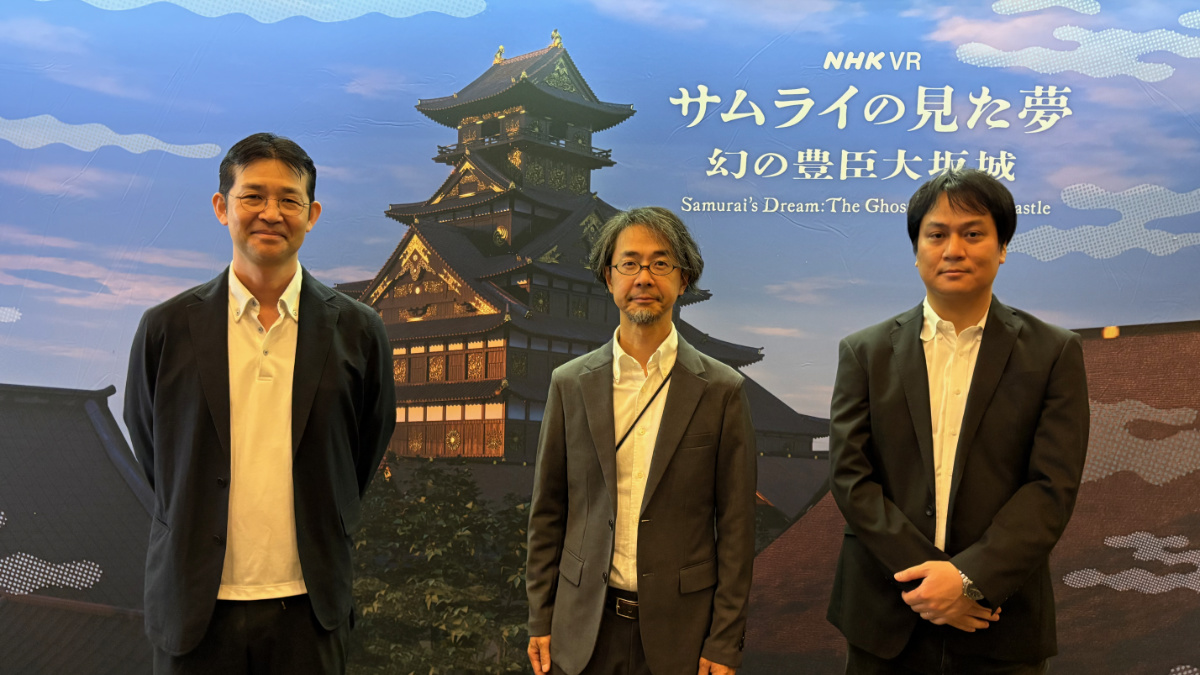
At a media briefing for the Osaka venue, NHK officials So Shibazaki, Taro Kunimi, and Kazuaki Tsujimoto explained how Toyotomi Osaka Castle was recreated as a VR space.
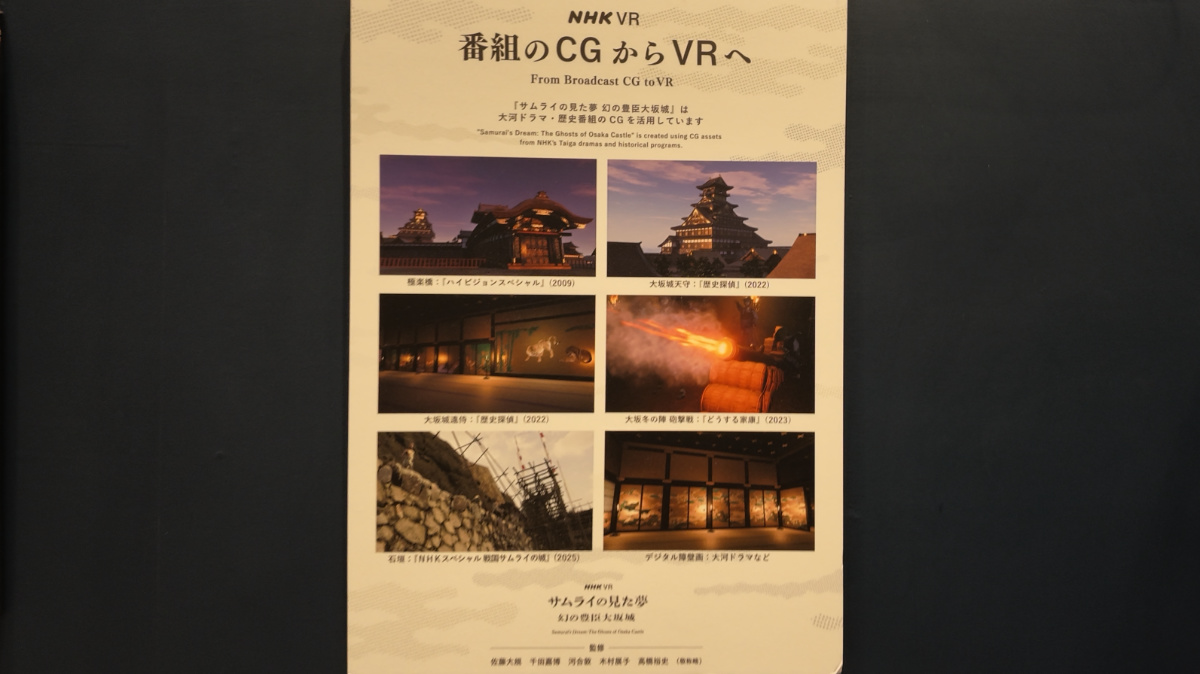
NHK has long produced 3DCG buildings and townscapes for historical programs including “Rekishi Tantei” and its taiga dramas.
This VR develops that accumulated work from “CG viewed on a screen” into a space that people can enter and experience.
Reconstructing the Space From Historical Plans and Written Records
A major clue in recreating the lost Toyotomi-era Osaka Castle was period plans known as “sashizu.”
The team used records showing details such as stone-wall height, moat width, and palace layouts, as well as written accounts left by daimyo and overseas missionaries who visited Osaka Castle.
For areas the sources could not fully explain, the creators consulted specialists on the latest research.
Rather than inventing a generic “lavish Sengoku-period castle,” the project built a three-dimensional version of the space from about 400 years ago by layering currently verifiable sources and research.
The prominent treatment of Gokurakubashi is also tied to this historical work.
At the briefing, organizers noted that recent research suggests the Karamon gate preserved on Chikubu Island in Shiga Prefecture is connected to Gokurakubashi at Toyotomi-era Osaka Castle.
Detailed study of surviving architecture also informed the Momoyama-period colors and decoration reproduced in VR.
Why TV CG Cannot Simply Be Dropped Into VR
CG assets from NHK history programs are used, but television CG cannot simply be placed into VR unchanged.
Because participants can walk freely and look in any direction, VR must process enormous amounts of CG data in real time.
Even individual stone walls therefore had to be optimized to reduce data while preserving as much visual detail as possible.
When you experience it, you often view walls and decorations up close as well as the castle from afar, making it easy to understand why merely “making the data lighter” would not be enough.
Osaka Version Expands From About 25 Minutes in Tokyo Shibuya to About 40 Minutes
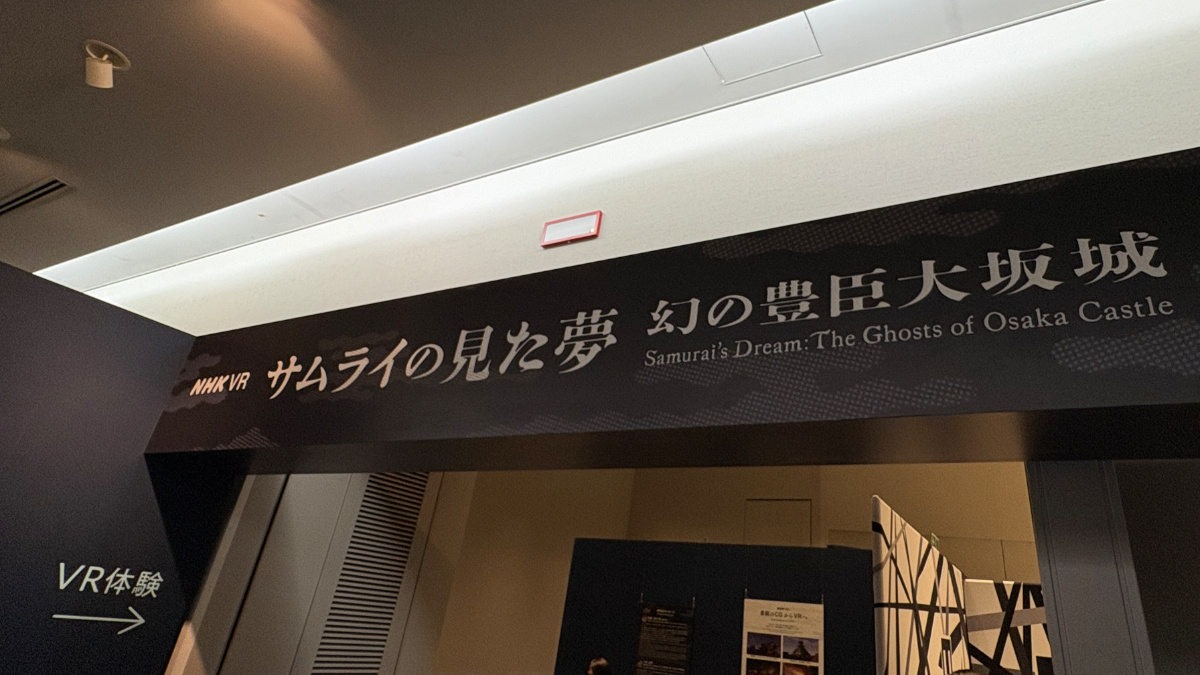
The VR experience at the Tokyo Shibuya venue lasted about 25 minutes.
At the Osaka venue, it runs about 40 minutes—roughly 15 minutes longer.
At the briefing, the following additions and changes were highlighted.
- Hideyoshi’s golden tea room
- Battle scenes
- Interactive Japanese-sword experience
- Cherry blossoms that respond to hand movement
- Staging changes in some scenes
Even if you experienced the Tokyo version, the Osaka edition is not simply the same content stretched longer.
More scenes evolve from “VR you watch” into “VR you physically participate in,” which gave me a strong reason to experience it again.
After the VR, Visit Osaka Castle and the Sanadamaru Site to Connect the Experience With Real Osaka
The Osaka venue has appeal beyond the VR itself.
Step out of the Osaka Museum of History and today’s Osaka Castle is immediately nearby.
Seeing the Toyotomi-era Osaka Castle in VR and then today’s castle one after the other strengthens the sense that different castles from different eras occupied the same place.
The Battle of Sanadamaru left a particularly strong impression on me, so after the experience I walked about 20 minutes from the venue to the Sanadamaru site.
After experiencing the battlefield’s terrain and offense/defense in VR, you can walk the historic site while imagining what happened there instead of simply visiting it.
If you have time, I recommend combining the VR with Osaka Castle and the Sanadamaru site.
Dates, Prices, and Required Time
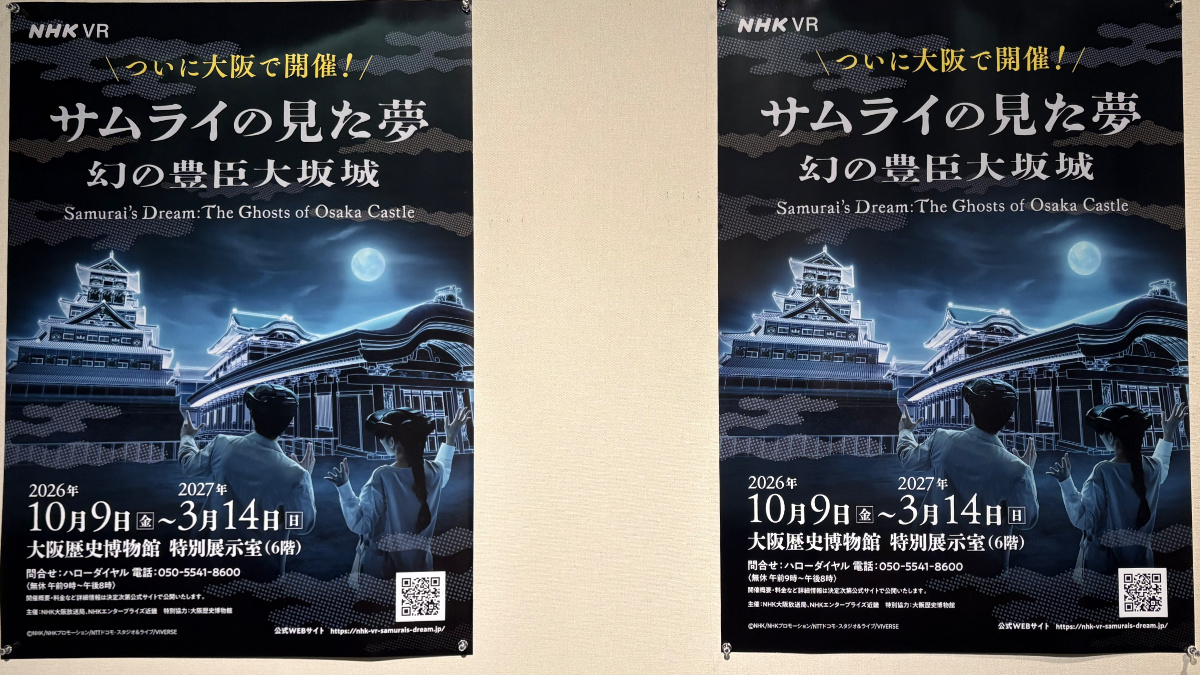
The Osaka run of NHK VR “Samurai’s Dream: The Lost Toyotomi Osaka Castle” is held in the Special Exhibition Room on the 6th floor of the Osaka Museum of History from Friday, October 9, 2026, through Sunday, March 14, 2027.
- Dates: Friday, October 9, 2026–Sunday, March 14, 2027
- Venue: Osaka Museum of History, 6F Special Exhibition Room
- Hours: 9:30 a.m.–5:00 p.m. (last admission 4:00 p.m.)
- Closed: Tuesdays (or the following day if Tuesday is a public holiday) and December 28–January 4
- Time required: About 50 minutes (about 40 minutes of VR plus about 10 minutes for briefing and equipment fitting)
- Tickets: Advance purchase with designated date/time
Prices are as follows. All prices include tax.
- Adults: ¥3,500 weekdays / ¥4,000 Saturdays, Sundays, and public holidays
- Elementary, junior-high, and high-school students: ¥1,500 weekdays / ¥2,000 Saturdays, Sundays, and public holidays
Tickets must be purchased online in advance; there are no on-site ticket sales.
Official NHK VR “Samurai’s Dream” website
What to Check Before Your Visit
The VR experience is for ages 7 and up.
Children age 10 or younger must participate with a companion age 13 or older and under 70. One companion may accompany up to two children at the same time.
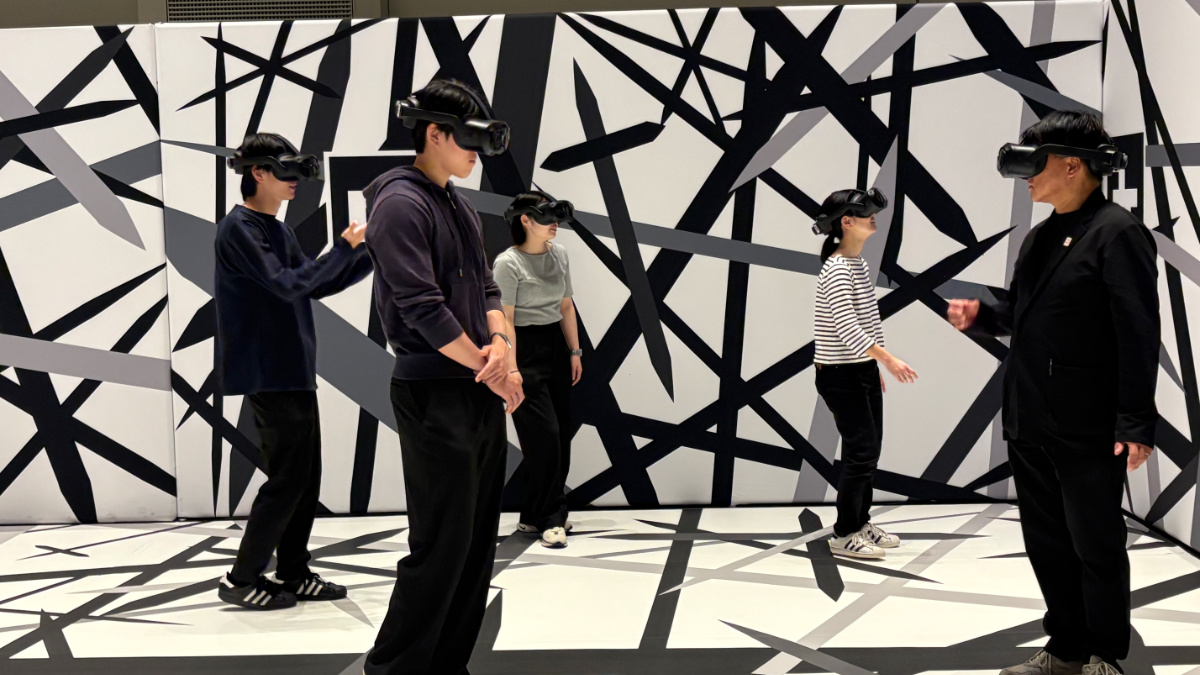
Groups are limited to five people. Groups of six or more will be divided.
You walk while wearing a VR headset, so clothing that is easy to move in is best. The official guidance asks visitors to avoid high heels and platform shoes and recommends stable footwear such as sneakers.
There are scenes involving heights and scenes that place you inside battle.
If you are uncomfortable with heights, choosing a reassuring position—such as standing near the center of the platform during floating scenes—may make the experience easier to enjoy.
The terms of use also detail conditions related to health, medical issues, motion sickness, and strong anxiety about enclosed spaces or heights, so anyone concerned should review the official terms before buying a ticket.
Who Is This Recommended For?
I would most recommend it to people who like Toyotomi Hideyoshi, Osaka Castle, Sanada Yukimura, or the Sieges of Osaka.
Unlike reading historical sources or explanations, looking up at Osaka Castle, standing beside Hideyoshi, and entering the battlefield of Sanadamaru brings familiar history closer to your own experience.
Even without deep historical knowledge, there is plenty to enjoy as a VR attraction: a gigantic castle, lavish decoration, the sensation of floating, and sword-action scenes.
With friends, it is fun to walk around Osaka Castle afterward and compare which scene made the strongest impression.
Solo visitors can take their time looking wherever they want and studying the buildings and decorations in detail.
The Osaka version is also recommended for people who experienced the Tokyo Shibuya version.
The VR portion has expanded from about 25 to about 40 minutes, with additions including the golden tea room, battle scenes, and more body-based interaction.
Summary | From “Knowing” Osaka Castle to an Experience That Stays With You
NHK VR “Samurai’s Dream: The Lost Toyotomi Osaka Castle” is more than a CG recreation of the castle to look at.
You look down on the castle from the sky, enter Gokurakubashi, stand beside Hideyoshi, and head into battle carrying a sword.
Over the course of about 40 minutes, I gradually felt more emotionally connected to Osaka Castle and the people who lived there.
If you like Osaka Castle or Toyotomi Hideyoshi, this is an experience worth trying.
Afterward, head to present-day Osaka Castle just beside the venue.
If time allows, continue to the Sanadamaru site to connect the Osaka of about 400 years ago seen in VR with the city of today.
How long does the VR experience take?
The VR portion lasts about 40 minutes. Including roughly 10 minutes for explanations and fitting the equipment, allow about 50 minutes total. Leaving some extra time for getting to and from the venue will also make it easier to enjoy the Osaka Castle area.
Is it still enjoyable if I experienced the Tokyo Shibuya version?
Yes. The Tokyo VR experience lasted about 25 minutes, while the Osaka version has been expanded to about 40 minutes and adds the golden tea room, battle scenes, and body-based interactive elements. Looking for differences from your previous visit can be part of the fun.
Can I enjoy it without knowing much about history?
Yes. Looking down on Osaka Castle from the sky, walking through lavish Gokurakubashi, and using a sword are highlights even purely as VR entertainment. Knowing the history can deepen your emotional connection to the people and battles.
Can children take part?
The experience is for ages 7 and up. Children age 10 or younger must participate with a companion age 13 or older and under 70, with no more than two children per companion at the same time. Check the latest terms before purchasing.
Are there places worth visiting together with the VR experience?
Start with Osaka Castle, immediately near the venue. Seeing today’s Osaka Castle right after the Toyotomi-era version in VR makes the differences between periods easier to imagine. If the Battle of Sanadamaru stands out to you, consider visiting the Sanadamaru site if time allows.

Make the latest USJ and Kansai event updates
easier to find on Google.