What You’ll Learn in This Article
- Dates and highlights of the Kyoto Museum of Culture special exhibition “Kanei: Beauty Nurtured by an Era of Peace”
- What the Kanei Imperial Visit was and the relationship between the Imperial Court and the Tokugawa shogunate
- Display information for Honebami Toshiro, Futatsusuji-hi Sadamune, the Kanei Imperial Visit Picture Scroll, and Nijo Castle wall paintings
- Kanei culture that flourished after the age of warfare, including works by Hon’ami Koetsu and Konoe Nobutada
- Early- and late-period rotations, admission fees, and the Touken Ranbu ONLINE collaboration
A major special exhibition will trace the “Kanei Imperial Visit” of 400 years ago and the “Kanei culture” that blossomed in Kyoto during the same era through celebrated swords, picture scrolls, Nijo Castle wall paintings, calligraphy, crafts, tea culture, and more.
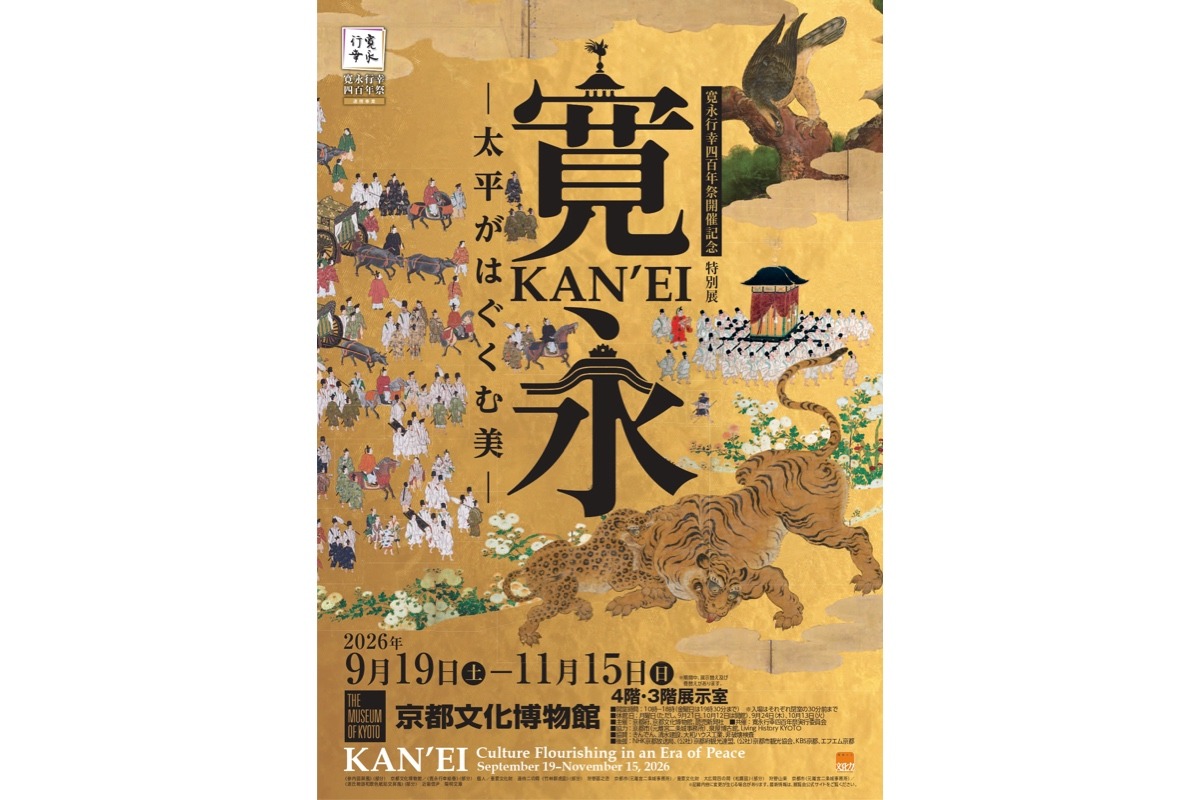
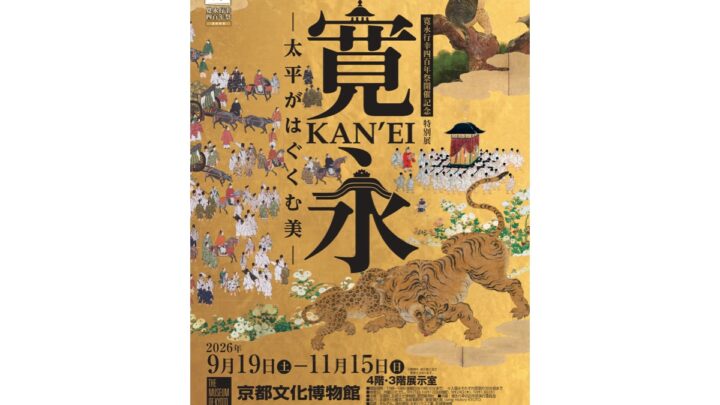
Held at the Kyoto Museum of Culture from Saturday, September 19 to Sunday, November 15, 2026, the exhibition is
Special Exhibition “Kanei: Beauty Nurtured by an Era of Peace,” Commemorating the 400th Anniversary of the Kanei Imperial Visit
.
In Kanei 3 (1626), retired shogun Tokugawa Hidetada and the third shogun, Tokugawa Iemitsu, invited Emperor Go-Mizunoo to Nijo Castle.
Over five days, the emperor was received with lavish room decorations and cuisine, bugaku court dance, Noh, waka poetry, instrumental music, and other forms of entertainment considered among the finest of the time.
This event is known as the “Kanei Imperial Visit.”
But the exhibition is about more than a magnificent procession.
It offers a look at Kyoto in the first half of the 17th century from both political and cultural perspectives, as Japan made the major transition from the Warring States era to an age of “peace.”
* Displays and scroll sections will be rotated during the exhibition. If there is a specific work you want to see, check its display period before visiting.
What Was the Kanei Imperial Visit? A Major Political Event 11 Years After the End of the Wars
The Kanei Imperial Visit took place in 1626, 11 years after the Toyotomi clan was destroyed in the Summer Siege of Osaka.
Following the Battle of Sekigahara, the Winter Siege of Osaka, and the Summer Siege of Osaka, Tokugawa rule had been established and large-scale warfare had come to an end.
The exhibition begins by introducing this historical background in
the prologue, “Genna Enbu—Beyond Sekigahara and the Sieges of Osaka.”
“Enbu” means to stop fighting and put away weapons.
In 1615 (Genna 1), the large-scale armed conflicts that had continued since the Warring States period came to an end, ushering in the long era of “peace” known as the Edo period.
The Kanei Imperial Visit came after this major turning point in Japanese history.
Chapter 1 “Chrysanthemum and Hollyhock”: Understanding Emperor Go-Mizunoo and the Tokugawa Shogunate
The theme of Chapter 1 is “Chrysanthemum and Hollyhock”.
The chrysanthemum symbolizes the Imperial Court, while the hollyhock represents the Tokugawa family.
For the Edo shogunate, its relationship with the Imperial Court was extremely important in stabilizing Tokugawa rule.
At the same time, political friction also existed between the court and the shogunate.
The Kanei Imperial Visit became one of the major events that advanced reconciliation between them.
The exhibition also focuses on people deeply connected to the visit, including Emperor Go-Mizunoo, Tokugawa Hidetada, Tokugawa Iemitsu, and Tofukumon’in Masako, Hidetada’s daughter who became consort to Emperor Go-Mizunoo.
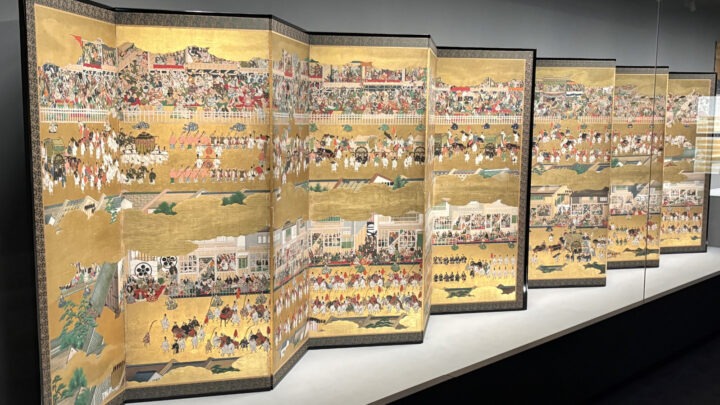
“Screen Depicting a Visit to the Imperial Palace,” Showing the Procession from Nijo Castle to the Palace
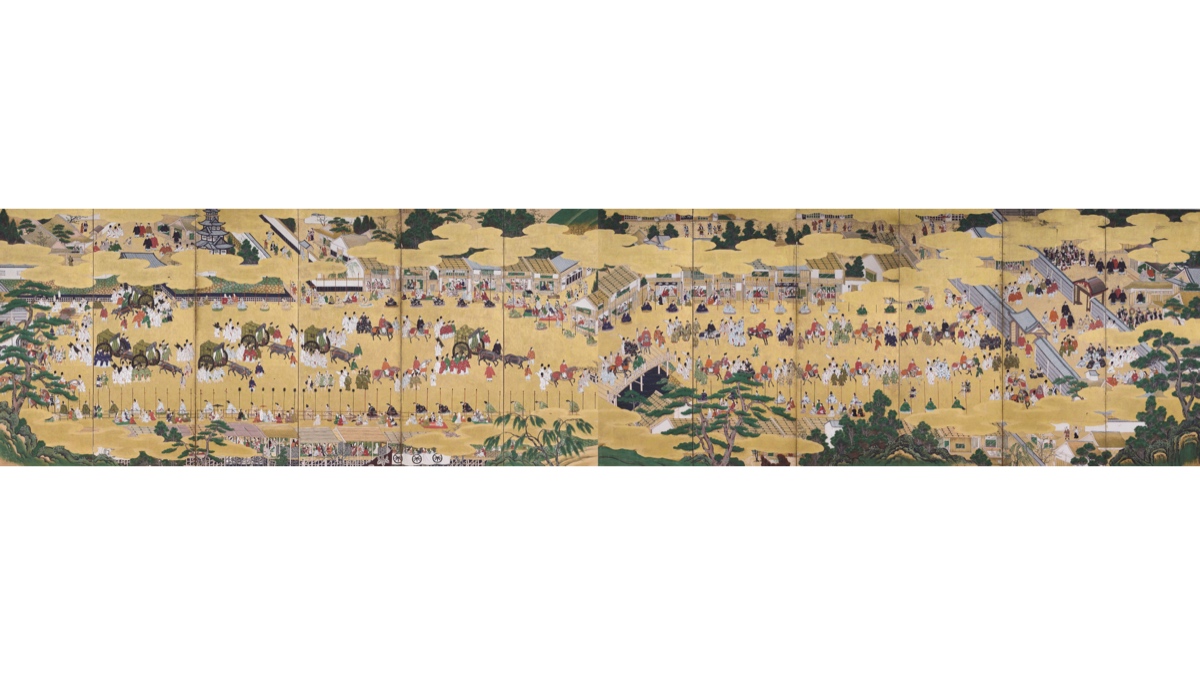
One highlight of Chapter 1 is “Screen Depicting a Visit to the Imperial Palace”.
Against a gold-leaf ground, the screen depicts ox-drawn carriages and a procession of people traveling from Nijo Castle toward the Imperial Palace.
Along with the Kanei Imperial Visit, the work helps visitors imagine how the Imperial Court and Tokugawa shogunate interacted against the backdrop of Kyoto at the time.
It will be on display throughout the exhibition.
Famed Sword “Honebami Toshiro” on Display Only September 19–October 2
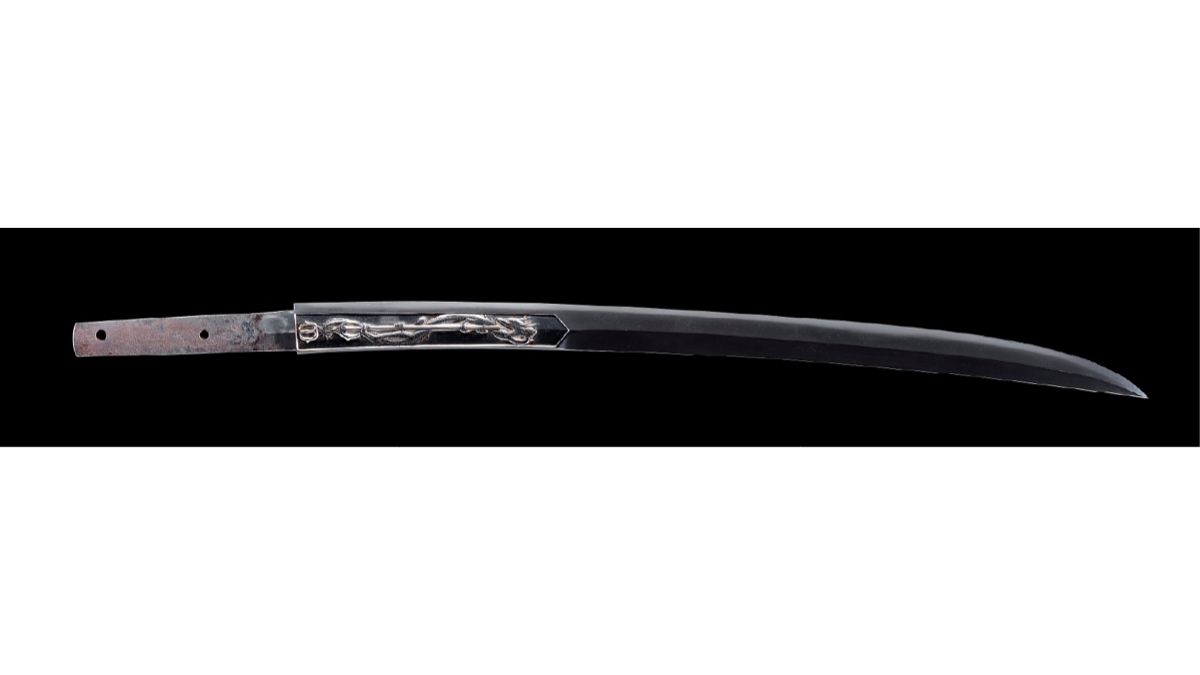
One work sword fans will especially want to see is the Important Cultural Property “Naginata-naoshi Sword, Honebami Toshiro”.
Known as a work by Awataguchi Yoshimitsu, this famed blade passed through the hands of successive rulers.
It will not, however, be on view for the entire exhibition.
Saturday, September 19–Friday, October 2, 2026
If Honebami Toshiro is your main reason for visiting, note that its display is limited even within the first part of the exhibition.
“Futatsusuji-hi Sadamune” on Display October 17–November 15; It Cannot Be Seen at the Same Time as “Honebami Toshiro”
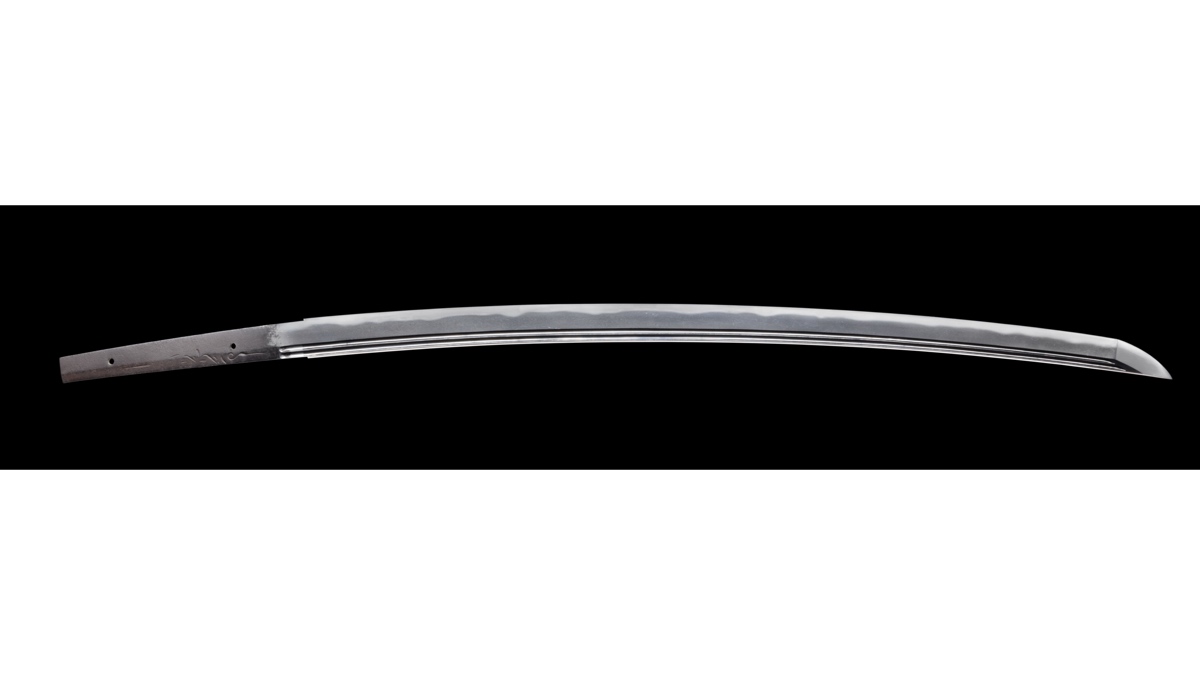
In the latter part of the exhibition, the Important Cultural Property “Unsigned Sadamune Sword (Meibutsu Futatsusuji-hi Sadamune)” will go on display.
The sword is said to have been bestowed by Tokugawa Hidetada on Matsudaira Tadanao, who won major distinction in the Summer Siege of Osaka.
Its history as a blade presented to a warrior for military achievement also makes it a compelling object through which to consider the transition from warfare to an era of “peace.”
Saturday, October 17–Sunday, November 15, 2026
Because Honebami Toshiro is on display only through October 2 and Futatsusuji-hi Sadamune begins on October 17, the two swords’ display periods do not overlap.
To see both in person, you will need to visit twice.
Touken Ranbu ONLINE Collaboration Featuring Honebami Toshiro and Futatsusuji-hi Sadamune
To commemorate the display of the two swords, the sword-raising simulation game Touken Ranbu ONLINE will also collaborate with the exhibition.
Life-size panels of the sword warriors “Honebami Toshiro” and “Futatsusuji-hi Sadamune” will be displayed during the exhibition.
Collaboration tickets will be sold, and exhibition-exclusive collaboration merchandise is also planned.
The life-size panels and collaboration merchandise are expected to be available even during periods when the actual swords are not on display.
Chapter 2 “Decoding the Kanei Imperial Visit”: Tracing the Procession and Nijo Castle 400 Years Ago
Chapter 2 is titled “Decoding the Kanei Imperial Visit”.
Using picture scrolls, wall paintings from the Ninomaru Palace, historical documents, and more, the chapter explores Nijo Castle—a symbol of Tokugawa authority in Kyoto—and what the 1626 Kanei Imperial Visit was actually like.
Beginning in Kanei 1 (1624), Nijo Castle underwent large-scale expansion and improvements in preparation for the imperial visit in Kanei 3.
After the major renovations were completed, Emperor Go-Mizunoo was welcomed to Nijo Castle with splendid ceremonies and entertainments.
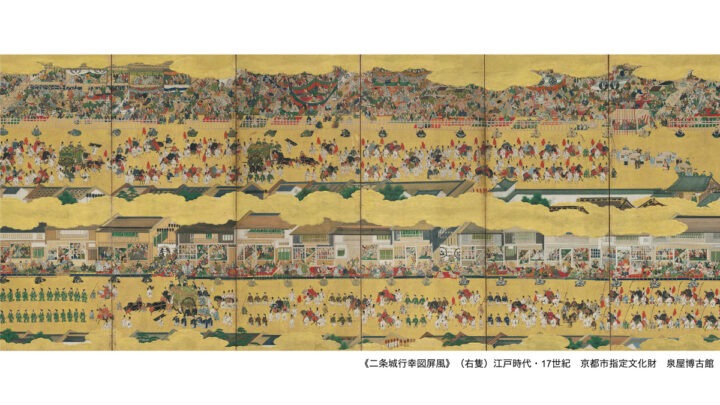
The Hand-Painted “Kanei Imperial Visit Picture Scroll”
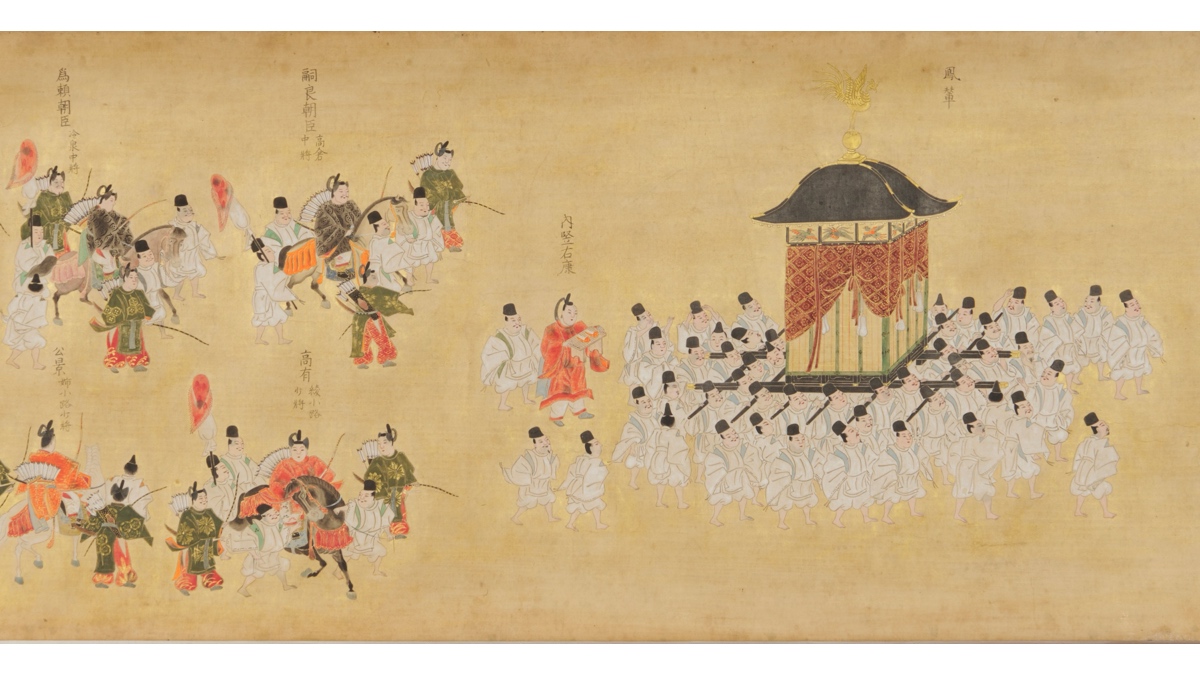
A work that visually conveys the actual Kanei Imperial Visit is the “Kanei Imperial Visit Picture Scroll”.
The hand-painted procession is colored in fine detail and filled with numerous figures.
Beyond the splendor of the imperial visit 400 years ago, it is fascinating to view the work while imagining the scale of an event that brought so many people through Kyoto.
The procession at the time is said to have numbered around 9,000 people. A reenactment event on December 6, 2026, will condense its key features into a procession of about 330 participants.
Seeing this scroll first may make it easier to picture what the scene looked like 400 years ago when you watch the procession in December.
See Nijo Castle Wall Paintings Up Close: “Pines and Hawks” and “Tigers in a Bamboo Grove”
Important Cultural Property wall paintings that once decorated the Ninomaru Palace at Nijo Castle will also be exhibited.
Works change between the early and late periods, offering the chance to appreciate different spaces of Nijo Castle through the paintings that once adorned them.
Early Period: The Powerful “Tigers in a Bamboo Grove”
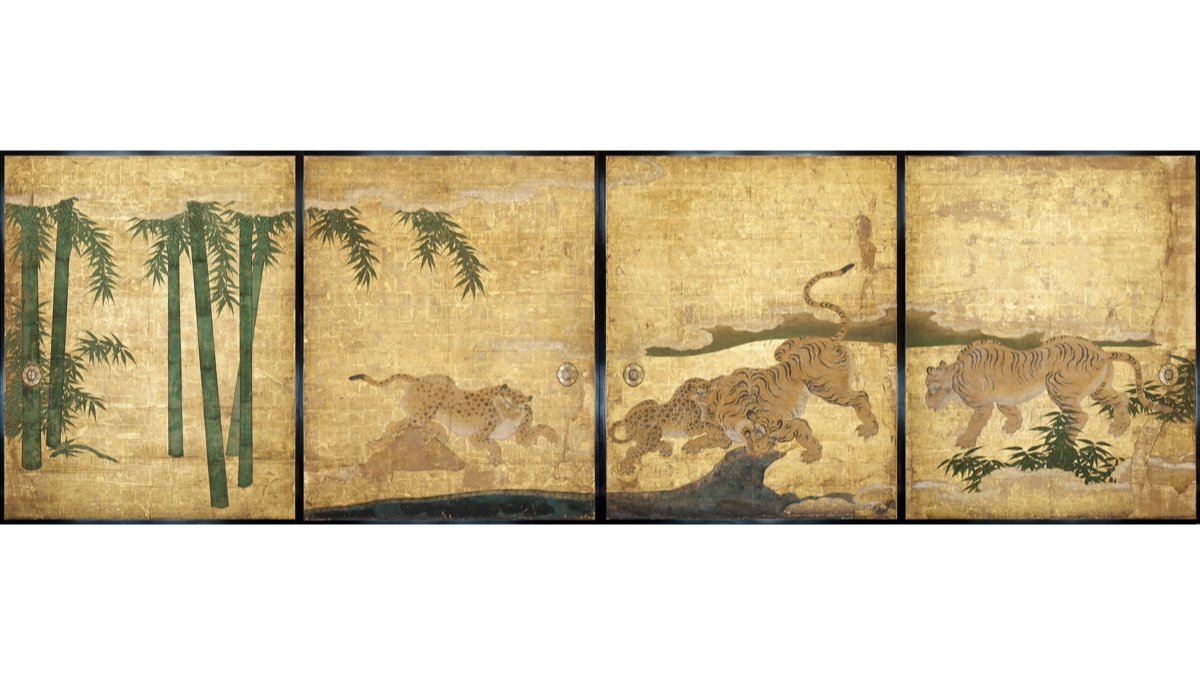
The early-period display includes Kano Jinnojo’s “Tigers in a Bamboo Grove”.
With a bamboo grove and tigers boldly painted across a gold ground, this wall painting conveys the imposing character associated with Nijo Castle.
At a media briefing, each panel was described as a large work measuring about 2.4 meters high and 1.9 meters wide.
Its scale, difficult to grasp from photographs alone, makes this a work worth seeing up close as part of a space designed to visually express Tokugawa authority.
Late Period: Kano Sanraku’s “Pines and Hawks”
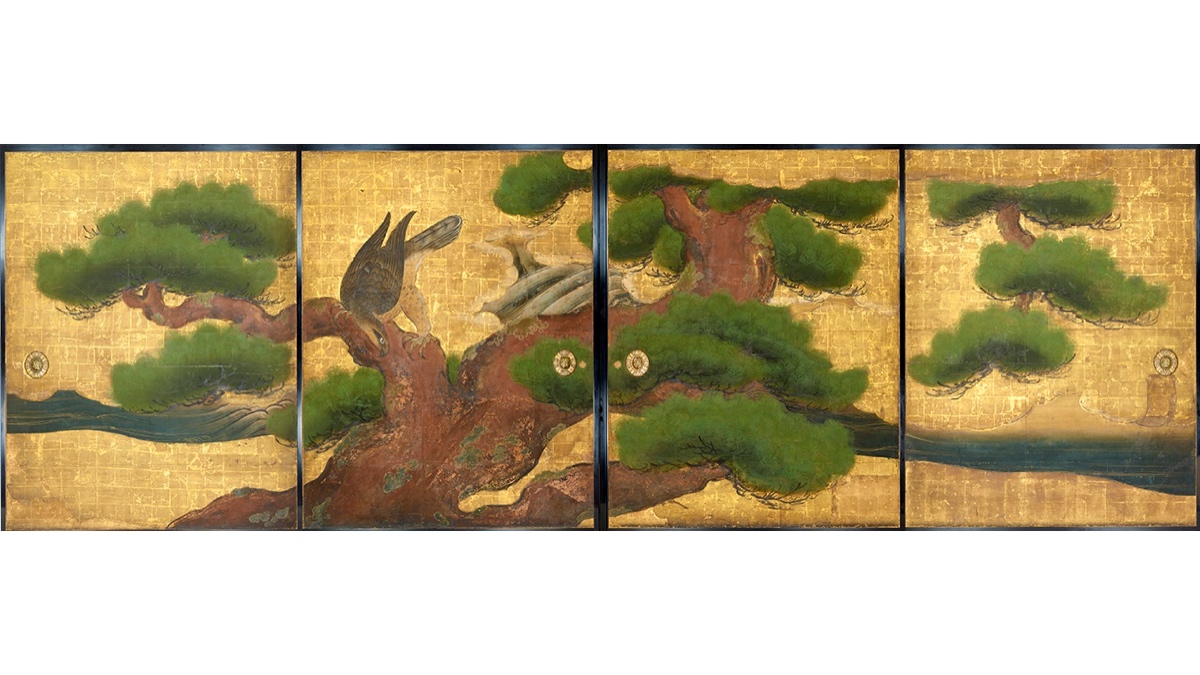
The late-period display features, from the Fourth Room of the Ohiroma in Nijo Castle’s Ninomaru Palace, Kano Sanraku’s “Pines and Hawks”.
Kano Sanraku, a leading painter of the Kyoto Kano school, created the work in the bold style carried forward from the Momoyama period.
“Tigers” in the early period and “pines and hawks” in the late period.
The changing displays let visitors enjoy wall paintings that once decorated different spaces within Nijo Castle, another highlight of the exhibition.
“Tachi, Signed Bizen no Kuni Ju Unji,” a Sword Connected to the Kanei Imperial Visit
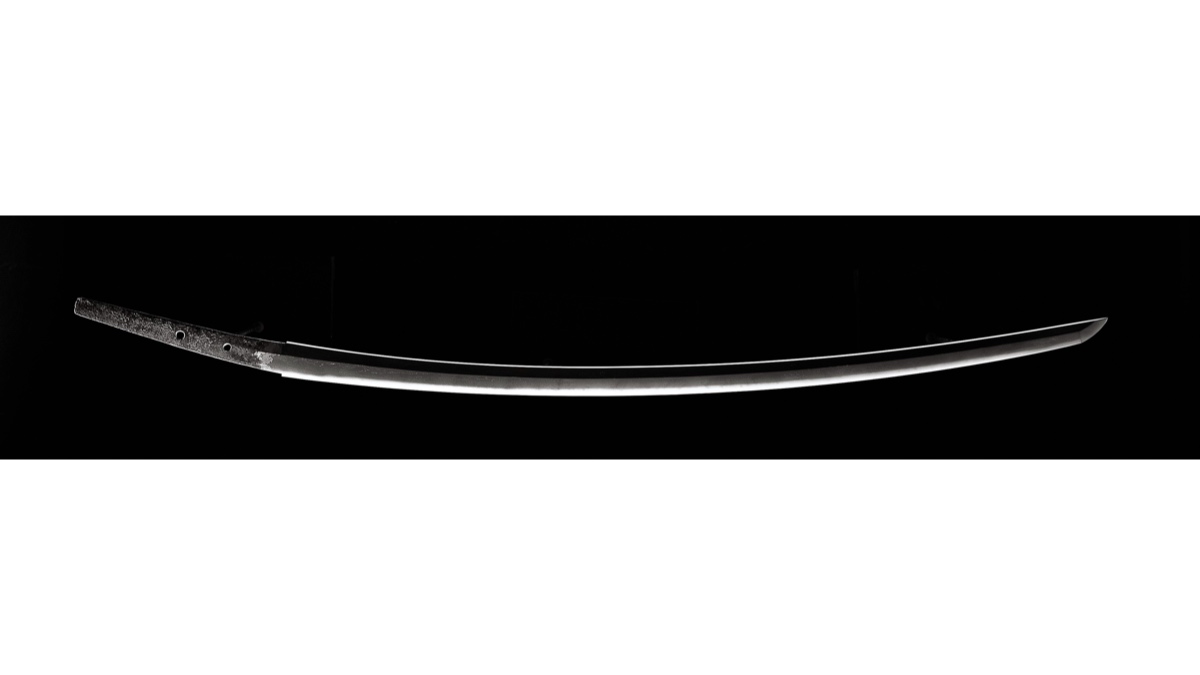
The exhibition also includes a sword with a direct connection to the Kanei Imperial Visit.
It is the Important Art Object “Tachi, Signed Bizen no Kuni Ju Unji”.
It is introduced as a sword associated with the Kanei Imperial Visit that Tokugawa Hidetada presented to the Konoe family.
Beyond processions and picture scrolls, objects that actually changed hands among people of the period also reveal the relationship between the Imperial Court and the shogunate.
Behind the Splendor of the Kanei Imperial Visit: Historical Documents Reveal the Reality of a Huge Event
The Kanei Imperial Visit was not attended only by high-ranking figures such as the emperor, shogun, and daimyo.
A very large number of people supported the procession and its operation.
At the media briefing, records were introduced showing that some officials who joined the visit were provided with formal attire or received allowances, and that disputes even arose over allowances that had not been paid.
A sumptuous picture scroll can make the event seem like something from a distant world, but in reality it was a massive undertaking involving large numbers of people and substantial funds.
Chapter 2 is especially compelling because it also reveals the real-life side of the Kanei Imperial Visit 400 years ago, behind all the pageantry.
Did Emperor Go-Mizunoo and the Shogunate Stay on Good Terms After the Kanei Imperial Visit? In Fact, Conflict Returned
The Kanei Imperial Visit was a major political ceremony that strongly emphasized reconciliation between the Imperial Court and the Tokugawa shogunate.
But history did not simply end happily there.
The exhibition also addresses how, after the Kanei Imperial Visit, conflict between Emperor Go-Mizunoo and the shogunate again became pronounced.
After events including the Purple Robe Incident, Emperor Go-Mizunoo abdicated.
Political tensions between the court and shogunate continued.
At the same time, another major development comes into view.
That development was “culture.”
Chapter 3 “Sustained Cultural Activity”: Kanei Culture That Spread Beyond Politics
Chapter 3 is titled “Sustained Cultural Activity”.
Even after abdicating, Emperor Go-Mizunoo retained great influence across the reigns of four emperors—Meisho, Go-Komyo, Go-Sai, and Reigen—and took part in a broad range of cultural activities including Chinese poetry, waka, calligraphy, rikka flower arrangement, and tea culture.
The period also saw cultural figures active across many fields, including Hon’ami Koetsu, Tawaraya Sotatsu, Nonomura Ninsei, and Ikenobo Senko.
Importantly, the people who shaped culture were not limited to a single social rank.
At the media briefing, cultural connections centered on Tofukumon’in Masako were described as including interaction across social ranks among tea practitioners, court nobles, monks, and others.
While political tensions persisted, people continued to connect through culture.
The culture of this era, when such diverse cultural activities developed, is now known as “Kanei culture.”
Konoe Nobutada’s “Genji Monogatari Waka Poem-Slip Collage Screen”
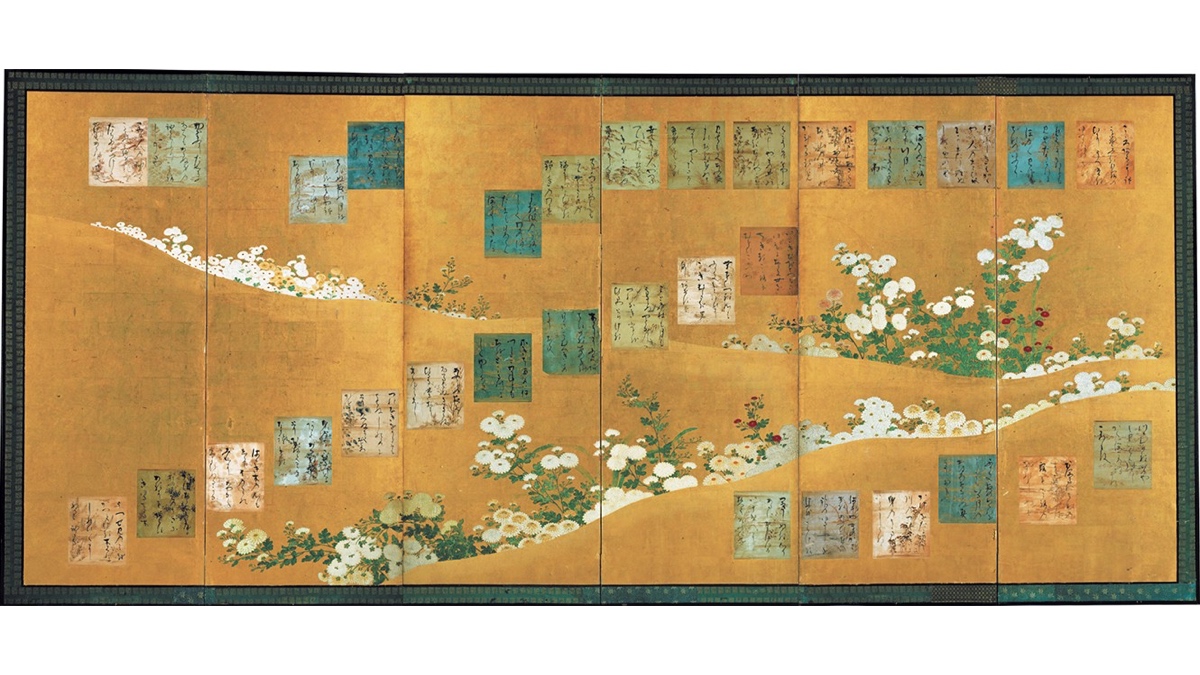
Set against a brilliant gold ground painted with flowers and plants, with multicolored poem slips scattered across it, is the “Genji Monogatari Waka Poem-Slip Collage Screen”.
Konoe Nobutada inscribed waka poems appearing in The Tale of Genji on the work, which will be shown in the late period.
Its elegant aesthetic, rooted in court culture, is entirely different from the Nijo Castle wall paintings that projected warrior authority.
Wear Auspicious Motifs: “Kosode with Pine and Crane Design”
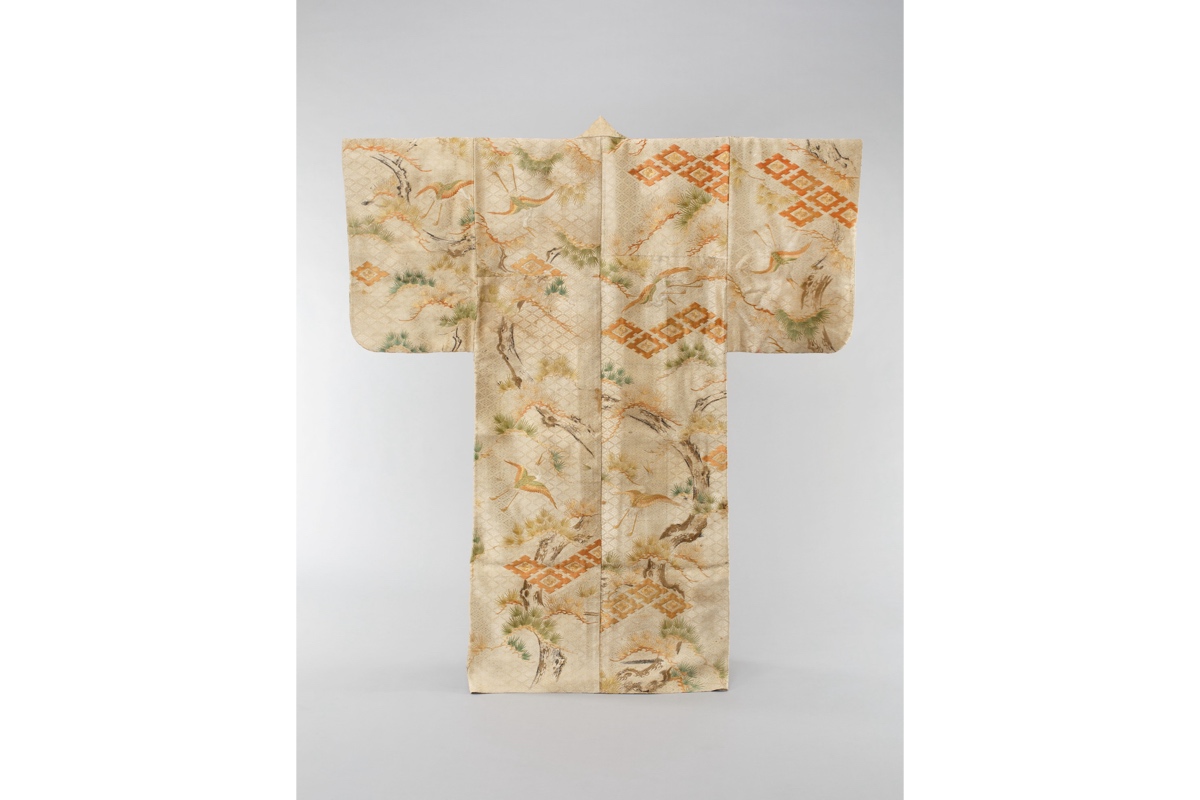
On display throughout the exhibition, the “Kosode with Pine and Crane Design” is decorated with auspicious motifs such as pine trees and cranes.
The work draws attention to the aesthetic sensibilities people wore on their bodies, beyond the politics and warfare of the age.
Looking closely at the fine patterns offers another way—different from paintings and swords—to experience the splendor of the Kanei period.
Early Period: Konoe Nobutada’s “Screen of the Six Principles of Waka”
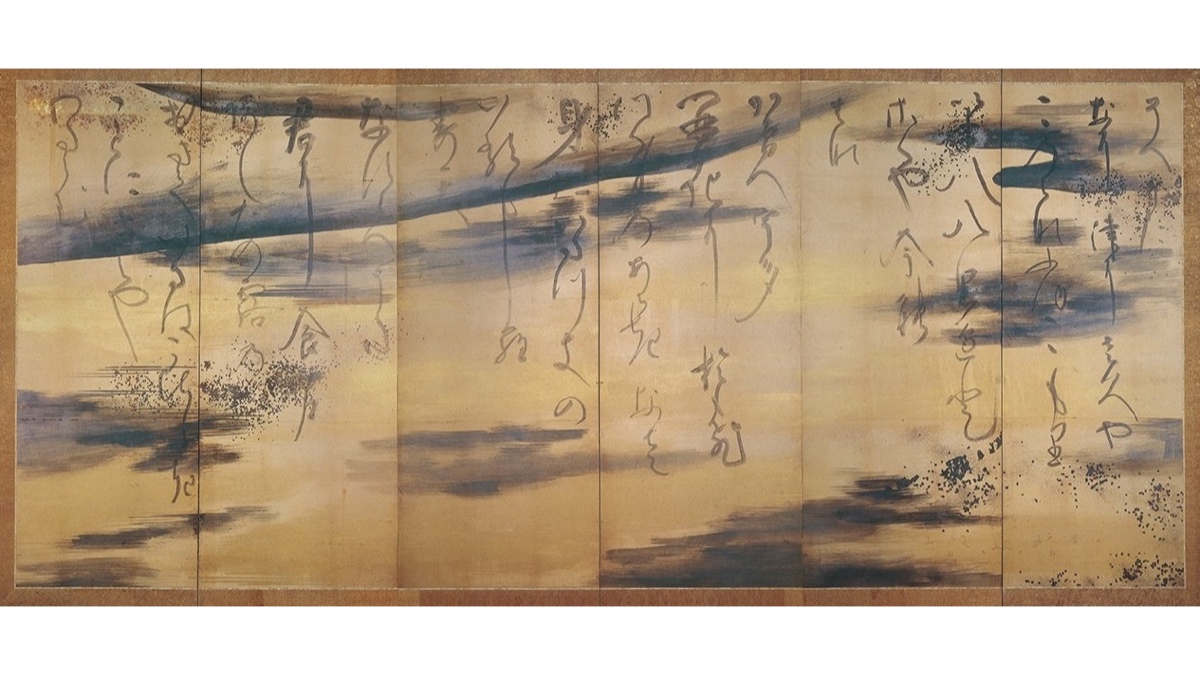
For Konoe Nobutada’s calligraphy, also look for the early-period display of the “Screen of the Six Principles of Waka”.
The boldly sweeping brushwork itself becomes part of the composition, allowing visitors not only to “read” the characters but also to appreciate calligraphy as visual art.
Different works by Konoe Nobutada appear in the early and late periods, making the display rotation another point of interest.
Hon’ami Koetsu’s Aesthetic in the “Sutra Box with Floral Arabesque Design in Mother-of-Pearl Inlay”
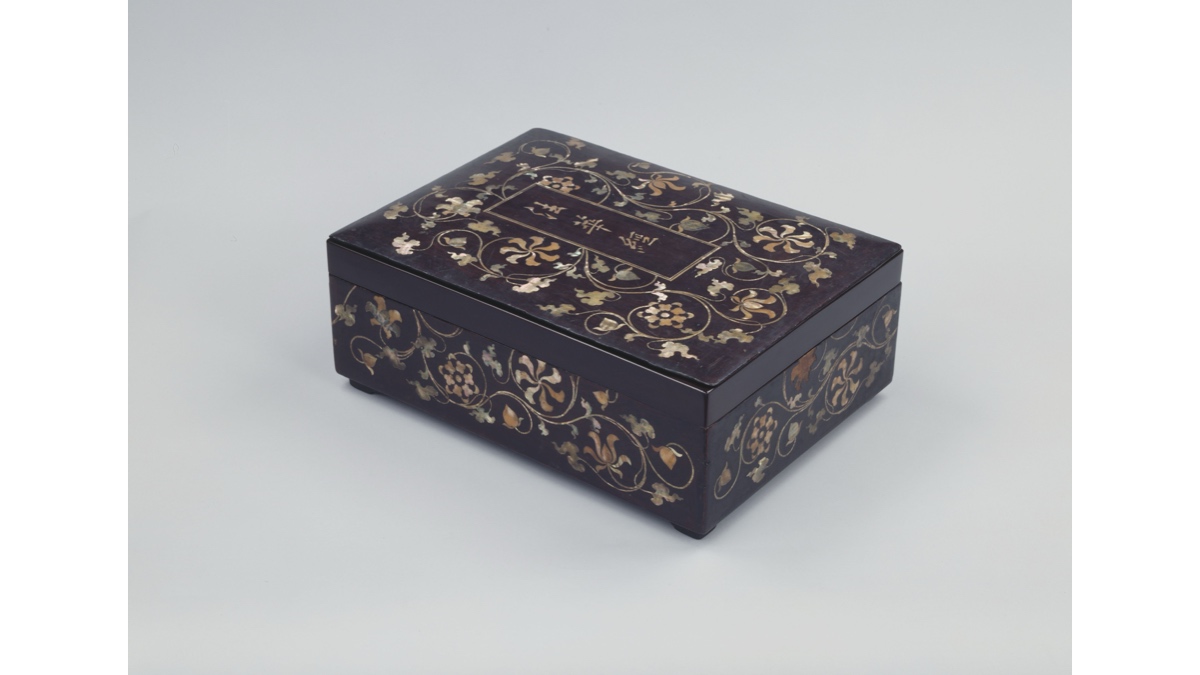
Hon’ami Koetsu was one of the leading figures of Kanei culture.
In the late period, the Important Cultural Property “Sutra Box with Floral Arabesque Design in Mother-of-Pearl Inlay” will be displayed.
This sumptuous sutra box depicts floral arabesques in mother-of-pearl against a black ground and conveys Koetsu’s decorative aesthetic.
Hon’ami Koetsu’s “Black Raku Tea Bowl, Named Murakumo” on Display Throughout
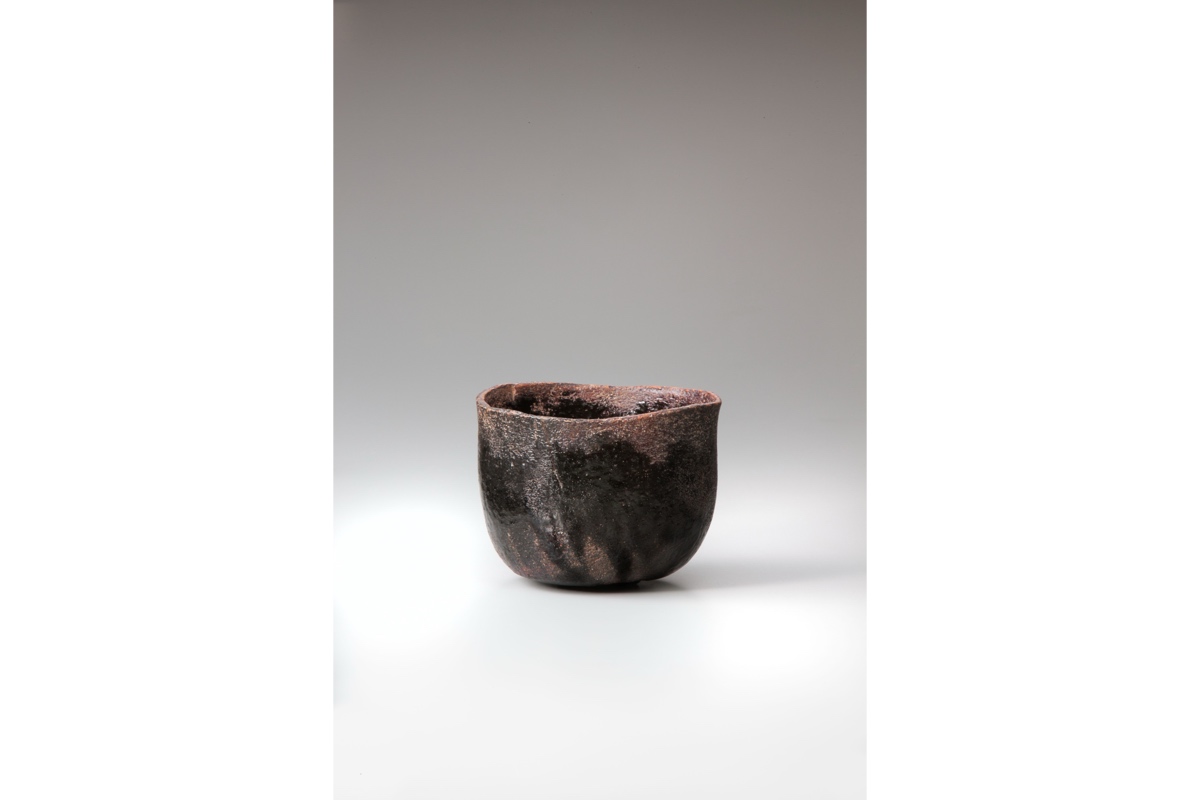
Koetsu’s aesthetic was not limited to ornate mother-of-pearl works.
The “Black Raku Tea Bowl, Named Murakumo”, on display throughout, shows the forms Koetsu created in the world of chanoyu tea culture.
The decorative “Sutra Box with Floral Arabesque Design in Mother-of-Pearl Inlay” and the black Raku tea bowl make very different impressions.
Noticing how different works by the same artist can feel reveals the breadth of Koetsu’s creativity.
Painting, calligraphy, crafts, clothing, and tea culture.
The exhibition shows how “Kanei culture” extended across many fields rather than belonging to a single genre.
Early or Late Period? Check the Main Works on Display
Display periods vary by work.
- September 19–October 2: “Honebami Toshiro”
- Early-period display: “Tigers in a Bamboo Grove,” “Screen of the Six Principles of Waka,” and more
- On display throughout: “Screen Depicting a Visit to the Imperial Palace,” “Kanei Imperial Visit Picture Scroll,” “Tachi, Signed Bizen no Kuni Ju Unji,” “Kosode with Pine and Crane Design,” “Black Raku Tea Bowl, Named Murakumo,” and more
- October 17–November 15: “Futatsusuji-hi Sadamune”
- Late-period display: “Pines and Hawks,” “Genji Monogatari Waka Poem-Slip Collage Screen,” “Sutra Box with Floral Arabesque Design in Mother-of-Pearl Inlay,” and more
If swords are your top priority, your visit date will depend on whether you want to see Honebami Toshiro or Futatsusuji-hi Sadamune.
If you are also interested in Nijo Castle wall paintings or Konoe Nobutada’s calligraphy, consider the combination of sword displays and the early/late rotation to see more of the works you want in one visit.
Because the display periods for “Honebami Toshiro” and “Futatsusuji-hi Sadamune” do not overlap, seeing both in person requires two visits.
Audio Guide Narrated by Kabuki Actor Ukon Onoe
An audio guide will also be available at the venue.
The navigator is Kabuki actor Ukon Onoe.
Rental is ¥700 (tax included).
For visitors who want to understand the relationships among historical figures and the background of the works while viewing the exhibition, the audio guide can make the exhibition narrative easier to follow.
Commemorative Lecture and Curator Gallery Talks
Related events will also be held during the exhibition.
Commemorative Lecture
Date:Friday, September 25, 2026, 1:30–3:00 p.m.
Venue:Annex Hall, Kyoto Museum of Culture
Lecturer:Kazuo Yamaguchi (Professor, Historiographical Institute, The University of Tokyo)
Capacity:150 people; first come, first served on the day
Fee:Free *An exhibition admission ticket (used stub accepted) is required.
Curator Gallery Talks
Dates:Friday, October 16 and Friday, November 13, 2026
Time:6:30 p.m. each day (about 30 minutes)
Location:Inside the 4th- and 3rd-floor galleries
Fee:Free *For same-day exhibition visitors only.
The galleries stay open until 7:30 p.m. on Fridays, so visitors can combine a gallery talk with an evening museum visit.
If you want to learn not only about the works but also the curatorial perspective behind the exhibition, consider planning your visit around one of these dates.
Also Recommended Before the December 6 Procession Reenactment
On December 6, 2026, a Kanei Imperial Visit procession reenactment event will take place from Kyoto Gyoen National Garden to Nijo Castle.
At the media briefing, organizers explained that the procession 400 years ago is believed to have involved about 9,000 people, while this reenactment will condense its features into a group of around 330 participants.
Rather than reproducing the original scale exactly, the event will revive the procession in a form that offers clues for imagining what it looked like 400 years ago.
The exhibition explains the background to questions such as:
“Why did Emperor Go-Mizunoo go to Nijo Castle?”
“What was the relationship between Tokugawa Hidetada and Iemitsu and the Imperial Court?”
“Why was such a lavish political ceremony held?”
“How did so many people support the imperial visit?”
“How did Kyoto’s culture develop after the Kanei Imperial Visit?”
In particular, seeing the people and procession in the “Kanei Imperial Visit Picture Scroll” before watching the December reenactment may connect the 400-year-old world seen in the gallery with a procession moving through modern Kyoto.
Visiting the Kyoto Museum of Culture first can help you see the costumed procession not simply as a historical parade, but as a “living historical scroll” grounded in the politics and culture of 400 years ago.
Special Exhibition “Kanei: Beauty Nurtured by an Era of Peace” — Visitor Information
Special Exhibition “Kanei: Beauty Nurtured by an Era of Peace,” Commemorating the 400th Anniversary of the Kanei Imperial Visit
Dates
Saturday, September 19–Sunday, November 15, 2026
* Displays and scroll sections will be rotated during the exhibition.
Hours
10:00 a.m.–6:00 p.m.
Fridays until 7:30 p.m.
* Last admission is 30 minutes before closing.
Closed
Mondays
* Open September 21 and October 12
Closed Thursday, September 24 and Tuesday, October 13
Venue
4th- and 3rd-floor galleries, Kyoto Museum of Culture
Admission
Adults: ¥1,800 (advance / groups of 20 or more: ¥1,600)
University and high school students: ¥1,200 (advance / groups of 20 or more: ¥1,000)
Junior high and elementary school students: ¥600 (advance / groups of 20 or more: ¥400)
Preschool children: Free *Must be accompanied by a guardian
* A student ID is required for student admission.
* Admission is free for the holder of a disability certificate or equivalent document and one accompanying person.
* Check the official Kyoto Museum of Culture website for the latest display status, ticket, and event information.

Make the latest USJ and Kansai event updates
easier to find on Google.



![Osaka Temperatures by Month | What to Wear at USJ for Morning-to-Night Temperature Swings [Women & Men]](https://happyell.co.jp/world/wp-content/uploads/2026/08/usj-osaka-temperature-clothingtitle-600x338.jpg)