What You’ll Learn in This Article
- Highlights and hands-on experiences at Little Ghibli Park, where adults can join the fun
- How to explore without missing photogenic spots and hidden details
- Ticket information, tips for families with children, access, and shop details
At the Ghibli Park Exhibition now open at the Osaka Nanko ATC Gallery, Little Ghibli Park is the area where visitors can move around and play the most.
It is inspired by Children’s Town, a play area for elementary school children and younger inside Ghibli’s Grand Warehouse, but adults are also allowed inside at this exhibition. Walk across the giant board game on the floor, touch doors and props, play retro Shōwa-era games, and explore scenes reminiscent of Ghibli Park’s five areas.
This article is based on coverage from the press preview held on July 17, 2026. Some locations that cannot be photographed during regular admission were photographed with special permission.
(C)Studio Ghibli
Start by Reviewing the Ghibli Park Map and History
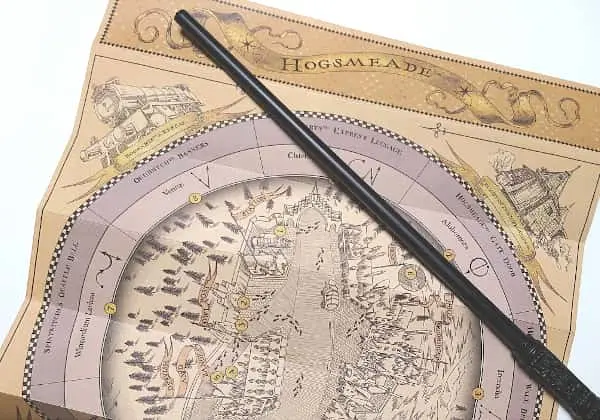
The first room is an introductory exhibit featuring a large Ghibli Park map, past posters, photos, and videos.
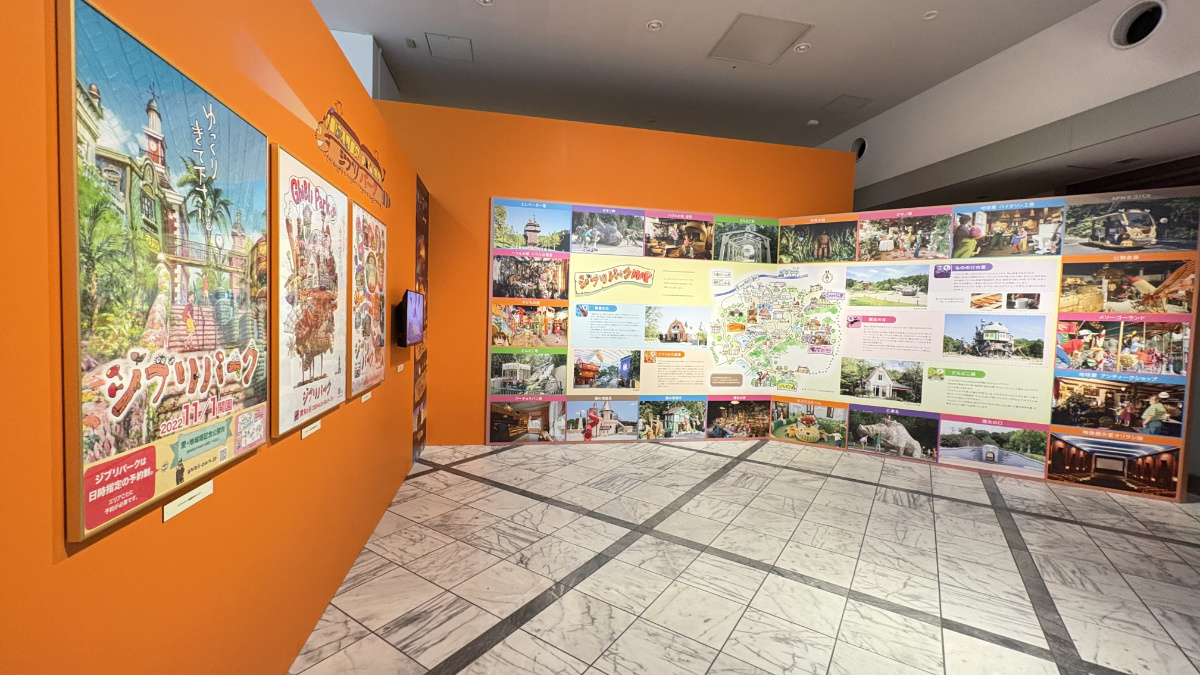
↑ Tap the image twice to play the video
After Yubaba’s Room, Enter the Little Town
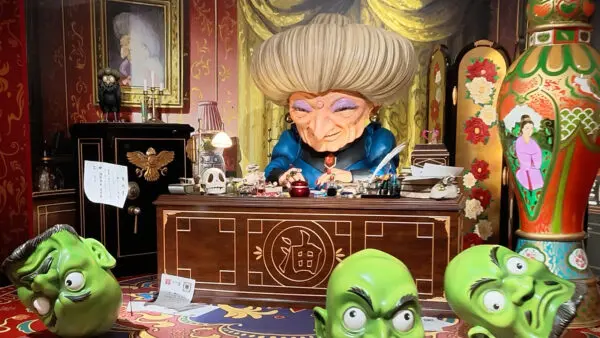
After passing through Yubaba’s room from Spirited Away, you arrive at the exhibition’s main attraction, Little Ghibli Park.
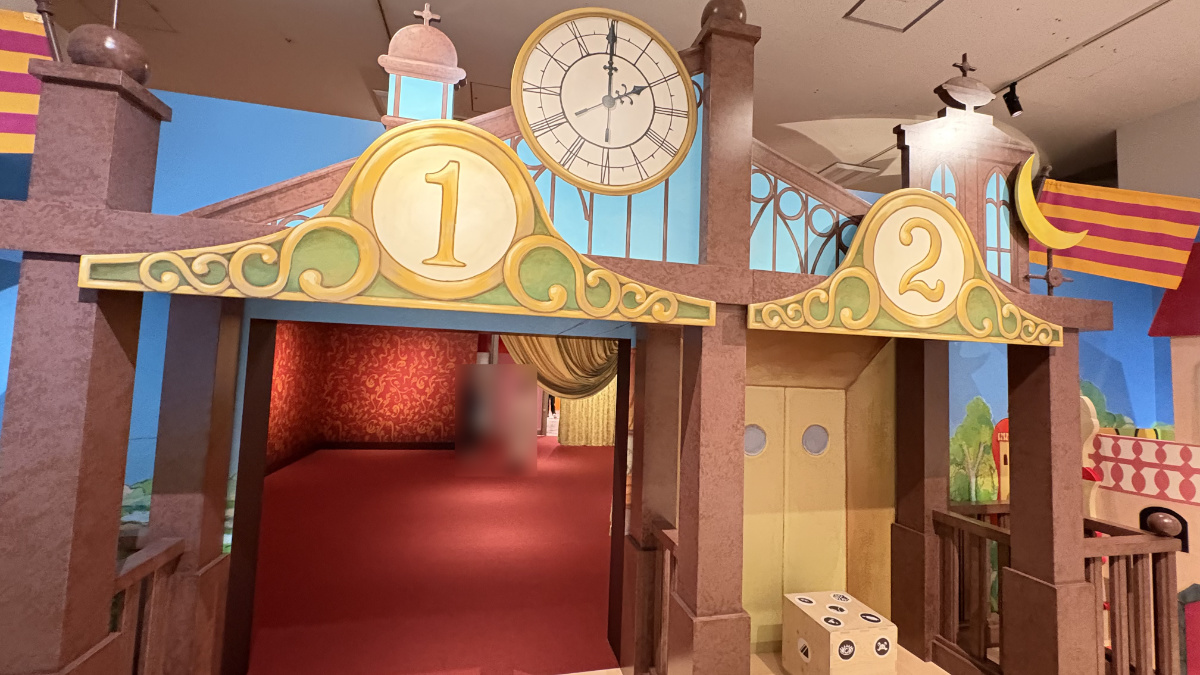
On the Floor-Sized Board Game, You Become the Playing Piece
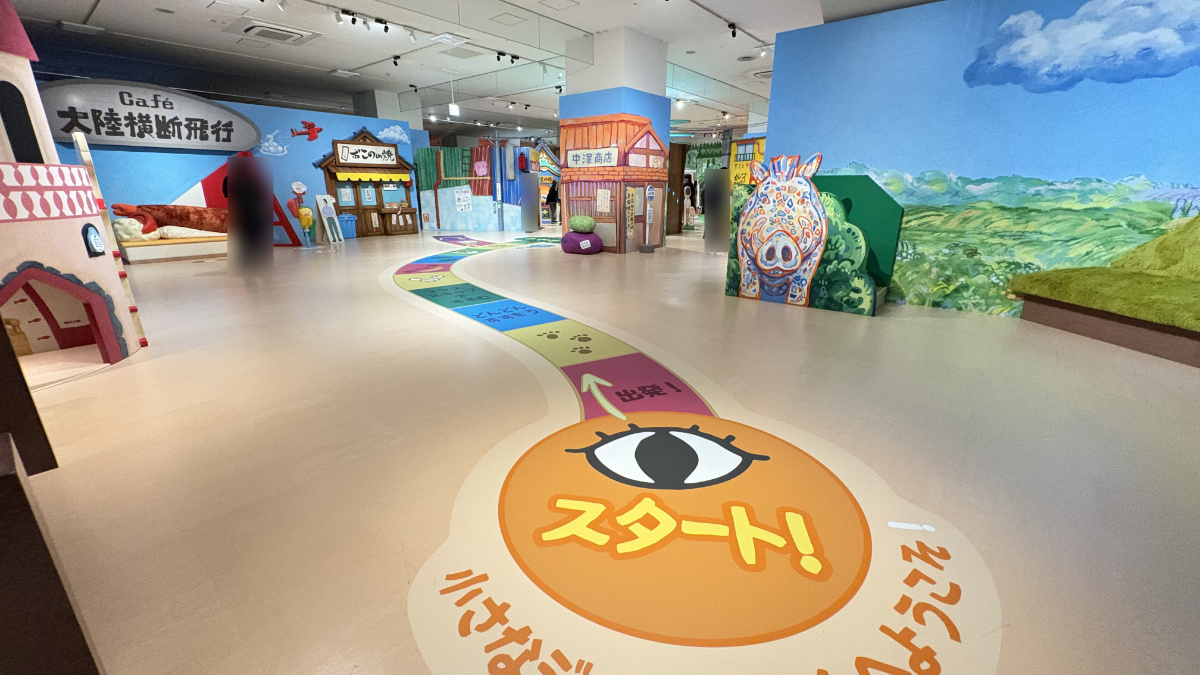
A large board game modeled after Ghibli Park posters is illustrated across the floor.
Start from the “START!” space and look for buildings, scenery, and games that evoke the different areas of Ghibli Park. There is no required route, so you can begin with whichever spots are open.
Even the Dice Feature Artwork-Inspired Designs
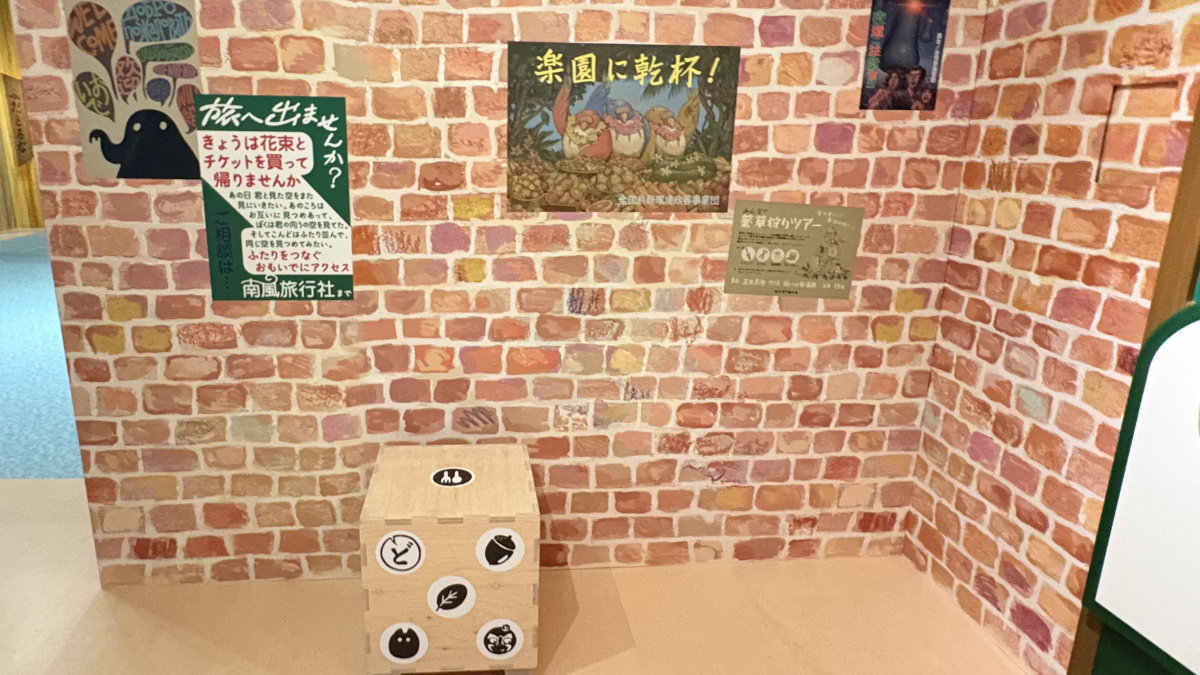
Throughout the town, you will find chairs and three-dimensional objects shaped like board-game dice.
Each die has a different design, so look around for as many as you can. Can you find one inspired by your favorite film?
The Witch of the Waste Looks Different from Front to Back
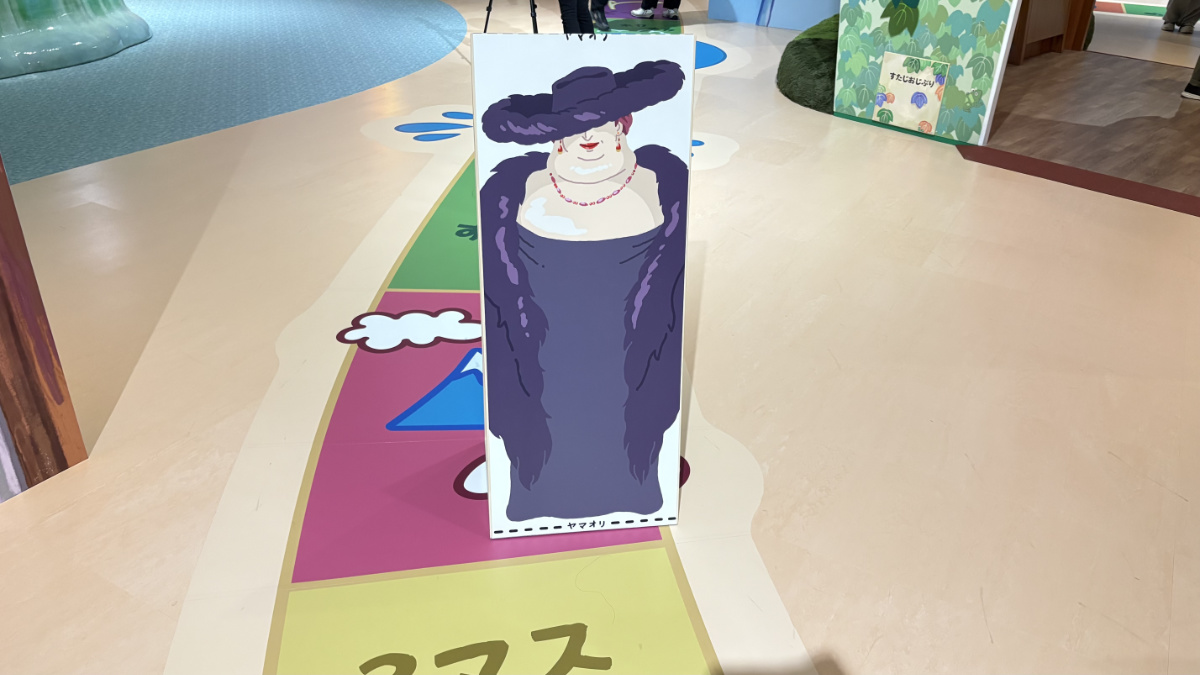
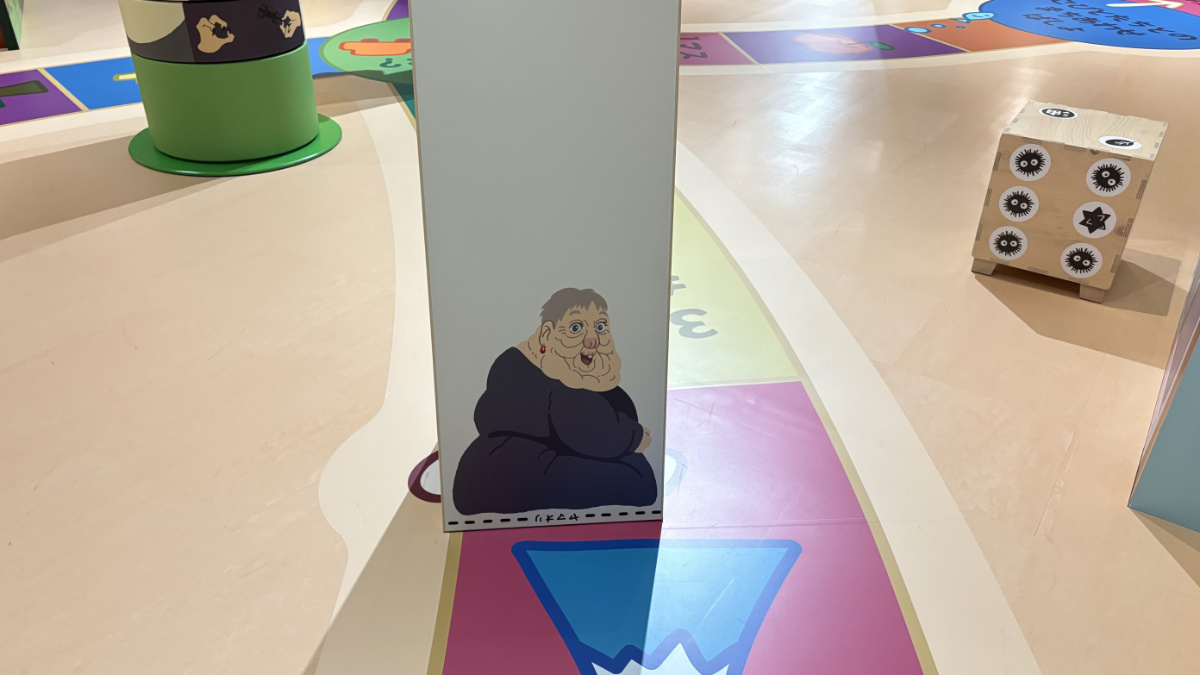
The board-game pieces include the Witch of the Waste from Howl’s Moving Castle.
Be sure to look at the back as well. The two sides show different appearances that evoke her before and after the story’s transformation.
A Bench Where You Can Hug a Giant Fried Shrimp
In an area inspired by the Transcontinental Flight Café in Ghibli’s Grand Warehouse, you can sit on a bench made from oversized food.
The display includes a huge plush fried shrimp, a white cushion resembling tartar sauce, and even three-dimensional side dishes. You can lift the fried shrimp for a fun photo.
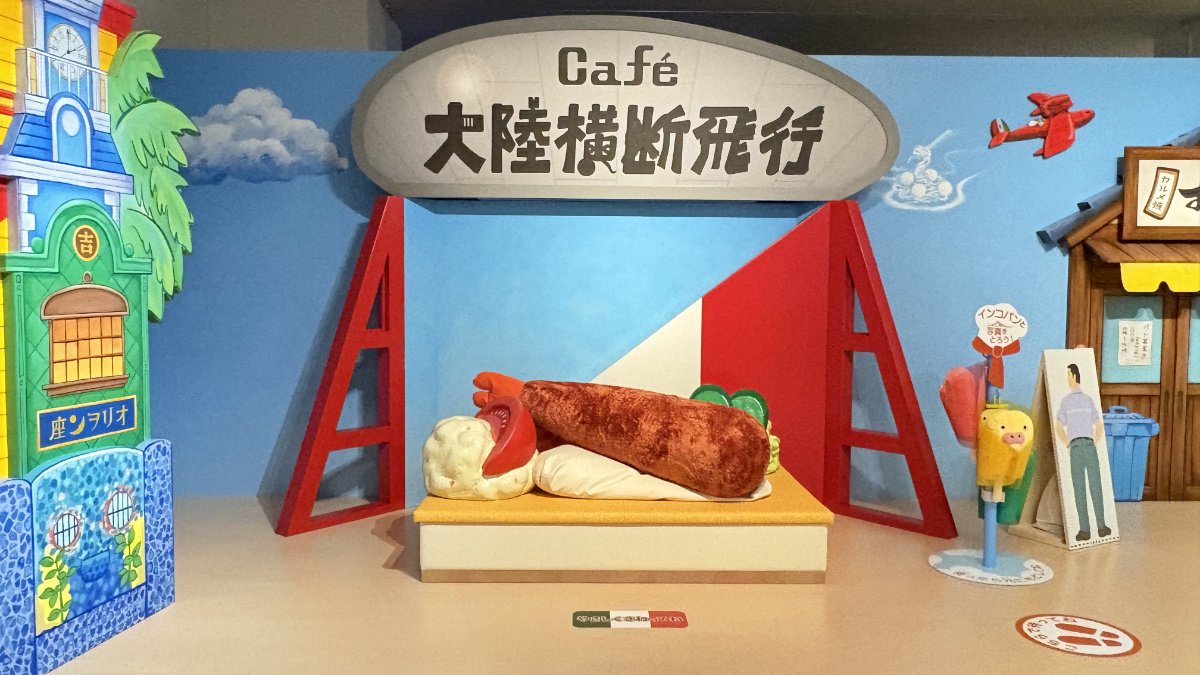
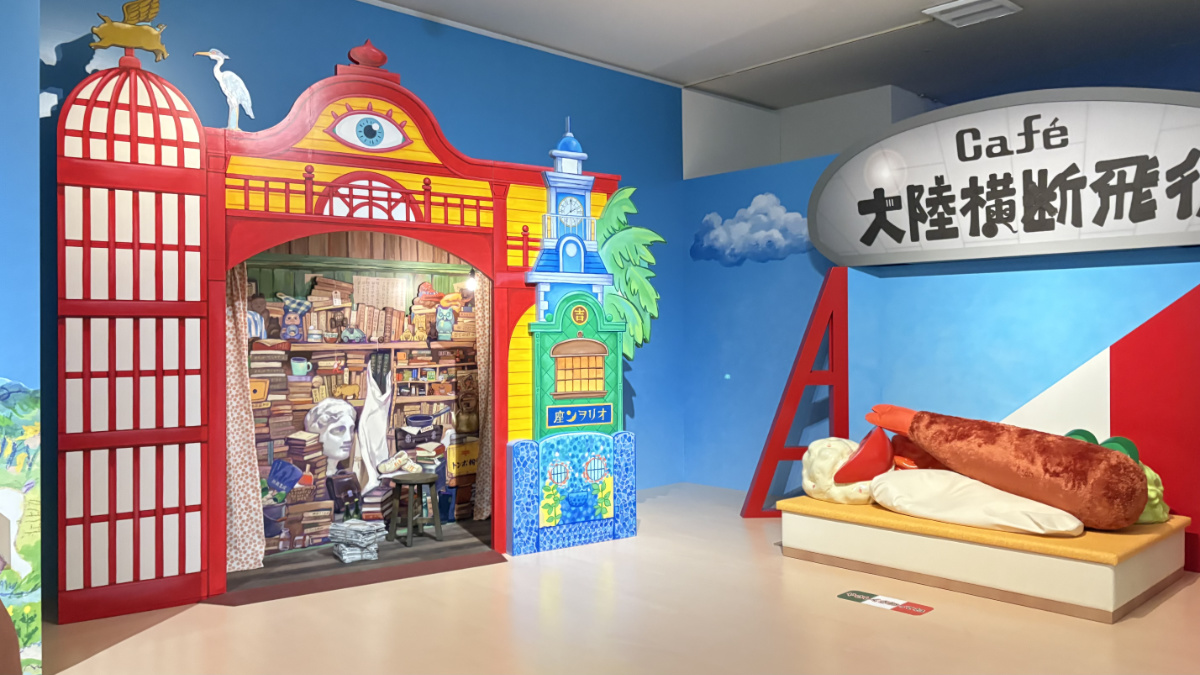
Colorful buildings surround the café area as well. A close-up focused on the fried shrimp creates a very different mood from a wider shot that includes the streetscape.
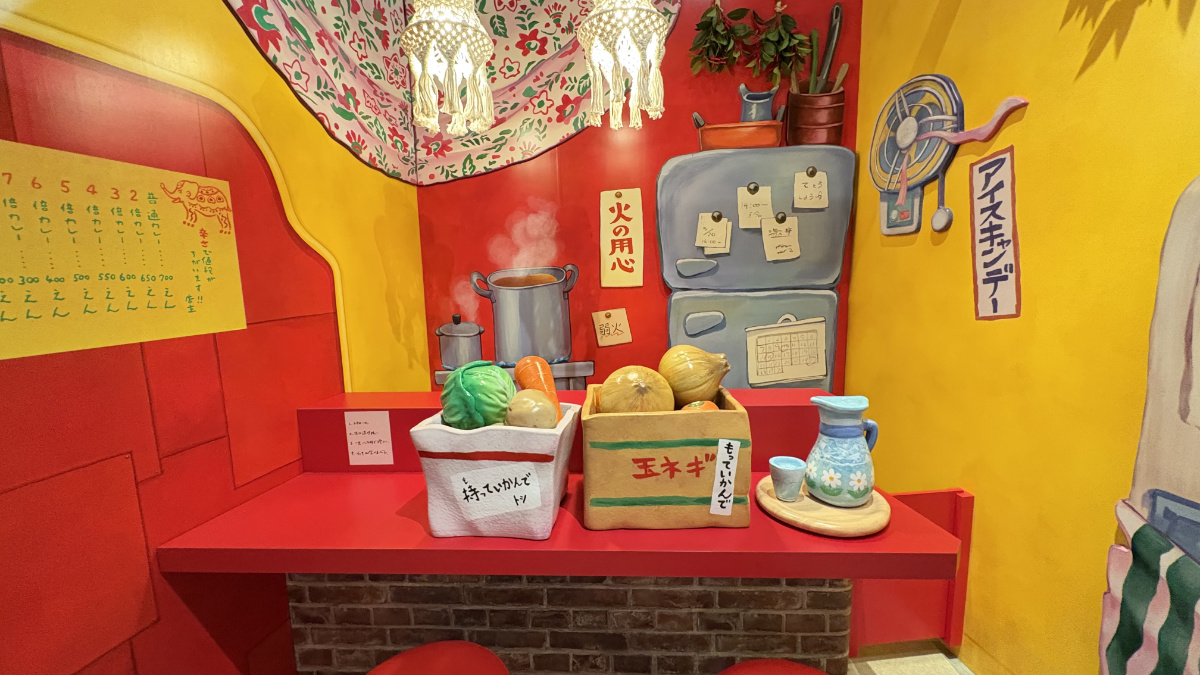
Check the Signs Before Touching Food Props and Other Items
The town includes a small storefront enclosed by red and yellow walls.
Containers of food, drinks, notices, and other props create the feeling of make-believe play for adults.
The Four-Seat Izakaya Is Fun for Adults Too
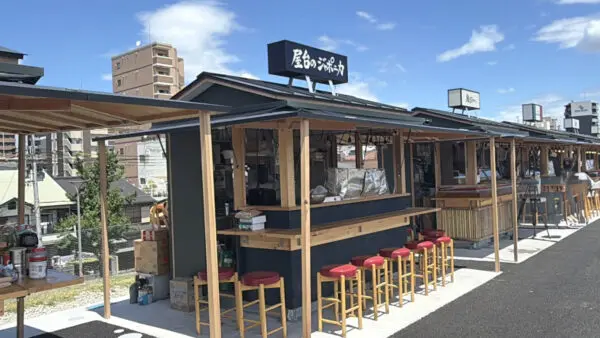
The izakaya, styled like a corner of a Shōwa-era town, has a small table that seats four.
Props such as beer, oden, and condiments are arranged on the table, letting friends and families take photos as though they were raising a toast together.
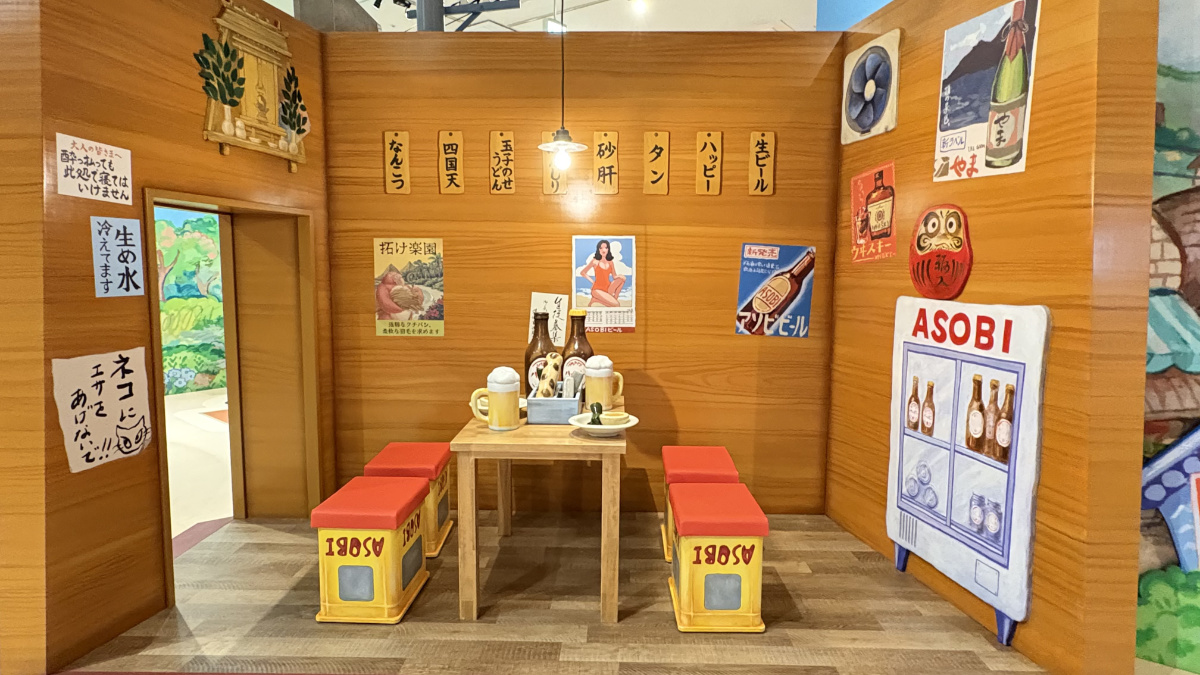
An izakaya in Children’s Town.
Will it make you feel just a little more grown-up?
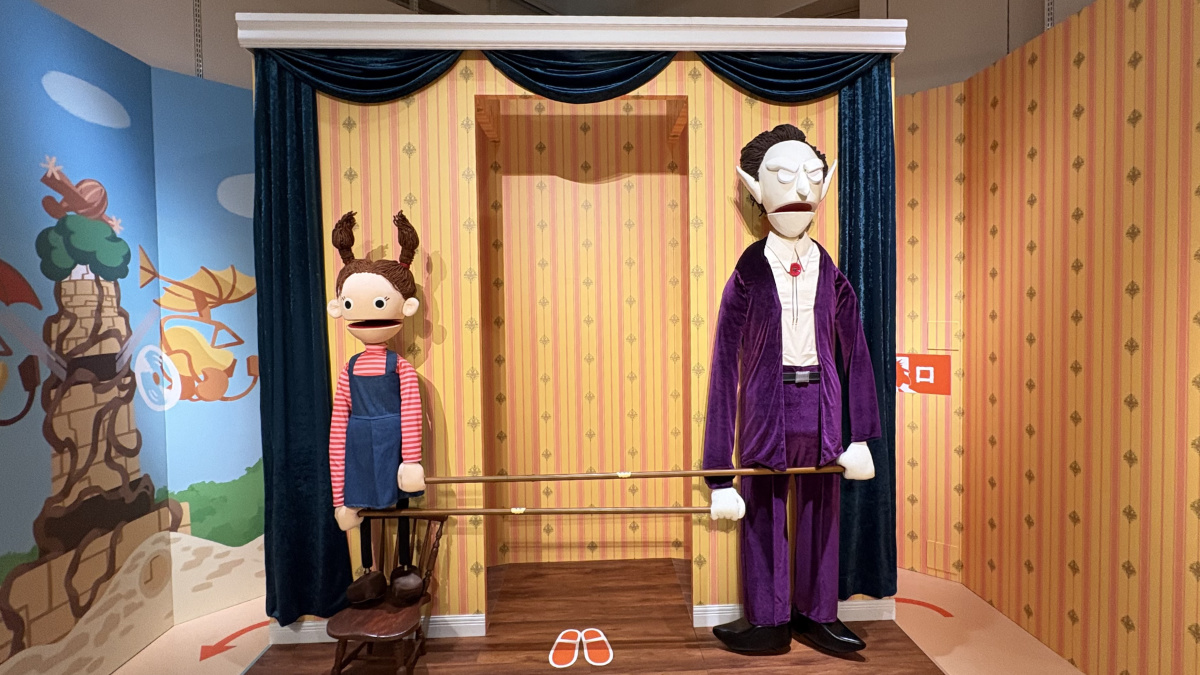
Earwig and the Mandrake Sync Puppets
A stage-like area features sync puppets representing Earwig and the Mandrake from Earwig and the Witch.
Marks on the floor show where visitors should stand. The exhibit overlays your movements with those of the puppets, so lining up with the marked position should help you get a great photo.
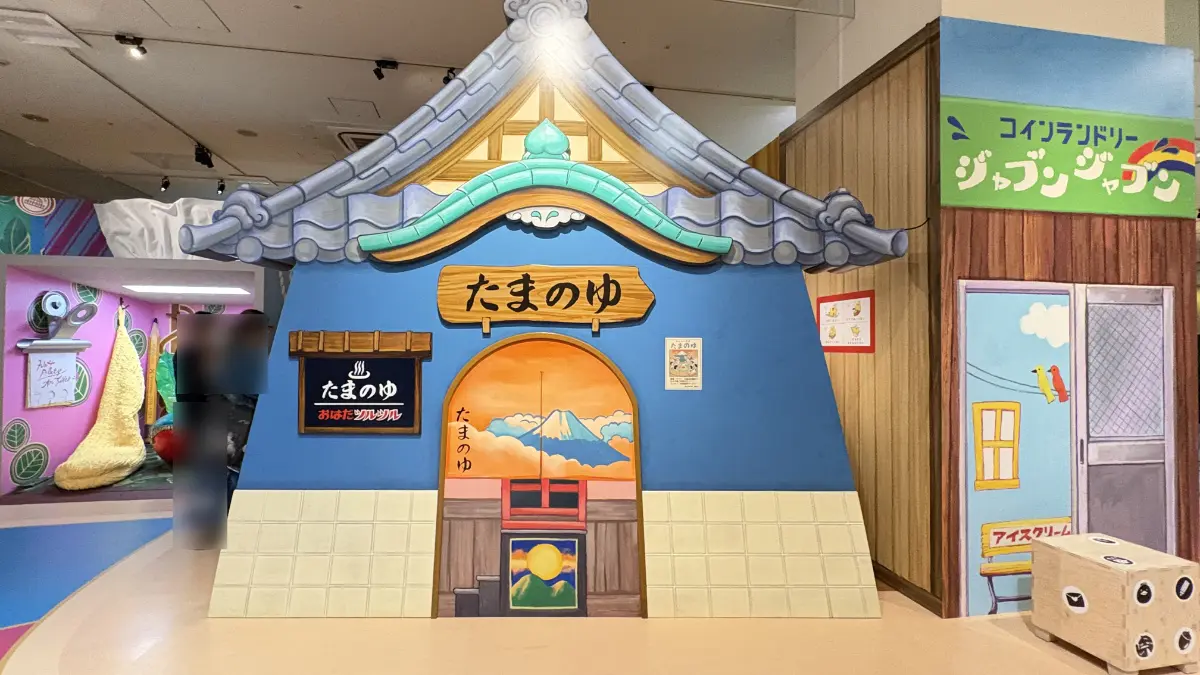
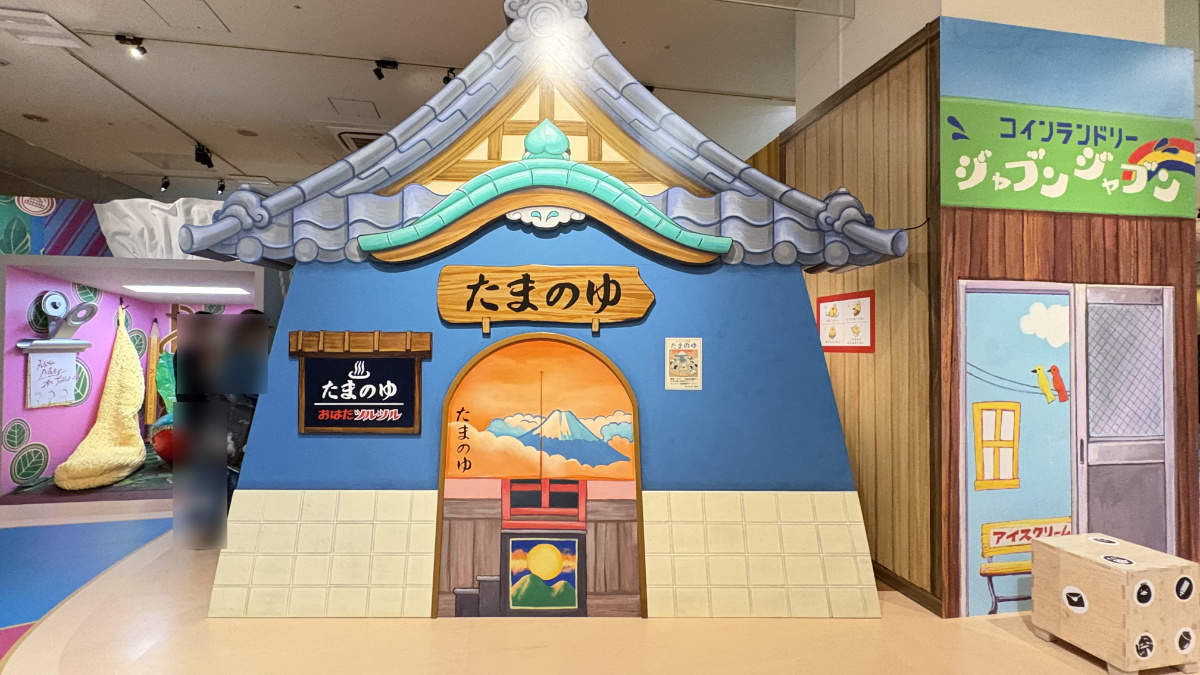
The Tama no Yu Bathhouse Continues from Its Exterior to the Bathing Area
Little Ghibli Park includes Tama no Yu, an old-fashioned public bathhouse.
Beyond the tiled roof, noren curtain, and changing-room shelves, you can continue into the bathing area.
There are plenty of details to see in the changing room too, so take your time before moving on.
Playful Details Hide in the Wooden Tags and Changing-Room Shelves
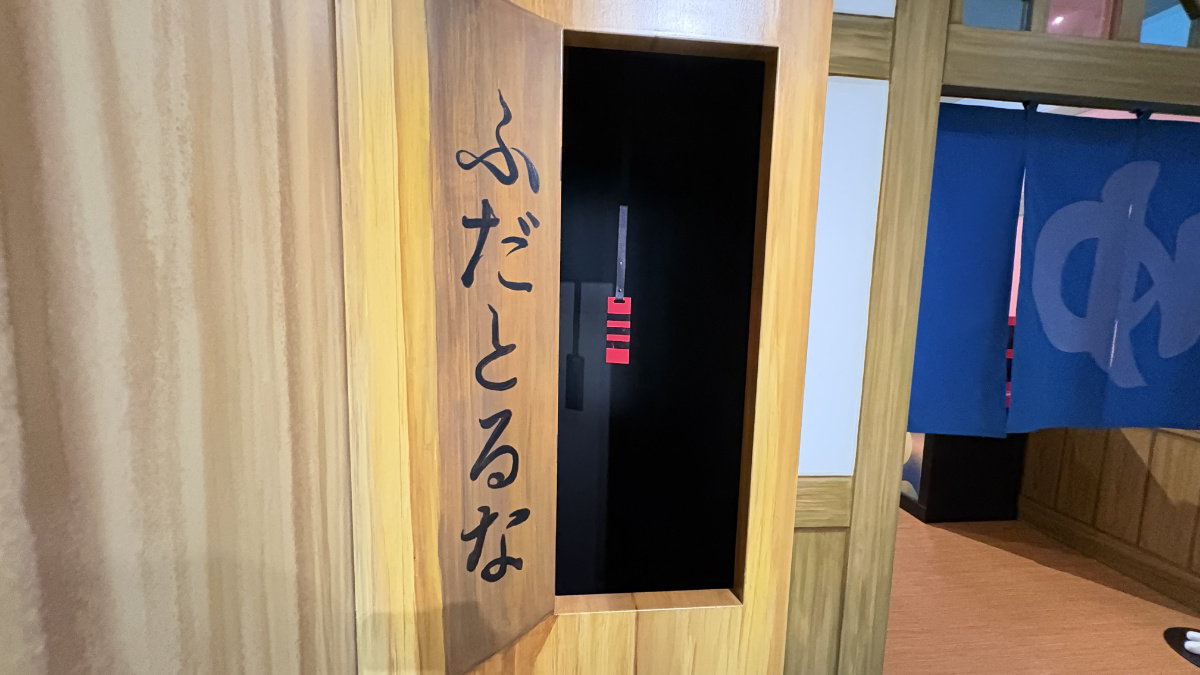
Near the bathhouse are interactive details resembling wooden tags and changing-room shelves marked with numbers.
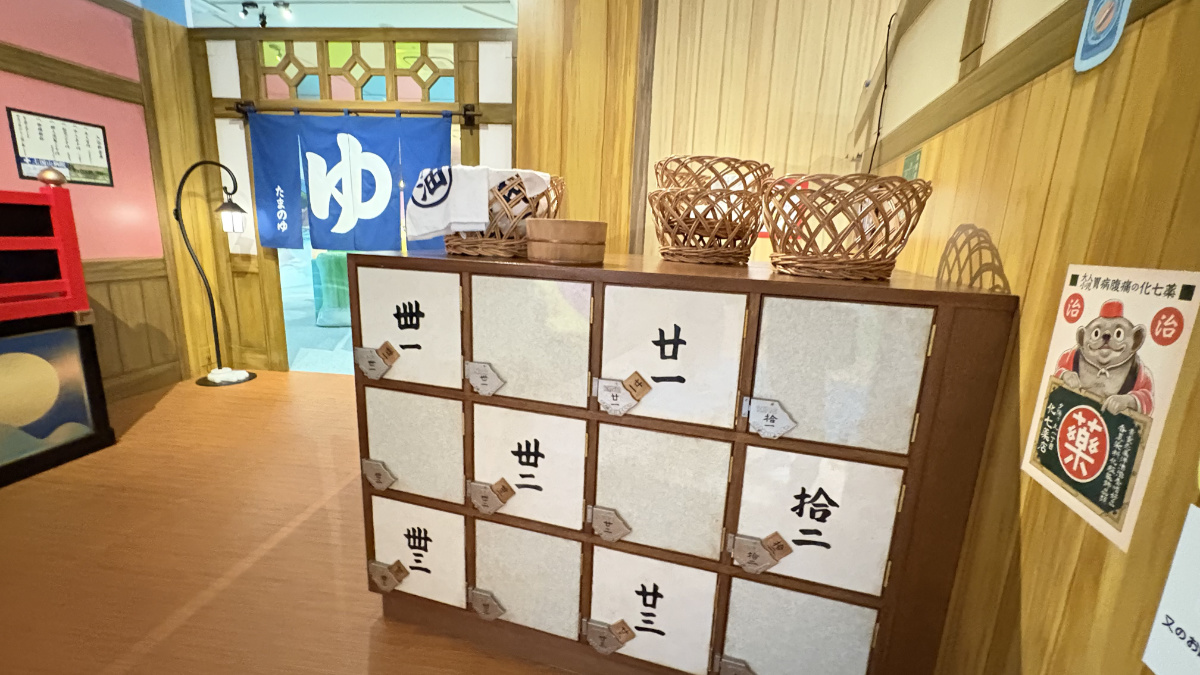
Kamaji mixes medicinal herbs in response to requests from the gods soaking in the baths.
The wooden tags, or bath tokens, are used to relay those instructions.
The scene makes it look as though you are giving Kamaji instructions from the bath.
Join the River Spirit and Otori-sama in the Bath
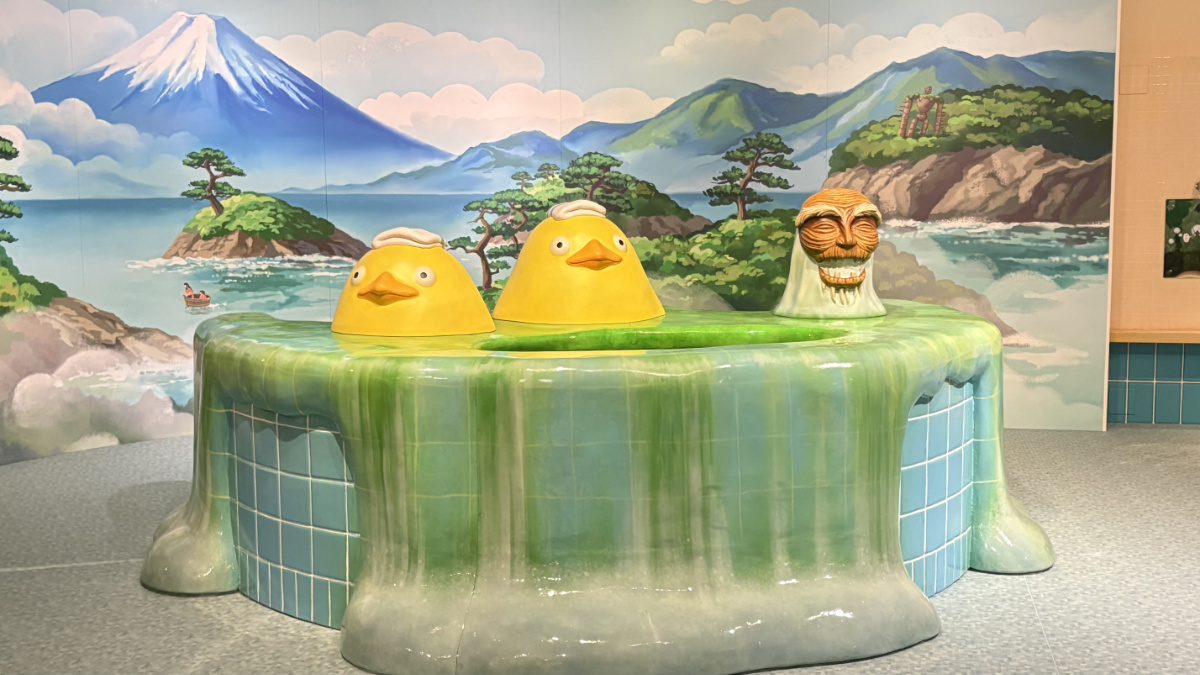
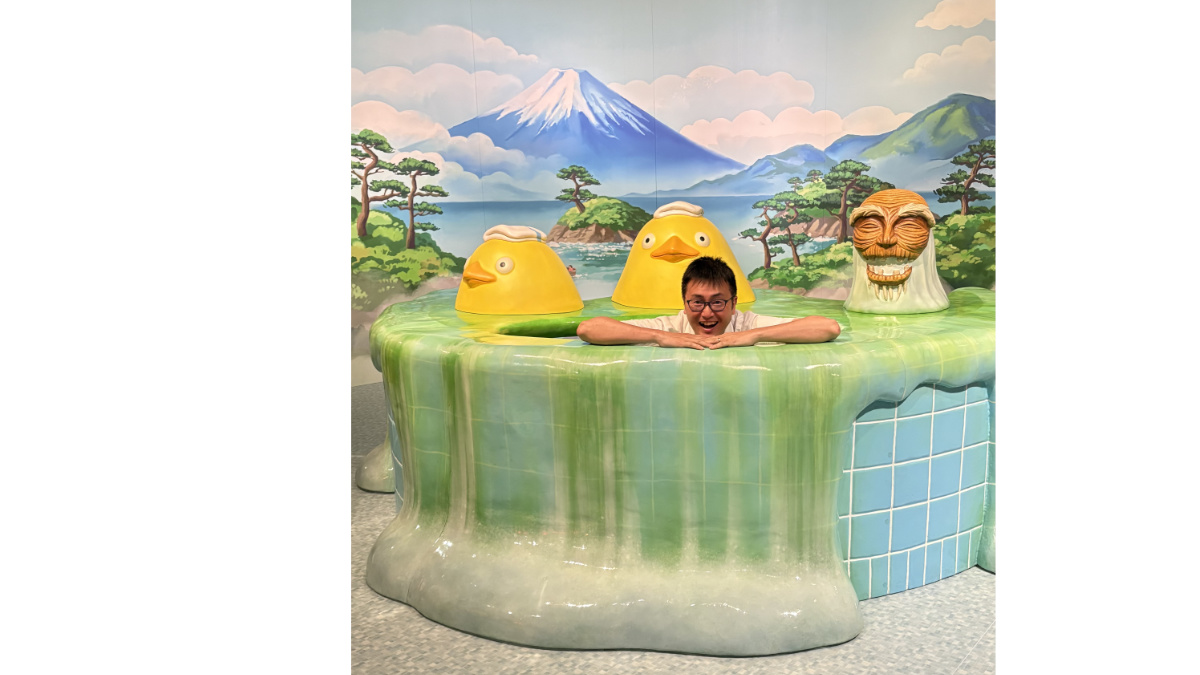
The bathing area contains a tub reminiscent of the bathhouse in Spirited Away.
The River Spirit, famous for the line “Well done,” and several Otori-sama are soaking in it.
You can step into the center and poke your face through, making it possible to take a photo that looks as though you are bathing with them.
Experience a Borrower’s Scale in The Secret World of Arrietty
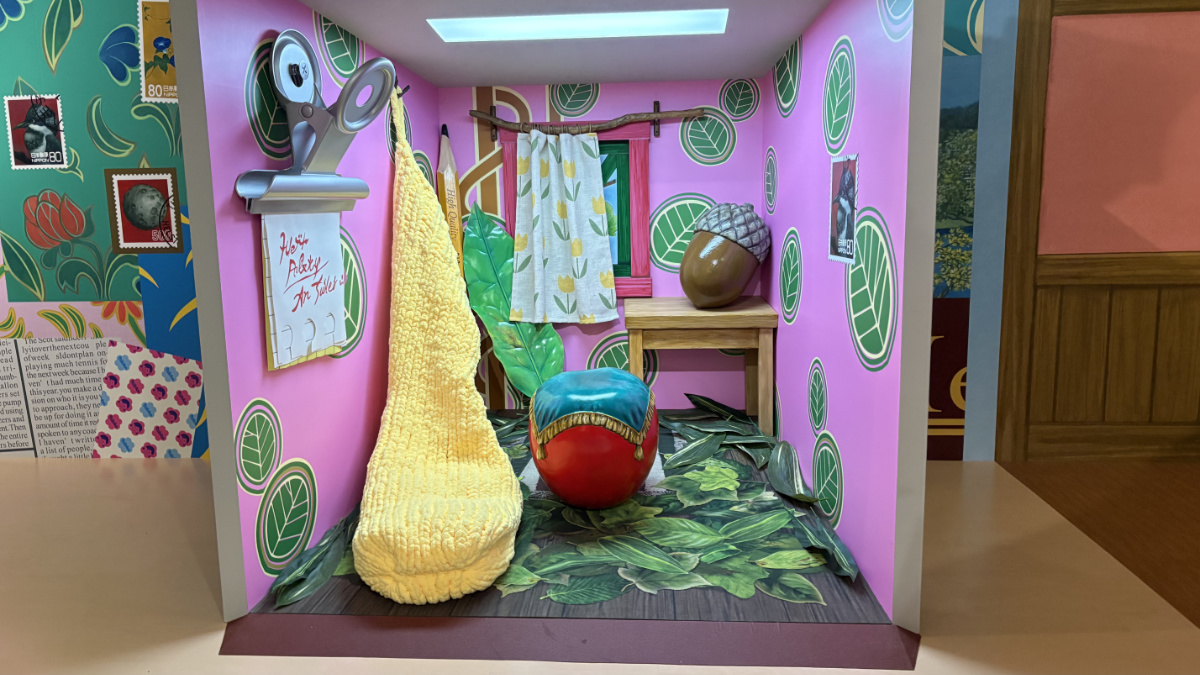
In a room inspired by The Secret World of Arrietty, everyday objects such as a tissue box, clothespins, acorns, and apples are built at an enormous scale.
Sit on the giant apple to capture the feeling of a tiny Borrower surrounded by oversized household items. For a full-body photo, have the photographer step back a little.
Turn the Wall-Mounted Machinery in the Howl’s Moving Castle Area
A large illustration inspired by Howl’s Moving Castle reveals the full shape of the building when viewed from a distance.
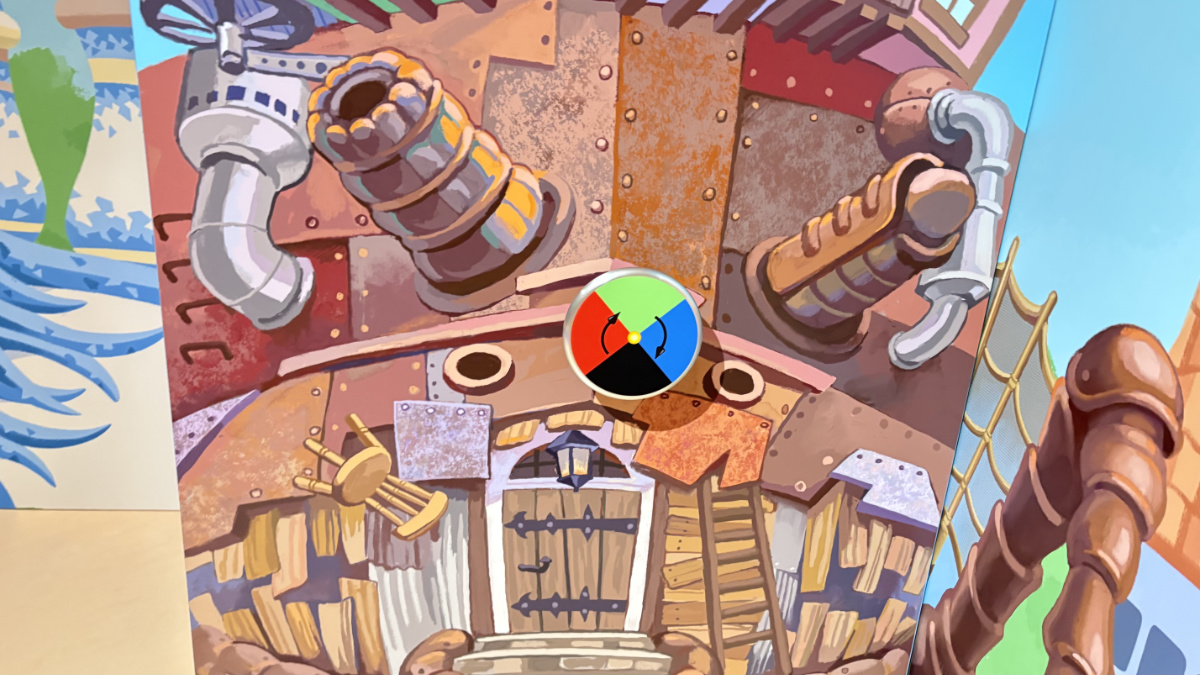
After taking in the layered chimneys, houses, and metal components, move closer to inspect the machinery. Changing your viewing distance reveals the boundary between the painted image and the three-dimensional elements.
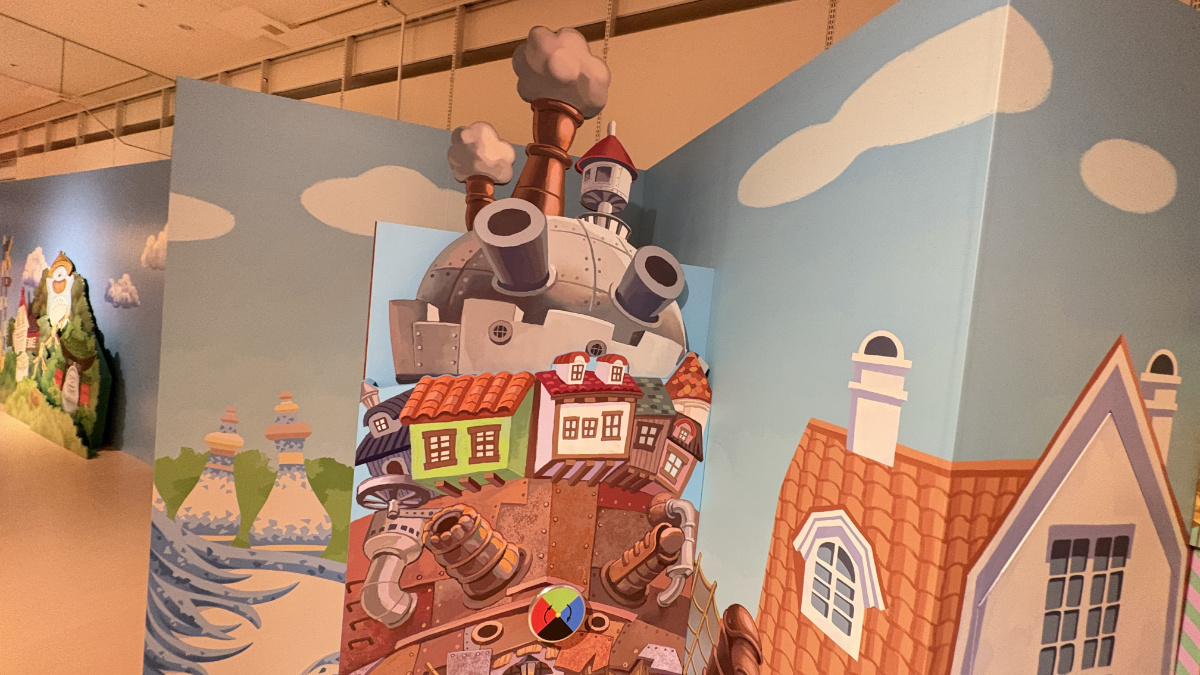
The mechanical section includes movable features such as colored disks. Do not spin them too forcefully, and return them to a usable position before stepping away.
Do More Than Take Photos—Be Sure to Look Behind Everything!
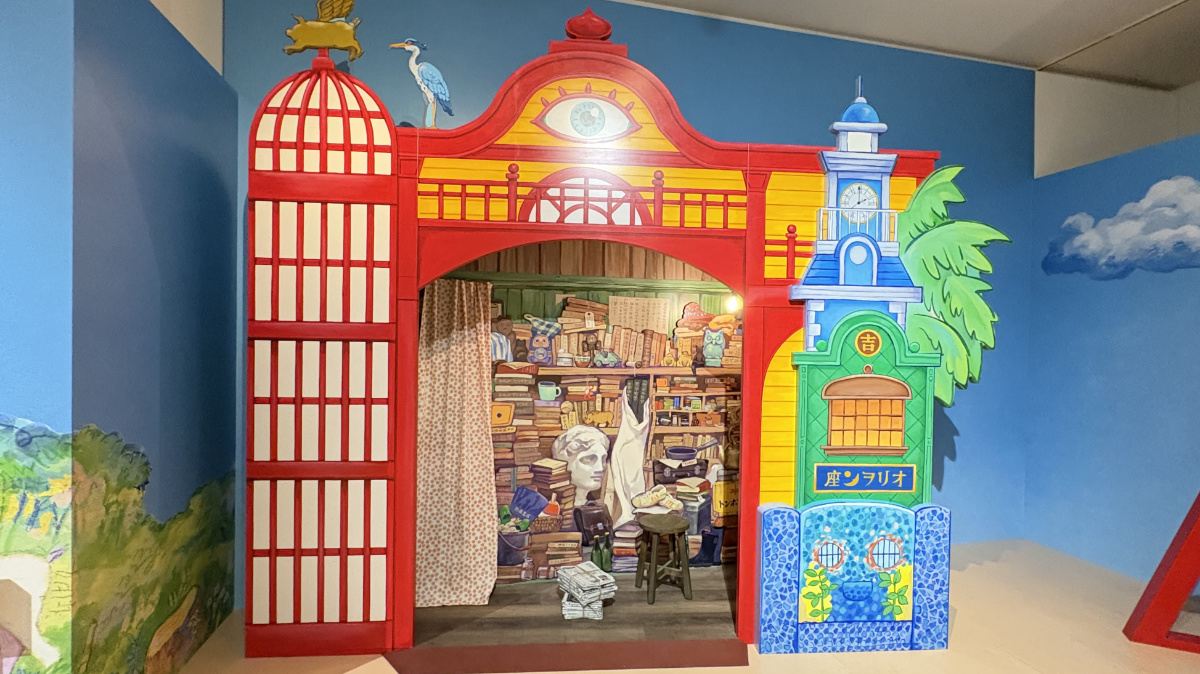
The town is filled with commemorative photo spots.
The interior of a red-and-yellow building is illustrated with stacks of miscellaneous goods and books. Because the colors and shapes differ greatly on each side of the entrance, a photo showing the whole building works especially well.
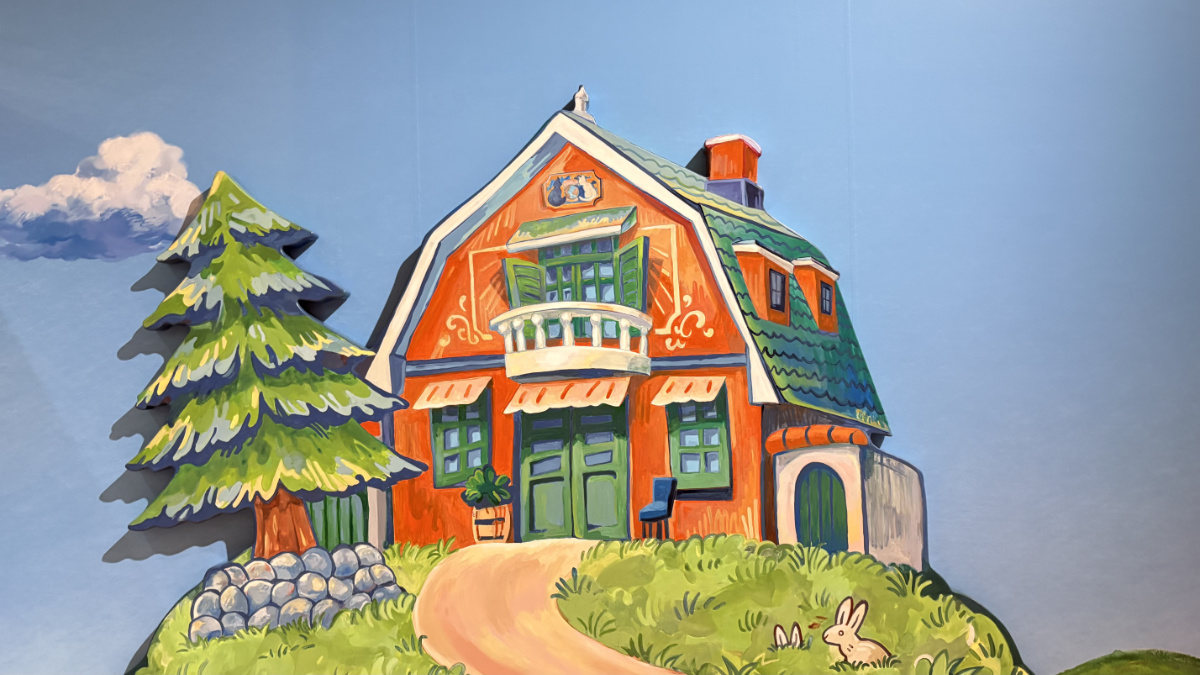
Three-dimensional trees and stone walls are combined with the painted scenery. Look closely around the house for detailed illustrations of windows, roofs, chimneys, and even rabbits in the garden.
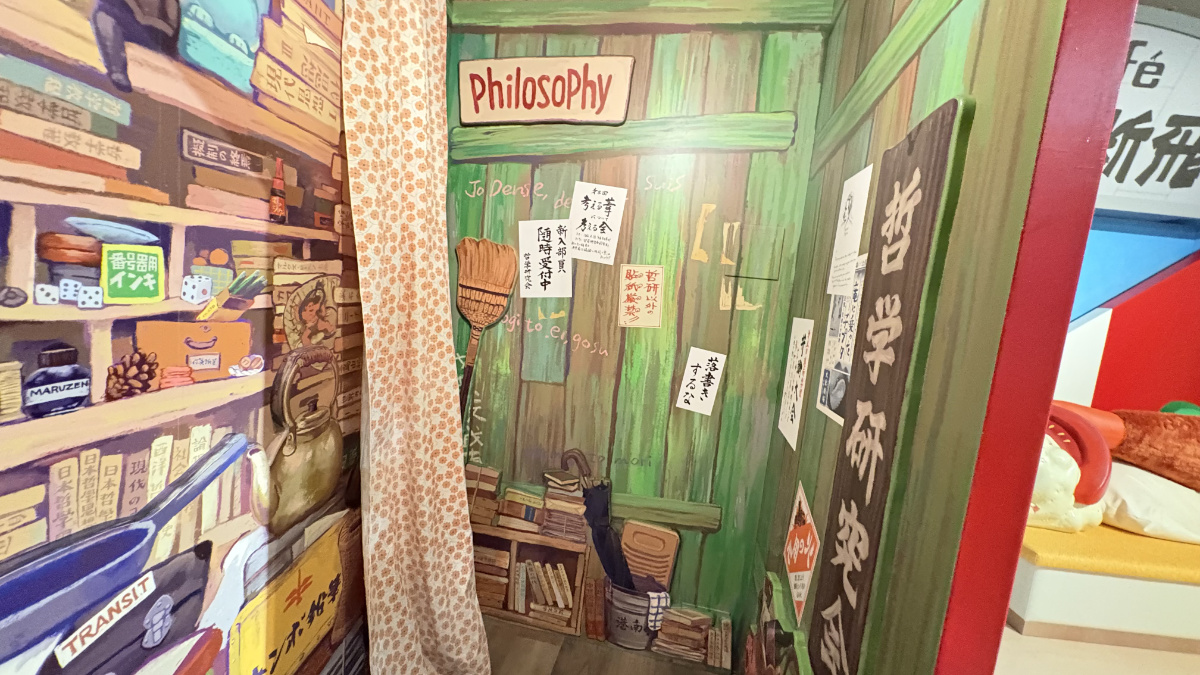
Once you step inside the building for a photo, you will find that the world is richly illustrated even in the deeper areas the camera cannot capture.
A Curry Shop and Public Telephone Bring Back the Shōwa-Era Streetscape
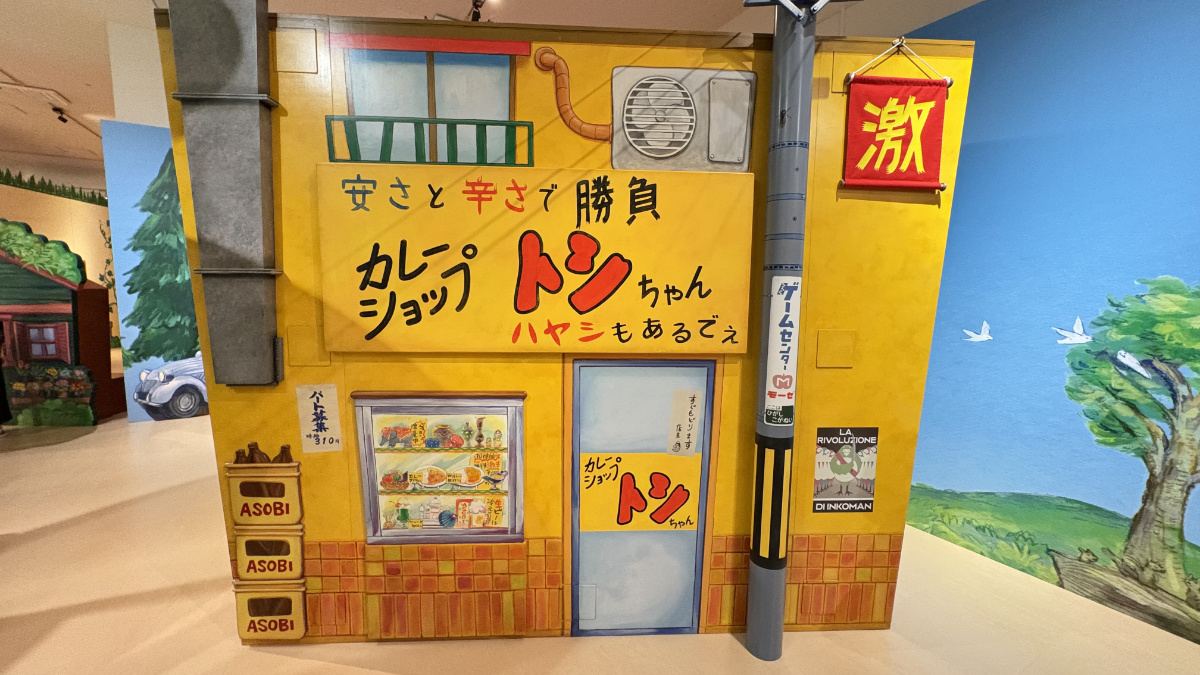
The yellow-walled Ton-chan Curry Shop is lined with a display case, notices, and boxes bearing the shop’s name.
It is not a real restaurant, but comparing the prices and products makes the fictional town feel lived in.
Nearby is a small public telephone booth containing a green telephone.
The receiver and posted notices resemble equipment once used in real Shōwa-era neighborhoods. Photographing it from the front includes the houses in the background and shows how naturally the booth fits into the town.
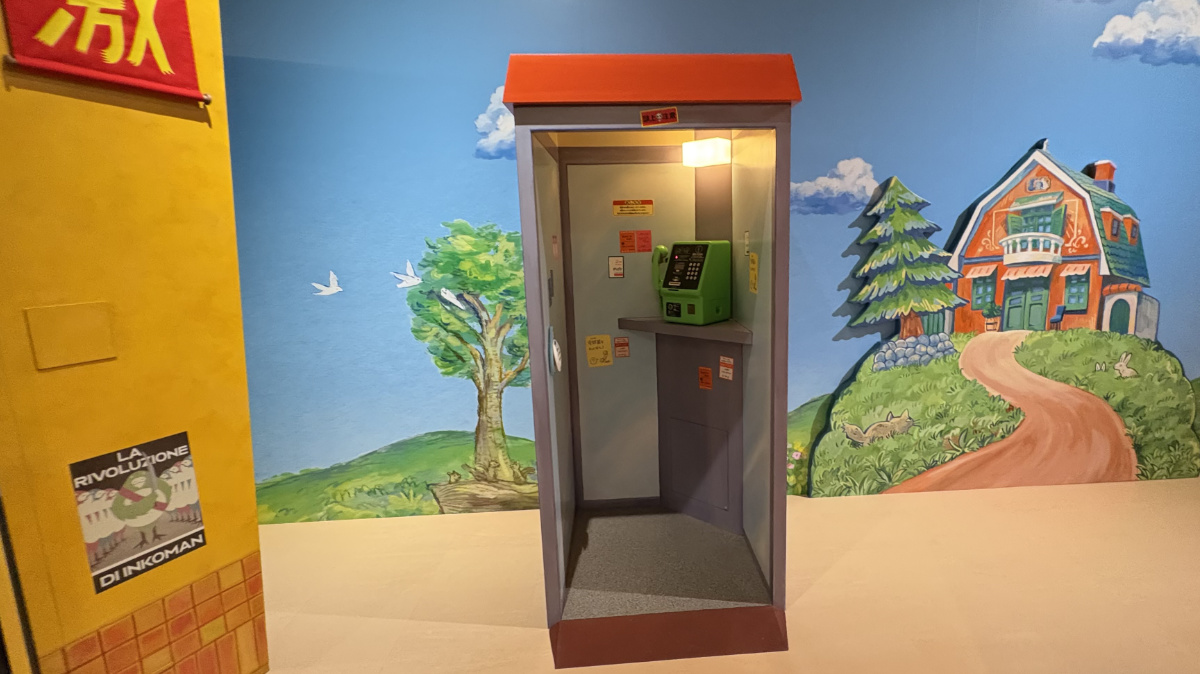
Pick up the receiver and you can hear the voices of two senior figures from Studio Ghibli.
Who appears is a surprise best discovered after you answer the phone.
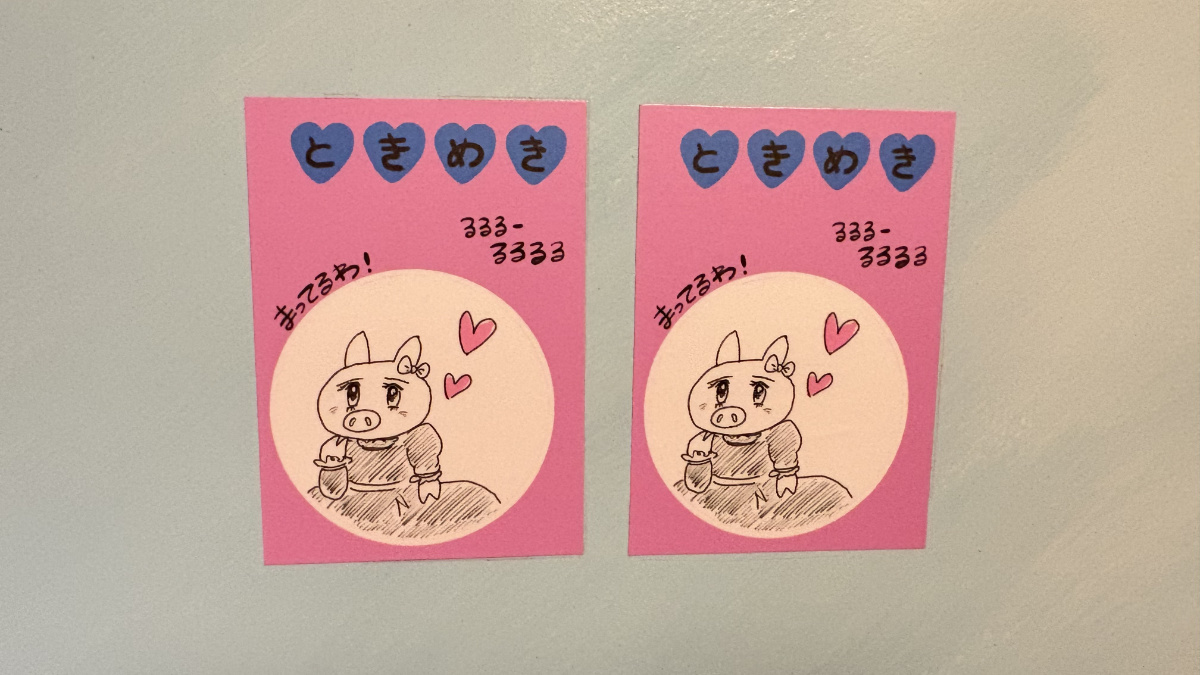
A small “Tokimeki” flyer featuring a pig girl is posted on the wall.
For some reason, public telephone booths in the 1980s were often covered with pink flyers like this.
The workspace where a pig character sits at a desk is filled with documents, art supplies, cigarette butts, and even seasonings.
Studio Ghibli: Director Hayao Miyazaki at Work
You can sit beside the pig in a workroom that appears to represent director Hayao Miyazaki and take a photo.
Look not only at the speech bubble but also across the desk, item by item, and you can sense the atmosphere of Miyazaki working busily.
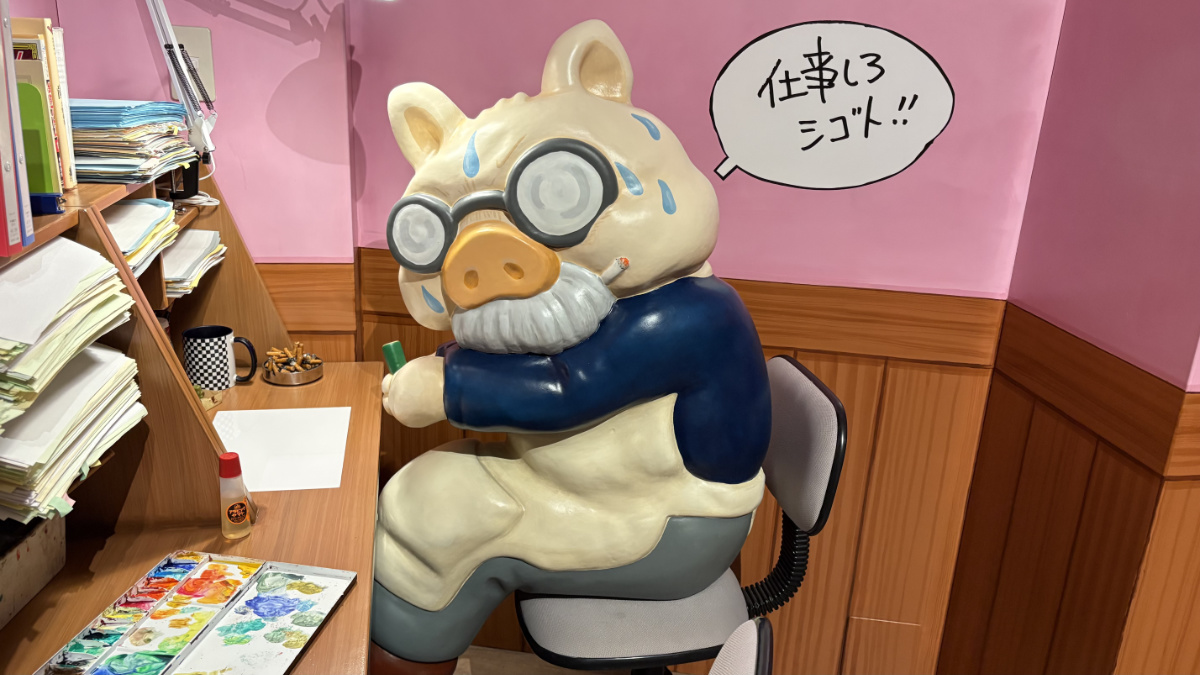
Director Hayao Miyazaki has also shared self-portraits depicting himself as a pig.
The White Cat Delivery Stop and Forest Passage
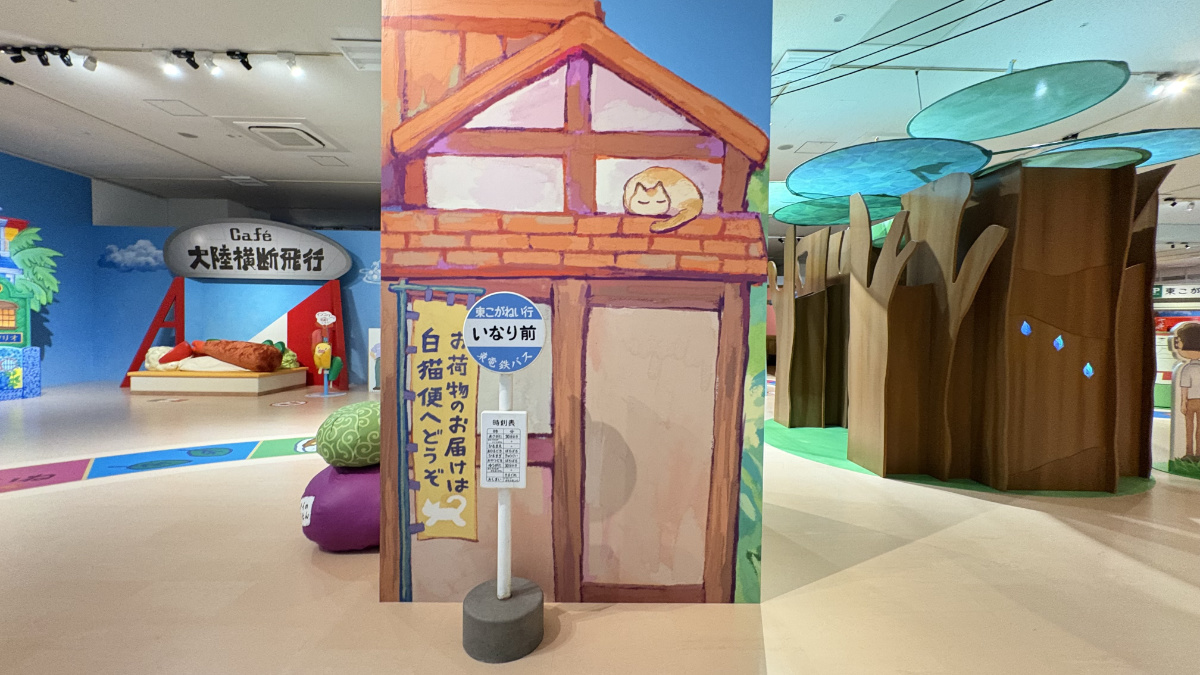
At the edge of the town is a small stop marked with a White Cat Delivery sign.
The forest backdrop is made by layering flat wooden pieces, while blue parts resembling the surface of water float overhead. After viewing it from the front, walk around to the side to see how the sense of depth is created.
The Arcade Mixes Nostalgia with Ghibli-Themed Play
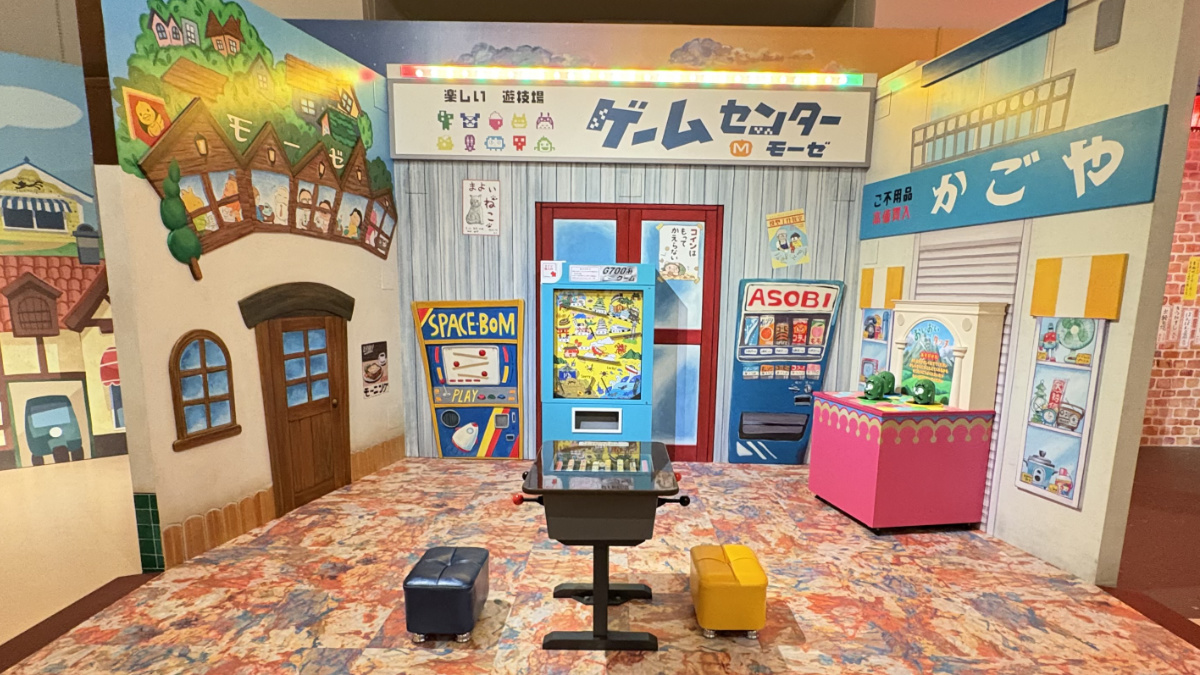
Little Ghibli Park includes a corner designed to resemble an old-fashioned arcade.
A shop sign, chairs, patterned flooring, and game machines are packed into the compact space.
A Game Where You Move Small Pieces Across the Board
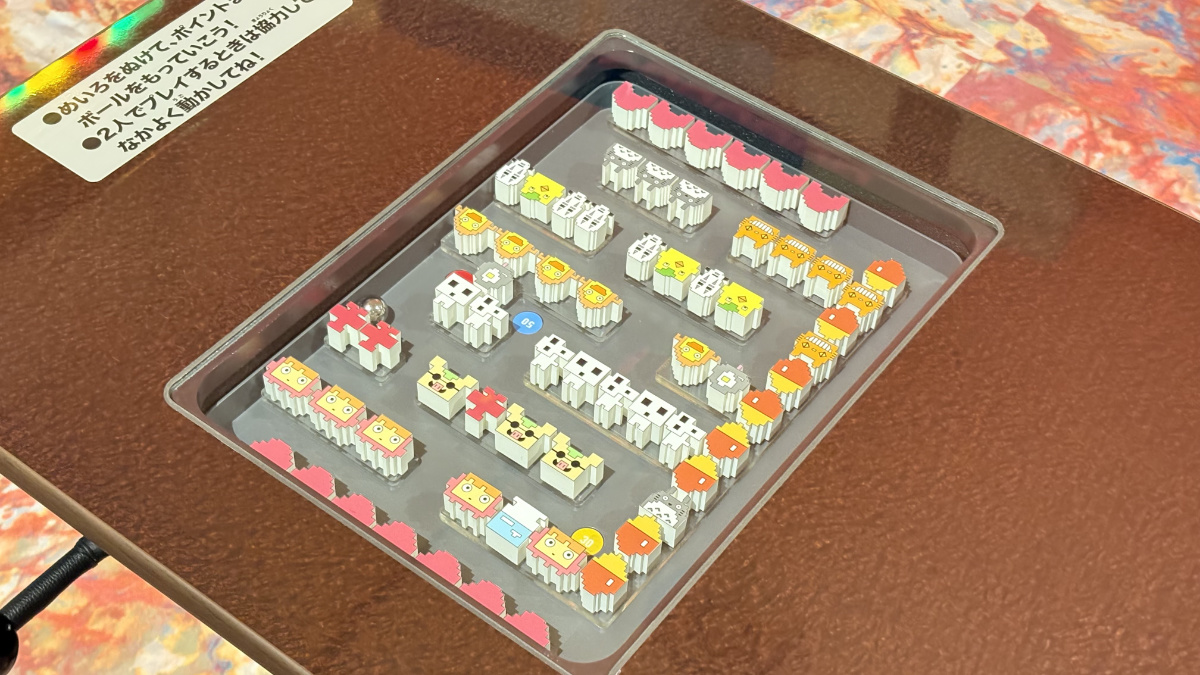
A tabletop game is arranged with small white and yellow pieces.
The pieces are shaped like characters from a classic space-invader game, but decorated with Ghibli characters, making them especially charming.
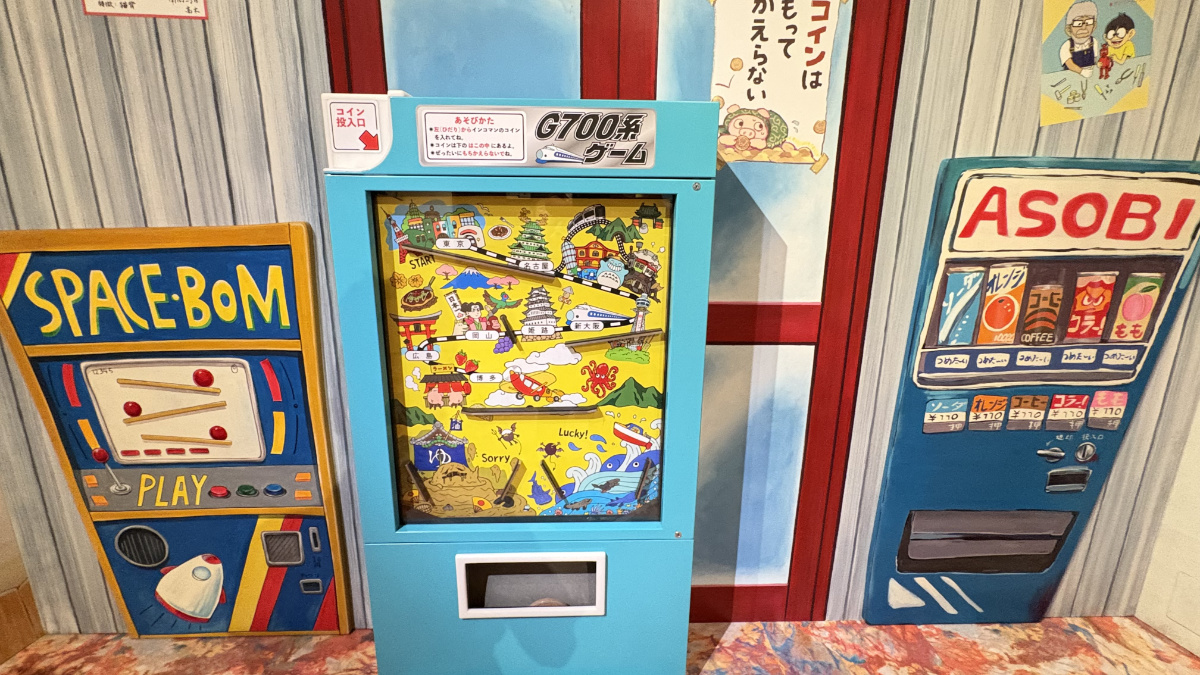
A Shinkansen-Style Game Machine Also Appears
Along the wall are games reminiscent of machines once found on department-store rooftops and in game corners during the Shōwa era.
The blue machine in the center is a coin-operated mechanism styled after a classic Shinkansen game. Different generations may feel nostalgic about different details, making it a good conversation starter for parents and children.
Gently Touch the Heads, or Kashira
The “Oi Oi Touch” game lets you play by gently touching the Heads, or Kashira, from Spirited Away.
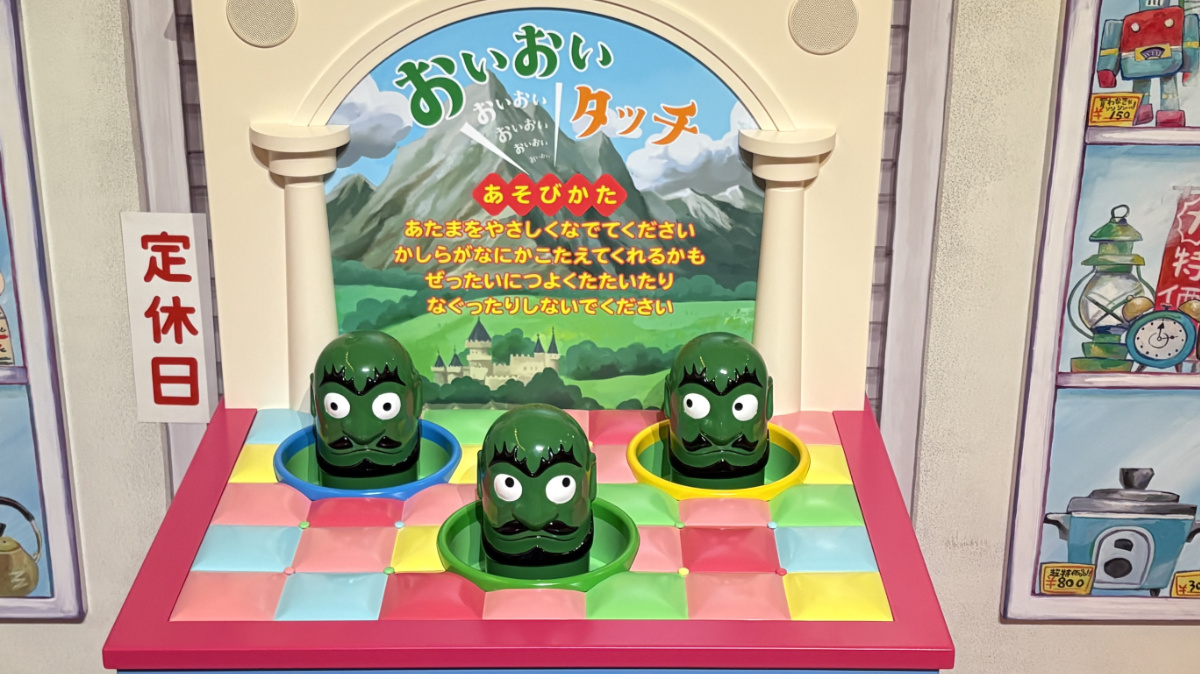
Touch one lightly and, after a brief delay, it calls out “Oi.”
There are three of them, so try touching them at different times and enjoy the overlapping voices.
Hidden Mechanisms Are Waiting to Be Found
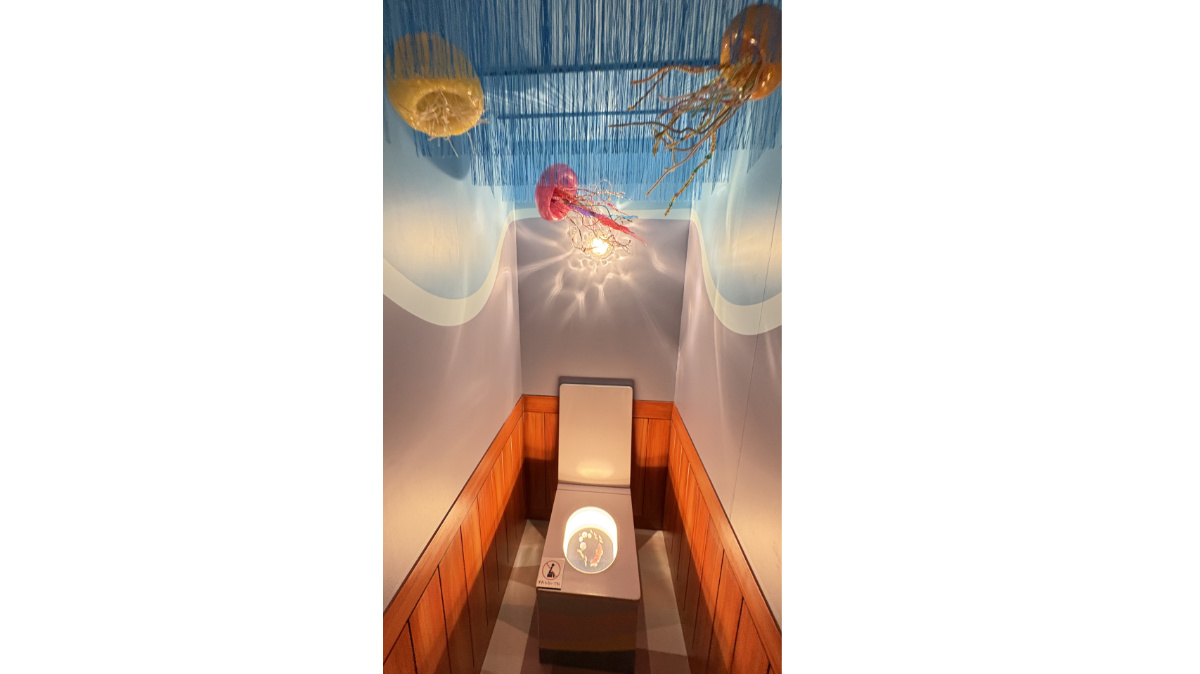
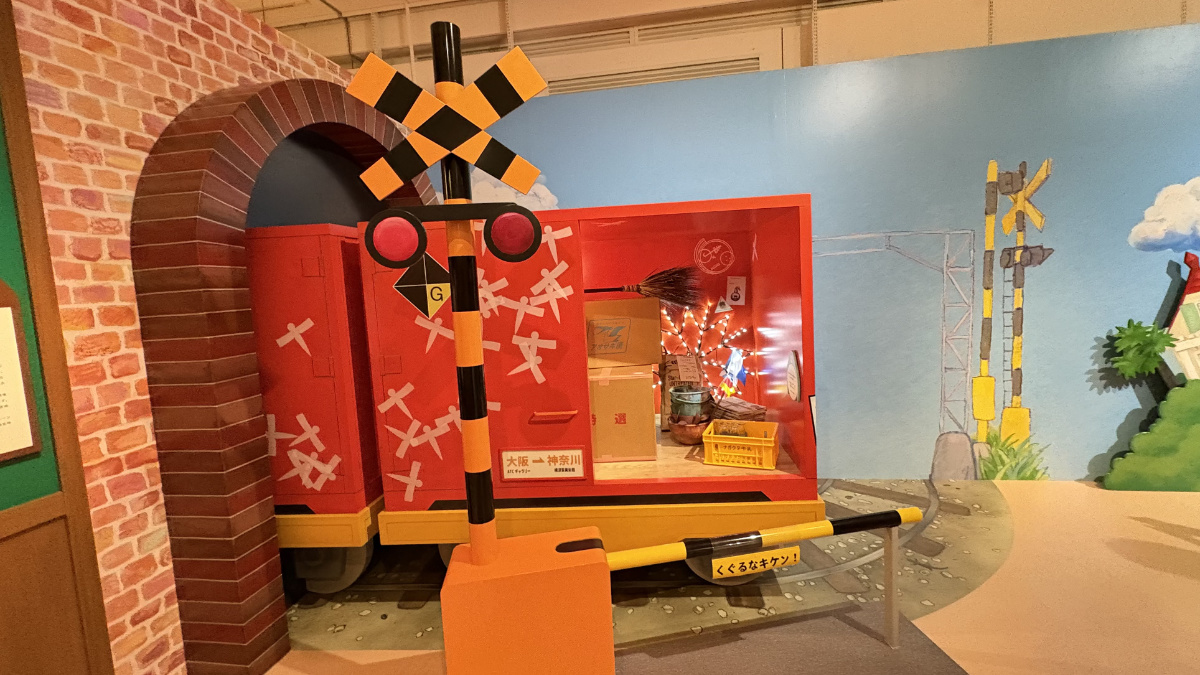
A toilet-like space is hidden beyond the row of photo spots.
Step inside and you enter a beautiful world of jellyfish. The toilet bowl appears to contain an aquarium, and living creatures could be seen swimming inside.
A Freight Train Carrying the Exhibition from Ghibli Park to Osaka
A freight train appears at the end of Little Ghibli Park.
Did it carry the exhibition displays all the way from Ghibli Park to Osaka?
Peer inside and you may discover all sorts of fun details.
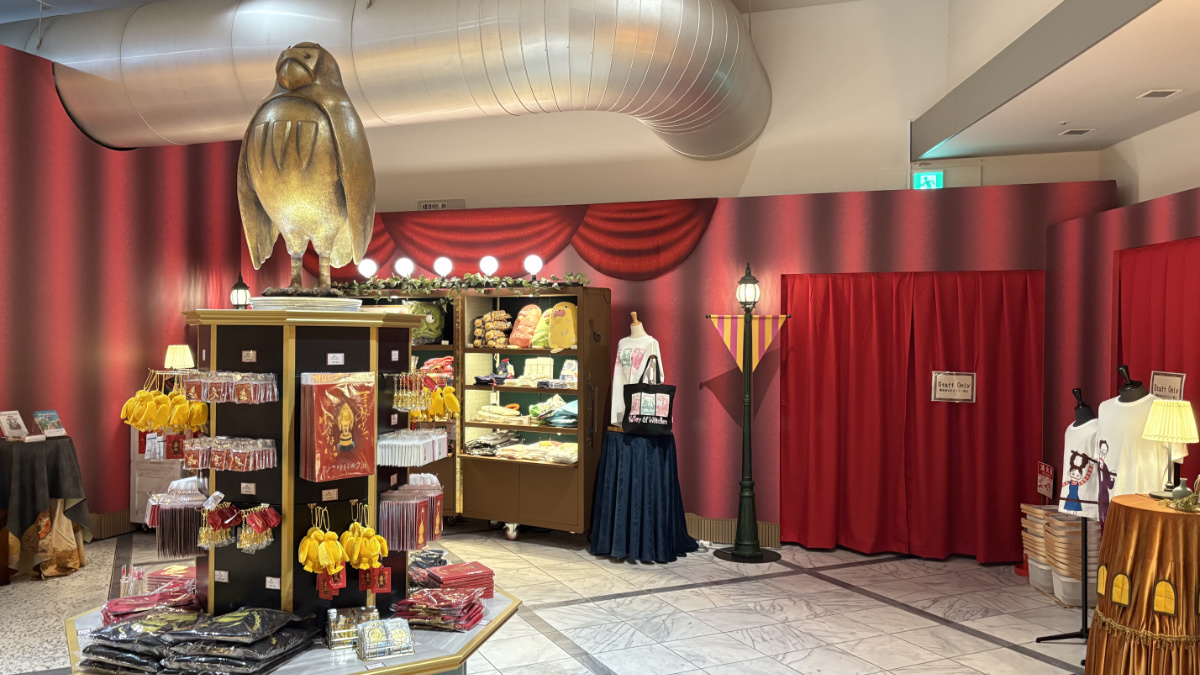
Only Visitors Who Finish the Exhibition Can Use the Shop
A special shop is located near the end of the exhibition.
Its shelves carry merchandise inspired by the Parakeet Man trophy, Parakeet Bread, the board game, Haku in dragon form, and more. Even if you spot something you want, you cannot skip ahead and visit only the shop while still partway through the exhibition.
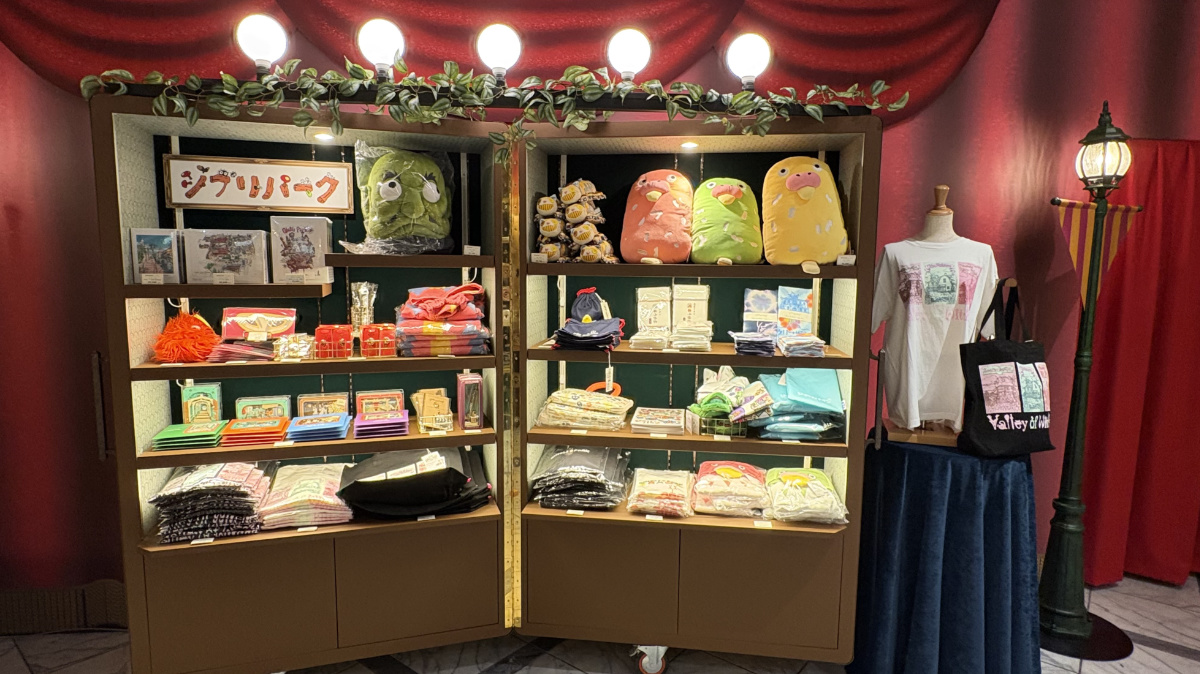
The entire shop is surrounded by red curtains, with a golden Parakeet Man displayed in the center.
Re-entry is generally not allowed, so do not head for the exit before you have finished shopping.
View the Merchandise on the Official Website
Ghibli Park Exhibition report: displays near the entrance and Yubaba from Spirited Away
Report on the food area and the immersive character experience
Tickets Are Timed, and Early Admission Is Not Available
Standard tickets specify an admission time in 30-minute intervals from 9:00 a.m. to 4:30 p.m.
You cannot enter before your assigned time. Finish eating and using the restroom inside ATC, then head to the entrance when your time slot begins.
【Buy on Asoview】Ghibli Park Exhibition Admission Ticket
- Adults: US$11.88
- Junior high and high school students: US$10.00
- Ages 4 through elementary school: US$6.25
- Ages 3 and under: Free when entering with an accompanying visitor who holds a timed ticket
- Same-day ticket sales at the venue: None
After purchase, tickets cannot be changed, canceled, refunded, or reissued. If you choose a paper ticket, it must be issued before admission.
Check Tickets on the Official Website
Families with Children Should Prioritize the Playable First Half
Children may want to move quickly through the games, bathhouse, and giant food displays, while adults may want to stop and read the small writing or study the detailed set pieces.
For a family visit, it is easiest to begin with the experiences children most want to try in Little Ghibli Park, then move through the document exhibits in the latter half while watching everyone’s energy level.
Strollers are allowed inside. A few loaner strollers are available, but they cannot be reserved in advance. Accessible restrooms and lockers are on the second floor of the ITM Building, while the nursing room is on the third floor of the O’s Building North Wing.
Two Minutes on Foot from Trade Center-mae Station
The nearest station is Trade Center-mae Station on the Osaka Metro Nanko Port Town Line. The venue is about a two-minute walk from the station.
Drivers can use the ATC parking lot, but during summer vacation, weekends, and holidays, nearby events may cause congestion. To avoid missing your timed admission, public transportation is the safer choice.
Check Access Information on the Official Website
Set Aside Time to Explore Little Ghibli Park
You can move through Little Ghibli Park fairly quickly if you visit only the most obvious photo spots.
But once you start looking behind the Witch of the Waste, reading shop notices, checking bookshelves and wooden tags, and searching for overhead mechanisms, you will find yourself turning back through the same streets again and again. Those detours are part of what makes the Ghibli Park experience special.
You will also need time to play the games, take turns taking group photos, and browse the shop. Avoid packing your post-entry schedule too tightly, and leave enough flexibility to return to anything you discover.
Frequently Asked Questions About Little Ghibli Park
Can adults enter and play without children?
At the Osaka exhibition, adults can enter and play in Little Ghibli Park. Many displays, including the games, izakaya, and giant fried shrimp, are easy for adult groups to enjoy.
Do I have to follow the floor board game in order?
No. There is no required order. When it is crowded, start with open displays and return later to avoid overlapping with other visitors.
Can I enter with a stroller?
Yes. Strollers are allowed inside, and a few loaner strollers are available, though advance reservations are not accepted. In narrow exhibit areas, check your surroundings and do not force your way through.
Can I visit only the shop?
No. The shop is available only to visitors who have entered the Ghibli Park Exhibition. Because re-entry is generally not allowed, finish shopping before you leave.
Can I drink beverages inside the venue?
Food and drinks are not allowed inside the venue. If you need water or feel unwell, do not leave on your own; speak with a nearby staff member.
Exchange rate used: US$1 = ¥160.
 Ghibli Park Exhibition Opens in Osaka: First Look at the Giant Haku Dragon and Hands-On Displays
 Ghibli Park Exhibition Food Guide: Kusakabe Home, Tiger Moth, and Chihiro’s Food Stall

Make the latest USJ and Kansai event updates
easier to find on Google.