What you’ll learn in this article
- Beginner-friendly highlights and must-see National Treasures at the special exhibition The Tale of Genji: Splendor of the Court
- The best times to visit for specific works, including the five Teika manuscripts and The Tale of Genji Picture Scrolls
- Kyoto venue details, including Akihisa Shiono’s audio guide, admission fees, and exhibition dates
You can enjoy this exhibition even if you have never read The Tale of Genji all the way through.
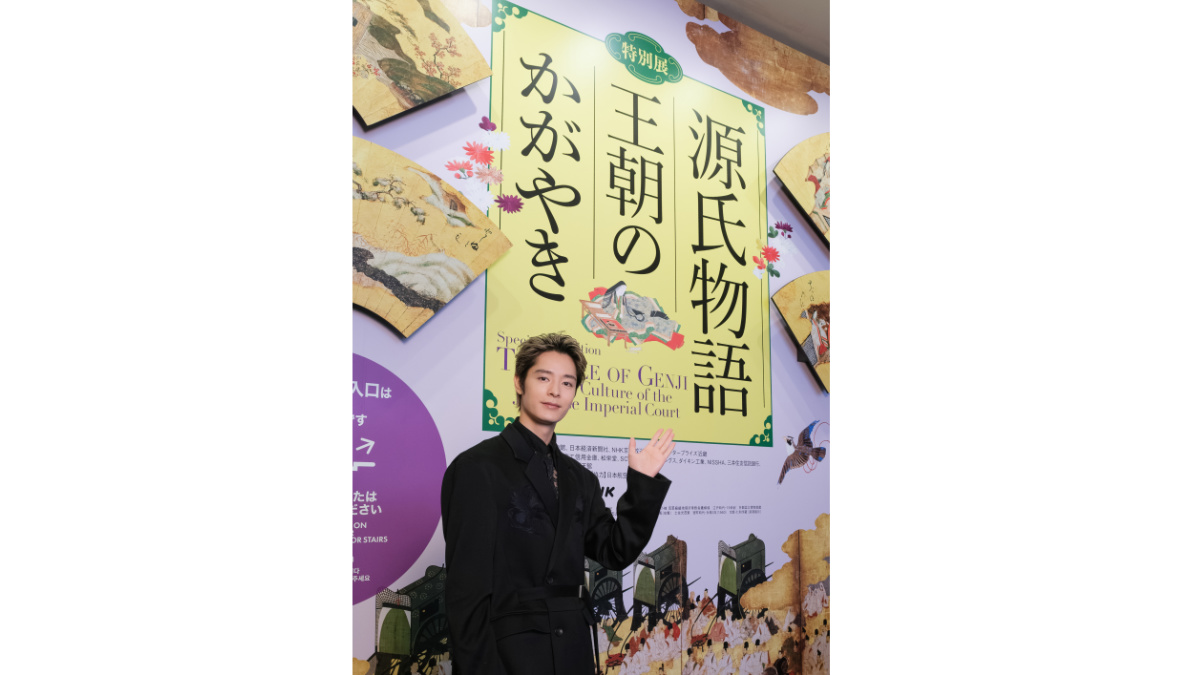
What makes the special exhibition “The Tale of Genji: Splendor of the Court” so compelling is the chance to trace, through original objects, how a single story born 1,000 years ago was passed down while taking new forms—as manuscripts, paintings, decorative arts, Noh theater, incense games, and modern painting.
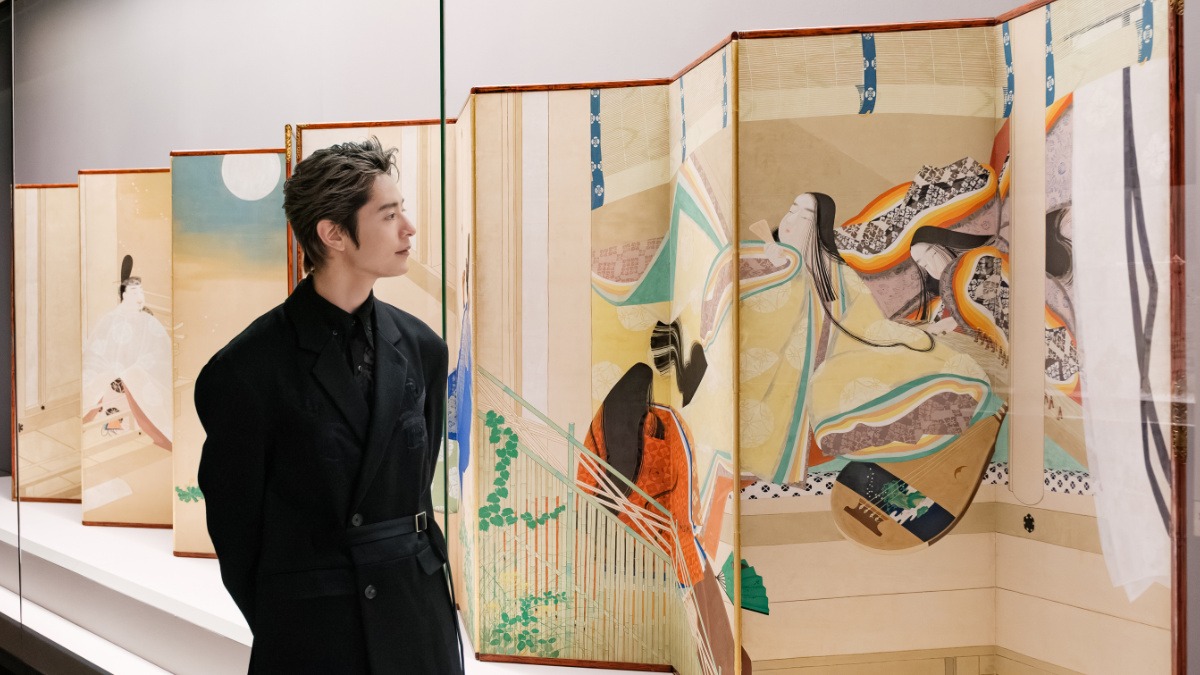
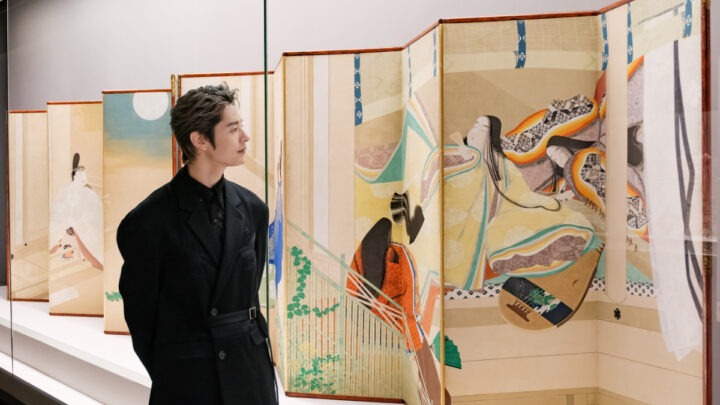
This is the first major exhibition devoted to The Tale of Genji at the Kyoto National Museum in 51 years, since the museum’s 1975 exhibition. During our on-site coverage, we viewed the exhibition after explanations from Kyoto National Museum Director Nobuyuki Matsumoto, Senior Curator Rintaro Inami, and Maiko Yamauchi, Head of Research and International Cooperation, as well as a talk by actor Akihisa Shiono, who serves as the audio guide navigator.
If you are new to The Tale of Genji, you do not need to memorize every character.
Follow “how this story was inherited by the next era,” and the flow of the exhibition becomes much easier to understand.
The first major Tale of Genji exhibition at Kyoto National Museum in 51 years: masterpieces that could be assembled now
In his organizer’s greeting, Director Nobuyuki Matsumoto explained that The Tale of Genji is not only a masterpiece of court literature but has continued to exert a major influence on later Japanese culture, including painting, decorative arts, and the performing arts.
Nearly half a century has passed since the 1975 exhibition. Research has advanced, and newly discovered works have also come to light. This exhibition offers a chance to reconsider The Tale of Genji in light of the research results and discoveries accumulated over those 51 years.
According to Senior Curator Rintaro Inami, the Kyoto venue displays 144 works, including six National Treasures and 28 Important Cultural Properties. Fifty-five works are shown only in Kyoto, giving this venue many highlights that differ from the Tokyo presentation.
Home from Harvard: the oldest surviving Genji paintings with scenes from all 54 chapters
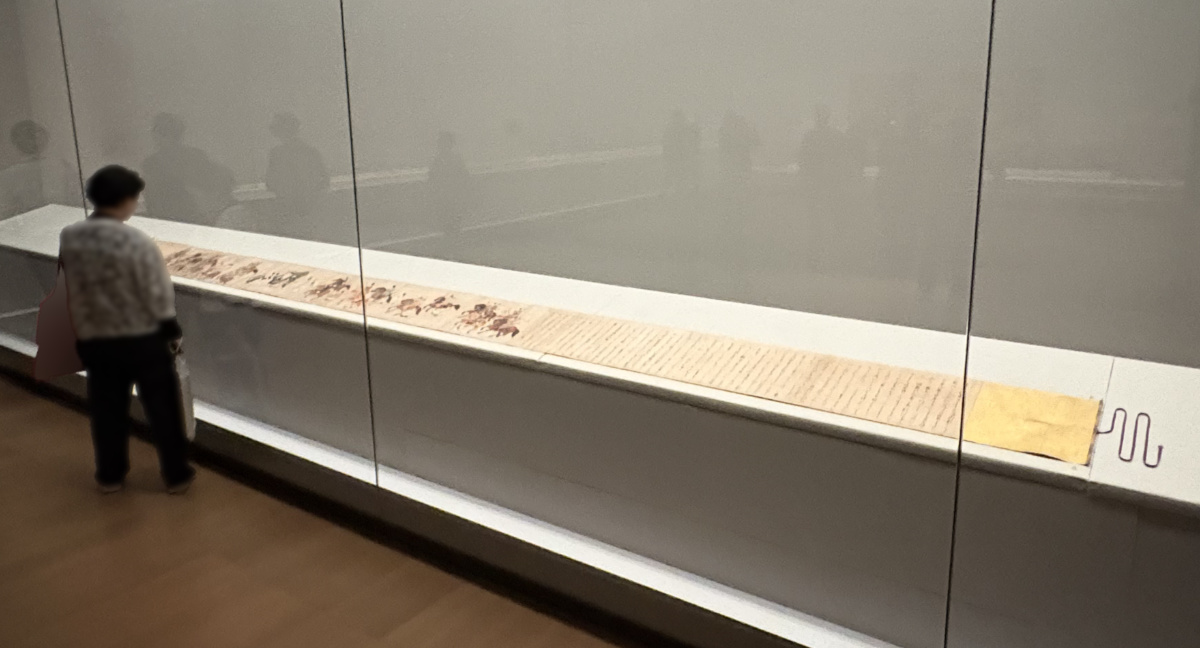
One work especially worth remembering is the Album of The Tale of Genji in the collection of the Harvard Art Museums / Arthur M. Sackler Museum in the United States.
Painted by Tosa Mitsunobu in 1510 during the Muromachi period, it is the oldest surviving set of Genji paintings containing scenes from all 54 chapters. The beauty of The Tale of Genji that traveled across the ocean now returns to Kyoto.
Move beyond the image of “The Tale of Genji as a Japanese classic” and see it as “a story that spread around the world over 1,000 years,” and the scale of this exhibition becomes easier to grasp.
For beginners, follow 1,000 years of change: see the exhibition in order
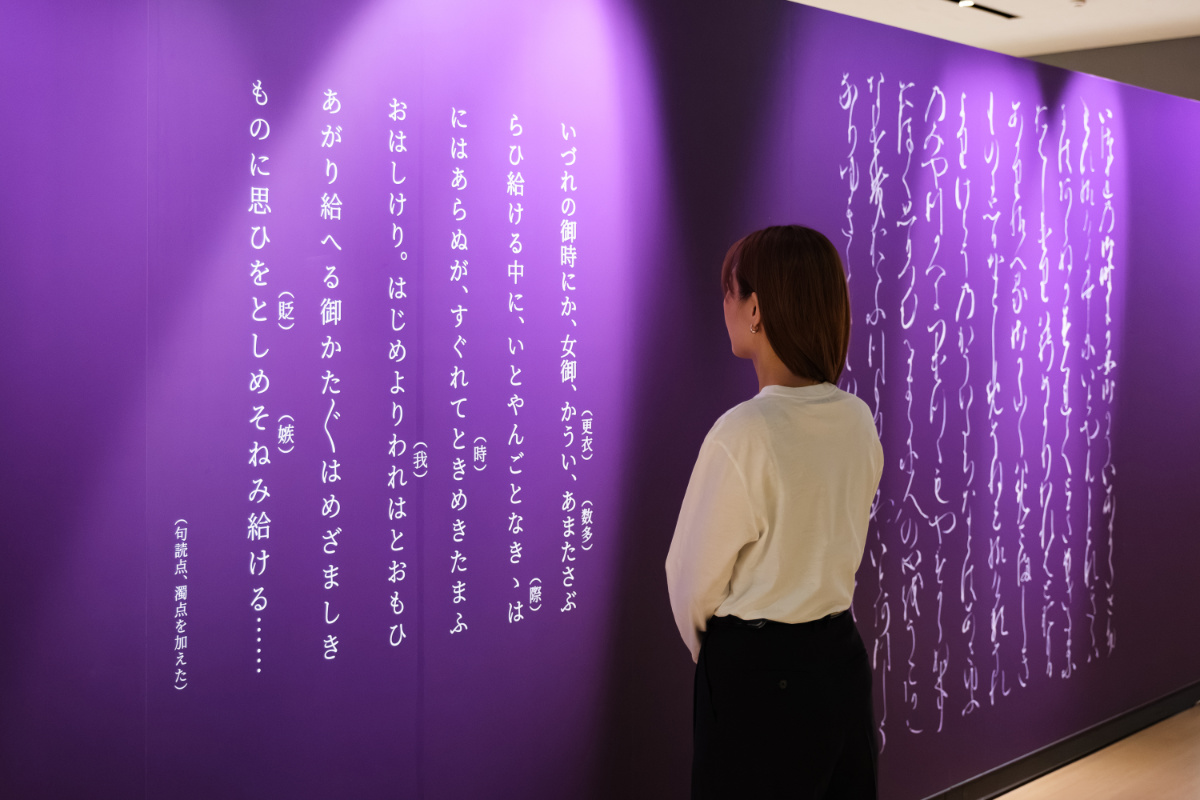
Rather than simply reading the story itself, the exhibition is organized around changing ways people engaged with The Tale of Genji across the centuries: “copying,” “learning about the author,” “turning it into pictures,” “decorating,” and “playing.”
From here, we introduce a beginner-friendly way to view the exhibition, focusing on representative works photographed during our on-site coverage.
Chapter 1: Copying The Tale of Genji | A manuscript connected to the text we read today
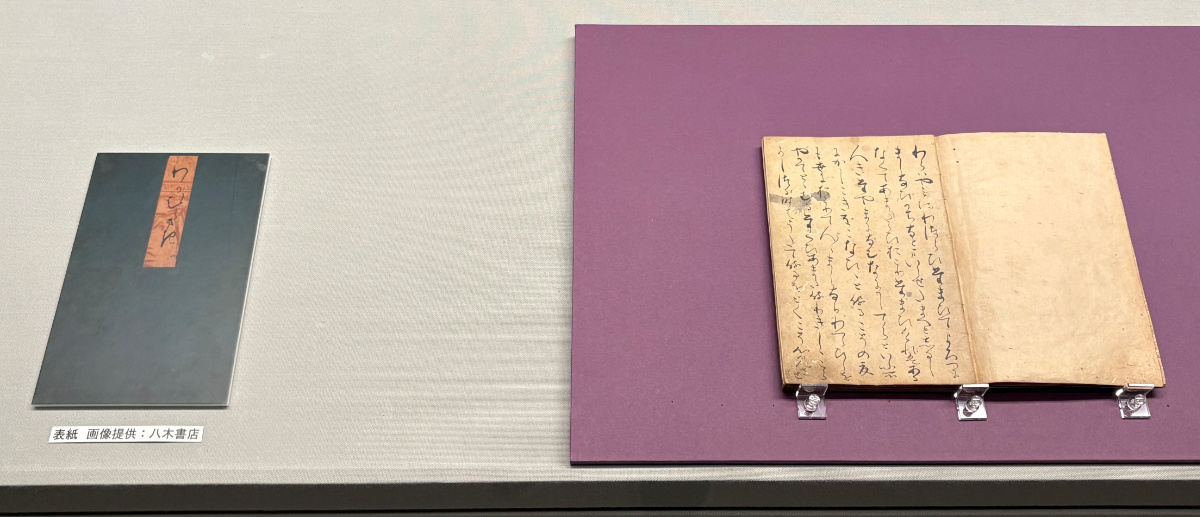
The first work to know in Chapter 1 is The Tale of Genji (Teika manuscript), Wakamurasaki.
No manuscript in Murasaki Shikibu’s own hand survives. The story was copied by hand again and again, and differences in the text emerged in the process.
In the Kamakura period, Fujiwara no Teika organized these textual variants, profoundly influencing later versions of The Tale of Genji.
This Wakamurasaki volume was discovered in 2019. Inami introduced it as a book connected to the roots of the printed Tale of Genji text we read today.
At the Kyoto venue, the five surviving Teika manuscript volumes will also be assembled together for the first time in history for only two weeks, November 3–15. For fans of classical literature, that alone is a compelling reason to visit during this period.
Chapter 2: Murasaki Shikibu, author of The Tale of Genji | What kind of woman was she?
![Portrait of Murasaki Shikibu by Tosa Mitsuoki, Edo period, 17th century, Ishiyama-dera, Shiga [first-half display]](https://happyell.co.jp/wp-content/uploads/2026/10/genji-monogatari-17.jpg)
Much remains unknown about Murasaki Shikibu herself, the author of The Tale of Genji.
Even so, her diary continued to be read, and many portraits of her were created in later generations. Chapter 2 looks at how “the woman who wrote the work” was imagined across the centuries.
The Portrait of Murasaki Shikibu shown in the photo was painted by Tosa Mitsuoki. Looking at her quiet figure and thinking about the person who wrote a story read for so many centuries can make the name “Murasaki Shikibu,” familiar from textbooks, feel a little closer.
Chapter 3: National Treasure, The Tale of Genji Picture Scroll | 12th-century images that convey the characters’ inner lives
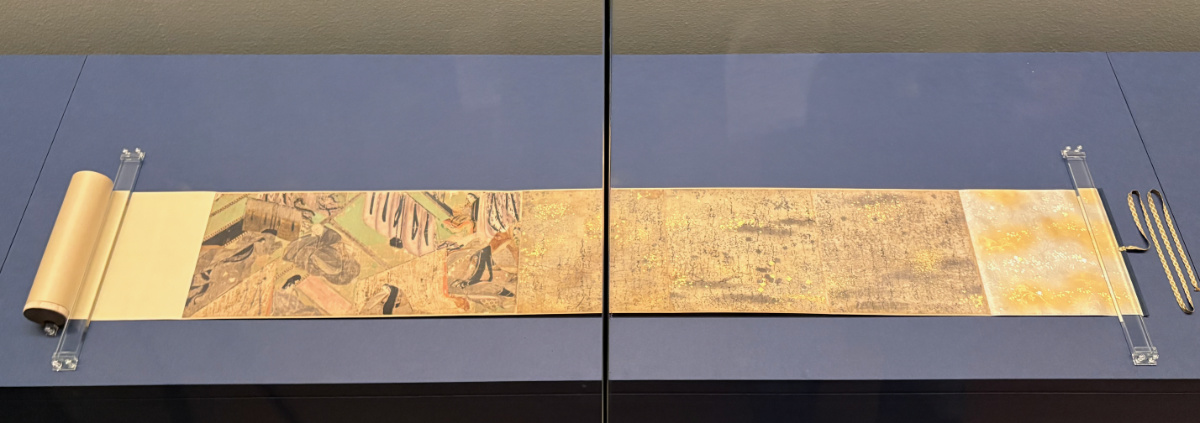
The star of Chapter 3 is the National Treasure The Tale of Genji Picture Scroll, the oldest surviving Genji paintings and one of Japan’s representative picture scrolls.
Kashiwagi I depicts the Third Princess holding the child born from her relationship with Kashiwagi and, after deep anguish, wishing to become a nun. The emotions of her father, the Retired Emperor Suzaku, Hikaru Genji, and the Third Princess intersect within a single scene.
![National Treasure, The Tale of Genji Picture Scroll, Kashiwagi I, Heian period, 12th century, Tokugawa Art Museum, Aichi [on view October 6–18]](https://happyell.co.jp/wp-content/uploads/2026/10/genji-monogatari-38b.jpg)
What Inami highlighted was how the composition itself expresses psychology and relationships rather than simply arranging figures. Though the work dates to the 12th century, beginners can enter the scene by following it like a drama and asking, “What are these people feeling right now?”
The National Treasure The Tale of Genji Picture Scroll is displayed throughout the exhibition with scenes rotated. After Kashiwagi I come Suzumushi II, Hashihime, and Yadorigi III, so part of the fun is that the scene you encounter changes depending on when you visit.
Chapter 4: Deepening The Tale of Genji | Don’t miss works returning from Harvard
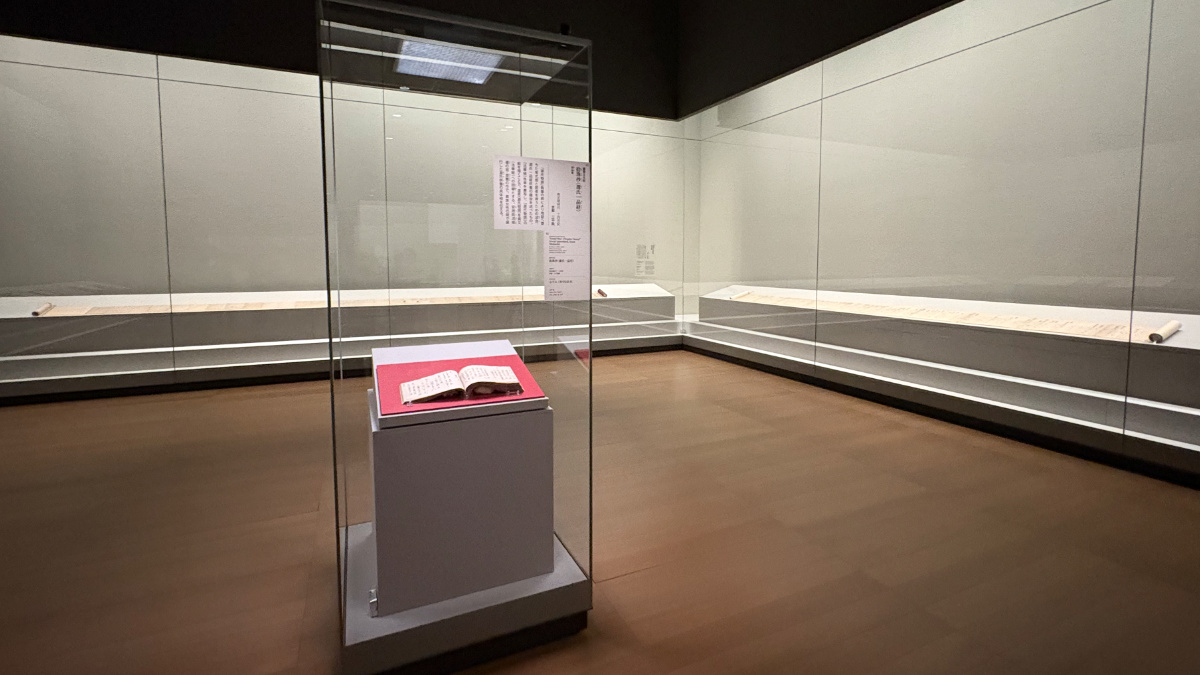
The Tale of Genji was not simply passed down through reading. Its text was studied and annotated, and it became a subject of cultivated learning in court culture.
This chapter includes the National Treasure Genji Monogatari Okuiri by Fujiwara no Teika, excerpts copied by emperors, and numerous Genji paintings—traces of people who tried to interpret this masterpiece.
The Album of The Tale of Genji, returning from the Harvard Art Museums / Arthur M. Sackler Museum in the United States, is another work to see in this context. Standing before the oldest surviving Genji paintings with scenes from all 54 chapters makes it clear how The Tale of Genji expanded from literature to be read into “literature to be seen.”
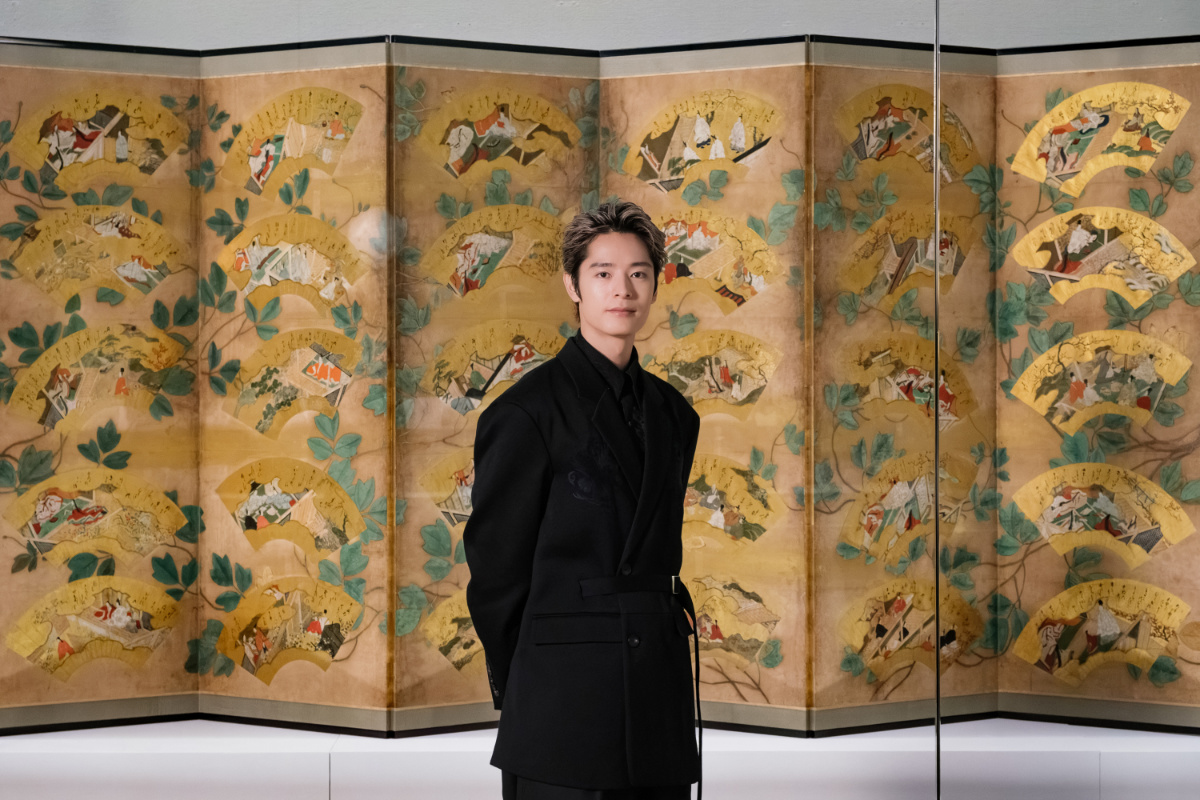
Chapter 5: Decorating with The Tale of Genji | “Hidden Genji” motifs you might miss without knowing the story
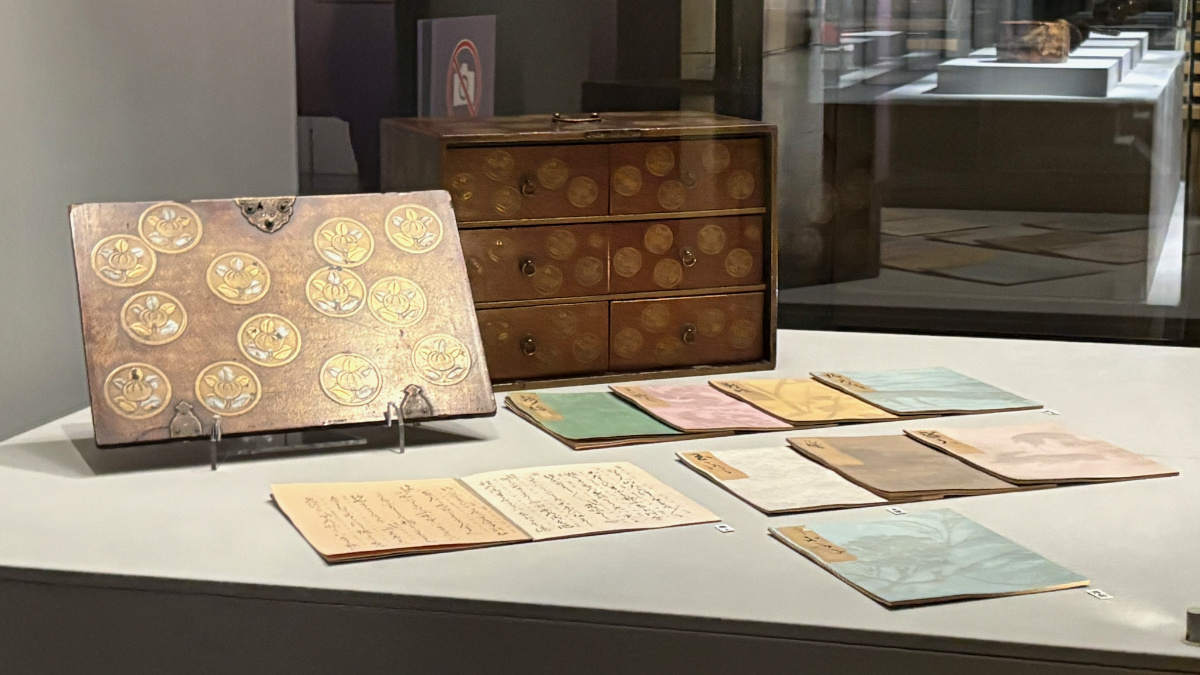
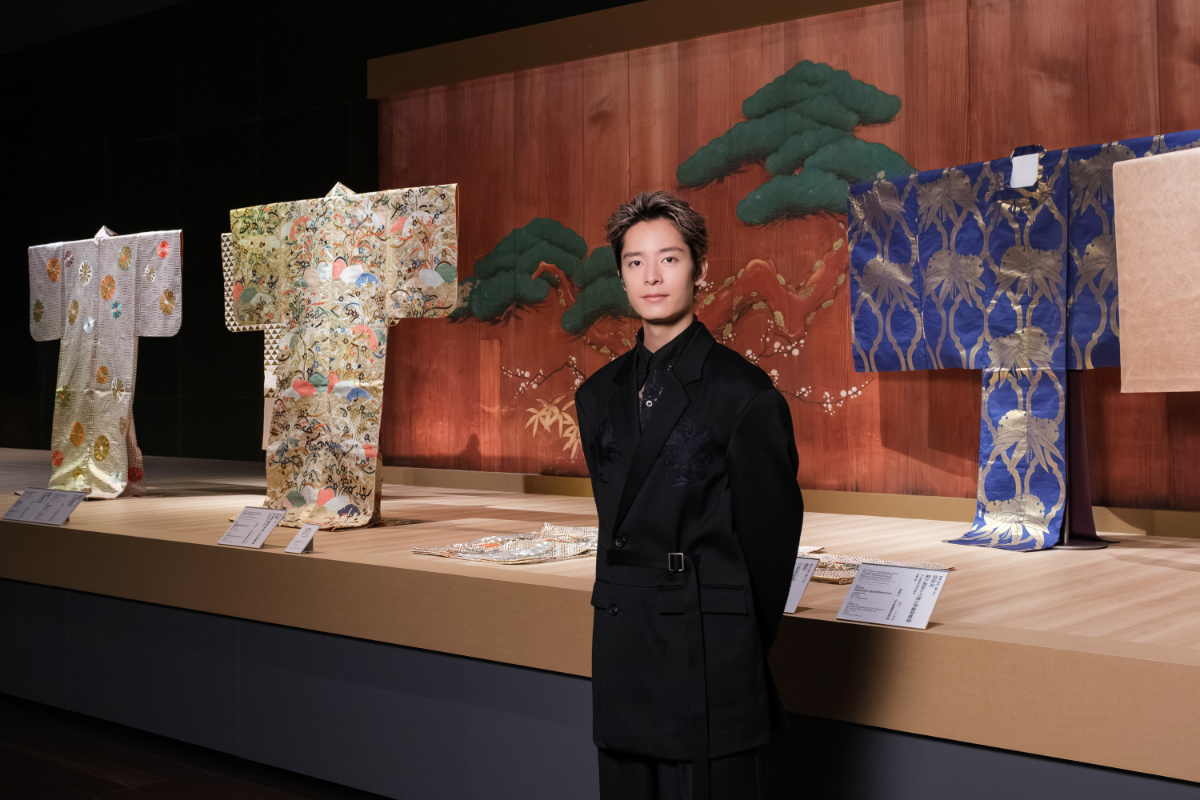
In Chapter 5, The Tale of Genji finds its way into the design of decorative arts and clothing.
One fascinating device is the rusumoyo, or “absent-person motif,” which represents the story without directly depicting its characters, using only motifs such as plants, buildings, or small objects that evoke a particular scene.
In modern terms, it is a little like character merchandise whose references fans recognize even when the title is not written on it. Knowing The Tale of Genji was itself both cultural literacy and a form of play.
Akihisa Shiono also singled out the National Treasure Hatsune Furnishings in this decorative-arts area as one of the works that made the strongest impression on him. He said seeing the actual object revealed the glow of the gold and the fine craftsmanship that photographs cannot fully convey.
![National Treasure, Hatsune maki-e traveling incense box (Hatsune Furnishings), by Kōami Nagashige, Edo period, Kan’ei 16 (1639)
Tokugawa Art Museum, Aichi [Kyoto: on view throughout] [shown only at the Kyoto venue]](https://happyell.co.jp/wp-content/uploads/2026/10/genji-monogatari13.jpg)
Tokugawa Art Museum, Aichi [Kyoto: on view throughout] [shown only at the Kyoto venue]
Kyoto-only feature: “The Tale of Genji and Noh” | Lady Rokujō’s emotions take the stage
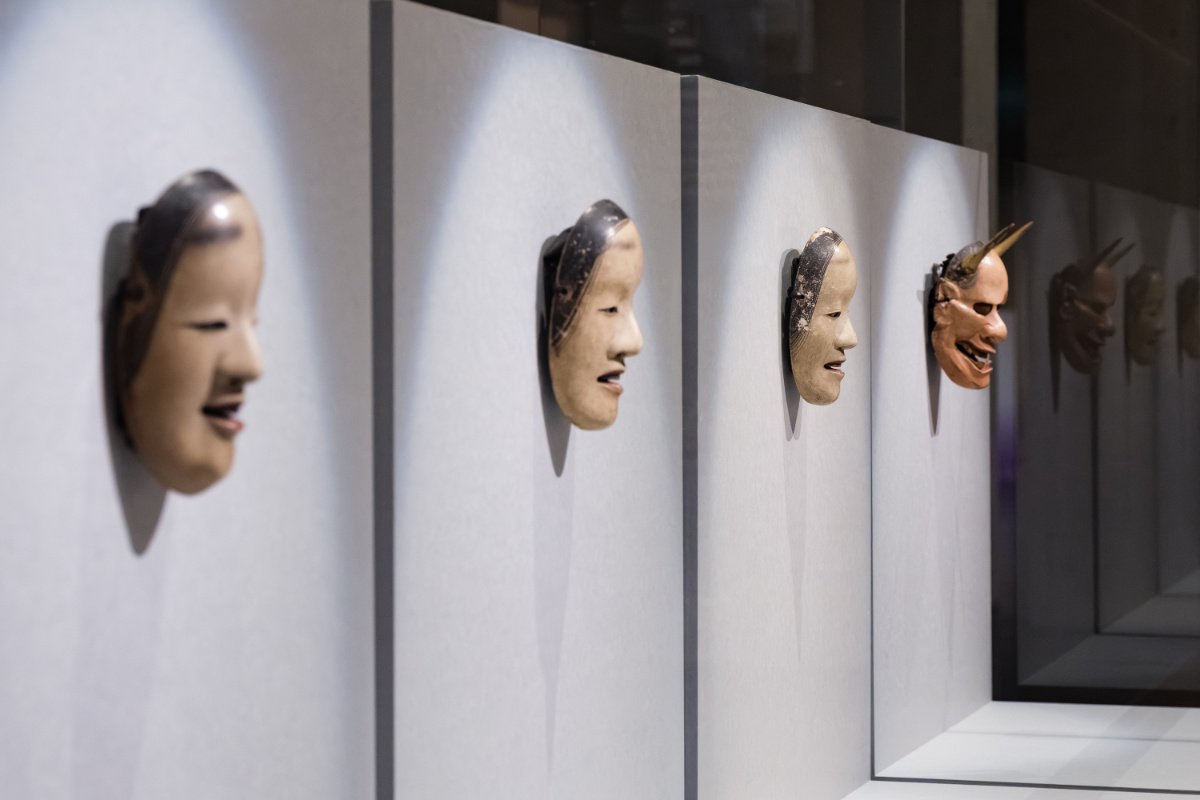
A major feature of the Kyoto venue is the thematic display “The Tale of Genji and Noh.”
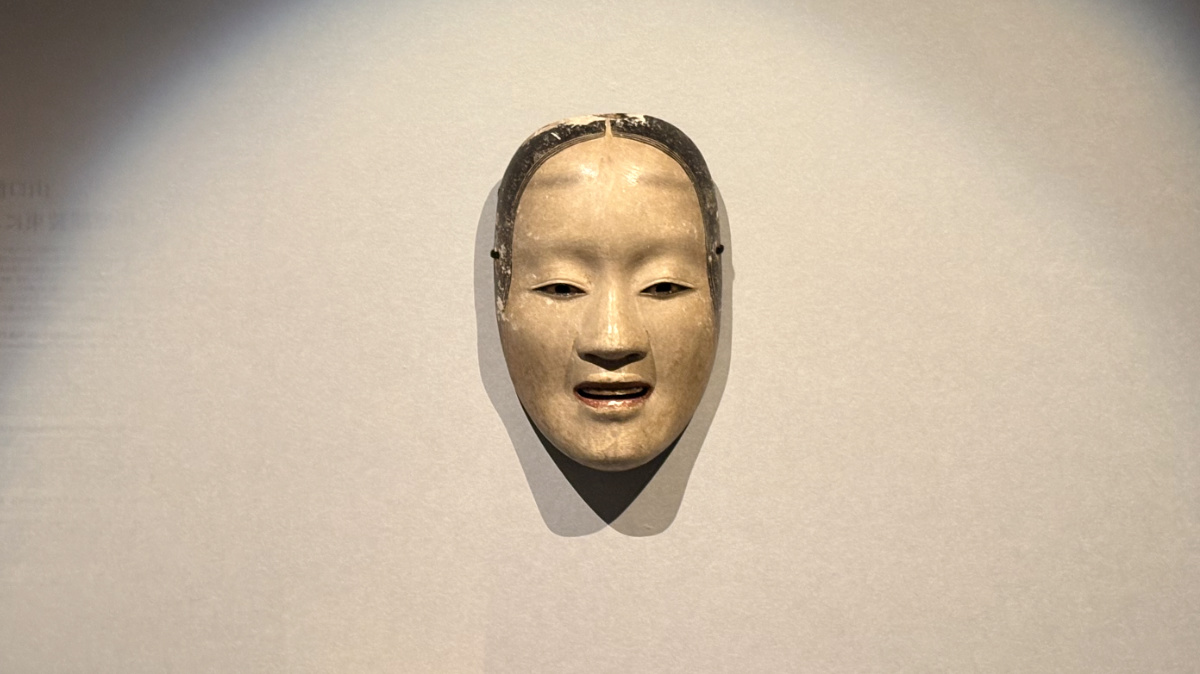
According to Maiko Yamauchi, Noh does more than simply stage the plot of The Tale of Genji. In Aoi no Ue, for example, it focuses on Lady Rokujō’s jealousy, frustration, and anger after she is hurt in the carriage dispute, transforming those emotions into theater.
The Important Cultural Property Noh mask Deigan looks at first glance like the face of a beautiful woman. Look closely at the whites of the eyes, however, and you can see gold decoration. Yamauchi explained that this expression signals a being with supernatural power.
This is a work worth studying closely around the eyes, not just viewing once from the front.
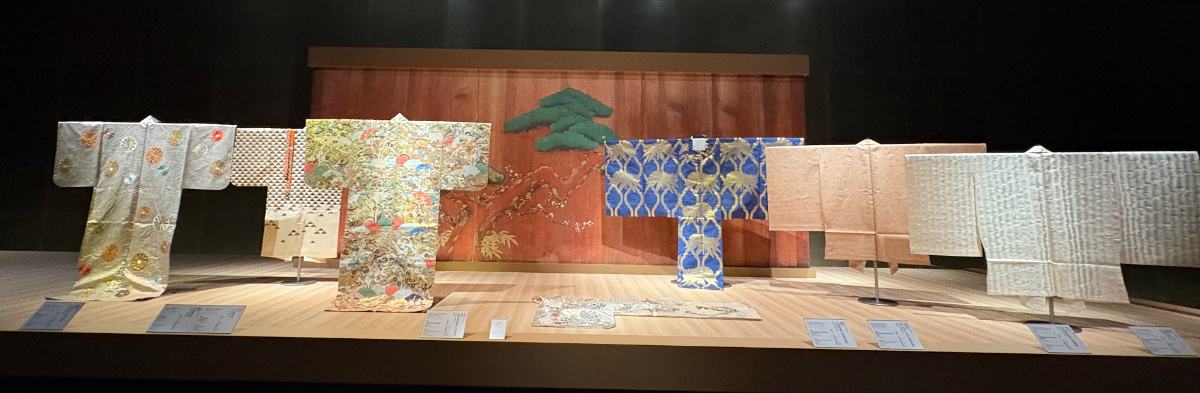
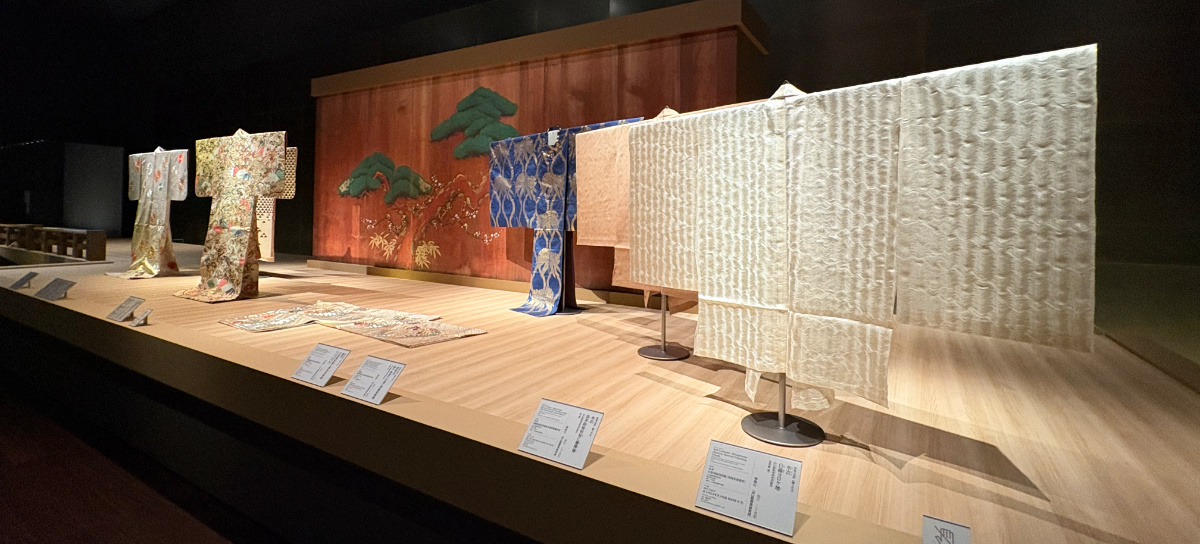
In the first-floor atrium, a Genji Noh stage is also recreated using reconstructed Noh costumes by the Yamaguchi Noh Costume Research Institute. The first half features Aoi no Ue and the second half Tamakazura. The world of The Tale of Genji expands beyond flat pictures as if its characters were stepping onto the stage.
Chapter 6: Coloring The Tale of Genji | How artists changed the way the same story was shown
![National Treasure, Folding Screens of Sekiya and Miotsukushi from The Tale of Genji, Tawaraya Sōtatsu, Edo period, Kan’ei 8 (1631), Seikado Bunko Art Museum, Tokyo [first-half display]](https://happyell.co.jp/wp-content/uploads/2026/10/genji-monogatari-170.jpg)
From the Azuchi-Momoyama period into the Edo period, Genji paintings expanded beyond shikishi cards and picture scrolls to large folding screens and sliding doors.
The National Treasure Folding Screens of Sekiya and Miotsukushi from The Tale of Genji is a representative early-modern Genji work by Tawaraya Sōtatsu. Unlike Genji paintings filled with finely detailed figures, its bold simplification of forms and broad areas of gold and color create a striking sense of design.
Compare it with earlier works and ask, “How can the same Tale of Genji look so different when the era changes?” That contrast makes this chapter much more engaging.
![Important Cultural Property, Album of The Tale of Genji, Wakamurasaki, by Tosa Mitsuyoshi and Chōjirō, Azuchi-Momoyama–Edo period, 17th century, Kyoto National Museum [on view throughout with album rotations; this scene in the first half] [shown only at the Kyoto venue]](https://happyell.co.jp/wp-content/uploads/2026/10/genji-monogatari-173.jpg)
In the Important Cultural Property Album of The Tale of Genji, the famous Wakamurasaki scene is another highlight.
A sparrow escapes, bringing the young Wakamurasaki into view as Hikaru Genji catches a glimpse of her. Inami also noted that two small animals—a “sparrow,” and later a “cat” that brings the Third Princess and Kashiwagi together—set major turns of fate in motion.
For beginners, it may be easier to grasp the story’s appeal by watching how “a small incident leads to a major encounter” rather than trying to track every character name.
![The Tale of Genji Picture Scroll (Moriyasu version), Aoi (detail), Edo period, 17th century, Kyoto National Museum [on view throughout with volume rotations; this scene in the first half]](https://happyell.co.jp/wp-content/uploads/2026/10/genji-monogatari-190.jpg)
Another work to watch for is The Tale of Genji Picture Scroll (Moriyasu version).
This large-scale scroll copies extensive portions of the text and attempts to illustrate in detail even scenes that are rarely chosen for conventional Genji paintings. Its surviving sections are scattered in Japan and overseas. Because its full scope remains unknown, it is also called the “phantom Tale of Genji picture scroll.”
Looking at it with the thought, “Famous scenes are not enough—I want to turn the whole story into pictures,” you can almost feel the intensity of Edo-period Genji fandom.
Chapter 7: Playing with The Tale of Genji | The Edo-period “Genji boom” enters popular culture
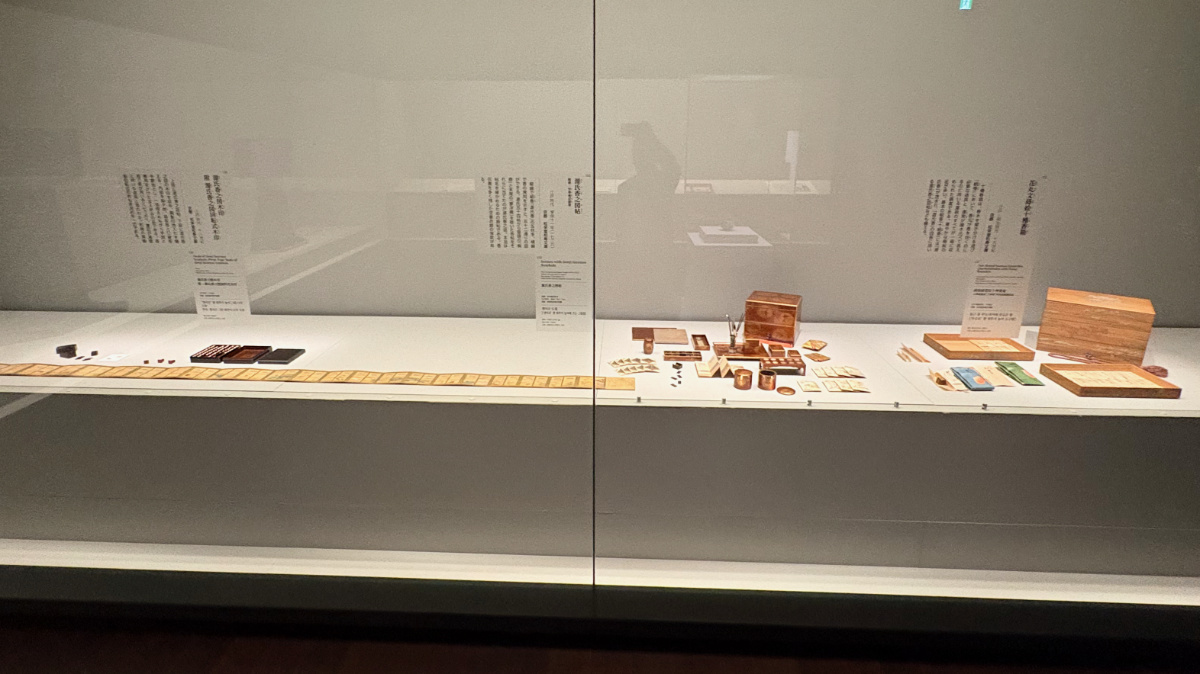
By the Edo period, The Tale of Genji had spread into forms of play enjoyed by an even wider range of people.
There was Genji-kō, an incense game based on distinguishing scents; ukiyo-e that recast the story in contemporary settings; and the enormous bestseller Nise Murasaki Inaka Genji. By this point, it may be easier to think of The Tale of Genji less as a 1,000-year-old classic and more as popular content that was repeatedly remixed.
Even visitors who felt a little tense while looking at manuscripts and National Treasures earlier may find this chapter more approachable: “People in the past played with the works they loved, too.”
Final Chapter: Continuing to paint The Tale of Genji | A 1,000-year journey ends with a modern large-scale painting
![Princesses of the Uji Palace by Matsuoka Eikyū, Taishō 1 (1912), Himeji City Museum of Art, Hyogo [on view throughout]](https://happyell.co.jp/wp-content/uploads/2026/10/genji-monogatari-256.jpg)
The exhibition concludes with Matsuoka Eikyū’s Princesses of the Uji Palace.
Painted on a large scale in 1912, the work draws on the study of older Genji paintings while reimagining The Tale of Genji with the brighter color sensibility of the modern era.
Inami introduced it as an example of a modern painter who thoroughly studied the classics and then brought them to life again with the sensibility of a new era.
Starting with a Kamakura-period manuscript in Chapter 1 and ending with modern painting, the exhibition shows that The Tale of Genji was not a work that was completed once and then ended. It has continued as each age reread and repainted it.
Akihisa Shiono on the thrill of seeing the real objects—something photos cannot convey
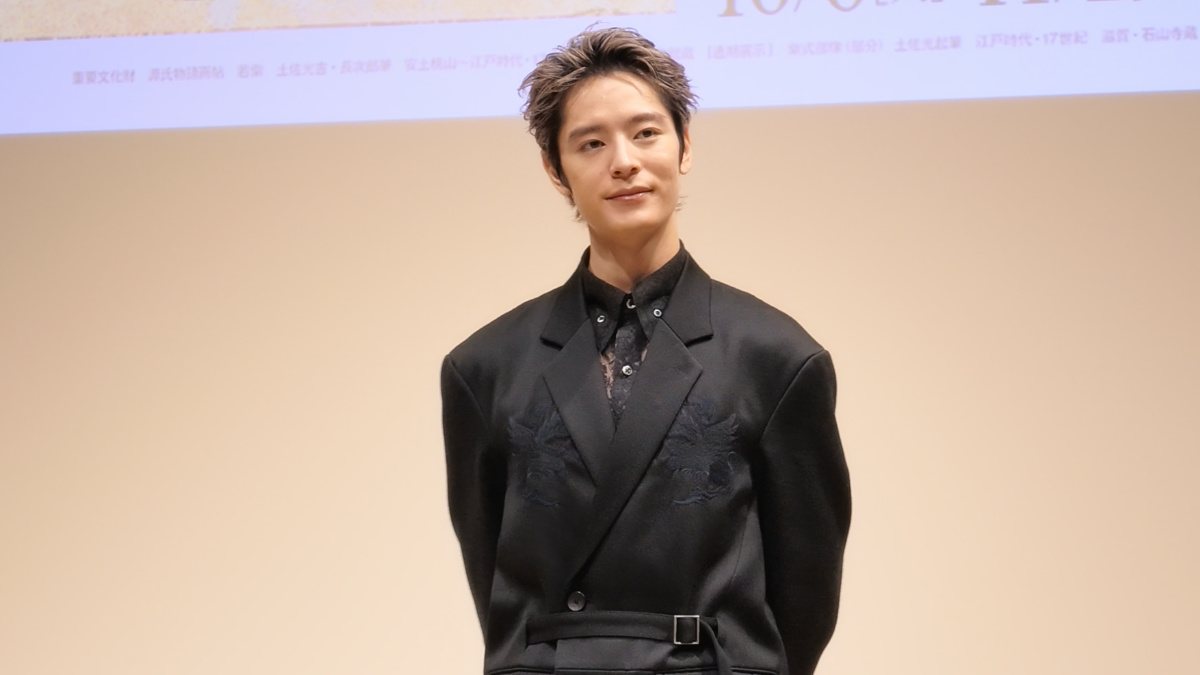
Akihisa Shiono, who played Emperor Ichijō in the 2024 taiga drama Hikaru Kimi e, serves as the audio guide navigator for this exhibition.
During the talk on the press day, he viewed the exhibition with explanations from Inami and seemed so drawn in that he felt “there wasn’t enough time.”
The work that especially stayed with him was the National Treasure Hatsune Furnishings. He said that, unlike seeing it in a photograph, encountering the three-dimensional object in person made a powerful impression through its fine workmanship and the glow of its gold.
He also commented that paintings reveal things only the naked eye can catch, such as the shimmer of gold and the slight thickness of the pigments—details that are easy to miss in photographs.
You do not need to be an art expert. It is fine to begin with reactions like “beautiful,” “so detailed,” or “the gold is amazing.” Then, as you listen to the audio guide or explanations, you gradually begin to see why the works were expressed this way.
Akihisa Shiono × Saori Hayami: an audio guide especially useful for beginners
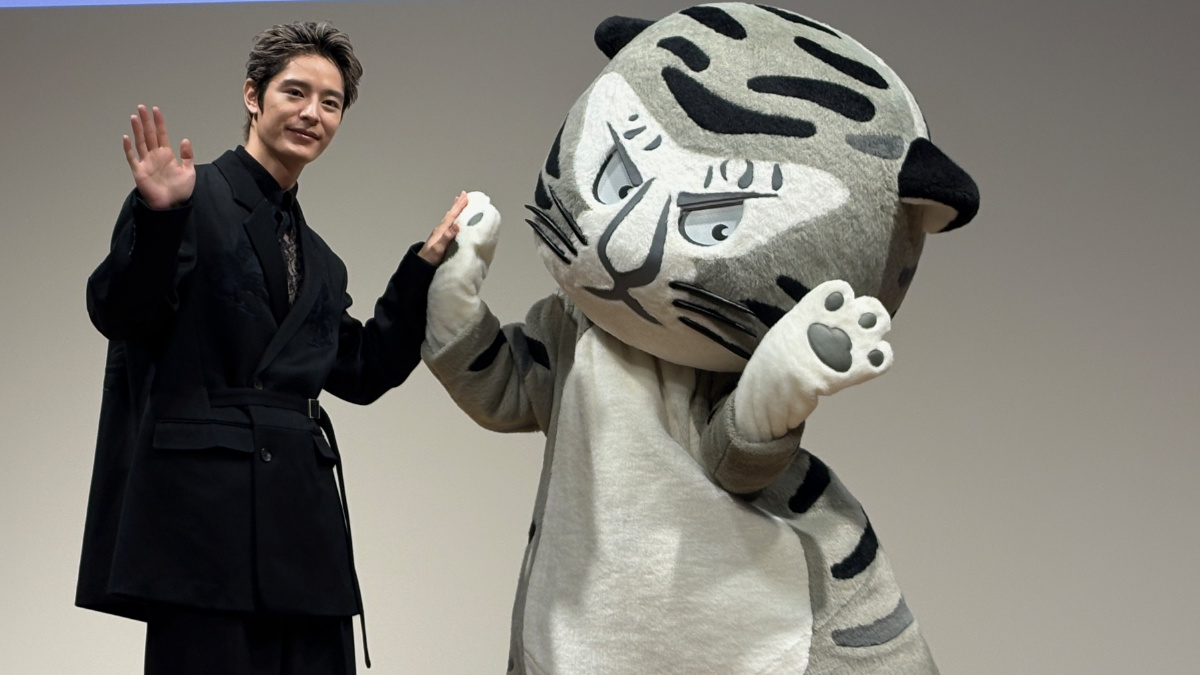
Actor Akihisa Shiono serves as navigator for the audio guide, with voice actor Saori Hayami providing narration. It gives you an entry point into the works even if you do not know their background, making it a particularly good option for newcomers to The Tale of Genji.
Shiono played Emperor Ichijō in Hikaru Kimi e. If the drama sparked your interest in the Heian period, his voice can guide you back into the culture of the imperial court.
Saori Hayami is a voice actor known for roles including Yor Forger in SPY×FAMILY and Shinobu Kocho in Demon Slayer: Kimetsu no Yaiba.
Of course, she is not speaking as those characters in the audio guide. But if you know Hayami’s voice from anime, the feeling of being guided by “a voice you recognize” may make art viewing a little more approachable.
The on-site rental version costs ¥700 per unit (tax included), runs about 35 minutes, and is available in Japanese and English.
The Japanese app version, “Kiku Bijutsu,” costs ¥800 (tax included) and is scheduled to be available from October 6, 2026, through March 14, 2027.
First half or second half? Choose your date based on the works you want to see
Because many works are rotated, the exhibition is not exactly the same every time you visit.
- October 6–18: For those who want to see the National Treasure The Tale of Genji Picture Scroll, Kashiwagi I
- First half, October 6–November 1: For those who want to see Tosa Mitsuoki’s Portrait of Murasaki Shikibu, Tawaraya Sōtatsu’s National Treasure folding screens from The Tale of Genji, and more
- November 3–15: For those who want to see the historic first gathering of all five surviving Teika manuscript volumes
- November 17–29: For those who want to see the National Treasure The Tale of Genji Picture Scroll, Yadorigi III
For first-time visitors, instead of trying to understand everything before you go, we recommend choosing just one work and deciding, “This is what I want to see.”
Use that one work as your anchor as you move through the exhibition, and the connections with the works before and after it become easier to see.
Special Exhibition “The Tale of Genji: Splendor of the Court” — Kyoto venue information
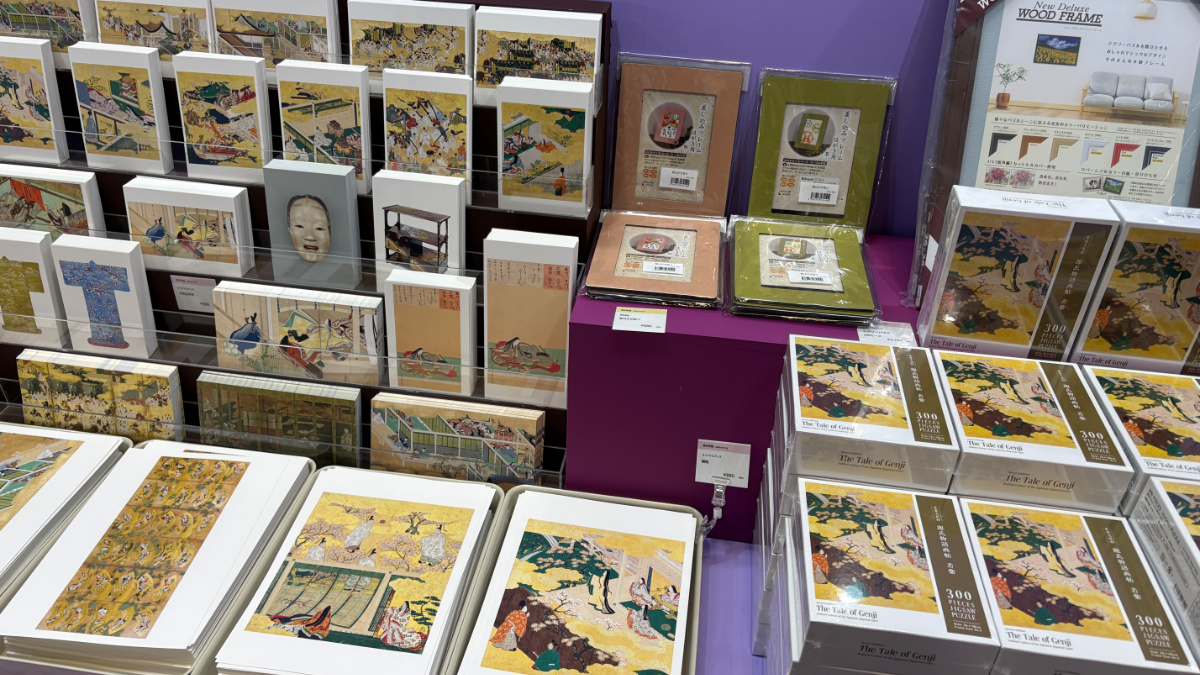
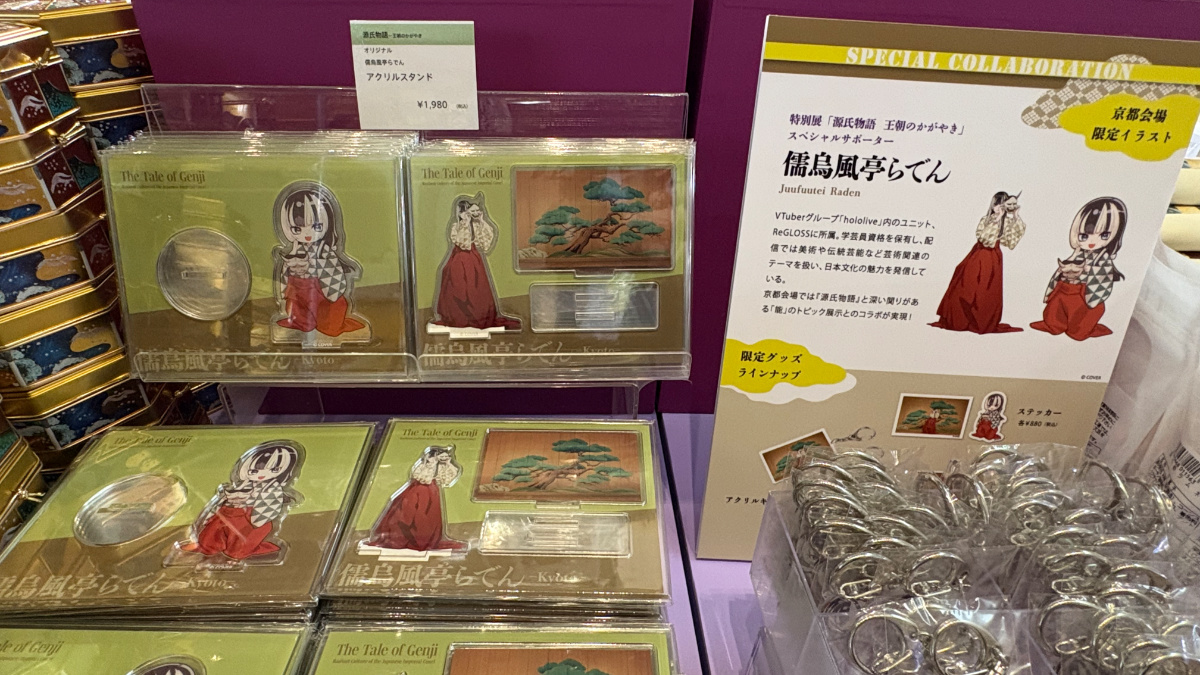
The exhibition runs from Tuesday, October 6, through Sunday, November 29, 2026, at the Heisei Chishinkan Wing of the Kyoto National Museum.
- Dates: Tuesday, October 6–Sunday, November 29, 2026
- First half: Tuesday, October 6–Sunday, November 1
- Second half: Tuesday, November 3 (national holiday)–Sunday, November 29
- Hours: 9:00 a.m.–5:30 p.m.; open until 8:00 p.m. on Fridays
- Admission: adults ¥2,200; university students ¥1,200; high school students ¥700; junior high school students and younger free (proof required)
- Venue: Heisei Chishinkan Wing, Kyoto National Museum
The museum is generally closed on Mondays, but it will open on Monday, October 12 (national holiday), and Monday, November 23 (national holiday). It will be closed on Tuesday, October 13, and Tuesday, November 24.
Works are rotated during the exhibition. If there is a work you especially want to see, check its display period on the official exhibition list before visiting.
Even if you do not know The Tale of Genji, discovering how far the story spread is part of the fun
The Tale of Genji may bring to mind a long classic with many characters and complicated relationships.
But this exhibition is not asking you to memorize all 54 chapters.
Someone copied the text. Someone painted it. Someone hid its motifs in decorative objects. Someone turned its emotions into Noh theater. Someone played with it through incense and ukiyo-e. And modern painters once again painted The Tale of Genji in the language of their own age.
Seeing that accumulation in the original objects gives you a glimpse of why The Tale of Genji has endured for more than 1,000 years.
This special exhibition brings together National Treasures, Important Cultural Properties, and works returning from overseas for Kyoto’s first major Tale of Genji exhibition in 51 years. It is rewarding for those who know the classics well, but it is also an excellent first step for anyone who has not encountered The Tale of Genji since school.
Special Exhibition “The Tale of Genji: Splendor of the Court” — frequently asked questions
Can I enjoy the exhibition if I have never read The Tale of Genji?
Yes. Rather than memorizing every character and plot point, it is easier to follow how the story spread from manuscripts to painting, decorative arts, Noh, and play. The audio guide can also help you understand the background of each work.
Who is featured on the audio guide?
Actor Akihisa Shiono serves as navigator and voice actor Saori Hayami provides narration. The on-site rental version costs ¥700 (tax included), runs about 35 minutes, and is available in Japanese and English. The Japanese app version costs ¥800 (tax included).
When can I see the National Treasure The Tale of Genji Picture Scroll?
It can be seen throughout the exhibition, with scenes rotated. Kashiwagi I, which we photographed during our coverage, is on view October 6–18, followed in sequence by Suzumushi II, Hashihime, Yadorigi III, and other scenes.
Is there an especially rare period to visit?
From November 3–15, all five surviving volumes of the Teika manuscript edited by Fujiwara no Teika will be brought together for the first time in history. For fans of The Tale of Genji and classical literature, these two weeks are especially notable.
If I am choosing between the first and second halves, which is better?
The simplest approach is to choose based on the works you want to see. The first half includes Tosa Mitsuoki’s Portrait of Murasaki Shikibu and Tawaraya Sōtatsu’s National Treasure folding screens; the second half includes the period when all five Teika manuscript volumes are assembled and displays of the National Treasure The Tale of Genji Picture Scroll scenes Hashihime and Yadorigi III.
For an introduction to the characters and romances of The Tale of Genji, see this article:

Make the latest USJ and Kansai event updates
easier to find on Google.